[category]
[title]
Cheek-piercing, fire-walking and dawn processions: here’s how to navigate Phuket’s Vegetarian Festival, October 9-18 2026


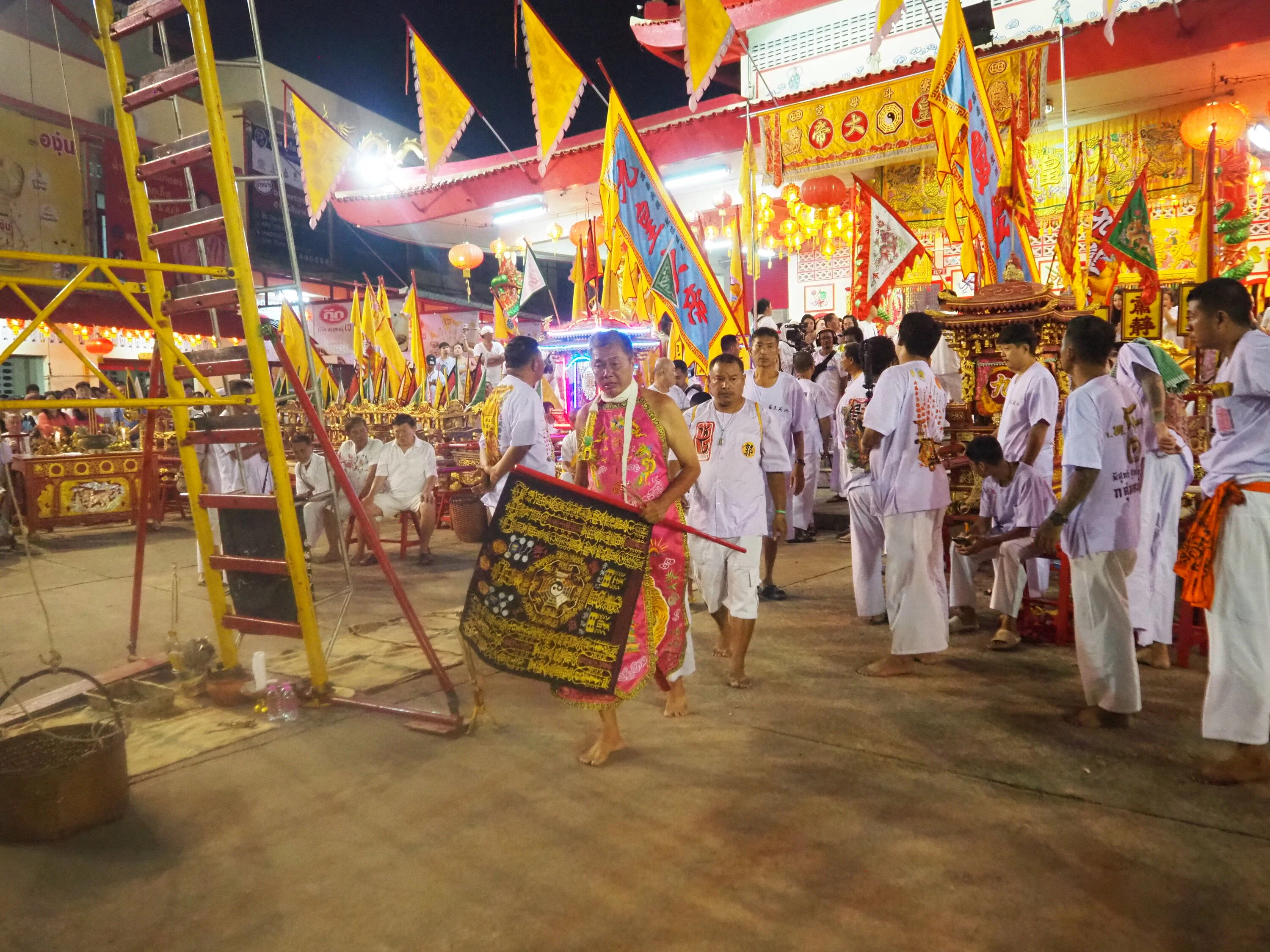
Every autumn, Phuket’s Vegetarian Festival takes over Phuket Town, with a name too innocent for the proceedings. At Chinese shrines including Jui Tui and Bang Liao, spirit mediums undergo cheek-piercing with knives and skewers, while devotees gather for street processions, fire-walking and prayers to the Nine Emperor Gods. Vegan food stalls line the streets, and white clothing symbolises purity. This year, the opening pole-raising ceremony takes place on October 9, followed by nine days of observance from October 10-18 2026.
Those observing the festival abstain from sex, booze and animal products as part of a period of physical and spiritual cleansing. The most confronting rituals involve ma song, spirit mediums believed by devotees to be possessed by gods and to take on the community’s misfortunes. For visitors, the contrast between quiet devotion and the thunder of firecrackers can be startling.
Given the scale, intensity and shifting schedule, it helps to know where to go and when. Here’s the lowdown.
What’s this all about?
The festival’s origins are commonly dated to 1825, during Phuket’s tin-mining era. One local account links it to an outbreak affecting both a visiting Chinese opera troupe and the local Chinese community. In this telling, locals adopted a vegan diet but found no relief until they also began worshipping the Nine Emperor Gods. They credited their subsequent recovery to the combined observance and continued it annually, establishing the festival. Details vary between accounts, and the story remains a founding legend.
The traditions include holy ash, joss sticks and strict rules about food preparation, with utensils kept separate from those used to cook meat. Chinpracha House & Museum owner Chanachon ‘Tiw’ Tandavanitj describes a nine-day period of shrine visits and credits the gods with ending the outbreak. ‘And ever since the rituals miraculously ended the pandemic, the Nine Emperors have been our heroes,’ he says.
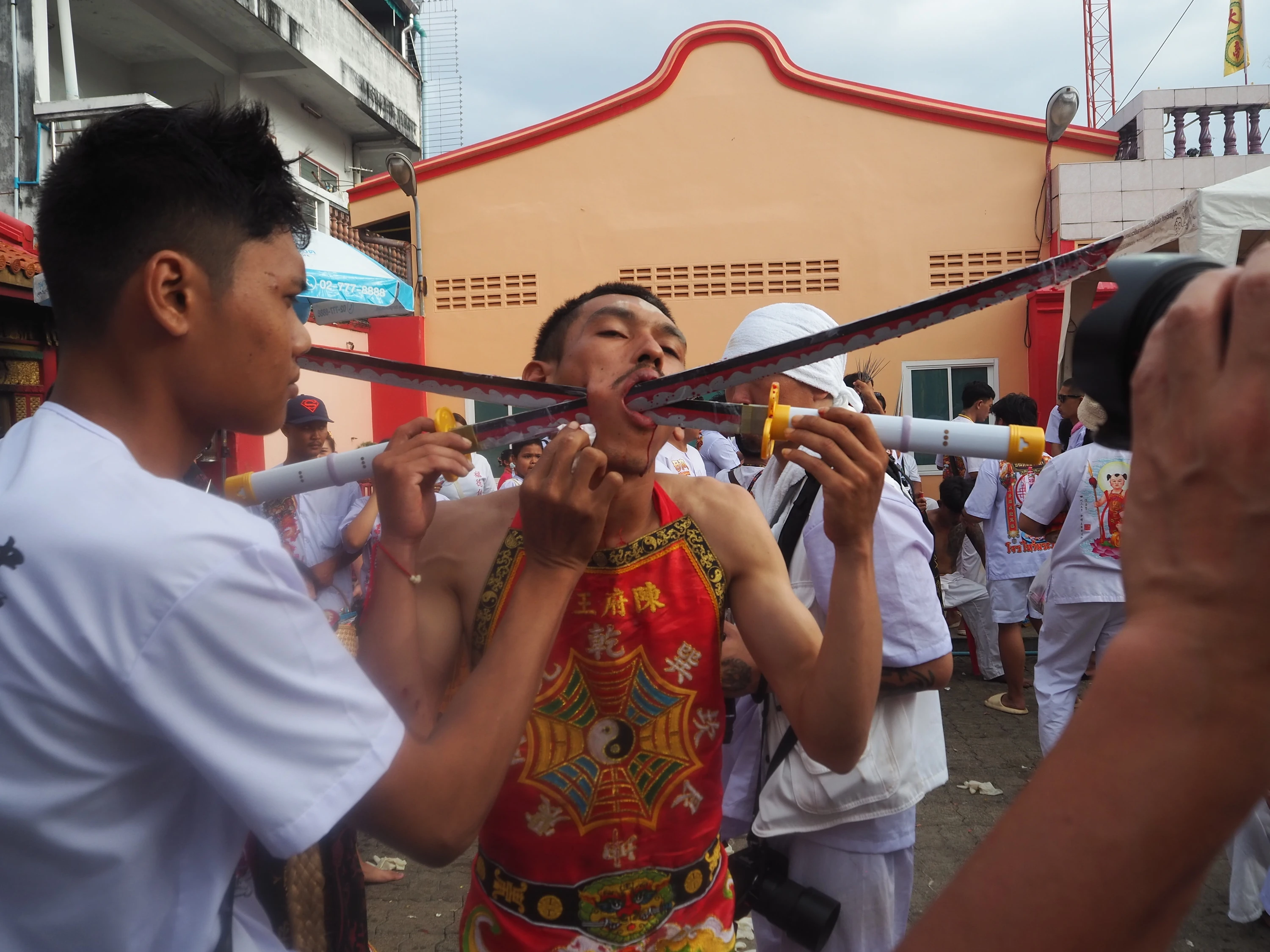
The Nine Emperor Gods are the festival’s focus, but the shrines honour a much wider pantheon. Some deities were once human, including doctors, soldiers, businessmen and musicians. The objects carried or used by mediums can reflect the identities of the gods believed to possess them – which helps explain the guitars and warlike objects you may see thrust through their cheeks. Ma song means ‘horses of the gods’: the mediums act as their vehicles.
For devotees, these acts of self-mortification serve a spiritual purpose, absorbing misfortune and seeking blessings for the community. Understanding that belief, alongside the Taoist idea that opposing forces can be complementary, helps make sense of a festival that can otherwise look like a series of alarming contradictions.
Where to go?
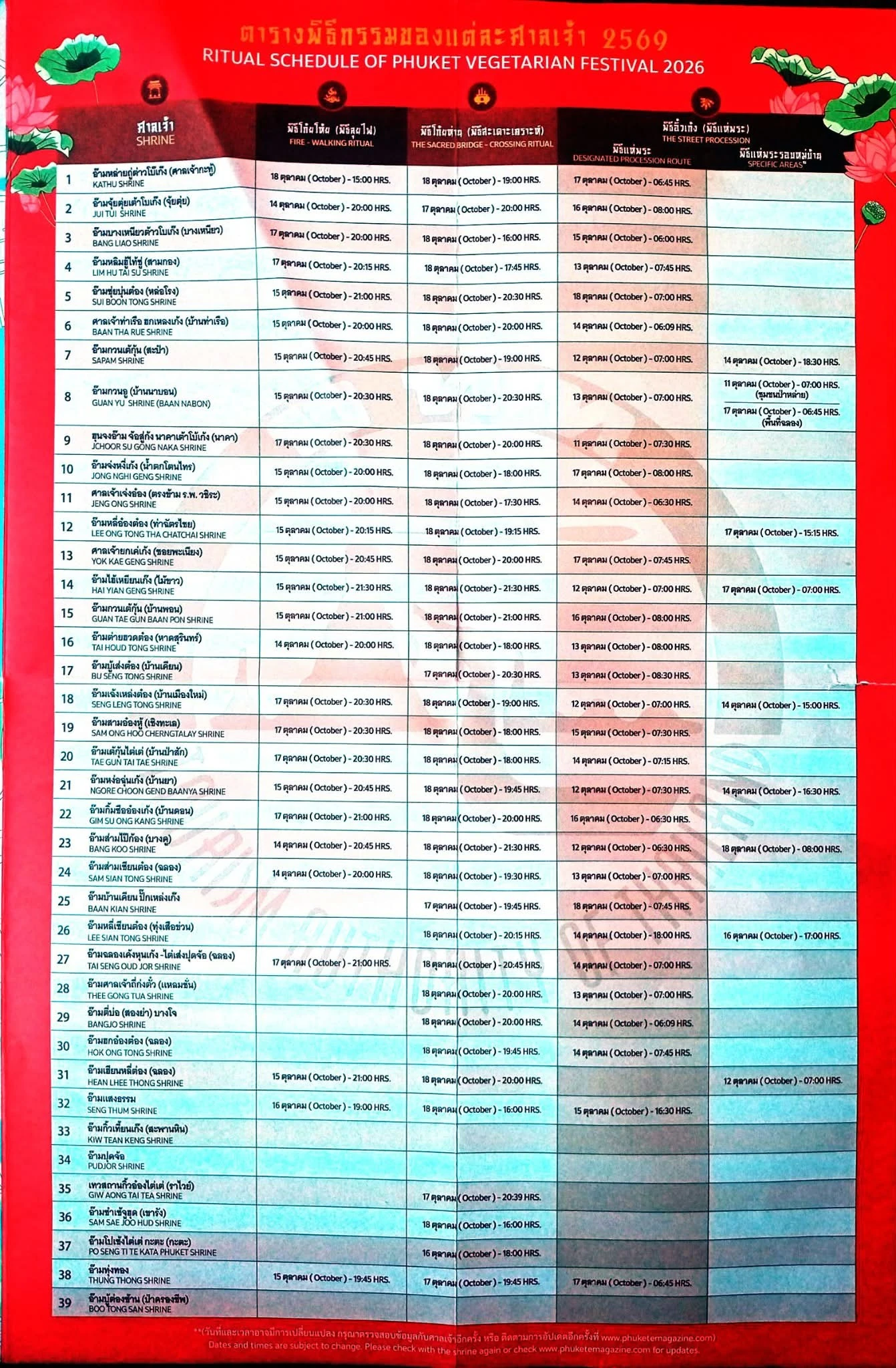
TAT Phuket’s published 2026 schedule covers 39 shrines across the island. For major street processions in Phuket Town, head to Bang Liao Shrine, also known as Bang Neow, on October 15 at 6am, or Jui Tui Shrine on October 16 at 8am. These are procession departure times, rather than a timetable for every ritual at those shrines.
For the opening, visit Jui Tui on October 9 for the Go Teng pole-raising ceremony at 5.09pm, which marks the invitation to the gods. Devotees then begin their strict diet, prayers and preparations for the rituals. One of the first scheduled street processions leaves Jchoor Su Gong Naka Shrine in Wichit on October 11 at 7.30am.
If you’d prefer a smaller shrine, try Bang Koo Shrine in Koh Kaew for its procession on October 12 at 6.30am, while the neighbourhood is still waking up. Another date to plot is Baan Tha Rue Shrine’s fire-walking on October 15 at 8pm. This colourful old shrine in Sri Sunthon, Thalang, has a giant statue of Guan Yu, the red-faced warrior. Check the current timetable with the shrine before setting out, as ritual times can change.
What to expect?
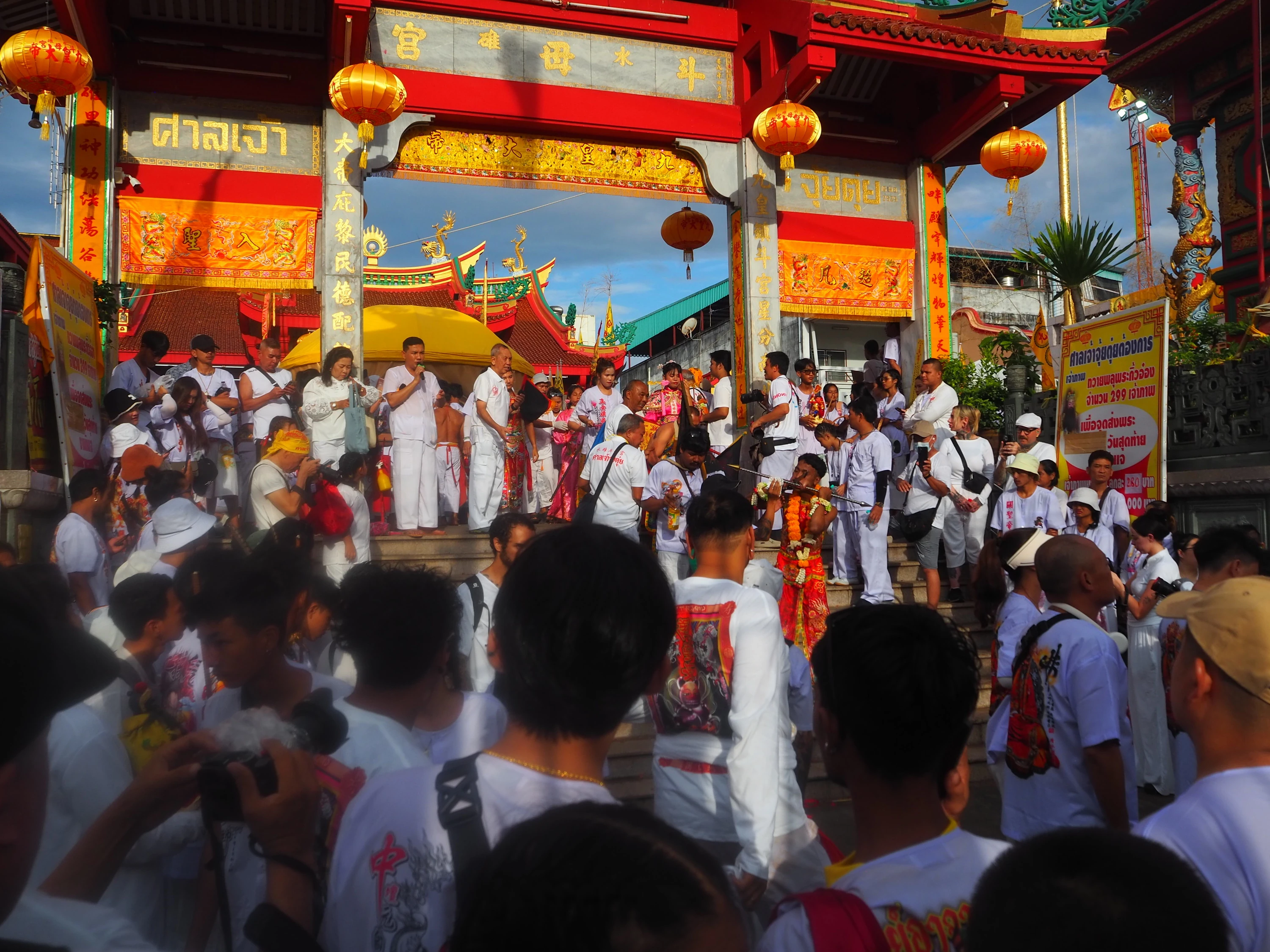
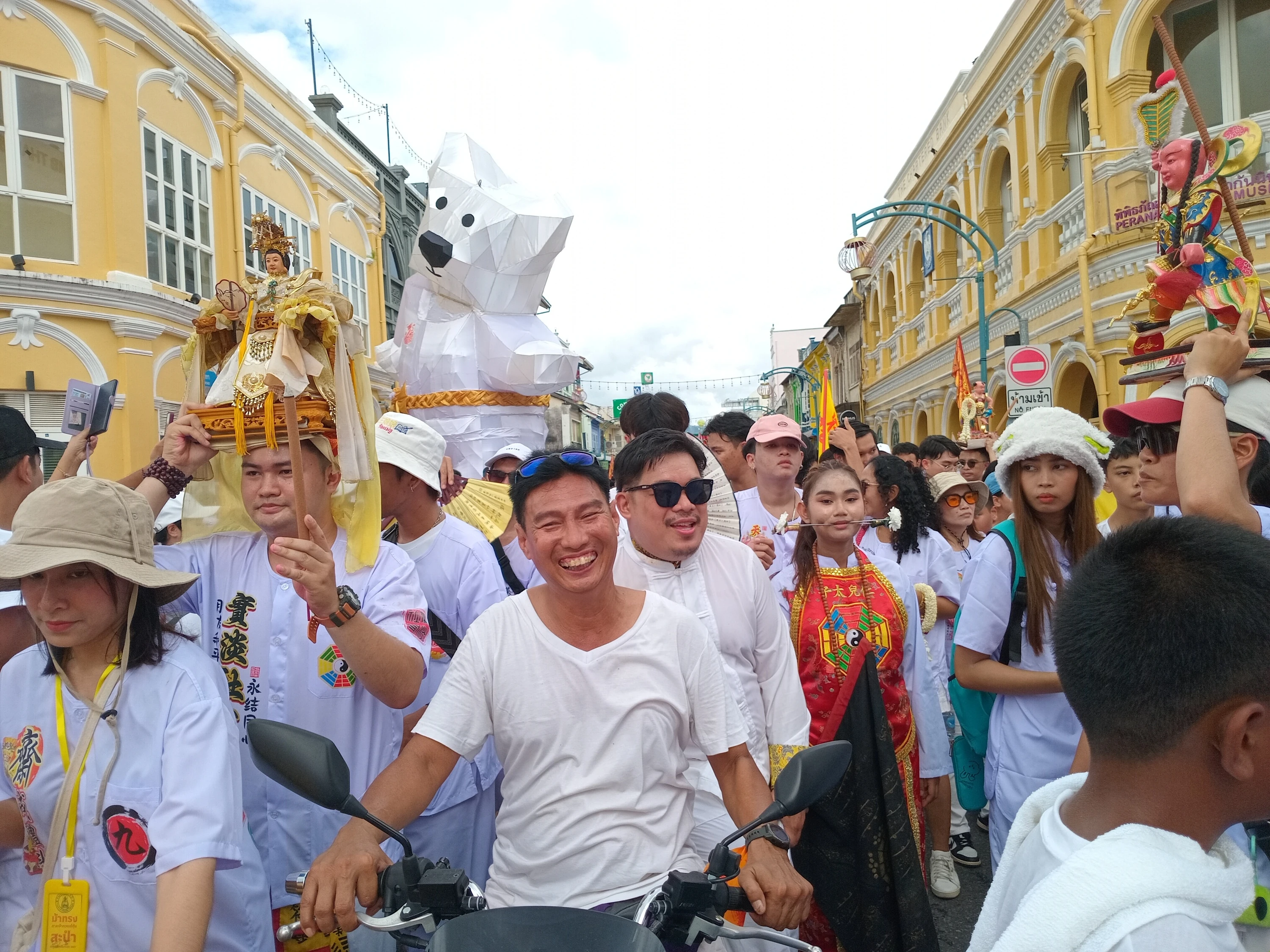
Vegan food is everywhere, at the shrines and along stall-lined streets. During processions, you may find yourself ducking limbo-style beneath long bars carried through roads chock-full of ma song pierced with knives and spears. At Jui Tui, the writer has watched spirit mediums spill out as if moved along a factory conveyor belt. Firecrackers welcome the gods with thunderclaps, smoke billows like a forest fire and the Great Compassion Mantra plays over speakers. Drumbeats are intended to drive away evil spirits. The odd ma song licks an axe as if it were ice cream.
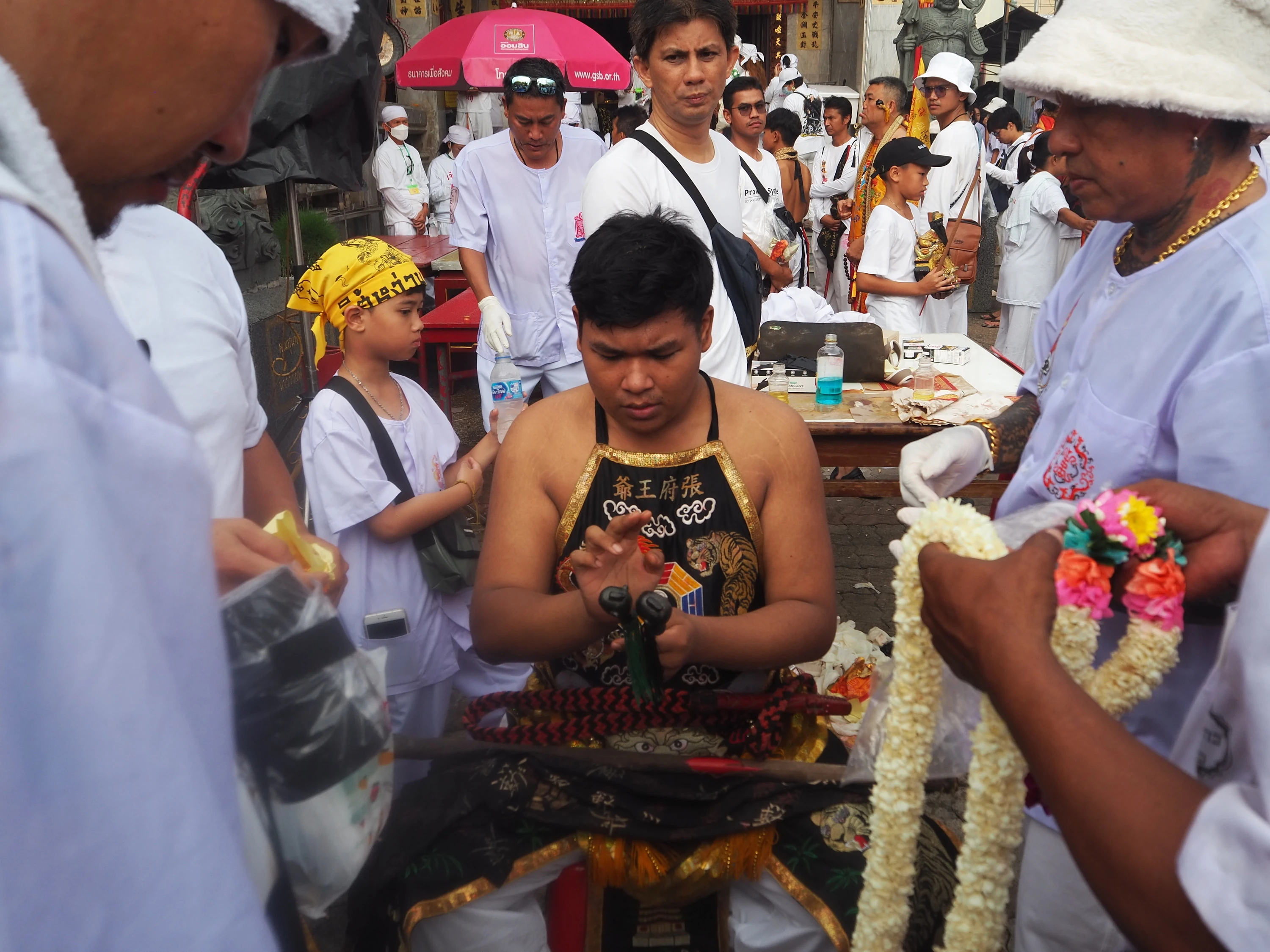
Can you stomach watching the cheek-piercing itself? In the writer’s account, incense smoke drifts from fire pots as bells ring and mediums look skywards. Some raise flags, their eyes rolled back, before sitting down while a gloved attendant opens their cheeks to accommodate larger objects. Swords, guitars, parasols – apparently nothing is too bulky, though blood still trickles.
These are descriptions of rituals the writer has witnessed, rather than a checklist guaranteed at every shrine. Give way to mediums and processions, keep a respectful distance and ask before photographing ceremonies. Follow shrine staff’s directions, including any photography restrictions.
Deeply rooted in Phuket culture, the festival takes place during the first nine days of the ninth Chinese lunar month. Thailand’s Ministry of Culture listed it as national intangible cultural heritage in 2018.
What not to miss?
Head to Kathu Shrine on October 18 at 7.30pm for the sacred bridge-crossing ritual. Devotees receive the Nine Emperor Gods’ seal on their backs, signifying purification from sins and misfortune. Later that night, Phuket Town fills for the farewell ritual, with processions heading towards Saphan Hin and its Kio Thian Keng Shrine. The send-off culminates at midnight. Thalang Road, Phuket Road and the route towards Saphan Hin are among TAT’s suggested viewing areas.
Asked to pick the best ritual, ma song Chayanin ‘Tao’ Ngansampantharit struggles to choose, but settles on ‘the most unique ritual is blade ladder-climbing’. The writer describes a 10m ladder with 72 razor-sharp blades and notes that only a few shrines, including Bang Liao, have hosted it. Those dimensions and a Bang Liao performance are not confirmed for 2026. This year’s TAT timetable does list knife ladder-climbing at Hean Lhee Thong Shrine on October 17 at 9pm; check locally before making a special trip.
Tiw points to related celebrations in Taiwan, Singapore and Penang, then laughs: ‘But Phuket is the worst.’ Having seen the knives and heard the firecrackers, you can guess what he means.
Discover Time Out original video