[category]
[title]
Talk about the "Green Centre"


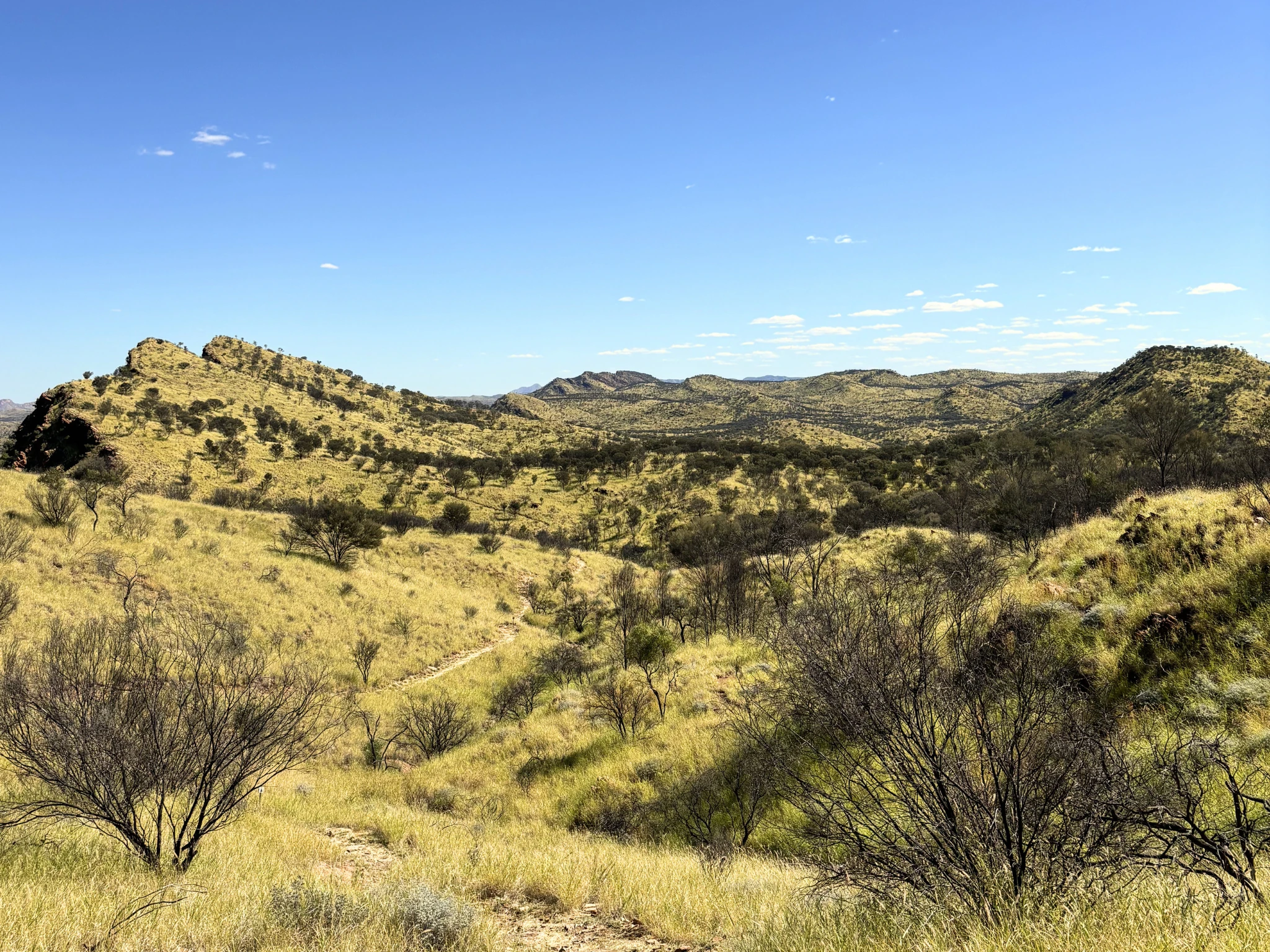
You have even more reason to be green with envy of anyone travelling through Australia’s “Red Centre” right now. This iconic region near the geographic heart of our country is almost completely unrecognisable, having transformed from an arid, rusty-hued desert into a verdant, green oasis. I witnessed this rare phenomenon while hiking the Larapinta Trail in April, but the transformation is so massive it’s even visible from space.
In March, the NASA Earth Observatory released striking comparative satellite images showing the extreme contrast between the red surfaces of January and the rare green colouration left behind by weeks of heavy rain. This transformation is the result of an unusually wet summer, capped off with February being the third-wettest in Alice Springs in 120 years. In that single month, the regional town recorded 239 millimetres of rain – nearly matching its entire annual average rainfall of 283.8 millimetres in just 28 days.
View this post on Instagram
The intense rain provoked a rapid response from the desert vegetation – a process known as “green-up” or rapid greening. It triggers dormant seeds, prompting them to quickly germinate and transform barren areas into green landscapes in a matter of days.
However, much of this sudden growth consists of short-lived herbaceous plants and grasses, including the highly invasive buffel grass. While it makes the landscape look lush, this dense carpet of greenery poses a severe bushfire risk for the upcoming summer. The heavy downpours also led to flash flooding on the Todd River and other nearby waterways, prompting officials to declare a natural disaster.
If you’re keen to witness the “Green Centre”, now is the best time to visit. May marks the start of Central Australia’s dry season, which runs through to September. You’ll miss the sweltering heat of the outback summer, while still catching the tail-end of this remarkable green bloom.
Discover Time Out original video