[category]
[title]
This four-day palawa-led journey in Tasmania will teach you how to read the ground beneath your boots

“See this?” Carleeta says, clutching a handful of coastal wattle. “Watch.”
She rubs it between her palms, adds a splash of water, and it starts to foam. Actual foam. Like, the kind you’d pay $50 for at Aēsop. It’s frothy and soft, clinging to her hands while the five of us just stare, slightly baffled that we now know how to wash our hands on a beach without sanitiser.
“There’s a lot we learn from Country,” she says.
I’m on day two of the four-day wukalina Walk along Tasmania’s north-east coast, guided by Carleeta Rose Helen Thomas, a proud pakana woman of North East lutruwita/Tasmania. In less than 48 hours, she’s already shown us how to pack a wound with ‘old man’s beard,’ a fluffy, stringy climbing plant, and brewed tea from one of her favourite native shrubs, kunzea. It’s anti-inflammatory, anti-bacterial and a natural insect repellent.
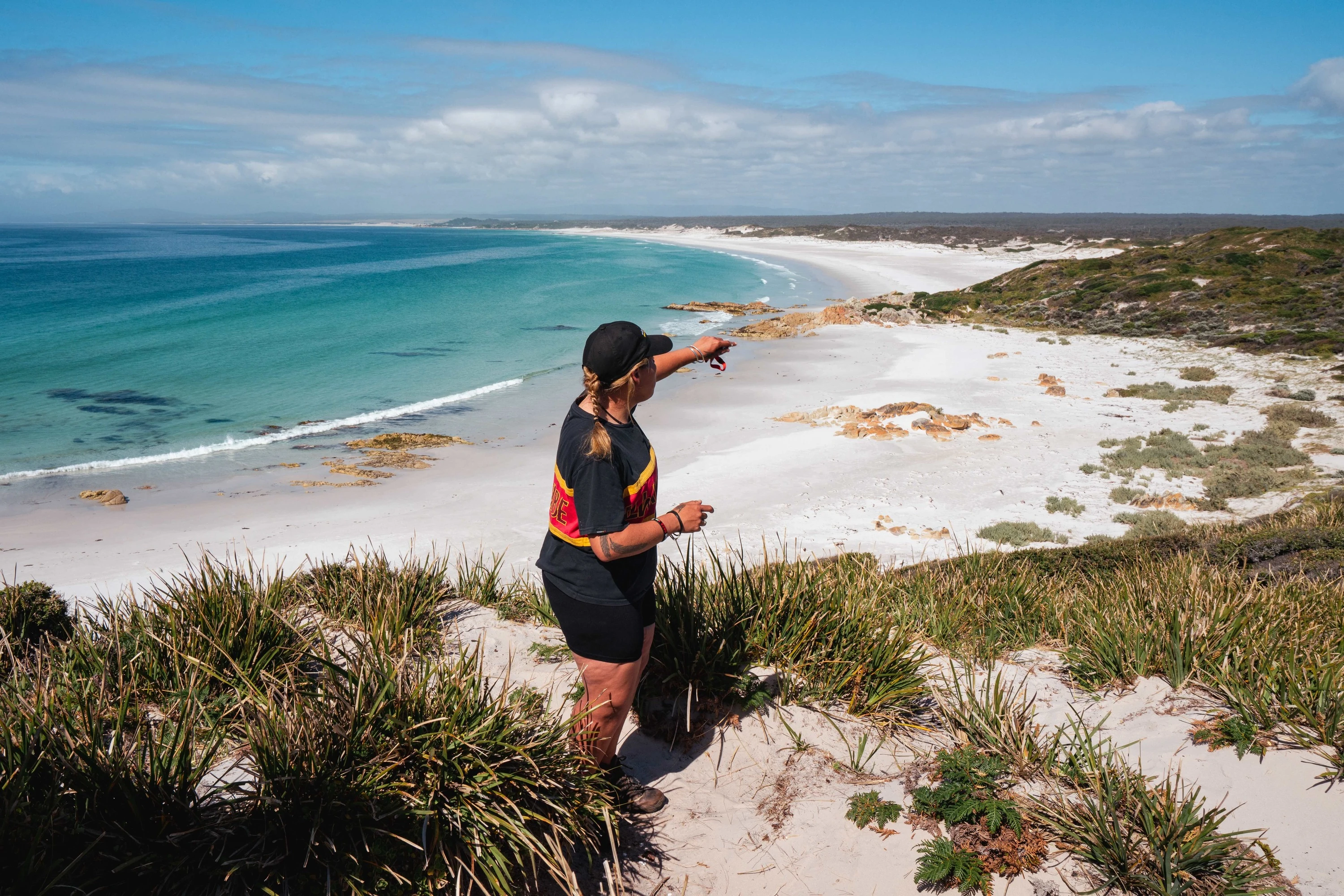
The walk begins with a three-hour drive from Launceston to Mt William National Park and a climb up wukalina Summit. It’s not Everest, thankfully, but enough uphill to make me regret eating the chocolate brownie in my packed lunch. Wukalina means ‘woman’s breast’. “It’s considered a place of nurturing,” Carleeta tells us when we reach the top.
At the summit, we sip kunzea tea while the wind tries to steal our hats. She mentions that this spot was a smoke signalling site. “Our old fellas would light fires to communicate or warn the women when sealers were coming.”
The women she’s talking about could hold their breath for up to four minutes to hunt seals. Strong. Skilled. Essential. Many were abducted and taken to Cape Barren Island, located off Tasmania’s north-east coast. It also explains the name Bay of Fires. Most people assume it comes from the orange lichen that clings to the granite boulders, but it was British naval captain Tobias Furneaux who recorded seeing Aboriginal fires blazing along the shoreline as he sailed past. “There would have been hundreds of fires at once,” Carleeta says. You can imagine the sight.”
There’s a lot to take in on this walk. Some of it is practical, such as which plants clean, which heal and which feed. Some of it is heavy. When Carleeta talks about kidnappings, murders and the Black War of 1803, it’s almost as if the bright white sand around us dims. Our group sits in silence, comprehending the horrors that have occurred in this beautiful place we’re exploring.
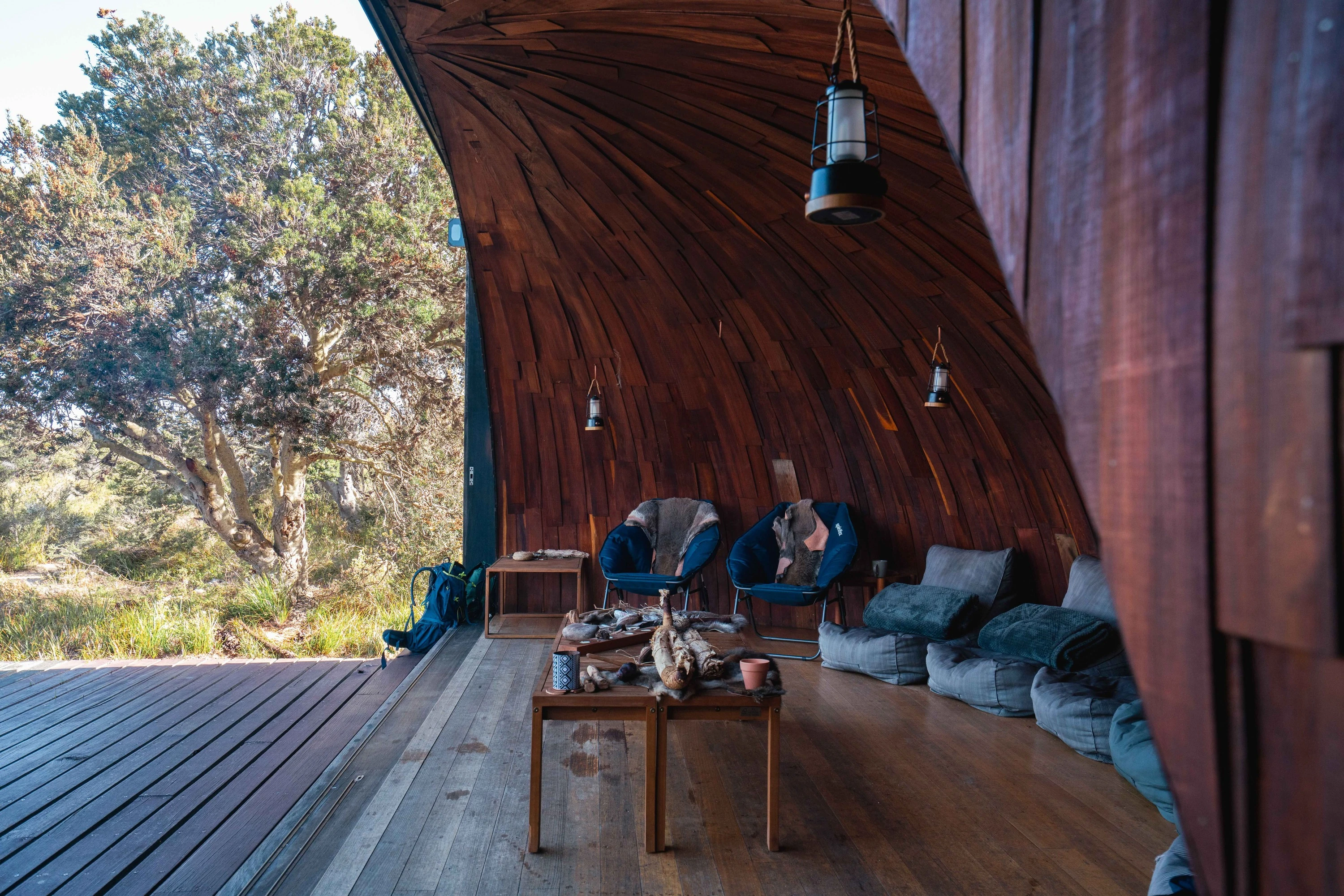
We stay three nights across two camps. The first camp is krakani lumi, meaning ‘resting place’, which sits just metres from the beach. It’s remote in the truest sense. You can’t access this stretch of coastline without permission from the palawa community, and that permission comes with the walk.
The camp itself is not your average swag situation. A central dome pavilion with plush camp chairs and a fire pit anchors the space. Our huts are designed to resemble the half-dome homes of the pala, with possum-fur blankets laid across the beds. The zip-up netting and proper mattresses are modern additions, and very much appreciated.
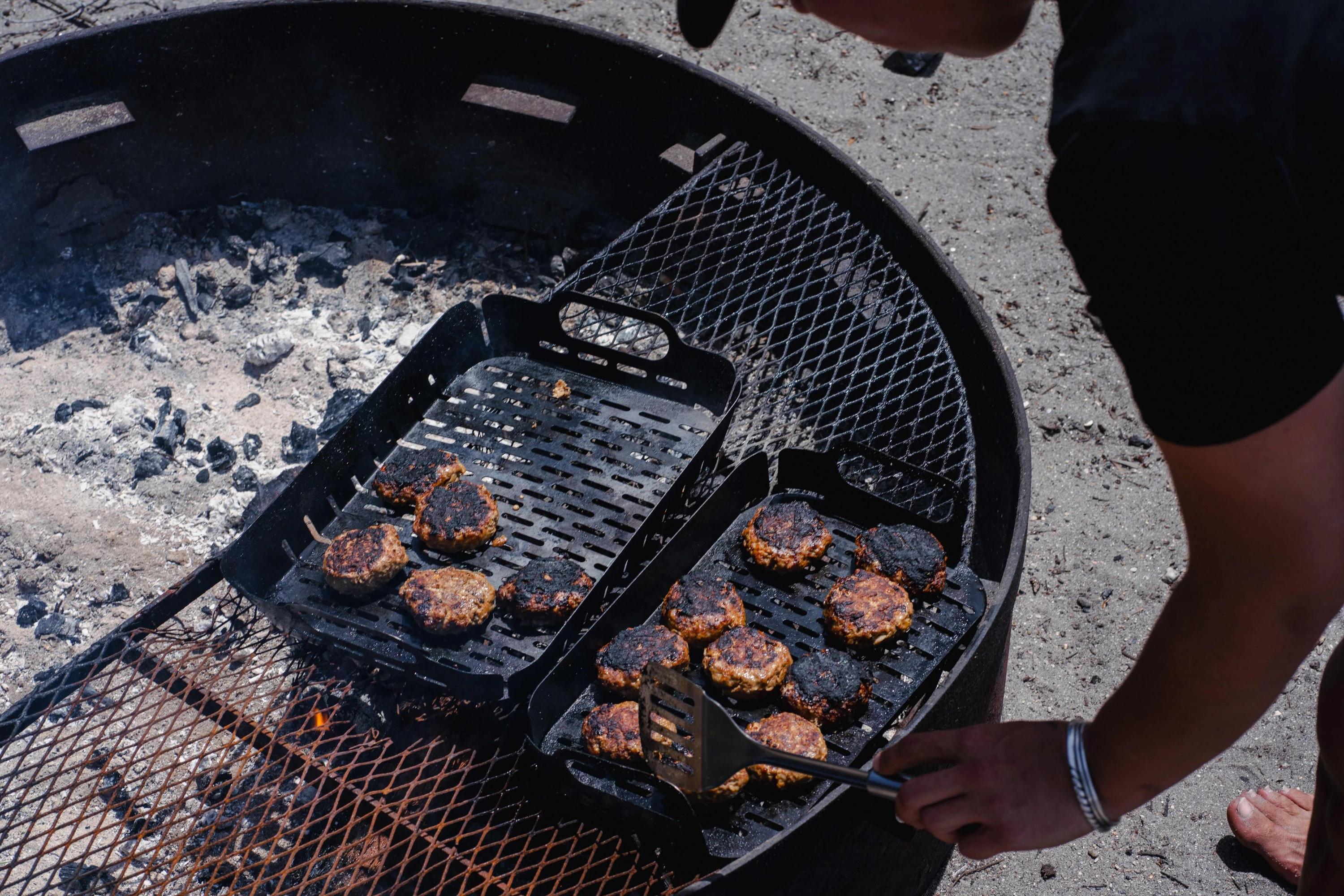
This is where Carleeta reveals her culinary skills. Wallaby burgers for lunch. Pickled samphire (a coastal succulent) with cheese. Mutton bird cooked over the fire. It’s her favourite, and a staple for many families living on Cape Barren Island.
It tastes exactly like a fish oil tablet, which makes sense when you learn the birds mostly eat krill. Did I finish it? No. But I’m glad I tried it.
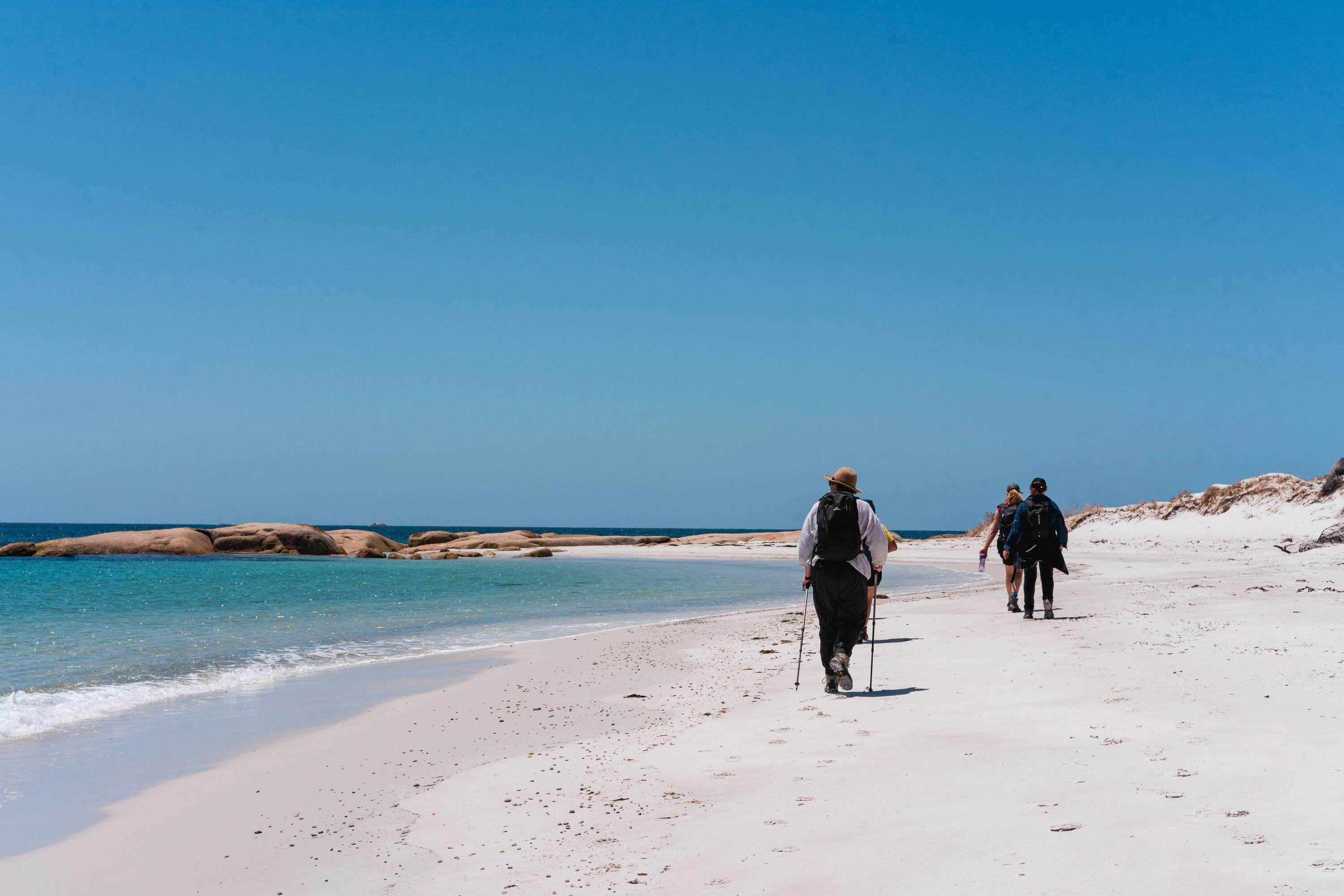
Her possum and wallaby stew with damper, on the other hand, is delicious. I tell her she needs to write a cookbook. She laughs. I’m not joking. The food alone makes this hike worth doing. Between meals, we make shell anklets, pick lemonade berries and watermelon berries along the track, and hear historic accounts of what life along this coastline was like. After two nights based at krakani lumi, we shouldered our packs for a 16-kilometre walk across endless white sand beaches, ending at Larapuna (Bay of Fires), where Captain Furneaux once recorded more than 200 fires burning along the shoreline.
We spend our final night in a lighthouse cottage beneath Eddystone Point Lighthouse, which makes me think of the TV show Round the Twist. I’m told this is a very common reaction.
It’s not as remote as krakani lumi, but it has arguably better views and wallabies roaming the grounds all day.
Here, Carleeta feeds us wallaby lasagne and shows us how to pick bower spinach, which ends up folded into omelettes for breakfast.
I’ve walked plenty of beaches before, but after this experience, I find myself looking down more than out. Noticing tracks, plants, and shell middens.
And I won’t forget that if I’m ever without soap at the beach, I can just reach for coastal wattle.
Discover Time Out original video