[category]
[title]
Just off Tasmania’s east coast, Maria Island is Australia’s true wildlife wonderland


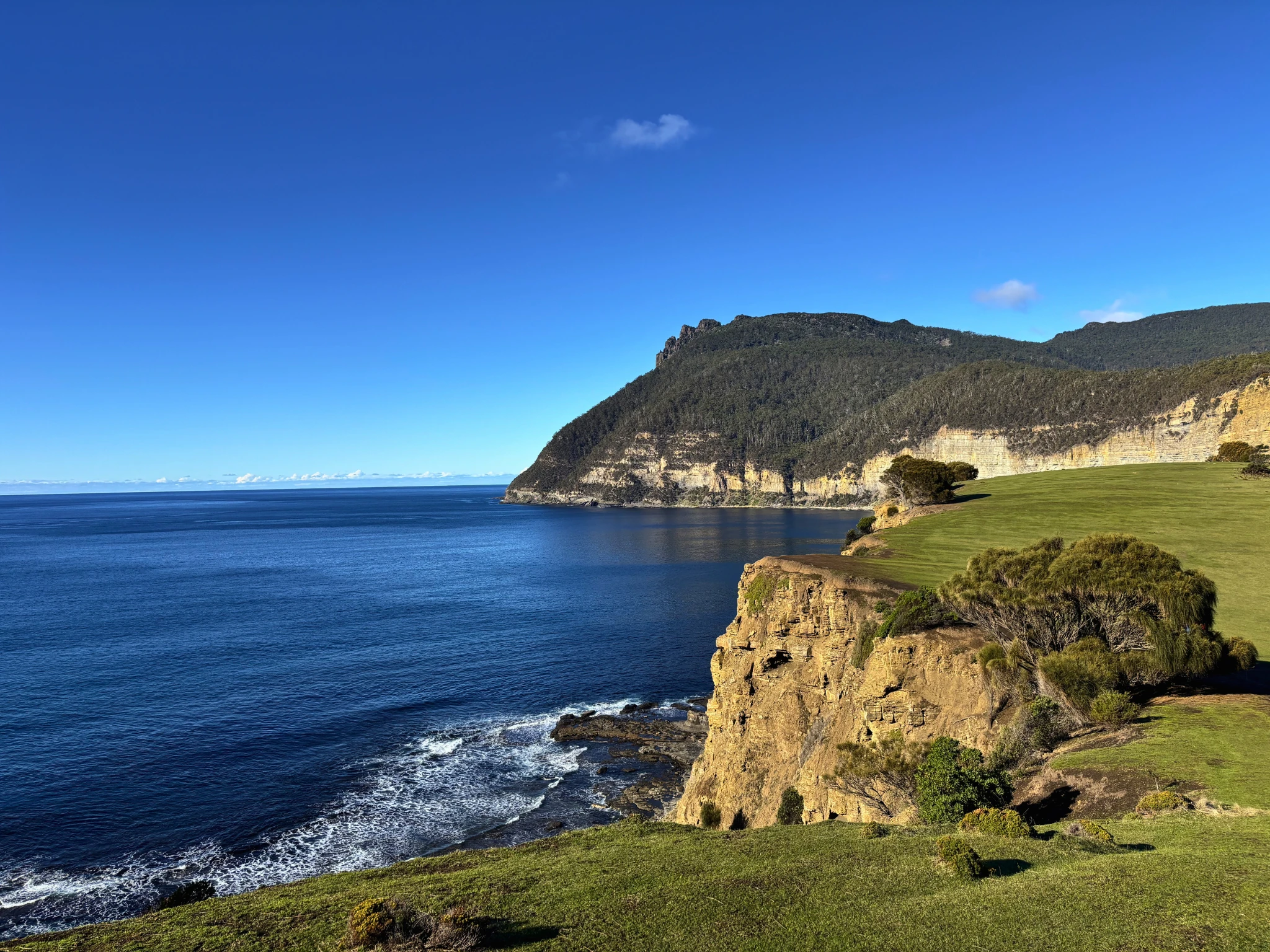
I’m standing on the edge of a car-free paradise, famously described as an “island off an island.” But instead of gazing out onto the shimmering blue seas stretched before me, my eyes are locked firmly on the floor. Just a few metres away, a wonderfully round, fluffy wombat is casually munching on the grass – one of hundreds of wild residents to call this magical national park home.
Floating just a 30-minute ferry ride off Tasmania’s rugged east coast, Maria Island (pronounced “ma-rye-ah”) is widely regarded as the "wombat capital of the world.” Here, hundreds of the planet's largest burrowing herbivores roam free across the grasslands, completely unfazed by visitors passing by.
I lost count of how many of these adorable native Australian marsupials I spotted during my day trip to Maria Island. And while it’s tempting to spend hours watching them waddle and graze around the grassy plains, there’s plenty more wildlife to see, hikes to tackle and convict sites to discover. Here’s everything you need to know about visiting Maria Island, including the best things to do.
Maria Island is a completely car-free paradise, meaning the only way to get there is by boat. Ferries depart from Triabunna, which is a scenic 75-minute drive from Hobart along the Tasman Highway. No car? A daily shuttle bus service runs from Hobart’s Brooke Street Pier directly to the Triabunna Marina.
The Encounter Maria Island passenger ferry operates year-round, running four return trips daily in summer and three times in winter. Bookings are essential via the Encounter Maria website here, with return fares from $56.50. Maria Island is a National Park, so you’ll also need a valid parks pass to visit.
Small in size yet packed with adventure, Maria Island is a paradise best explored on foot or by bike. While the biggest drawcard is the free-roaming wombats, wildlife lovers might also encounter Forester kangaroos, Cape Barren geese and endangered Tasmanian devils. If you look out to sea between May and July, or October and November, you might even catch sight of migrating whales.
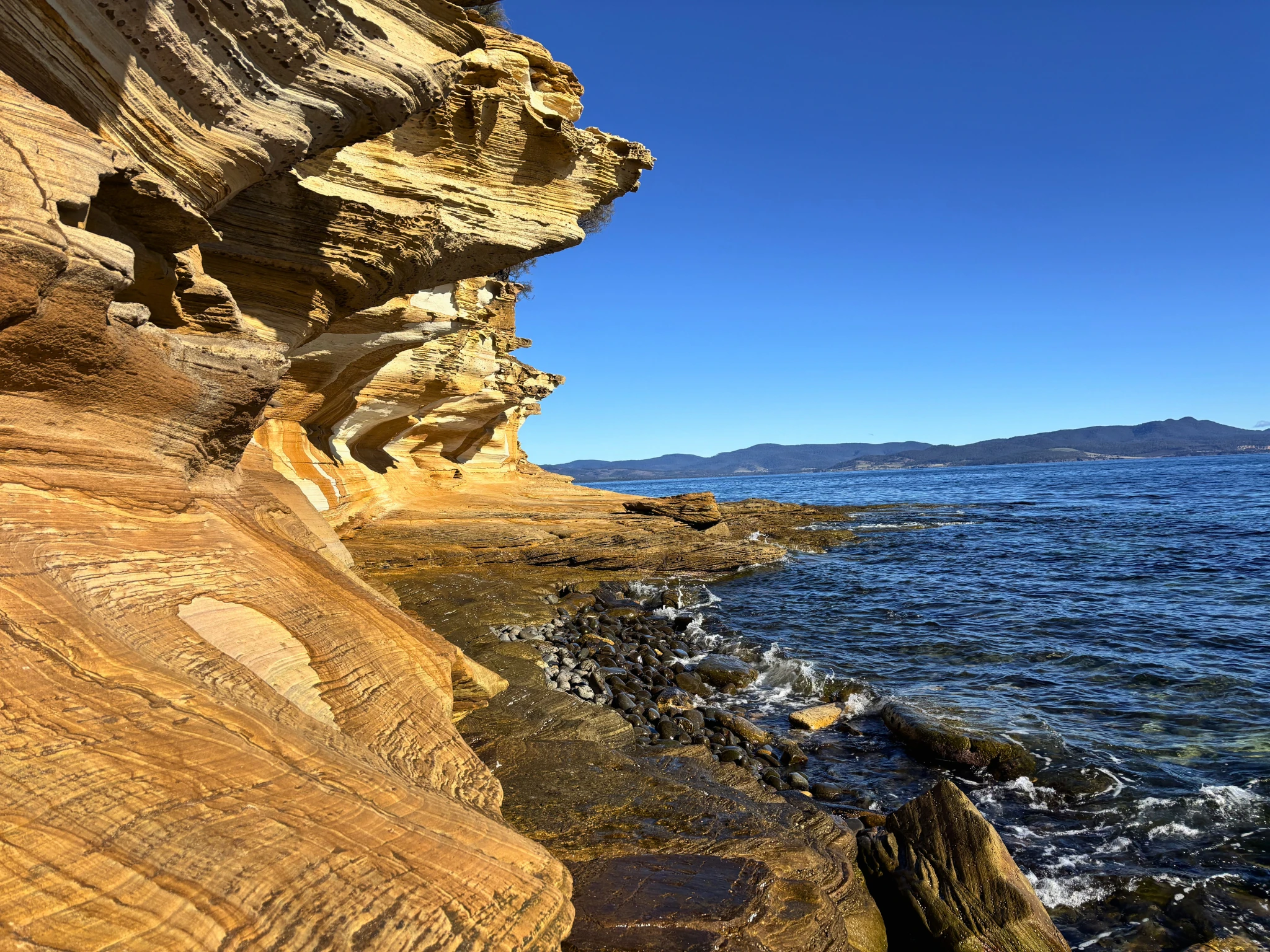
Animals aside, Maria Island is a walking wonderland, offering both short day walks and overland hikes. My favourite walk is the 4.3-kilometre Painted Cliffs circuit, which takes you from the ferry port, past Hopground Beach, to a spectacular, swirling sandstone cliff carved out by the ocean over millions of years. The relaxed 4.5-kilometre Fossil Cliffs circuit and the challenging 11-kilometre Bishop and Clerk walk are the island’s other two inclusions in Tasmania’s 60 Great Short Walks. If you’re short on time, you can also cycle many of the island’s walking tracks by hiring a mountain bike from the historic Darlington Probation Station – a UNESCO World Heritage-listed site dating back to 1824, which stands as the most intact convict probation station in Australia.
After a day of exploration, finish off with a refreshing plunge into the clear waters of the Maria Island Marine Reserve. Darlington Beach or Hopground Beach are hotspots for snorkelling and swimming.
Yes, you are welcome to stay overnight on Maria Island. Since it’s a protected national park, there aren’t any luxury hotels, resorts or shops. You can book a room inside the World Heritage-listed Maria Island Penitentiary, which offers ten basic bunkhouse-style rooms. There’s no electricity or running water inside the rooms, so you’ll need to bring your own sleeping bag, pillows, food, and torches.
Alternatively, you can pitch a tent under the stars at the main campground behind the dunes of Darlington with easy access to the beach. It’s super affordable at just $7 per person per night.
If you want to experience the island’s wild interior but aren't keen on roughing it, you can book the Maria Island Walk – one of the 15 Great Walks of Australia. On this guided, four-day luxury walking tour, you’ll trek across the beaches and stay in exclusive eco-campsites, capped off with gourmet Tasmanian food and fine wine.
I spotted my first wombats on Maria Island just minutes after stepping off the ferry. These adorable marsupials are highly active around the Darlington Probation Station and main campsite. The dirt tracks heading out along the Painted Cliffs circuit and the Fossil Cliffs walk also cut directly through prime wombat territory. Pro tip: the open, grassy fields right by the visitor centre are another hotspot for watching them graze one last time before you board the ferry back to the mainland.
🚨 Wombats are wild creatures. To help them stay that way, keep your distance (at least 2.5 metres), and never feed or touch wild animals.
Discover Time Out original video