[category]
[title]
Crossing three states and millions of hectares, Munga-Thirri-Simpson Desert National Park is worth exploring in this lifetime


If you didn't know already, Australia is home to the most national parks out of any country in the world. Our incredible, protected national parks come in more than 600 shapes, sizes and landscape varieties, and can be found in every single state and territory across the Great Southern Land. But there's one park that's bigger than any other.
Meet: The Munga-Thirri-Simpson Desert National Park, an immense stretch of wild and rolling desert, striking rock formations and natural springs that span across three Australian states. Home to the world's longest parallel dunes and packed with crimson sand, incredibly colourful wildflowers, massive starry skies and an abundance of native wildlife, this very special (and very big) place has been the traditional lands of the Wangkangurru Yarluyandi people for thousands of years. Cared for by First Nations custodians across three states, including the Arrernte and Karanguru people in the western, northern and eastern sides of the desert, it's rich with ancient history, culture and natural splendour that has to be seen to be believed.
The Simpson Desert covers hundreds of kilometres and stretches across three states, including Queensland, South Australia and the Northern Territory.
The Simpson Desert is the fourth-largest Australian desert, with the entire sandy expanse clocking in at 176,500 square kilometres. The Munga-Thirri-Simpson Desert National Park is located within the desert, but it isn't the whole thing. The national park itself is approximately 3.6 million hectares wide.
The geology of the Simpson Desert dates back a wild 270 million years, when the desert was an icy field of glaciers. 70,000 years ago, the first sandy dunes began to truly form, with the desert as we know it today taking shape 10,000 years ago.
Known originally by the local Wangkangurru Yarluyandi people as ‘Munga-Thirri’ (which is now noted in the National Park’s new name), the name ‘Simpson’ actually came as a token of thanks from early desert explorer Cecil Madigan to Alfred Allen Simpson. Simpson was a) the president of the Royal Geographical Society of Australasia, and b) the bloke who paid for Cecil to traverse the desert, way back in 1939. Folks have always loved a sponsor.
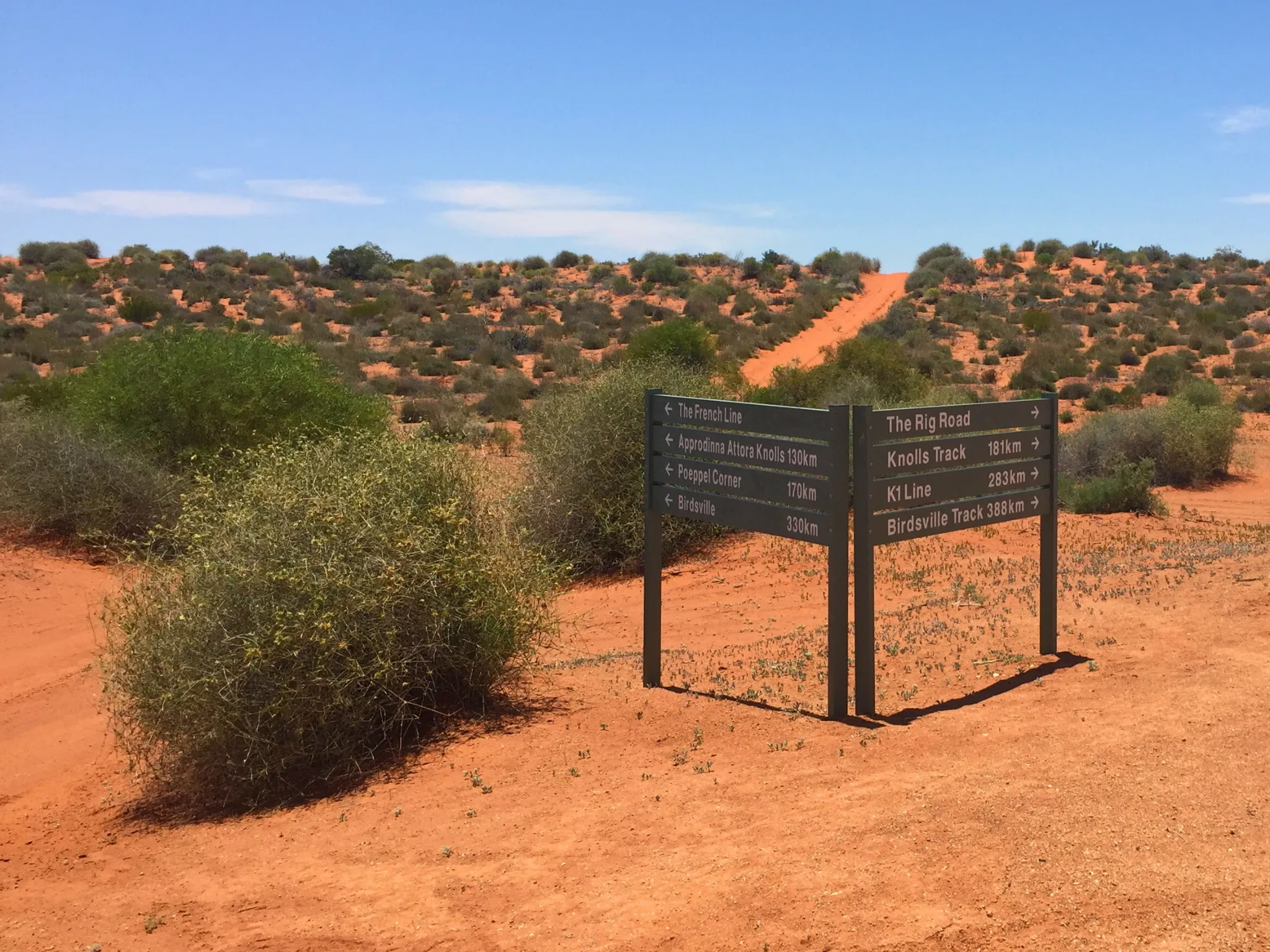
You'll need ample time to cross the Simpson Desert, and there are several ways to do it. The usual crossing takes four days, but multiple sources say that you should allow at least six to seven days to allow for buffers, mishaps and to enjoy spending more time there than just driving. The classic route starts at Mount Dare and ends in Birdsville, with the 500-kilometre stretch between these locations void of any fuel stops.
Ample preparation time is advised for anyone wanting to make a Simpson crossing. Ensure you bring extra fuel, extra water, 4WD drive experience (you’ll need a 4WD car to do it at all), recovery gear in case of an emergency and a two-way radio. Also make sure you bring fly nets, camping gear, plentiful food, firewood, a compressor and a tyre pressure gauge.
The National Park is totally closed from November to March because of treacherously high temperatures. As such, you'll need to plan your Simpson trip between April and October. This time of year brings cooler daily temps and colder desert nights.
You’ll find a diverse array of native wildlife in the Simpson Desert. Expect to see huge red kangaroos, dingos, echidnas, vibrant desert birds, sand goannas, dunnarts, Australia’s biggest lizard – the perentie, desert pythons and other (alas, venomous) snakes. You might also see introduced species, including camels, foxes, feral cats, rabbits and pigs.
Speed off on an exhilarating 4WD drive on the iconic Binns Track, connecting South Australia with the Northern Territory. Rolling dunes and sparse, wide-open spaces will make you feel like the only people in the world. You can also visit amazing Aboriginal art centres, check out ancient rock carvings and paintings, and marvel at multiple towering rock formations that were made millions of years ago.
Discover Time Out original video