[category]
[title]
The MRTA has unveiled plans for a 21-station electric tram line running across Mae Hia


Chiang Mai might finally be getting a tram. Or, that’s what they’re saying this time. But, like the boy who cried wolf, we'll believe it when we see it. But for the first time in a while, the plans seem to actually be moving forward.
The Mass Rapid Transit Authority of Thailand (MRTA) has presented findings from its study into a new electric tram system for the city – named the Red Line – and if everything goes to plan, Chiang Mai's urban transport is about to look very different… by 2032.
For a city where getting around has long been a choice of songtaew, tuk tuk or Grab, and with the current gas crisis making that last option increasingly expensive, a decent public transport system is sorely needed.
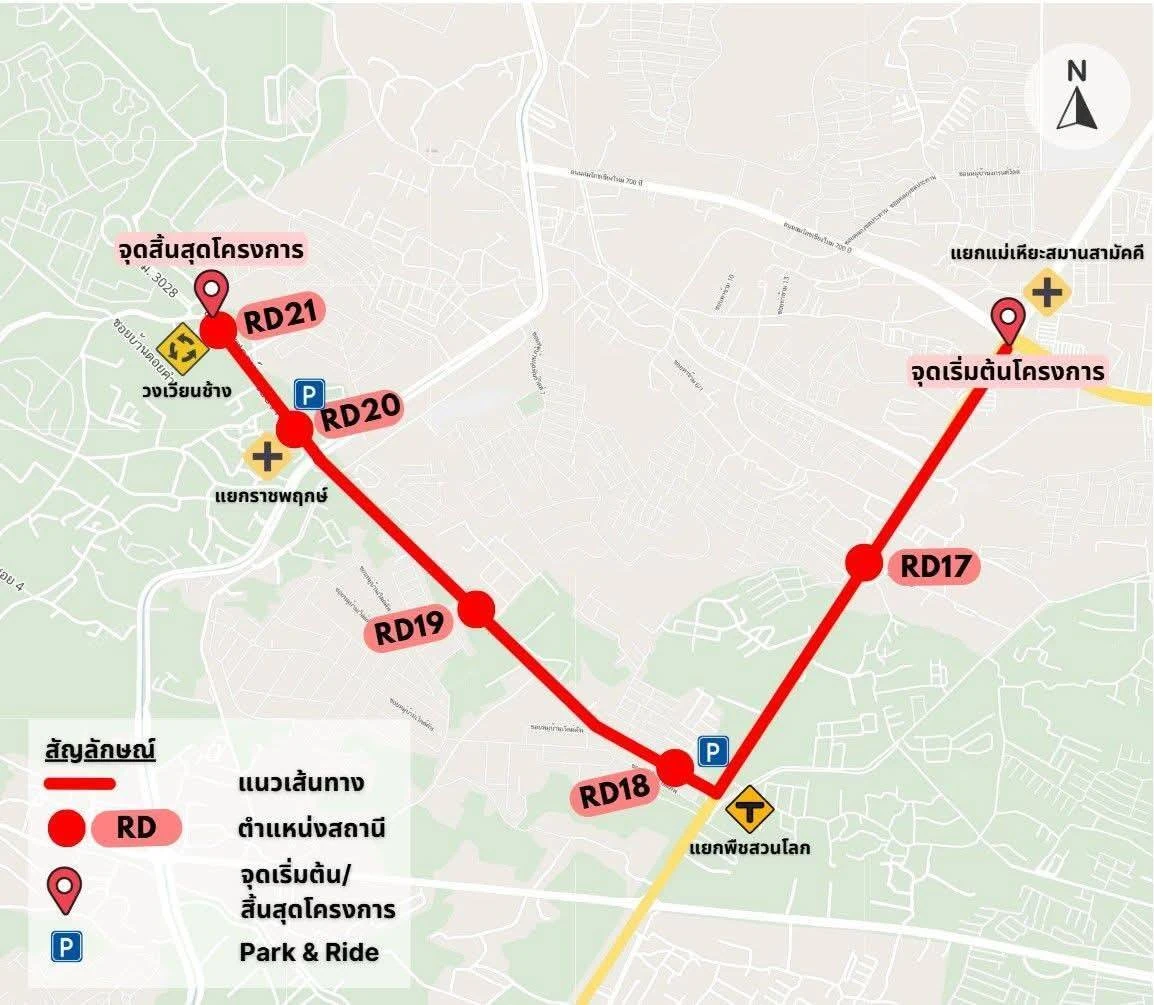
As a first step, the MRTA will first focus on the red line (above) which runs from Mae Hia to Royal Park Rejapreuk. However, the full proposed route runs 20.8 kilometres across 21 stations, starting at Nakorn Ping Hospital. The line runs above ground for most of the journey but there are plans for underground sections through the city centre – including a stretch that passes directly under Chiang Mai International Airport – once they extend.
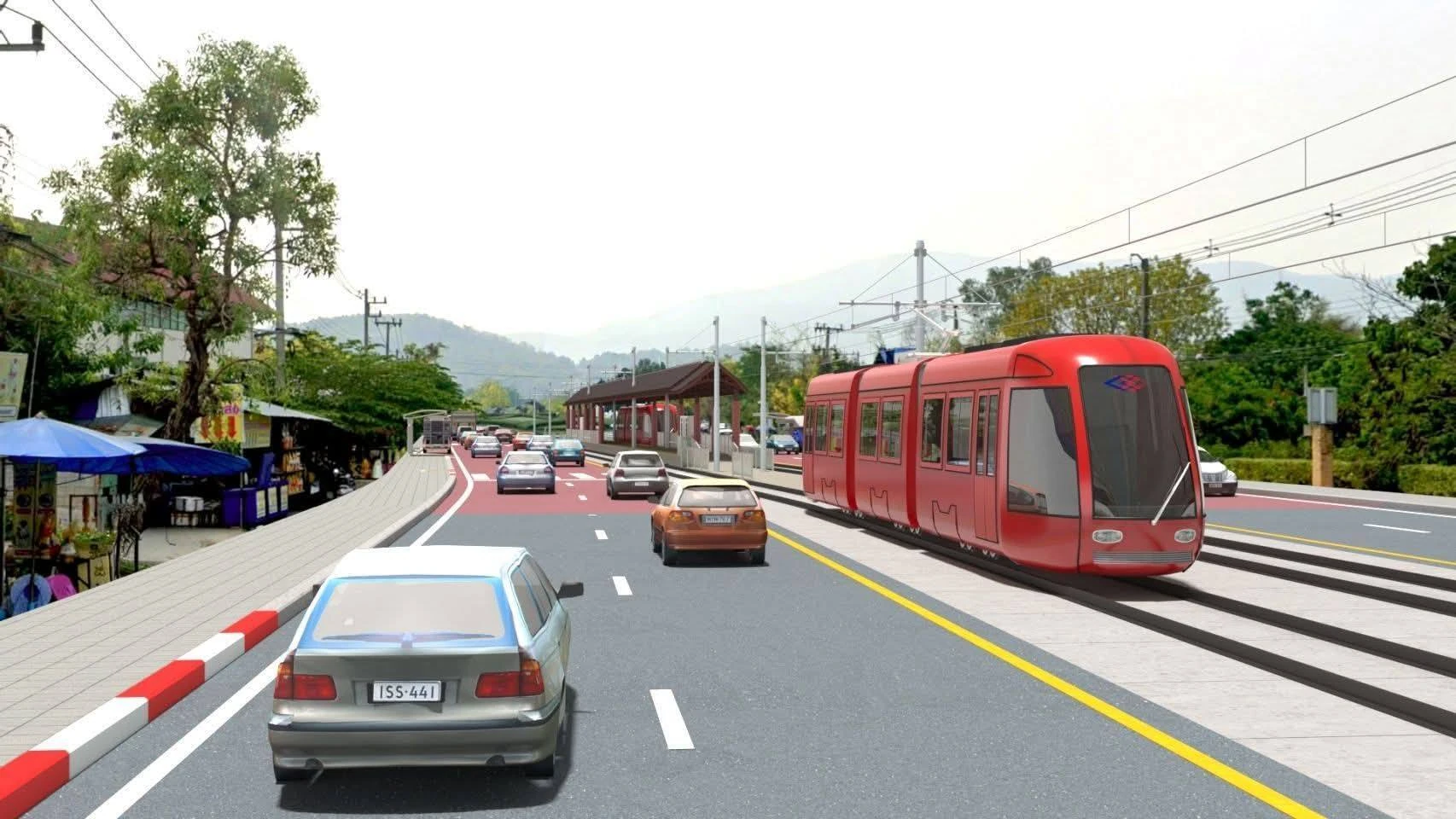
The system uses a light rail tramway – electric trams on rails laid along existing roads – which means less disruption to the city layout than a full metro and a much lower environmental footprint than everyone driving. That last part matters more here than almost anywhere else in Thailand. Chiang Mai residents already receive air quality warnings on their phones during this burning season, with air quality levels that regularly rank the city among the most polluted in the world.
The timeline is undeniably long. An environmental impact assessment is currently underway with Cabinet approval targeted for 2027. Once approved, construction begins October 2028 under a public-private partnership model and the line opens – fingers crossed – in December 2032.
A public transport system that gets cars off the road couldn't come fast enough, even if the wait is six years. But, if previous projects are to be believed, we’ll not hold our breath just yet.
Discover Time Out original video