
[image]
[title]It’s time to trash the stereotype of a city hooked only on loud pop and commercial club nights. Delhi’s music scene is far more restless than that: a buzzing network of live concerts, rooftop folk sets, living-room qawwalis, screaming rock, improvisational jazz and experimental electronic nights.
My flatmate, a Pune transplant working at Microsoft, stumbled into a Sufi concert while she was at Delhi’s Triveni Kala Sangam to look at art. Soon, we realised that if you know where to turn, Delhi’s music operates on several different frequencies: it’s a restlessly buzzing network of fluid live concerts, rooftop folk sets, living-room qawwalis, screaming rock, improvisational jazz, and more.
Mumbai may hold the commercial infrastructure and Bengaluru may dominate the electronic circuit, but Delhi runs on something far more volatile: curiosity. A wave of unlikely venues, fluid genres, and non-traditional formats are making it easier than ever to experiment. Here’s your way in.
Delhi’s changing sounds
It’s this exact curiosity that took me to the streets of Chandni Chowk one December evening. On the rooftop of Omaxe Chowk, we sat spellbound by Manganiyar artists playing Rajasthani tunes directed by Roysten Abel, the glimmer of over a hundred stage lights cutting through Delhi’s dense winter smog.
Their music was originally recorded by Amarrass Records, which has been hosting its Amarrass Nights series for nearly two decades. The late Padma Shri Sakar Khan, Barmer Boys, Rehmat-e-Nusrat, and even a jazz band from Kathmandu have filled their rosters. Spotlighting folk genres opens new conversations. ‘A crossover becomes a doorway into deeper traditions,’ says founder Ashutosh Sharma. ‘Someone may arrive for a collaboration between a Manganiyar vocalist and an electronic producer and leave wanting to know everything about the sarangi.’
Nishant Mittal, owner of record store Digging In India, tracks the city's collector and DJ ecosystem. He has watched amapiano, IDM, and vinyl-only sets move from niche subcultures to weekly staples over the last five years. (Artists currently on his radar: Sijya, Shauharty, Dolorblind, Lifafa, and Ruhail Qaiser). For metalheads and rock fans, Siyah Art House has emerged as the latest haunt for homegrown talent.
Delhi’s streets have also fed the country’s hip-hop culture. Spit Dope, currently India's most established desi hip-hop community, grew out of informal freestyle circles in Hauz Khas. It went on to produce Seedhe Maut and Prabh Deep, two of the most critically acclaimed acts in Indian rap.
The best music venues in Delhi
Underground collectives remain the backbone of the city’s experimental culture. Shohini Dutta choreographed Delhi's first original drag musical, Superqueens, with Udisha Uniyal alongside director Vivek Mansukhani. On their regular runs at The Piano Man Jazz Club, she notes: ‘We typically get weekdays to perform, but always sell out. There is an impact. But are there enough platforms; are enough people willing to take a risk? No.’
She does believe, however, that the alternative scene has grown strong enough to bypass traditional gatekeepers. ‘(As an artist) you might not get booked if you don’t have a social presence. But on the other hand, you do have more community now: bespoke places, jam rooms, underground spaces where newer sound is being explored.’
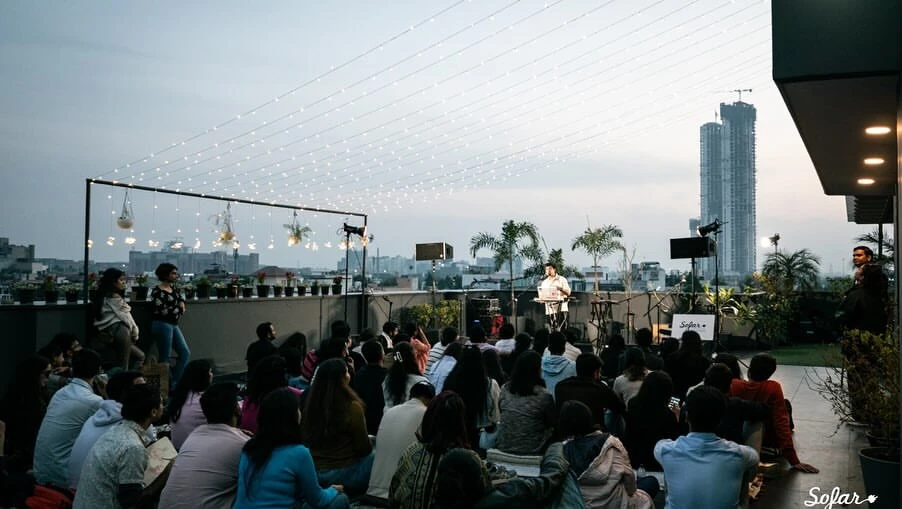
People’s houses have become one of the most effective disruptions in this shift. ‘A traditional venue separates you from the music with invisible glass: the stage lights, PA, ticketing structure,’ says Sharma. ‘In a living room or a courtyard, that glass dissolves.’ House Concerts India showcases rising talent, while Amarrass Records regularly brings intimate qawwali sessions into residential drawing rooms. Sofar Sounds operates on a similar principle of intimacy, dropping secret venue locations just 24 hours before a gig.
More traditional spots are adapting too. Heritage sites like Sunder Nursery now regularly host open-air concerts, while immersive spaces like OddBird Theatre and Warehouse Mix offer year-round experimental programming. Institutional landmarks such as the India Habitat Centre and India International Centre remain essential for classical Hindustani and fusion. Some experiences remain timeless fixtures, like the Thursday evening qawwalis at Hazrat Nizamuddin Dargah after Maghrib prayers.
Then there's The Warp Core, an invite-only club night for electronic music that you still only find out about through word of mouth – because what is Delhi without a little gatekeeping?
Experimental formats
It's not just where Delhi listens to music that's changing, but how. ‘The same listener at a vinyl night might turn up for an improvised jazz set the following week and a drag show the week after,’ says Girjashanker Vohra, co-founder of Depot 48. Depot 48's Pink Thursdays began as a simple networking evening before evolving into a genre-blurring showcase where drag artists, musicians, spoken word performers, and MCs share a single lineup.
Recent additions include W.I.P. Labs' Delhi Improvisers Orchestra, where practitioners from jazz, Hindustani classical, modular synthesis, live coding, and experimental electronics perform together without a fixed score. Co-founder Anirban Ghosh notes that while free improvisation exists elsewhere, this is the first step towards an ecosystem for collective free improvisation anywhere in the country. Delhi’s density of cross-disciplinary talent gives it a distinct edge. ‘Delhi has an unusually rich concentration of practitioners working across music, theatre, dance, visual art, and creative coding,’ he says.
That same spirit fuels Delhi's leftfield electronic scene. Qilla Records, co-founded by Madhav Shorey (Kohra) around 2010, has pushed this boundary further than most, moving beyond label releases into multi-sensory audiovisual curation through its Sacred Alchemy events.
Elsewhere, Genre and Pagal Record Store pull a quieter crowd: people who come to dig through vinyl stacks and stay for the community. Amarrass, meanwhile, has taken the live format out of the city entirely, hosting multi-day musical journeys to Jaisalmer and Uttarakhand. ‘That willingness to travel specifically for sound is the real shift,’ Sharma shares.
What's still missing, perhaps, is sustainable infrastructure: more independent venues, structural funding. But artists are no longer waiting for permission. The current movement is asserting something: that this is what Delhi's music scene looks like when it takes its own subcultures seriously.
Your job in all this? Show up. Skip the algorithmic recommendations. Go to a gig by an artist you’ve never heard of, hang around after the set, and ask what they're listening to. And if you’re looking at the right time, bookmark these three annual festivals: Jazz Weekender, Jahan-e-Khusrau and the Shriram Shankarlal Music Festival.
Your cheat sheet to navigating Delhi's music scene
For folk: Amarrass Nights
For jazz: The Piano Man Jazz Club
For hip-hop: Spit Dope
For experimental music: Delhi Improvisers Orchestra
For electronic music: Qilla Records / The Warp Core
For intimate gigs: Sofar Sounds / House Concerts India
For qawwali: Hazrat Nizamuddin Dargah