

[image]
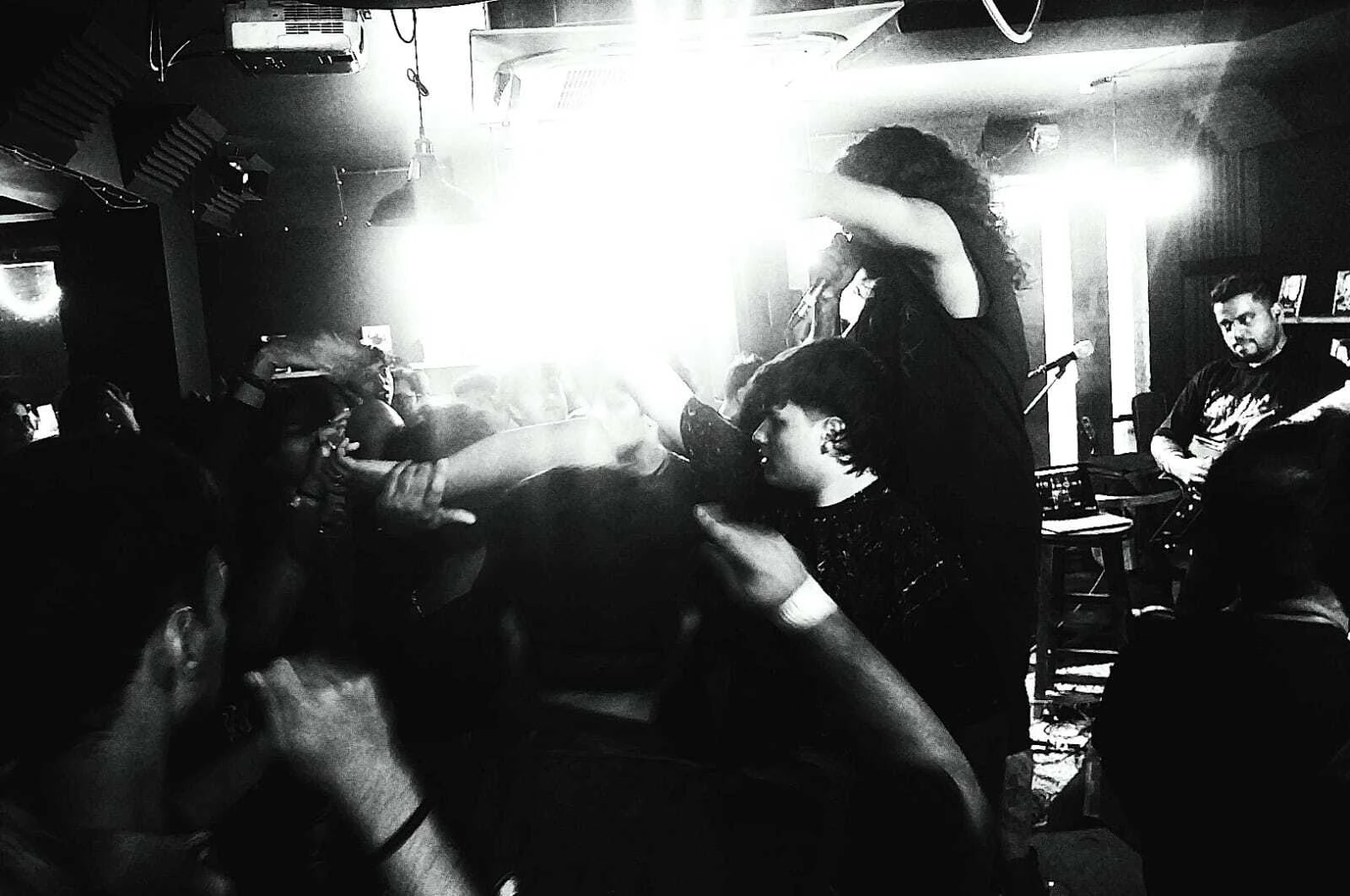
[title]Googly-eyed, with tongues occasionally flopped out. A swing of an engraved guitar into the air. At least four beer-stained chairs. Our throats are straining as something that sounds vaguely close to words hurls out. Oh well. It’s easy to let go. We’re all already slamming into each other, those of us in the ironic eye of the storm, the moshpit. But the second a glass breaks, or a kid wearing an Iron Maiden is trying to step on the stage, we break away, look out for them, and return.
What are we really doing at an ‘underground’ metal gig? Here’s a quick definition: distorted, screaming music, mostly heavy on every instrument used. Some call it evil. But those folks haven’t been part of a crowd of adults who’ve sat in a seconds-long formation to row a boat, made out of air, to the sound of Viking melodic metal on the floor. Nor have they been in happy tears, managing just enough breath for a Slipknot karaoke afterparty, at 2am.
It’d been a while since I hit a metal gig, and as a regular goer of many years across cities, I kid you not: I felt something like comfort. Metal can be… childish. It’s vulnerable. You get creative with the insults, and then you grin. This was Delhi Underground Fest 2, part of the roaming Sick Tour by Kolkata Metalheads at Siyah Arthouse in Saket. It turned out this would be one of Siyah's last gigs.
Metal’s not an easy scene to run – it’s a dog-chase of venues, special sound setups, licenses, the works – but Delhi's community of entrepreneurs and musicians of all ages keep finding a way. From Outrage Festival's decade-long grind of Wacken's North India prelims and the bars striving to platform heavy music year-round, scale is not so much the point as love and maintaining spaces for a community bound by that love. Not music appreciation of the South Delhi snob kind, either. Independent music here, after all, thrives like an ant in a cupcake.
Well, as Karan Mehta, who runs the city’s arguably largest metal concert Outrage Festival, puts it, ‘I love the community. Metal and rock fans are some of the greatest people I know. We want Outrage to always step out and do what we can.’ And it pays off, as Pranati Khanna aka Peekay, a frequent performing artist in the city, says. ‘One thing I absolutely love about Delhi is that the metalheads really show up. The audiences are passionate, loud, and deeply invested in the music,’ she says.
Where it all began
The last time I attended Outrage, it was 2024 and Bloodywood was headlining. I was thirty minutes early. Even though every sort of gig ever begins at least two hours late, a sea of black graphic shirts, bandanas, tattoos, kohl, and five-year-old girls had already lined up. Ten mindnumbing bands and nearly eight hours of headbanging later, I found myself next to a psychologist, Parul, as we panted and rested on the pavilion in DLF Avenue. ‘Ten years ago, you would always have to have a male companion standing beside you, protecting you. Now, things have changed,’ she smiled.
Just around ten years ago at that point was when Outrage was founded. In 2014, their first gig sold some 600 tickets. It was almost entirely self-funded. ‘RSJ (Rock Street Journal) Great Indian Rock Festival used to happen in the capital when I was in a band back in 2010. They’d even bring international acts. When the founder, Amit, unfortunately passed away in an accident, it left a void in Delhi. In 2014, NH7 Weekender hadn’t yet come to Delhi. Outrage began because we couldn't let the community die. We couldn’t wait for someone big to come in,’ Karan tells me.
This year, so far, Outrage's done a club concert at Bianco with bands Gutslit, Undying, Viya, Peekay, and Catatonic. It’s here I found myself accidentally helping lead the first women-led moshpit I’d ever been in. I bought a merch shirt to have something to remember that by.
This was also Outrage’s first travelling concert, with shows in Bengaluru and Mumbai. Travelling tours have been on the rise because with the frequent big-shot concert cancellations in Delhi recently, trust in organisers is at a low.
Taking the leap is worth it.
Where you can find metal gigs in the city
Over the years, Outrage has platformed some of the most intriguing metal bands this country’s ever produced, along with beer and grub. 2024, personally, was a rage and a blur: on your feet all day for an open-air festival that wasn’t an international artist, indie act or Bollywood star. Not common in the city.
One of the other best ways to experience metal in Delhi stems from prelims for the world’s largest metal festival of all time – Wacken Open Air, which takes place only 6,126 kilometres away in Germany. India sends out one band a year and prelims happen for North, East, West, and South parts of the country before they advance to a final, typically in Bengaluru. The North try-outs typically happen in Delhi, which gives rise to some truly fierce bar concerts around March. In the past, they’ve taken place at Saket SOCIAL.
Another IP that’s swelled up in the city is Assault Fest by Cacophony Networks. They travel between venues in Delhi, mostly based around Saket itself. An even newer one is Goth Gigs, which is about to host a gig at Hard Rock Cafe (could this mean a revival of the millennial's music memorabilia bar wet dream? One hopes).
Metal’s also to be found in the several up and hip music-programming bars in the city. Depot48 and Summer House, in particular, has lately been platforming a lot of heavy music. You’ve got the Linkin Park tribute gigs and metal covers across the city, of course, but it’s also a mix with some truly creative events – in the past, I’ve seen Gothic-themed ones, ones dedicated to women-led metal, a punk rock book meet complete with a performance at The Piano Man. It’s really all about keeping an eye out, to be honest, and any metalhead you meet here is only glad to help you do that. BIGHORN, Skillbox's hard rock and metal IP, is one to watch out for bigger-ticket shows.
What else makes Delhi’s metal scene special?
Most people will tell you that Bengaluru or Kolkata is the city to be at for metal in India, in terms of scale. Pranati’s got a soft spot for Bangalore Open Air – can’t blame her there – but hear out her case for Delhi: ‘Every city has its own identity. Delhi's identity, to me, is its sheer energy. The crowds bring an intensity that's hard to match.’
See – I’ve been around enough musicians in my life to know that it’s a ripe arena for drama. It’s a tough spot to make a name in. But the intensity Pranati talks about carries forward in a spirit of unity and openness in Delhi. People bond over a genuine love for music, and at least from the shows I’ve been to, they’re always happy to see someone new. Take the Outrage WhatsApp group chat, where folks exchange gig info, send song links, stream live concerts, talk about the scene, even squabble with each other… Karan calls it not part of his commercial plan and just ‘something of its own’. There’s also an attempt by most organisers in Delhi to keep tickets as affordable as possible. Student tickets for Outrage are as low as ₹499. Gen Z-run gigs in the city are sometimes priced even lower.
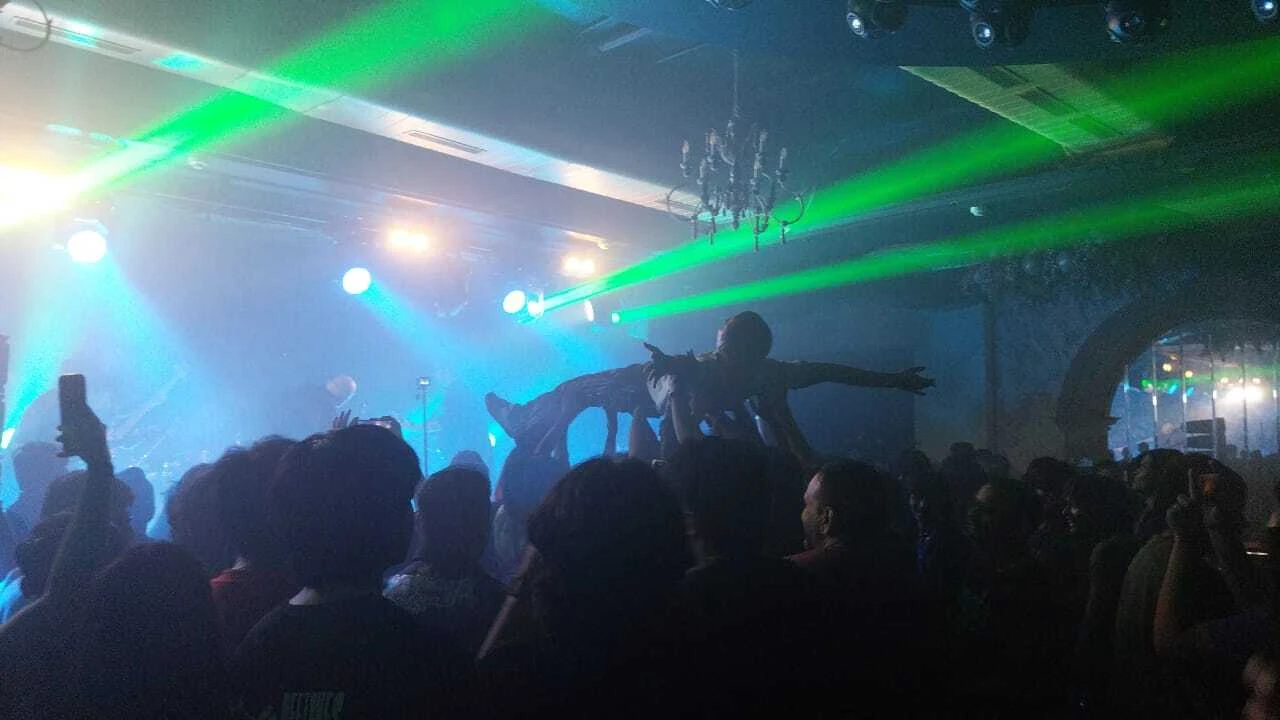
‘I definitely think the Indian metal scene is evolving in a positive direction. There's still a long way to go, but every year it feels healthier and more connected,’ Pranati says. She points out that in India, the metal scene is still quite male-dominated, and many prefer older and established brands. Again, with Delhi being the capital and quite famous for its dudebros, you’d expect that to reflect in concert lineups. Nope. In fact, Mumbai and Bengaluru have considerably more funding, and bigger bands tend to play there. I’d say organisers in Delhi prioritise artists who aren’t getting a stage elsewhere, who’re releasing fresh material. Other artists in the city show up for acts who fly in from across the country for even a small bar stage.
Even though a world-touring genre-bending giant like Bloodywood might be seen as the blueprint of Indian metal, even they would acknowledge that one band can only ever be the beginning. And there are several rabbit holes… or pits… to fall into from that starting point.