[category]
[title]
The fair’s a massive mix of experiences – here are the ones that stood out


A confession: I’m biased towards the smaller gallery experience. But I’ve got to say this year’s India Art Fair has, as it does every year, outdone itself. It’s a delightfully curated mix of creativity, people, and experiences, with a number of exhibits that can tire you out if you’re not careful (guilty). We’re helping you plan your day better – here are five unskippable features of the fair to pace yourself for.
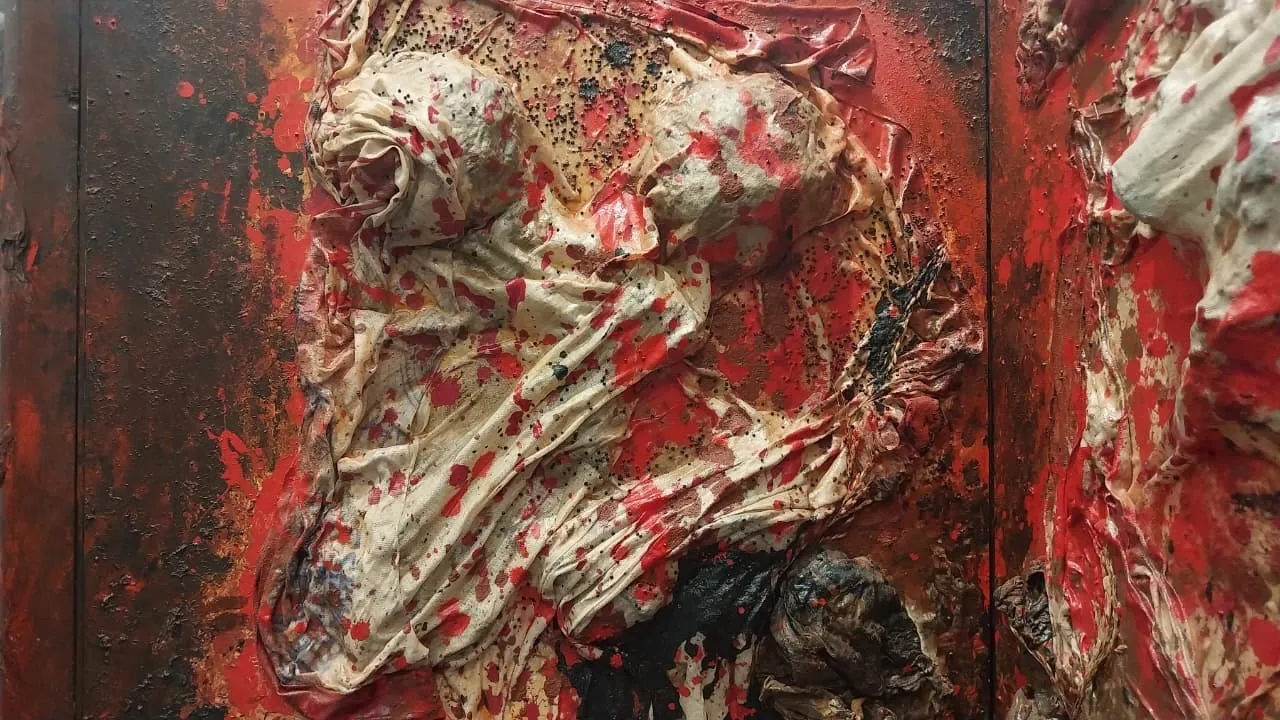
This contemporary artist is known for still paintings of gods and goddesses, looking after you, comforting you. Now, a memory of a six-hour surgery, and seeing her severed legs, have provoked an exploration of the myth of Sati.
In a multi-panel painting, seething hues of red and brown overtake a depiction of a white cotton sari. The other side of this bears the reverse imprints but in colours of the earth. I’m usually suspicious of works that try to universalise the experience of women across society. But here, attention is taken away from the very cycles of life and regeneration itself and given instead to a sacrifice. I couldn’t look away for several minutes.
Equally jarring is the accompanying small set of pleasant grey-washed watercolour paintings that veer towards diary entries and poems – you’re suddenly brought back to the hyperpersonal. It’s quite the experience. Be sure to read the note with them.
Where: The Art Alive gallery booth
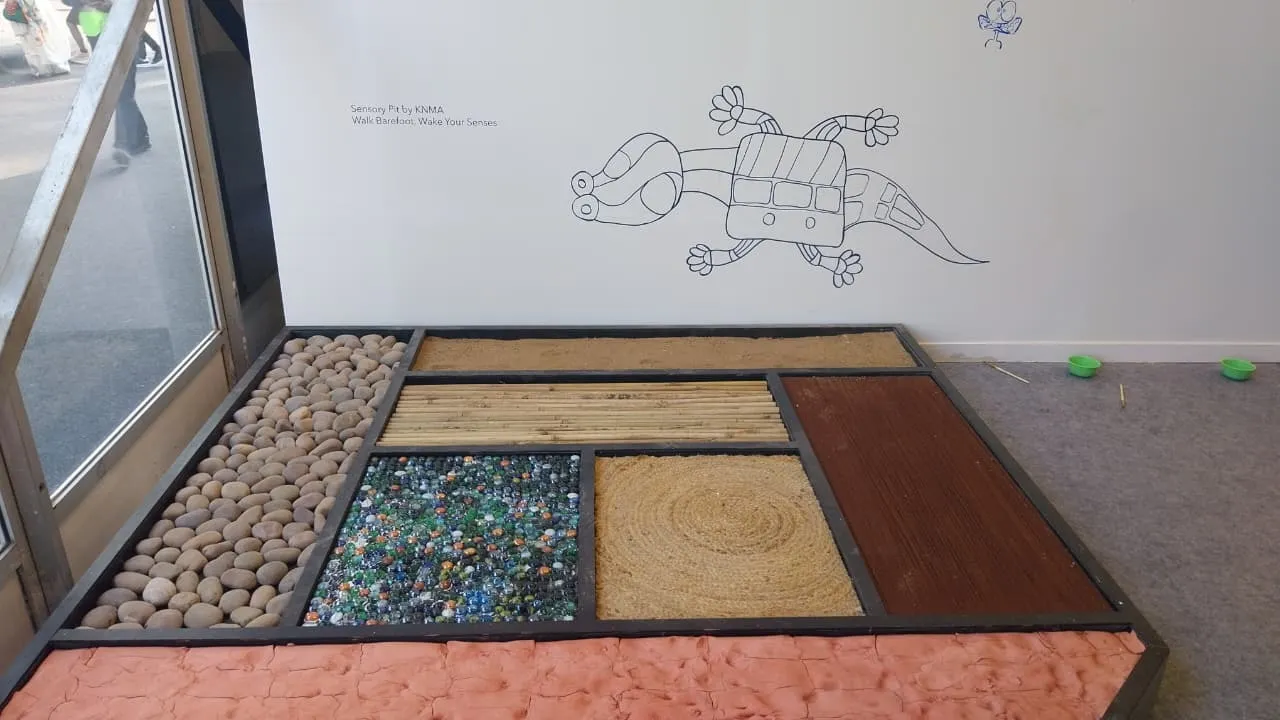
Can you feel art through your feet, of all things? I could already tell most people would unknowingly skip this, not realising it’s also an integral artistic experience. I mean, yeah, you can’t buy or look at it for long. But it’s a good reminder that art can encompass every sensation you’re capable of having. You’re given a range of materials to walk barefoot on. It's slight pain, in a good, calming way. And if your legs are sore from walking the fair, of course, this is the perfect retreat.
Where: The Inclusion Lab section
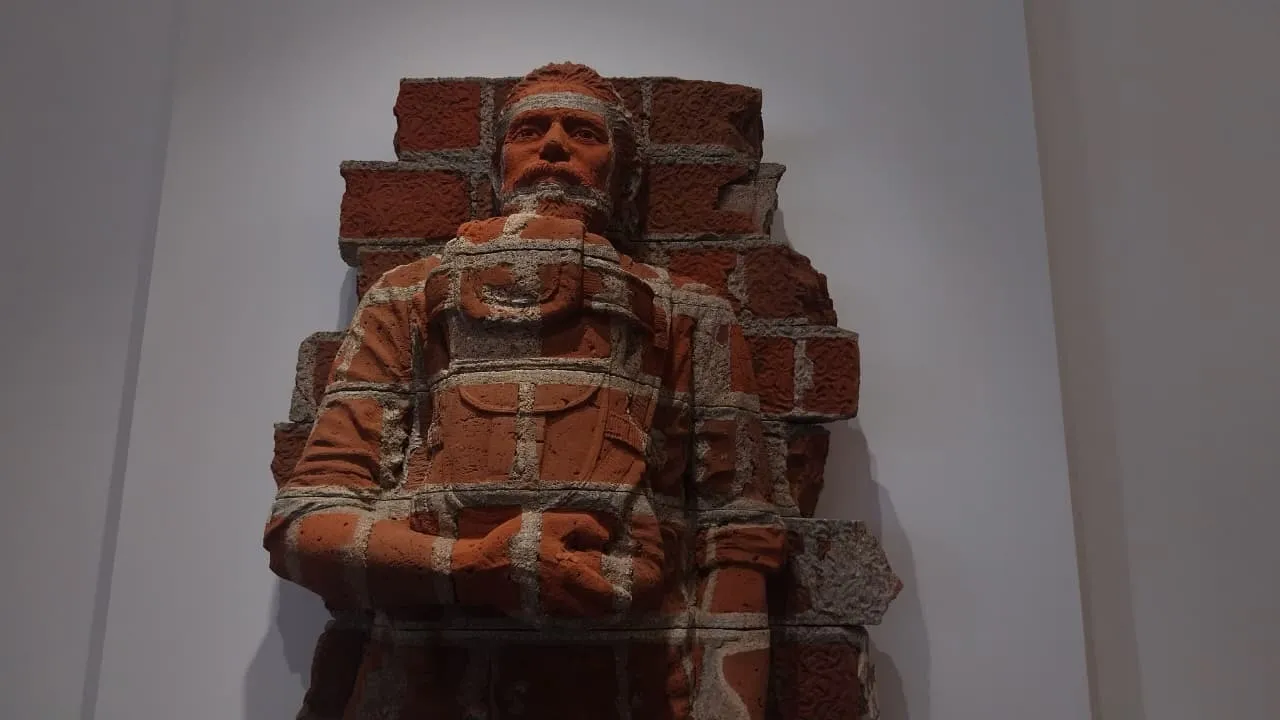
It’s easy to dismiss this exhibit if you came in search of aesthetics or a dining room set. But we suggest you don’t. The bricks and mortar that make up these statues were taken from demolished walls near a railway station in Maharashtra, and they have annotations, of sorts, by means of a simple small brick-coloured square, representing where these depicted people – and bags – might be now.
What I initially thought were brick lines turned out to be more indicative, and the artist provides a phrase: like lines on a topographical map. I looked deeply into the expressions of their faces, and for a while, the chatter buzzing around in my ears slowed.
Where: The Gallery Espace booth
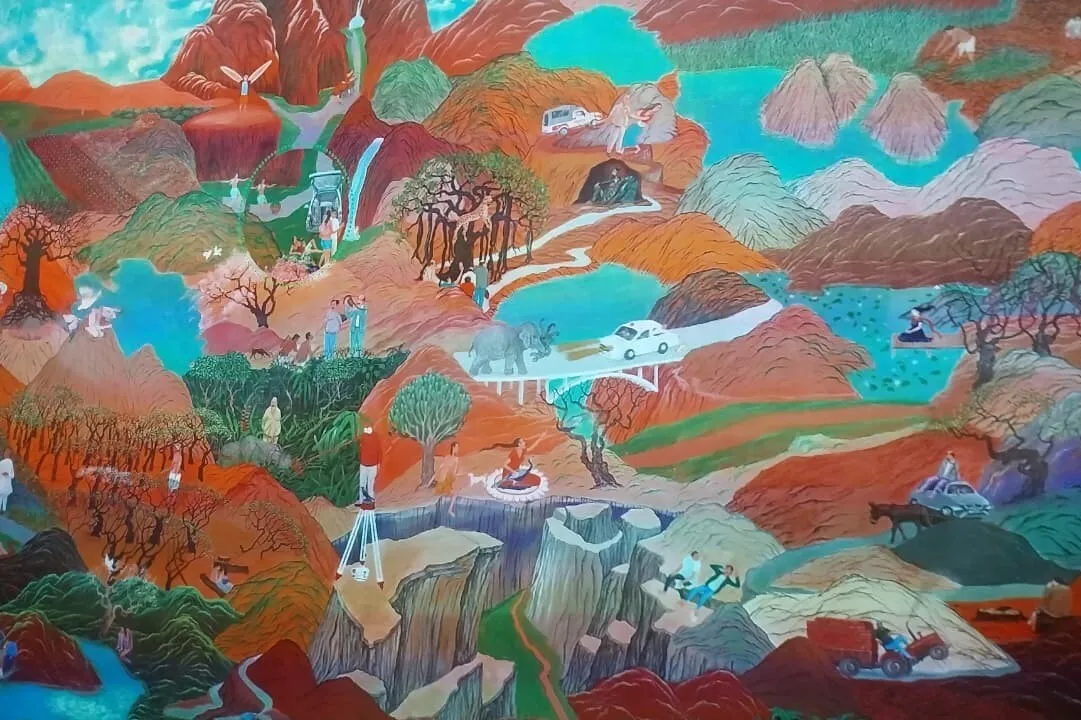
Honestly, I wasn’t expecting much when I ducked between curtains for this one. Then I saw five circles with colours on the ground, each promising a new interpretation of the audiovisual interactive experience, based on a painting by Mantu Das, on the screen. Thirty passing moments across Assam are given new meaning to you with the help of Das’ words in headphones, and corresponding colour markers to each scene.
I found myself gravitating towards the one about power. You really feel the potential for a well-established museum, on the other side of the country, to enable artists to explore more dimensions to their own work.
Where: In the Institutions section
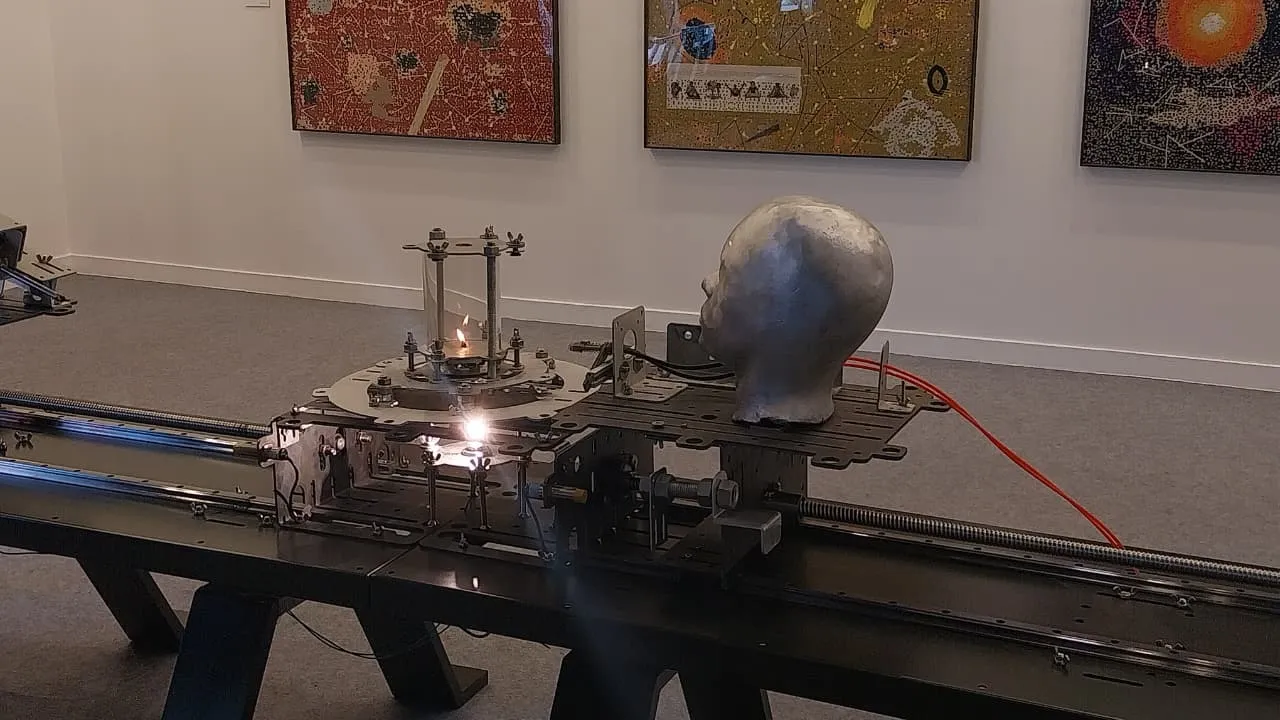
Part of Vadehra Art Gallery’s exhibit is the moving (literally) combination of (checks notes) a stepper motor, controllers, screws, sensors, metal, a smoke-free paraffin lamp, aluminium and a compressor. It’s severely rare, in my opinion, to see the physical complexity of a piece mirror how interesting it actually is.
Here, the heads of two philosophers are shown moving back and forth, in a Sisyphean repetition, to light and put out a lamp. Simple enough. But it’s in watching a couple of times that you find the irregularities, the unnecessary force. Very timely if you’re an AI skeptic, or a skeptic in general.
Where: The Vadehra Art Gallery booth
Discover Time Out original video