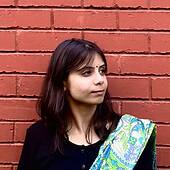
Batool at Mehrauli, Delhi
Photograph by Nitya Choubey | Batool at Mehrauli, Delhi
Photograph by Nitya Choubey

A trans conservationist’s guide to queer heritage in Delhi

Millennia-old instances of queer history hide in plain sight. Batool Ali, founder of Delhi Queer Heritage Walks, shows you where

Nitya Choubey
Advertising

From the moment I sat down with Batool for our first heart-to-heart, I felt like hours had passed. In reality, it had only been a few minutes. She’s a fluent talker – something I truthfully wasn’t too surprised by. Batool, you see, was born in Old Delhi, where people love trading in mostly two things: spices, or stories. She picked the latter. 

Today, the trans-feminine public historian and conservationist loves nothing more than wandering the bylanes of all of Delhi, sniffing out the best, most delicious stories behind Delhi’s ample heritage. 

Her love for history began in the eighth grade. It was the Egyptian queen Cleopatra, actually, who drew her in. That fascination eventually led her, in 2015 to land a job as a heritage and culture guide with the High Commission of Canada in India. From there, the city stopped being just a backdrop. ‘Delhi doesn't give you time before falling in love with its culture and heritage,’ she says. And it’s the public oral history of the capital, much against its written academic avatar, that flaunts greater inclusivity and nuance.

Yet, it was hard for Batool to pick up authentic queer stories across Delhi. Mainstream heritage walks have a habit of brushing off queer history, while academic record-keeping’s contested and jumbled. But the sheer number of stories that lurked below the horizon kept Batool’s interest piqued, and in March 2021, she led her first-ever queer heritage trail in Delhi. 

For this guide with Time Out Delhi, Batool pulled out three little gems from her ever-growing stash of stories of queer heritage, and they go beyond the widespread myth of Jamali Kamali.

Queer heritage in Delhi

Hijron Ka Khanqah | Mehrauli village

No heritage trail in this eternally mourning city could be possible without visiting a grave. A little deeper inside the sloping lanes of Mehrauli village lies the Hijron ka Khanqah (translating to ‘burial ground for the third gender’), built sometime in the fifteenth century, and tucked just off the tourist-heavy Mehrauli Archaeological Park.

The medieval mosque-cum-graveyard was historically managed by the third gender community of Old Delhi’s Turkman Gate. Over time, a shift in power made management difficult, and the keys to the door passed on to a family living nearby. 

‘In the 1990s, Shree ji’s family used to deliver milk to the Hijra haveli at Turkman. Over time they gained trust for the upkeep of the complex, which is home to about 51 graves,’ says Batool. 

Entry to this gate is restricted to transpeople or known allies, so you can’t really walk in on a ticket. A burnished silver gate at the entrance blends almost too well into its surroundings, and is easy to miss at first glance. It opens into a narrow, low-ceilinged passage that spills into a quiet courtyard. 

Inside, you’ll find whitewashed walls, glittering Persian calligraphy, and sharp right-angled passages wrapping around the graves. At its centre lies the tomb of Sadhu Mai, a leader of the Hijra community, revered for once saving a king’s life. Batool tells us the site is venerated across Southeast Asia, drawing reverence far beyond Delhi’s (and India’s) borders.

Ticket: Free (entry restricted)
Address: Mehrauli Village, near Mehrauli Archaeological Park, South Delhi – 110030, India

Baagh-e-Naazir | Mehrauli

This eighteenth-century Mughal garden was built by Mughal emperor Muhammad Shah Rangila’s chief eunuch, Roz Afsun Nasir. It served as a waystation for pilgrims visiting the dargah of Qutbuddin Bakhtiar Kaki Dargah, located right next to the garden. 

Against Delhi’s arid climate, the trans noble figure built a Persian-style garden with elegant pavilions of red sandstone, stone, and plaster. The travel lodge-cum-garden was once enclosed by a stone wall and threaded with water channels that no longer survive. For Roz Afsun, it was their pocket of serenity beside the bustling Qutub complex.

Today, the garden stays true to its hidden nature, quietly fading into the Aravalli ridges of Delhi. Bagh-e-Nasir is a popular summer stopover for birds, even as the spot slips by almost unnoticed to most cityfolk. 

Ticket: Free
Address: Inside Mehrauli Archaeological Park, Mehrauli Village, South Delhi

Advertising

Quwwat-ul-Islam Mosque | Qutub Minar Complex

This mosque once cradled the mighty Delhi Sultanate, but we’ll have to drop the whole story about that particular empire in exchange for a better one: that of Sultana Razia. 

Razia was an anomaly, almost a blip in the long line of the Sultanate’s male rulers from 1206 to 1526. What’s more – Razia didn’t wear a veil, cross-dressed as a man, rode horses and elephants, and also went to the mosque, defying everything stereotypically feminine. Mind you, this is the early thirteenth century.

In the run-up to succession, Razia went up to the Quwwat-ul-Islam Masjid on a fine Friday morning, when the mosque had its maximum number of worshippers. She asked the gathered crowd who they would want to see as their ‘king’. Backed by her father, Iltutmish, and after securing support from her citizens at the mosque, Razia became the first and only female ruler of Delhi.

Ticket: ₹35 to ₹40 (Indians), up to ₹600 (foreigners), free (children below 15)
Opening hours: Mon- Sun. 7am to 6pm
Address: Qutub Minar Complex, Mehrauli, New Delhi, Delhi 110030

Recommended
    Latest news
      Advertising