[category]
[title]
What makes DIFF special? We spent four days at the 15th Dharamshala International Film Festival, watching world cinema and soaking up its one-of-a-kind atmosphere.

There are worse ways to spend four days than watching independent films from around the world in the mountains. The 15th edition of the Dharamshala International Film Festival (DIFF), which wrapped up on Sunday, November 1, brought together films from over 40 countries at a Tibetan children's school in the hills. I'd had a brilliant time at the festival the year before, so when tickets went live, I didn't need much convincing.
I did, however, nearly miss my bus to Dharamshala. Eventually making it to the festival (which began on on Thursday, October 29) by afternoon, I collected my DIFF registration kit and its now-coveted purple tote bag. (Delhi, prepare to see quite a few of these.)
When I did queue up to watch the films, though, it seemed impossible to catch any. The age-old desi jugaad had to be employed. My prying eyes looked for a friend to help me jump the queue. Civic sense went straight to hell – because almost everyone was ignoring lines by the fourth and final day.
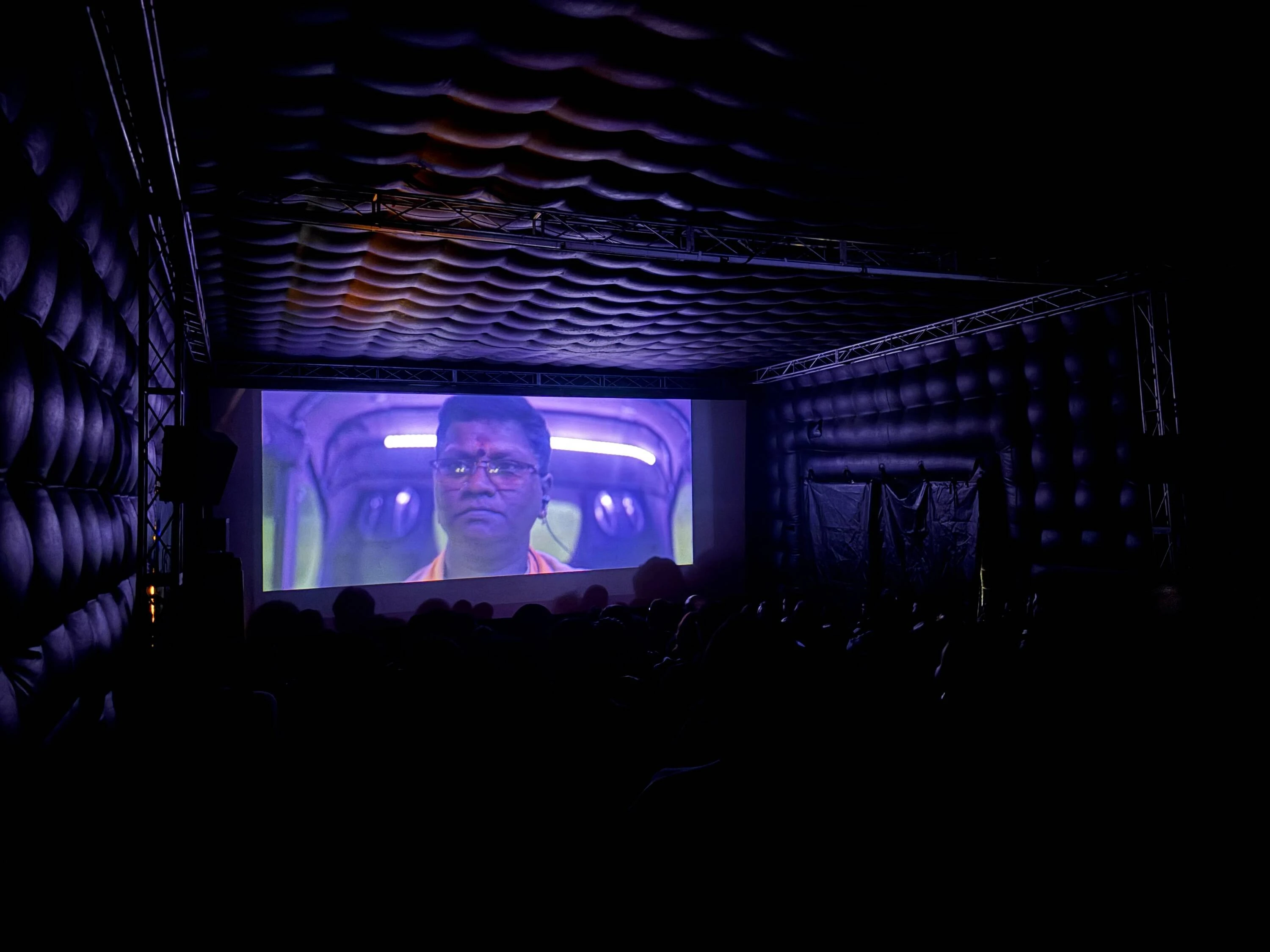
This makeshift-workaround spirit runs through DIFF, much like independent cinema itself. Films are screened in pop-up balloon theatres, an entire school campus is transformed into a creative fortress even as the school continues to operate, and much of the festival is run by a team of volunteers in their early 20s. There's an admirable resourcefulness to the whole operation.
The 15th edition also carried a fleeting sense of melancholy, more pronounced than in previous years. Almost every film I watched had an overt or underlying current of sadness running through it. Brilliant films, all of them, but rarely easy viewing.
‘It's the times we live in,’ DIFF co-founder Tenzing Sonam told me. Reflecting on reaching this milestone, he spoke about how he and his wife, filmmaker Ritu Sarin, started the festival simply ‘out of love for alternative cinema’. That founding impulse, he said, remains unchanged. ‘It's something we haven't compromised on, because DIFF doesn't have a competitive section.’ The idea is to keep it open to everyone, without the pressures of competition or the business of handing out awards. A come-one, come-all approach, if you will.
Another thing that sets DIFF apart is how accessible its creative community feels. The filmmakers and actors who attend aren't sequestered behind velvet ropes. Dibakar Banerjee, Sayani Gupta and Kirti Kulhari were among those spotted chatting with festival-goers and posing for selfies. There's little of the usual celebrity distance here. ‘This way, it also helps film people congregate in close quarters and gives new people a chance to learn,’ said Jasdeep Singh, who worked on the writing of Rehmat and Birds in the Dark.
A less-discussed attraction at DIFF is the fashion. Corduroy trousers, leather jackets, hats and colour combinations that deserve a second look. The festival has its fair share of glamour girls and dandies, all dressed to kill and armed with considerable sartorial confidence. For four days, the campus doubles up as a rather lovely creative fashion parade, with the cinema as its main event.
After hours, however, were noticeably more subdued this year. Jimmy's Italian Kitchen and Bimil, the resident cool pub that had drawn crowds well into the night last year, were both found closed by midnight. Partygoers and revellers were left wandering the streets of McLeodganj, looking for somewhere to take the evening. The after-party circuit seemed to have all but disappeared.
Perhaps it had something to do with the younger crowd this year, or a shift in the festival's social mix. Perhaps it reflects a wider change in the arts, where shrinking funds and a more uncertain cultural landscape are beginning to shape even the spaces where creative communities come together. Whatever the reason, DIFF felt a little quieter once the screenings were over. And, in a year when so many of the films were already steeped in melancholy, the subdued nights seemed to echo the mood.
From the 15 films – shorts, features, documentaries and more – I watched across four days, three stood out.
Midnight Momo was something of a sleeper hit at this year's festival (and otherwise). Made on a shoestring budget of just €4,000, the time-travel-themed romp managed to strike a chord with audiences, blending a sharp take on the cultural zeitgeist with plenty of entertainment and technical finesse. It proved popular enough to warrant two screenings, both of which drew packed houses.
This Georgian tragicomedy came with an absurdist sense of humour, distinctly reminiscent of Eastern European cinema. Shot in black and white, the film had its India premiere at DIFF's largest venue, the Hermann Gmeiner auditorium, to a roaring reception. Rooted in its setting yet universal in its appeal, Guria was a memorable showcase of world cinema.
A short documentary about Chennai's women auto drivers, Auto Queens is an absolute must-watch. Tamil songs are woven seamlessly into a story of feminist resistance and class struggle, giving the film a rhythm and emotional texture of its own. It's a beautiful, sharply observed piece of filmmaking that manages to leave you both angry at the circumstances its protagonists navigate and hopeful about their lives. The cinematography is particularly striking, and by the end, you'll find yourself wishing there was more to watch.
Discover Time Out original video