

[image]
[title]'Before you can spot a tiger in the Sundarbans, it spots you.'
With that, our tour guide from the state's forest department brushes away any and every unrealistic expectation tourists (myself included) had of spotting the elusive Royal Bengal tiger here in the delta. The area's home to one of the largest populations of these tigers – some 200 or so—but they're camouflaged in the wilderness so perfectly that they're almost impossible to spot.
The Sundarbans is a curious place to visit, in any case. The world's largest continuous mangrove forest, the area spans over a thousand square kilometres of coastline across the Bay of Bengal delta, shared between India and Bangladesh. Most reckon that the unique tidal system, estuarine fauna, and of course, the Royal Bengal tiger absolutely deserve its UNESCO World Heritage Site status.
But I'd say there's more to it than that. There's a timelessness about the place. Every couple of years, the forest – and the sparse human settlements around it – get washed away by chaotic cyclones. Huts, animals, even coast guard posts, all swept away in the blink of an eye. Yet the forest, its animals, and its people rebuild themselves each time, again and anew.
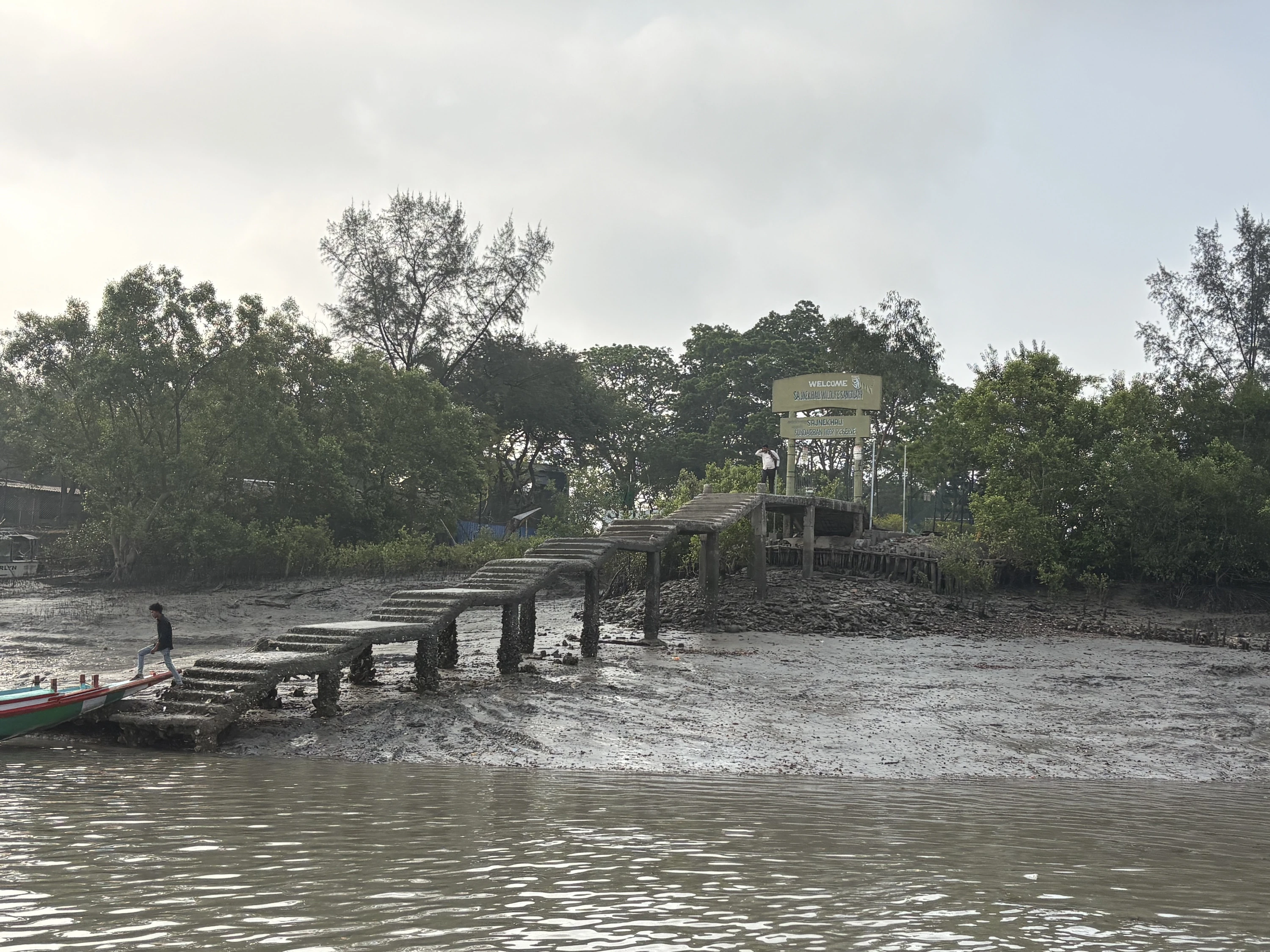
The best time to visit the mangroves, I'd say, is between November and February, when the weather isn't wringing bucketloads of sweat out of you. A two-day trip is what most people settle for, but if you want a full feel of the forest, stay for a week. The eco-resorts in the area are mostly pretty pocket-friendly.
But as it turns out, several people mainly just come for a glimpse of the tiger. There's far more to the place. Here's everything the marketing quacks don't tell you.
Prepare yourself for zero tiger sightings
Won't lie, the guide's words left me a bit disappointed. The tigers of the Sundarbans are special. Much to Darwin's delight, they've undergone centuries of evolutionary adaptation to survive on marshy terrain, and they even settle for crabs and fish over deer or boar. Their hind limbs are also stronger than the average tiger's, making them exceptional swimmers. Between camouflaging themselves in the dense, overgrown forest to paddling between muddy islands, it's almost impossible to catch one – spottings are rare and usually take a couple of patient days.
There is, I suppose, one way of spotting one, but it doesn't come recommended: venture into the smaller tributaries of the delta. The tiger may swim up to you and...well, put you on the spot.
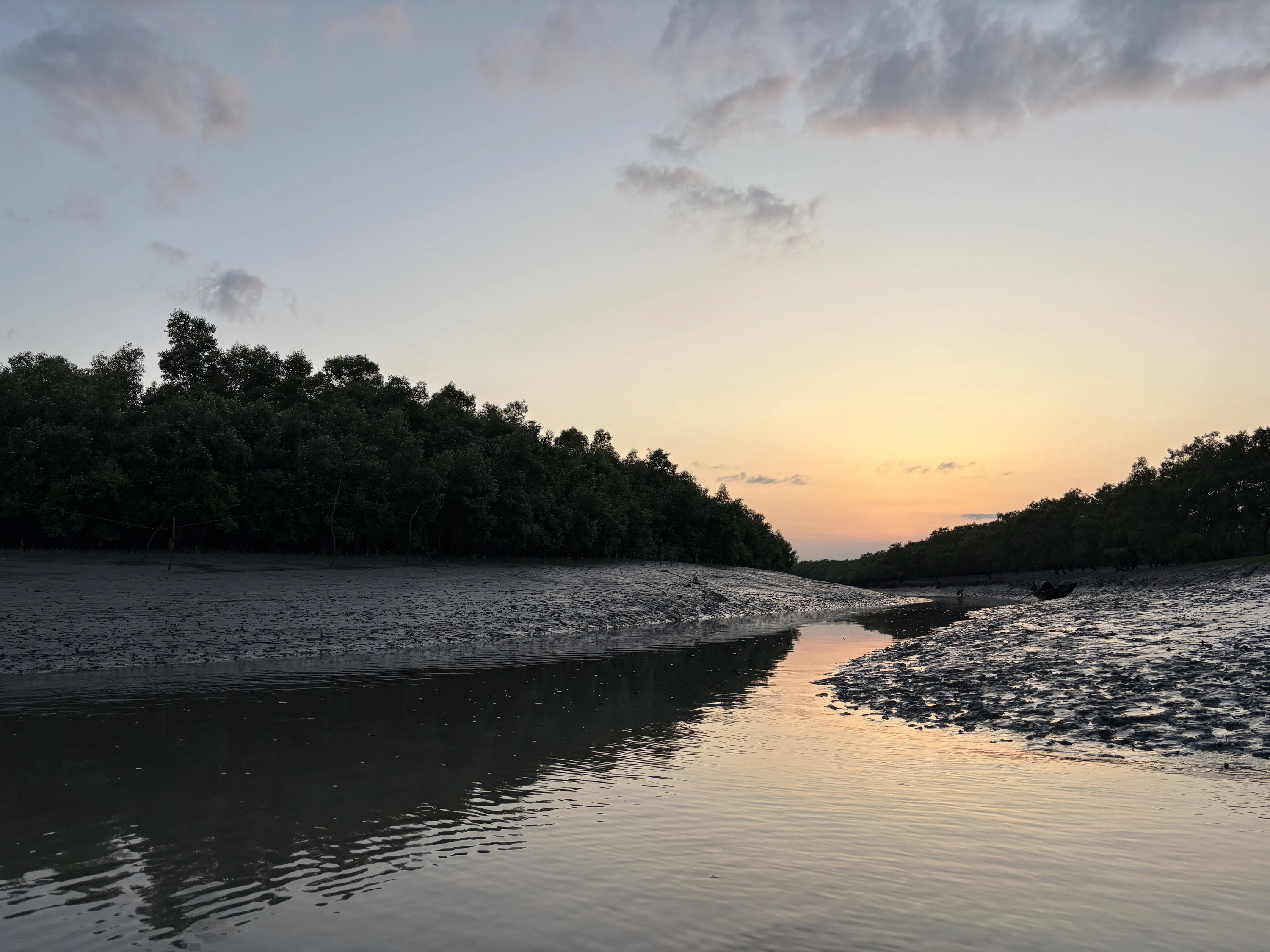
What else if not the big cat?
There’s so much more to see! The amphibious ecosystem of the delta supports a rich biodiversity; take the indigenous residents, for instance, like the tiny mudskippers, the deep-red fiddler, and the ghost crabs. While the red crabs almost beg to be spotted on the grey-brown clay soil of the Sundarbans, the tiny mudskippers, though abundant, camouflage themselves remarkably well, until you come close enough to almost taste them. With an average size of 10 cm, these fish hop their way up and down the coastline.
Then comes the endangered horseshoe crab. Why they are called so becomes clear when you lift one by its tail spine and carefully look beneath its hard mantle (do this with an expert, and more importantly, without disturbing the crab).
The waters of the Sundarbans also host non-edible species like the white-spotted shovel-nosed guitarfish, Indian dog shark, bull shark, hammerhead shark, and pale-edged and black-edged stingrays. The edible category includes hilsa, pomfret, parshey, gurjali, amude, ram fita, and churifita.
The Sundarbans is also home to Gangetic dolphins (unique to the Indian subcontinent), saltwater crocodiles (among the smartest predators here), spotted deer (easy to spot if you’re ready to give up an entire day), and common otters. There are definitely many more animals, though sightings are rare. When it comes to avifauna, the Sundarbans doesn’t fall short either: brown-winged kingfishers, mangrove whistlers, mangrove pittas, various eagles, and ospreys. Plus, the ever-moving fleet of migratory birds. Bird watching's at par with tiger spotting here, and I suggest getting a pair of binoculars.
The 'walking' mangroves of the delta
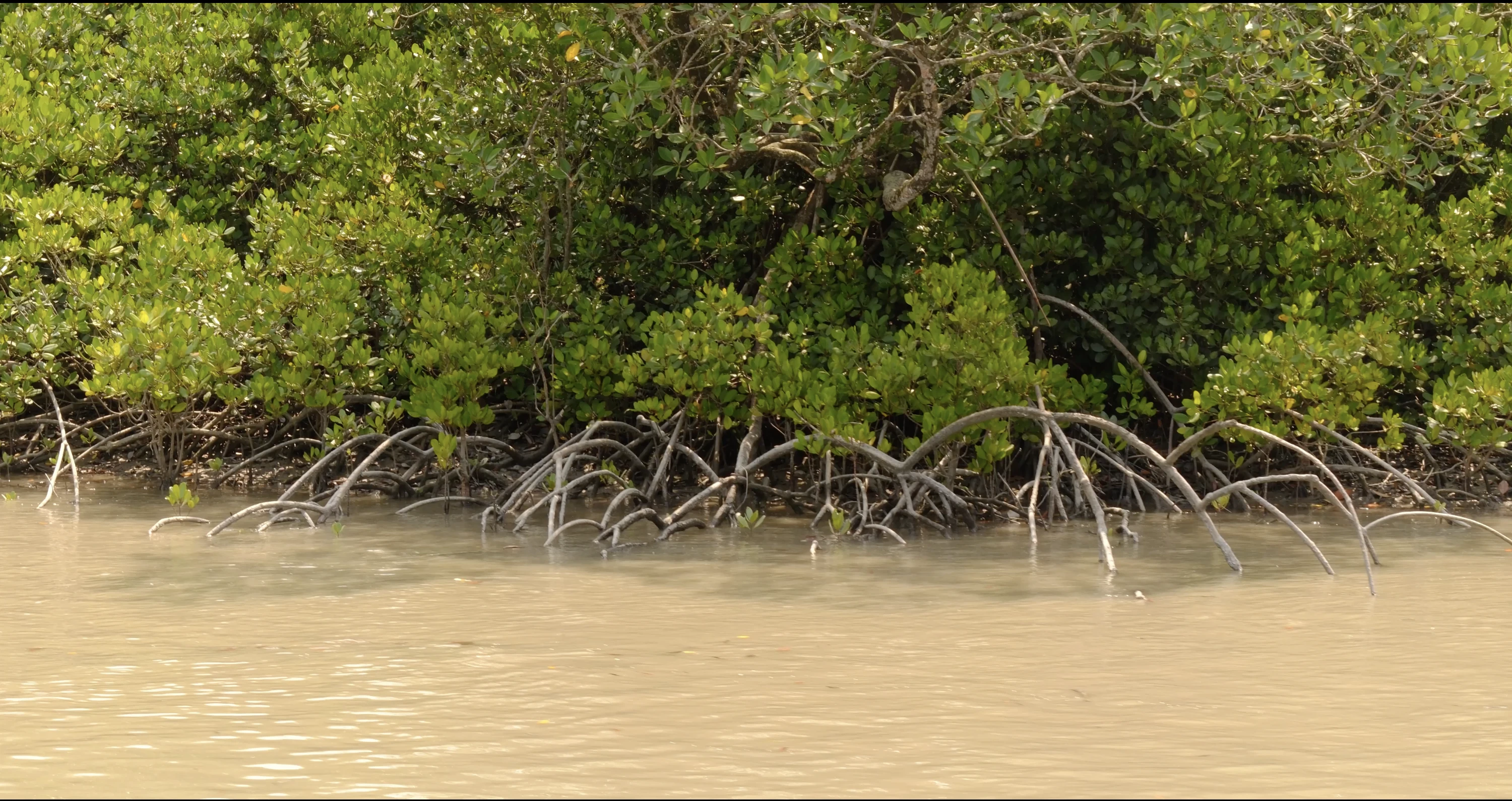
The Sundarbans is a bouquet of nearly eighty plant species, fine-tuned for tidal saline water: gewa, goran, and golpata. But the one that appears most frequently, and gives the mangroves their name, is the 'Sundari’. You really need an encyclopaedia (or a human version of one) to distinguish which plant is which. What these species are known for are their breathing roots (pneumatophores), which rise halfway above the water to survive oxygen-poor, muddy soil. By the looks of it, it seems like the trees are walking toward you, with roots reaching outward in all directions. Even more bizarre is how the trees reproduce. Instead of dropping dormant seeds that could wash away or drown in harsh, salty, oxygen-poor tidal mud, the trees let seeds germinate into fully formed seedlings, called propagules, while still attached to the parent plant. Typical parenting strategy of a Southeast Asian, shall I say.
Sundarbans’ nighttime surprises
The tides at night behave entirely differently from those in the morning. Either way, the waters remain accessible, so venture out at night, on a wooden non-motor boat. A night safari in the Sundarbans is less about the forest and animals and more about the water itself. Slice your hand through it, and it begins to sparkle: the phytoplankton in the water emits light upon disturbance. The best time to witness this is on a new moon night, in near pitch darkness. Carry a torch. In the jungle, your phone flashlight is about as reliable as your internet.
Overall, the Sundarbans shines as the perfect destination for anyone wanting to slide a little closer to nature. Its ‘walking’ trees, sparkling water at night, and the evergreen possibility of a tiger sighting make it a magical place. After touring the forests of South, Central, and Northeast India, I can say these are the most unique forests I have ever laid eyes on.