

[image]
[title]Ambi bai is dancing. She's surrounded by the other adivasi women of the Thakkar tribal community, and for a moment, nobody in the group is thinking about the donna baskets or foraged shevdi stalks in front of them.
It’s mid-morning at a Monks Bouffe forest walk. Back on the day's checklist: participants have already learned to fold a donna, a basket made from bastard teak or palash leaf, and to blow bubbles using wild leaves: small, specific skills that don't exactly typically show up on a city walking tour. They've foraged shevdi stalks, goonj leaves, mahua seeds, kurdu and kuda flowers, and with a local family, they'll turn some of it into bhakri (a millet flatbread) and ghavna (a soft rice pancake usually eaten for breakfast). Mahua, the liquor made from the indigenous mahua flower, propels a discussion on its own; its history and process are enough to briefly steal attention.
But it really is the dancing and the storytelling that stay with you, at the end of it all. As the women teach the cuisine, they're also narrating their own relationship with nature and the seasons.
A city like Mumbai has no dearth of compelling cultural walks. The usual ones'll take you to hotspots to savour street food and fine dining alike. The pub crawls will get you day-drunk. But there's a newer kind of walk that isn't chasing either high. This is for the tourist sick of choosing a coin-flip dinner, and the local who's stopped believing eating out tells you anything real about the city. The pandemic only sharpened that appetite, and what's emerged since is arguably the new cool food walk.
What’s different?
Perhaps one of the many reasons these walks are getting popular is that they're reasonably priced. The day-long experience at around ₹1,000 costs a fraction of what you'd pay at any city restaurant for the same organically harvested ingredients.
Gaurang Motta, Monks Bouffe's co-founder, adds that their audience isn't defined by age or gender; it spans corporate employees, students, and independent professionals alike, all pulled in by the same curiosity about food and nature.
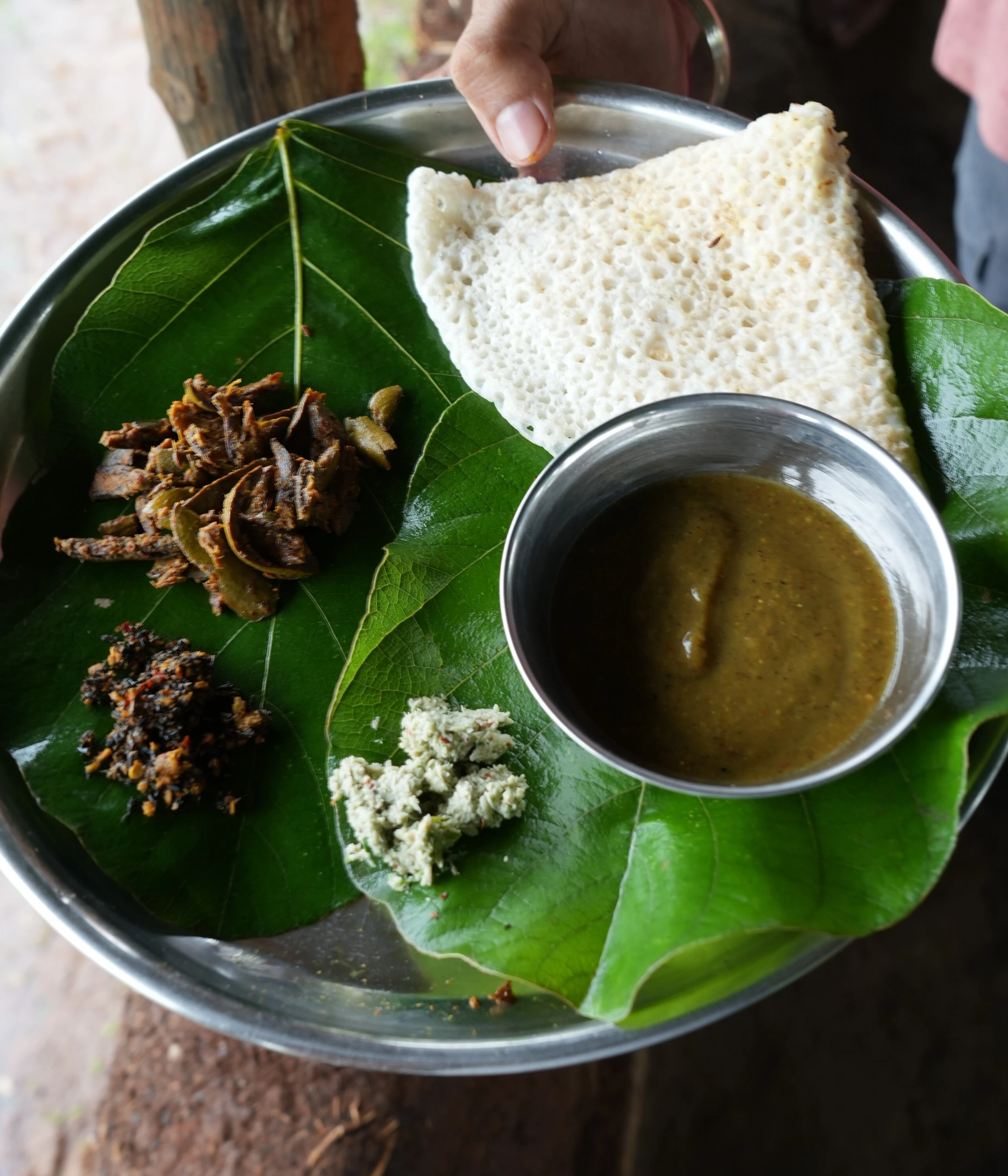
Take their Neral food walk, for instance. After a breakfast of locally grown rice ghavna (an unfermented rice dosa), urad dal pitla, mahua fruit sabzi and ambada-coconut chutney, all cooked in mahua oil, Saurabh Motta leads participants for their wild foods and forest walk. He's the other co-founder of Monks Bouffe. He encourages participants to halt at various points along the way to discuss seasonal wild produce and trees important to the tribal and forest ecosystems of our country. The aim: to question the lack of diversity on our plates.
While Monks Bouffe's primary focus has been the Neral walks with a spotlight on the Mahua tree, symbolically hailed as a kalpavruksha, owing to being the mother tree of the forest with several medicinal or culinary uses, they’re now introducing city walks called 'Khoj' at the Byculla Zoo & Botanical Garden. These walks segue to urban foliage and the hidden botanical knowledge that lies in front of our very eyes, with a focus on edible tree produce.
'Khoj’ dives deeper still into the culture of the food we eat. Trees we pass by regularly, or that are in the middle of our city, used to be or could be a part of our food system. If incorporated into city diets, the produce from these trees could provide not only diversity, but also flavourful taste and nutrition to our plates. These happen at the Byculla Zoo & Botanical Garden on Saturdays, from a neat 9.30am to noon, and they’re priced at ₹499 per person. View their Instagram for details.
Untapped communities
Across town, that same instinct shows up in a marketplace. In the city, a member of Chef Thomas Zacharias' Local Food Club brandishes an heirloom brass mortar & pestle from their grandmother's kitchen.
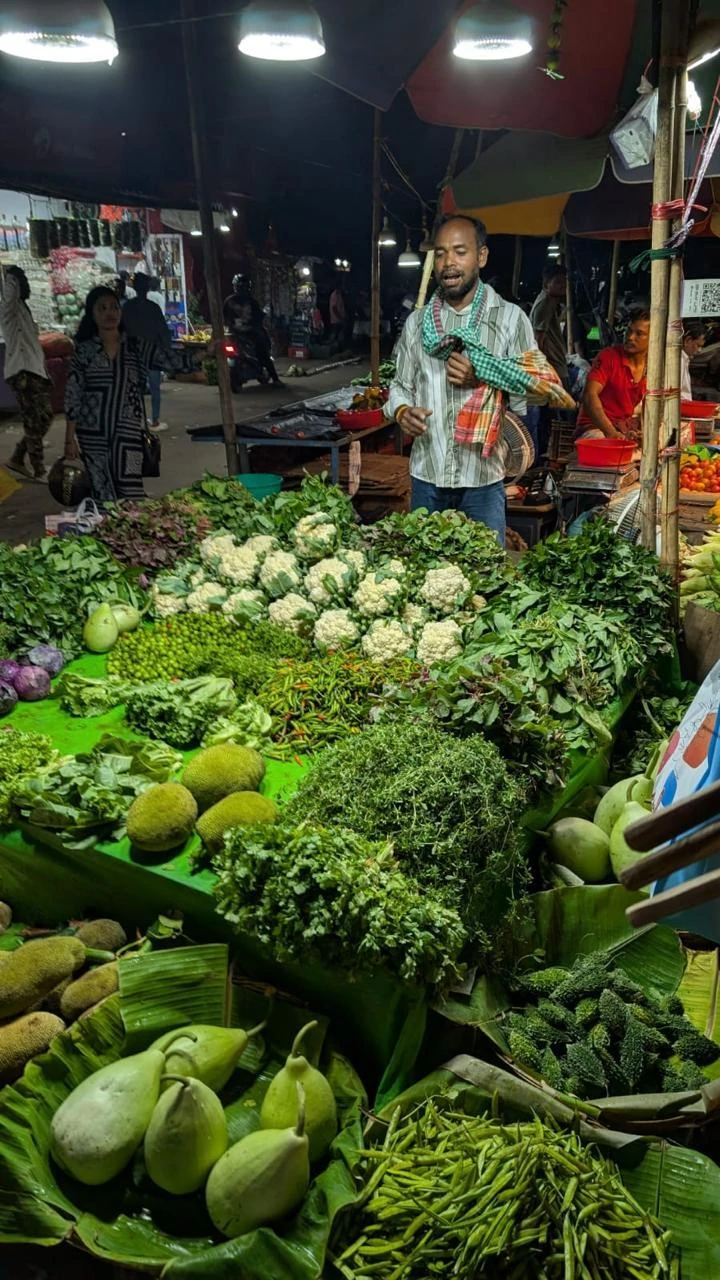
They inform the group that this apparatus is reserved for gently pressing the delicate saffron spice. As everyone leans in to listen to the memories associated with the tool, the room comes to a standstill. Because – of course – family rituals become common ground among attendees. Led by stories such as this, the Local Food Club also started hosting Bazaar walks last year across the length and breadth of the country. In Mumbai, they focus on Koliwada communities and the livelihoods of those who allow our coasts to thrive.
As he became a household name over the last decade, owing to his association with a city culinary institution (The Bombay Canteen), Chef Thomas Zacharias travelled across twenty-five Indian states and regions, and overseas. Zacharias wanted to share this experience with others and began an initiative called Chef on the Road. It’s intimate. Participants travel with Zacharias into a region, meet people they may otherwise never encounter, eat in homes, walk landscapes, ask questions, and engage with food as something much larger than cuisine. Local Food Club and Chef on the Road are two arms of the same effort: both run under Zacharias' The Locavore, the umbrella food movement behind them.
Zacharias likens food markets to living classrooms. A place to expand your know-how on biodiversity, seasonality, migration histories, labour, trade – with incredible sensory stimulation to boot. Therefore, Bazaar or Market Walks seemed like a natural next step for what they do at the Locavore, which spans from their excellent journalism on hyper-local food cultures to resources for first-time chefs and farmers. The bazaar walks require only a commitment of a few hours, as opposed to the days-long Chef on the Road experience.
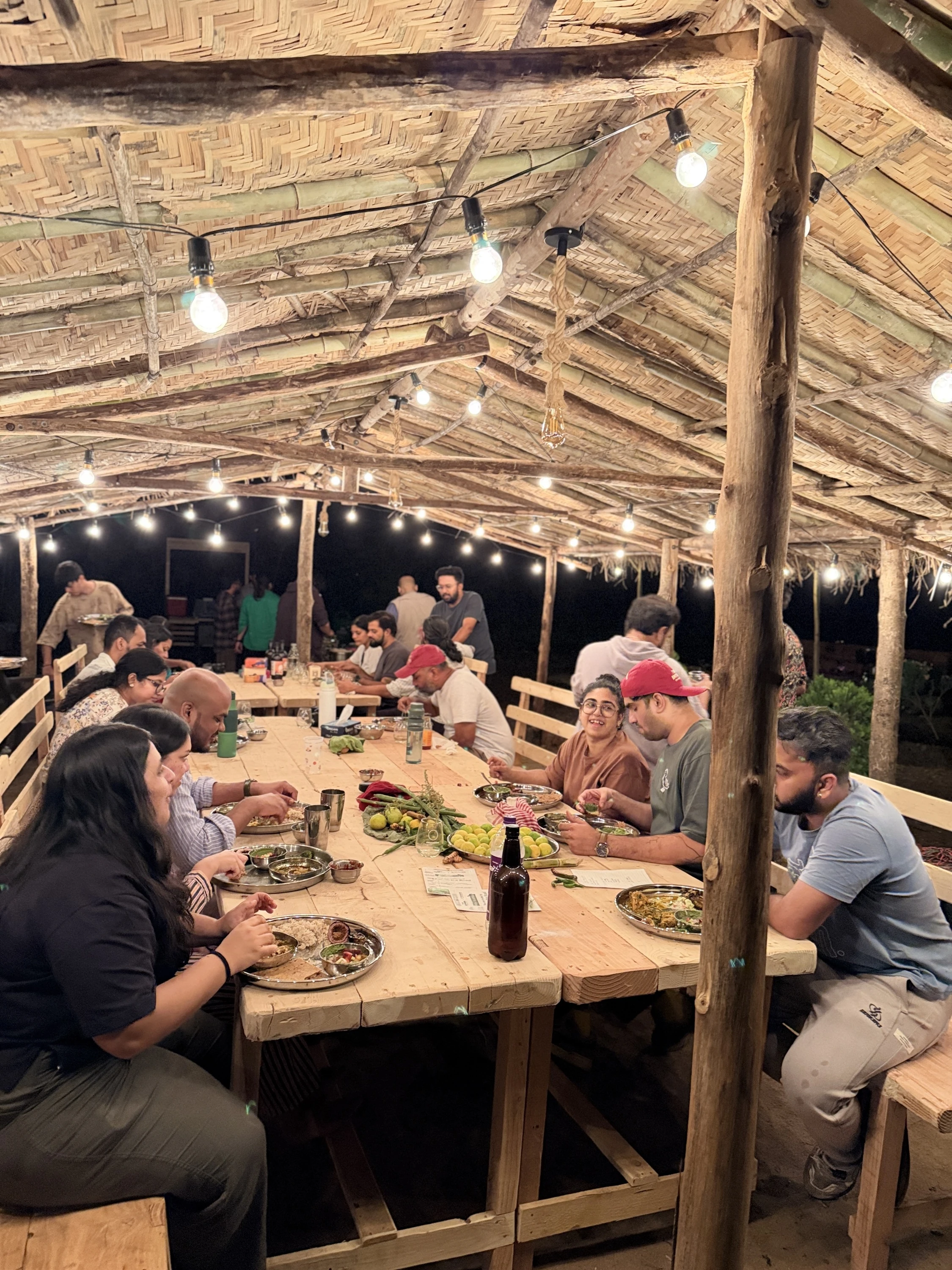
Chef on the Road curates a small number of journeys each year. They are typically multi-day, often 4-7 days depending on the region, with a group size of 12-16 participants. The price varies significantly depending on region, logistics and stay, and is announced per journey (₹30,000 - ₹75,000). Market Walks are typically 2-3 hours and often free. Stay updated on The Locavore's Instagram.
Together, these food walks are less of a trend than a rejection of the same city that made ingredient-pedigree tasting menus feel the end-all of food evolution. A farmer once told me, 'We eat food three times a day, yet no one thinks about where it comes from or who grows it.' Perhaps we take a walk and find out?