Mahjong clubs are to South Bombay what taash parties are to Delhi. It's an indisputable fact – so much so that designer Gaurav Gupta's custom limited edition mahjong set, made in collaboration with HSBC, is a true collectible coveted by many.
Not to say that games that originated in one part of the world can't win over the rest (chess is a fabulous case in point), but the obsession with mahjong's still a bit of a mystery. Born somewhere in 19th-century China, mahjong's a tile-based game usually played by four people, in which players draw and discard tiles from a set of well over a hundred, marked with suits, numbers, winds and dragons, to build a winning hand of matching sets. It’s part strategy, part memory and part luck, and the rules differ from one style to the next. It's made its way from China to Japan, Taiwan, and America. But what's it doing trumping the beloved rummy and bridge in army wives' luncheons and South Bombay drawing rooms?
Is mahjong new in India?
Hardly. While America’s mahjong obsession is more of a 1920s phenomenon, India’s revival is very much a 2020s one. During the British colonial era, it was a fixture of ritualistic social gatherings. Early Chinese settlers in Kolkata used to hold community game sessions in Tiretti Bazaar (Kolkata’s second Chinatown).
Even so, Mumbai’s mahjong fixation stands on its own. In the last couple of years, its prominence has risen, mainly because trendspotters gave the game a more visible platform. That paved the way for a national tile movement that now comes with leagues, tournaments and, of course, the creation of a new genre: Indian mahjong.
The city now has its first dedicated mahjong parlour (1 BAM) and a new club (The Mahjong Club), giving the game a sense of permanence for the city’s social set.
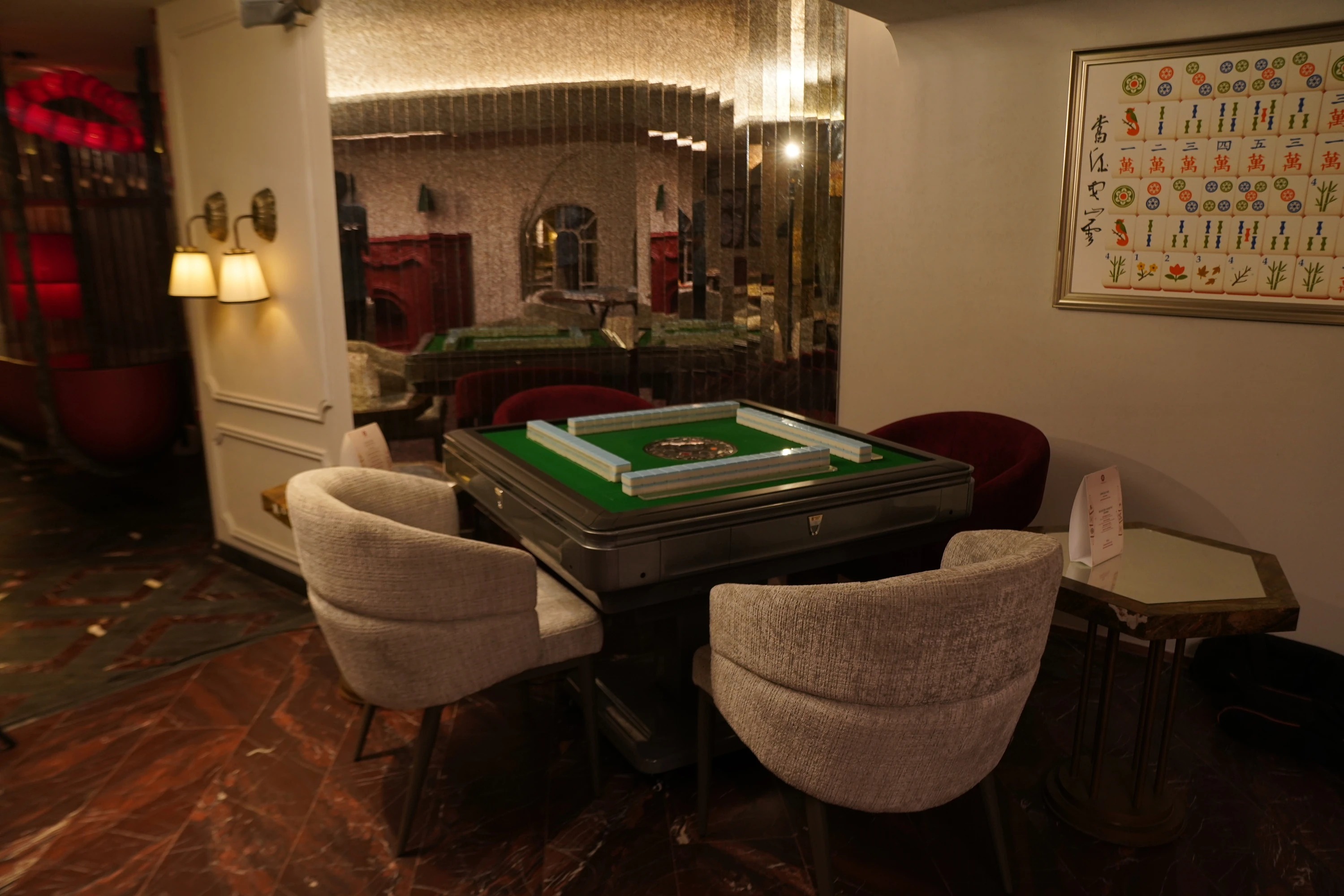
Image courtesy of The Mahjong ClubA table at The Mahjong Club, Mumbai
‘Women have been playing around a card table for as far back as I can remember,’ says Sheetal Patel, co-founder ofLets Mahjong and the Indian Mahjong League. The 55-year-old has been playing mahjong for years. It offers the perfect combination of strategy, competition and conversation. ‘It's more than just a game. It fits beautifully into the city’s culture of home and club gatherings.’
From SoBo, with love
Mumbai, especially SoBo, has a natural affinity for absorbing global influences, which is perhaps why it became the perfect launchpad for its arrival (and revival). ‘South Bombay, in particular, has this culture of clubs, social circles and people discovering things through friends,’ says Nema Cherian, a Mumbaikar who shifted to Goa 16 years ago and is the founder ofQiinza, the state’s experiential retail-cum-community space and a Taiwanese mahjong club.
‘Mahjong fits naturally into that (SoBo) ecosystem. (Among SoBo-ites) there is also a certain openness to trying something that feels a little different but still has a strong sense of tradition and culture behind it. Mahjong has that wonderful combination: it feels exotic and new, but it is actually a very old game with a huge global following.’
‘Once a few groups started playing, it was inevitable that it would travel through social networks. Someone learns it in Mumbai, takes it to Delhi, someone else introduces it to friends in Bengaluru or Goa, and suddenly you have little mahjong communities developing in different cities,’ reflects Cherian on the game’s growing popularity across Bengaluru, Delhi and Pune, which already have established mahjong communities and playing setups.
‘South Mumbai may have been the launching pad, but the appetite for strategy, connection and community is clearly pan-India. I would say now these cities are as hungry for mahjong as Mumbai,’ adds Sheetal.
Is mahjong the new kitty party?
‘Mahjong gives us the opportunity to socialise with four friends, play a game which sharpens the mind, and helps avoid all the unnecessary food bingeing lunches and aimless coffee runs,’ says Prium Seth, an avid player and now co-founder of Mojo Mahjong – which makes homegrown mahjong sets in Mumbai and supplies them to select clientele, teachers, restaurants and clubs across India. ‘SoBo women would rather engage in a mind-sharpening activity than go for the usual calorie-packed plans.’
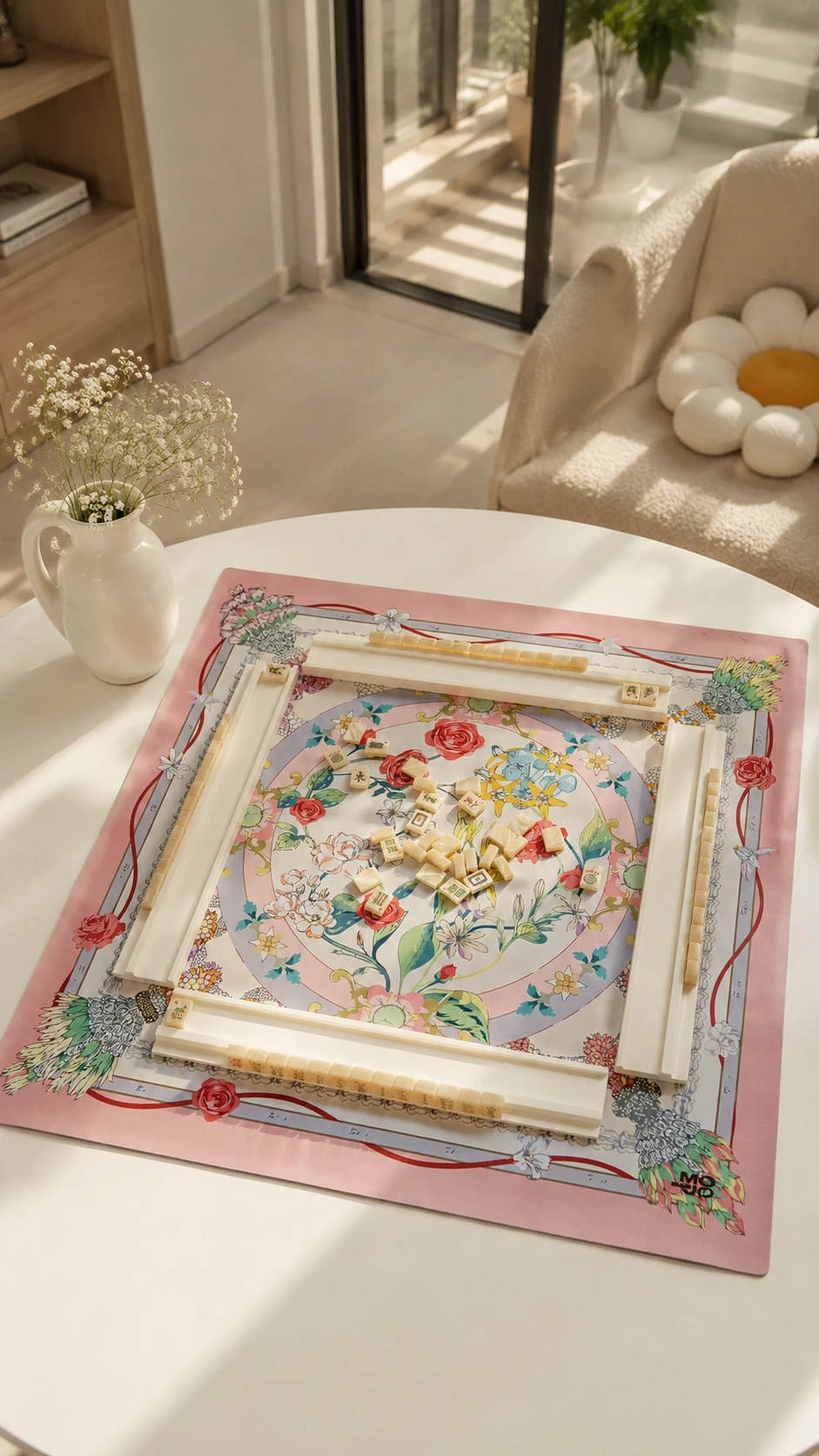
Image courtesy of Mojo MahjongA mahjong set
Sheetal and her partner Kanika Vasudeva, through Lets Mahjong, help make mahjong fun and accessible without losing its tradition or depth. ‘Our story started with a love for the game, but we developed a structured course and curriculum and worked with a team of trained teachers to spread the game to all age groups and cities.’
They were inspired by America’s mahjong-playing culture in bars and cafes. So far, they have organised matches, training, tournaments and more in over 15 Indian cities. Their passion even led to the Indian Mahjong League, which attempts to standardise gameplay and give players a larger national platform, with a ranking system to compete beyond their living rooms.
The social network
Elite clubs may have card rooms, but Mumbai’s social scene is brimming with mahjong classes and dedicated venues.
‘The rise in mahjong events, clubs and communities reflects a larger shift in how people want to spend their leisure time. People are increasingly looking for experiences that bring them together and allow them to disconnect from their screens,’ says Hitesh Keswani, MD & CEO, Aspect Hospitality, who has just opened the doors of The Mahjong Club in Khar.
‘One of the most exciting things about mahjong is that it cuts across age groups. We are seeing younger audiences in their twenties and thirties discovering the game for the first time, alongside people who have grown up playing it or have been familiar with it for years,’ he says.
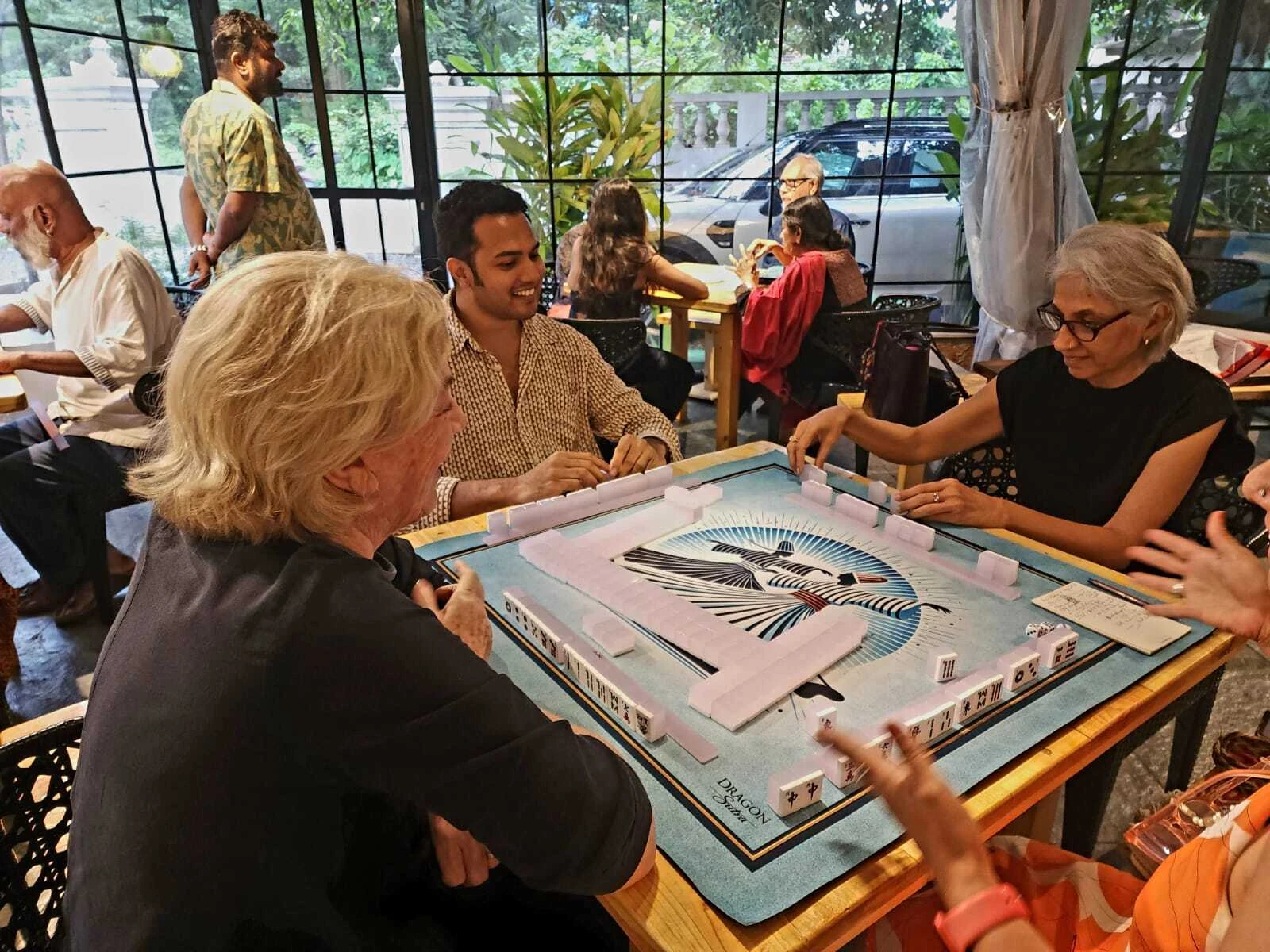
Image courtesy of the Taiwanese Mahjong Club, GoaA game of Mahjong in Goa
Mahjong has long been stereotyped as a women-only, housewife-friendly game for older generations. But the digitally overstimulated millennial or Gen Z-er is up for a phone-free social gathering too.
Sheetal says the age group at her games is 35+, and that Indian Gen Z may lack the patience and time commitment a full game demands (I’m told it easily runs over two hours). But Nema disagrees.
With digital fatigue setting in among the young, human interaction, or even a semblance of it, trumps everything else. ‘Sitting around a table, handling physical tiles and actually interacting with the people around you feels surprisingly refreshing. And mahjong has enough complexity to keep you interested. The social element is probably the biggest draw. You don’t need to be a hardcore gamer to enjoy mahjong. You can be there because your friends are there, and before long you’re completely hooked,’ she says.
But why mahjong over rummy or other card games?
‘Card games, bridge and taash have their own very loyal following. Mahjong is simply bringing something different to the table (literally!),’ says Nema. ‘There is a very strong intellectual element to mahjong. You have to think, remember what has been played, read the other players, make strategic decisions and constantly work out your best move. So while luck is certainly part of it, your brain is working throughout the game – and that’s what makes it so engaging.’
‘There is a certain appeal to mahjong with the whole drama of the tiles, racks and the mahjong etiquettes. It provides brain stimulation, making it an ideal change for the South Bombay card circles while retaining the same thrill,’ says Seth.
But it isn’t replacing anything. ‘I think it’s adding to an already existing community of gamers,’ says Sheetal.
The Mahjong toolkit
If you’d like to get into mahjong yourself, be warned: it won’t come cheap. ‘To learn, you need some time and some friends to learn and play with (not necessary, but always makes it more fun) depending on which style you learn – traditional, Taiwanese, Riichi, etc. And it can range from ₹5,000 to ₹10,000 for a course per person,’ says Sheetal. The cost of playing at clubs and hosted homes varies depending on the venue.
If you want to own a set, there are always Chinese ones, which are cheaper. ‘However, a handmade, made-in-India set from Mojo Mahjong would be anywhere between ₹19,000 and ₹23,000, which would include tiles, racks, mats, accessories, etc.’
Been there, done that? Think again, my friend.
🙌 Awesome, you're subscribed!
Thanks for subscribing! Look out for your first newsletter in your inbox soon!
Communities and classes for Mahjong in Mumbai you can get into
Image courtesy of Lets Mahjong
Lets Mahjong
A one-stop shop for all things mahjong: events, tournaments, classes and even soirées. Price: Upon request Instagram: letsmahjong
House of Mahjong
Teaches Asian, Taiwanese and American styles and conducts online and in-person classes. Price: Upon request Instagram:sangeetakewalramani
Mumbai Mahjong Only community, no classes. If you’re interested in playing, sign up. Price: Upon request Instagram:mumbai_mahjong
Play Mahjong Classes, communities, events and more. You can join their WhatsApp group to stay updated. Their website lists teachers and costs per session. Check here.
Where to play mahjong in Mumbai, at a glance
Image courtesy of The Mahjong Club
1 BAM Mumbai’s first dedicated mahjong parlour, on Linking Road, has automatic tables, stylish sets and tea. Bookings are mandatory. Price: Standard table slots are ₹500 per seat Instagram: 1bam_mahjong
The Mahjong Club, Khar Mumbai’s newest community-driven club offers scheduled slots. There’s plenty of food too. Price: Upon request Instagram: the_mahjongclub
Been there, done that? Think again, my friend.
🙌 Awesome, you're subscribed!
Thanks for subscribing! Look out for your first newsletter in your inbox soon!
Been there, done that? Think again, my friend.
🙌 Awesome, you're subscribed!
Thanks for subscribing! Look out for your first newsletter in your inbox soon!
By entering your email address you agree to our Terms of Use and Privacy Policy and consent to receive emails from Time Out about news, events, offers and partner promotions.
🙌 Awesome, you're subscribed!
Thanks for subscribing! Look out for your first newsletter in your inbox soon!