[category]
[title]
Authorities hope that a path at the Calanais Stones could help prevent future erosion


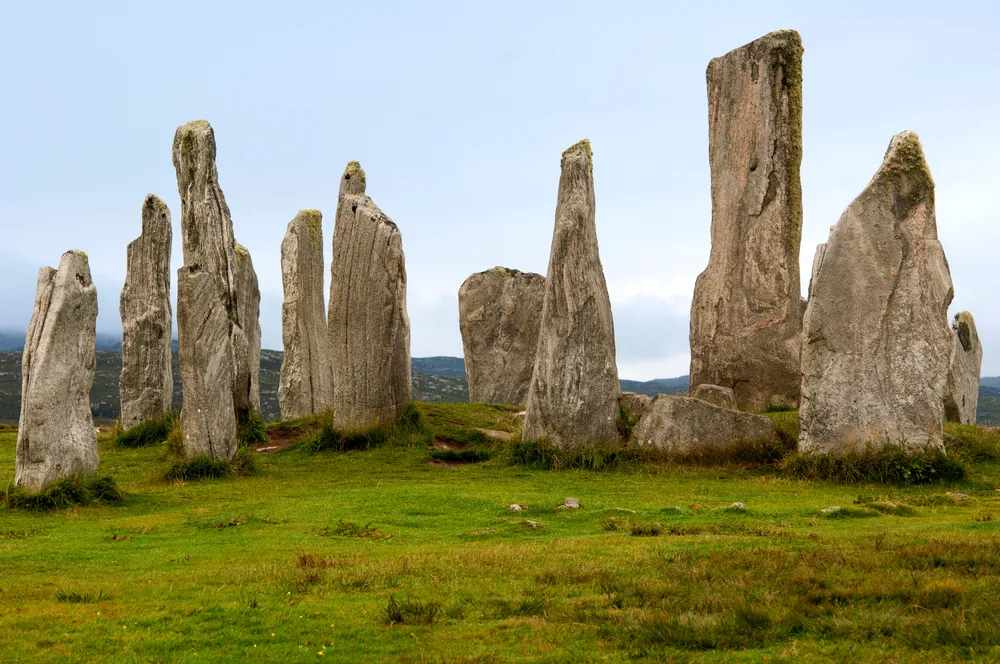
Everyone knows Stonehenge, but did you know that the Wiltshire landmark isn’t not even the oldest set of prehistoric standing stones still surviving in the UK? Several sites predate the Wiltshire circle, including the iconic Calanais (or Callanish) Stones in the Hebrides.
Despite being older than Stonehenge and very famous in their own right, most people are a lot less familiar with the Calanais. They receive about a quarter of the annual footfall of their southern siblings, probably due to the fact that they are a lot more out of the way.
Instead of being a short-ish drive from London, the Scottish monument, which is thought to have held some sort of astronomical significance to neolithic islanders, is on Lewis in the Outer Hebrides. It’s also in the middle of a field. There isn’t even a road directing you toward it – but that could soon change.
Historic Environment Scotland (HES) has applied for planning permission to build a path around the ancient stones in order to offer onlookers better views and reduce erosion of the surrounding land.
RECOMMENDED: The 16 best new things to do in the UK in 2026, according to Time Out.
This comes after a survey in 2020 indicated that footfall from more than 150,000 visitors each year was beginning to cause serious damage to the ground at the base of the stones, making them less secure. Some projections estimate that the number could climb to over 200,000 by 2030, making it all the more important to put safeguards in place now.
A walkway was previously put in place in 1993 for similar reasons, but it was removed in 2008 as it was not deemed to be effective at reducing erosion. To remedy that, this time around there will be staff on hand to encourage people to stay on the path when the weather makes conditions particularly fragile.
HES has also requested permission to lower a nearby 200-year-old stone wall. It was once put in place to outline what land was owned by a local farmer, but today it mostly just makes it more difficult to see the stones from some angles.
The site is also set to get an entry fee later this year, after the government approved a request in 2025. There’s no date as to when this cost will come into effect, so if you make your way up to Lewis soon you should still be able to catch a glimpse free of charge.
This is the beautiful British town that is one of Time Out’s best places to visit in the world in 2026
Plus: This legendary northern stadium will soon become one of the UK’s biggest football grounds
Stay in the loop: sign up to our free Time Out UK newsletter for the latest UK news and the best stuff happening across the country.
Discover Time Out original video