[category]
[title]
Here’s which parts of the UK will see the most coverage for Wednesday’s deep partial eclipse – and the exact time to look up


It’s almost here. It’s nearly time for the most complete solar eclipse seen in the UK since 1999. Today (August 12), the country will suddenly plunge into eerie twilight as the moon moves in front of the sun and blocks out its light.
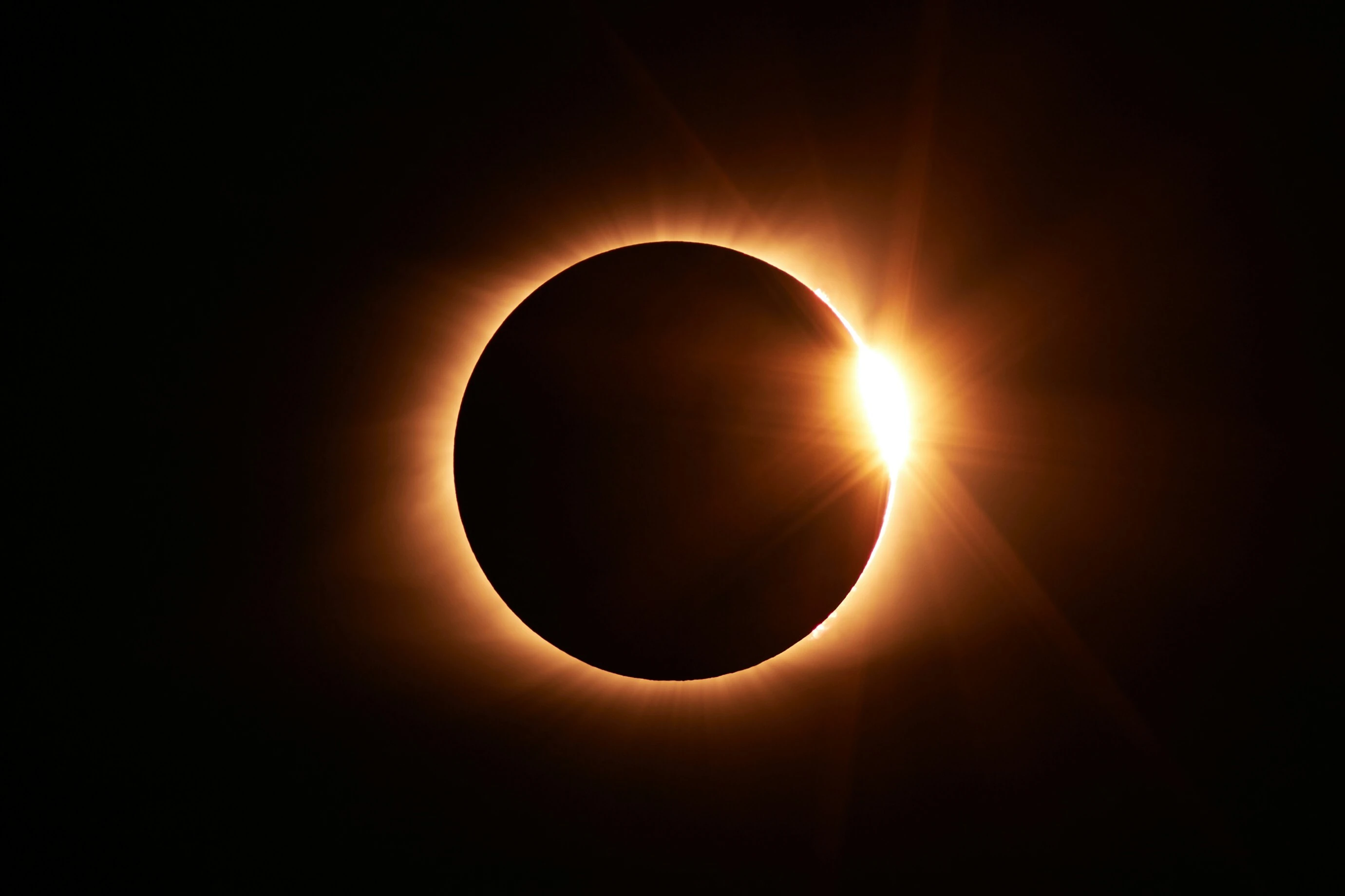
The celestial event won’t be a total eclipse (we’re not getting one of those until 2090) but it will nonetheless be spectacular. It will be what is known as a deep partial eclipse, in which over 90 percent of the sun will be covered.
But remember! Do not look directly at the spectacle, not even with sunglasses on. Get yourself certified ISO 12312-2 glasses or make your own pinhole viewer (all you need are two sheets of paper or card).
While the eclipse will be visible from all parts of the UK, the view from each area will be slightly different. So, here’s the lowdown on the best places in the country to see the solar eclipse this evening.
RECOMMENDED: Where to watch the solar eclipse in London.
The deep partial solar eclipse is happening today, on Wednesday August 12.
The west and southwest of the country will see the most coverage. In Plymouth, the moon will block 95 percent of the sun, in Cardiff it’ll cover 93.2 percent and in Belfast 93.1 percent.
In terms of where will have the clearest skies on Wednesday evening, that’s likely to be in the south and east of the country. Both Scotland and Northern Ireland have a higher chance of thick cloud and rain.
The best time to look up depends on where in the UK you are. Here’s a breakdown of when the eclipse will reach its maximum in each region.
As we said, the most impressive view of the eclipse will be down in the south and southwest of the UK, since that’s where you will see the most coverage. There, you want to find a spot with uninterrupted views towards the west or west-north-west and with elevated ground away from light pollution, trees and buildings.
Large parts of Cornwall will have around 95 percent coverage of the sun. Find a west-facing beach such as Watergate Bay, Perranporth or Sennen. If you view from Land’s End, you’ll see 95.8 percent coverage. Smugglers Rest Cafe in Talland Bay is hosting a viewing party with live music while the Falmouth Hotel is hosting a day-long ‘Shanties and Skylines’ festival for the occasion.
Long beaches such as Saunton, Woolacombe and Westward Ho! are good places to go for a clear view of the horizon on Wednesday evening. Slapton Sands, Bantham, Bigbury and Thurlestone will see some of the deepest coverage zone and offer unobstructed sea views to the west. Exmoor National Park also offers some of the best sky views in the UK. In Lowry Cross, Yelverton, the Plymouth Astronomical Society is hosting a free public viewing with free ISO-certified glasses available.
This will be one of the best UK cities to be in for the eclipse. You’ll get great views in Bristol from places like the west-facing Clifton Observatory near the Clifton Suspension Bridge and the Clifton Downs. The Bristol Astronomical Society is hosting a free public viewing party at the Sea Walls Viewpoint on the Downs with solar viewing telescopes and free observing glasses for those attending. Brandon Hill and Cabot Tower and Victoria Park will also make good vantage points.
Golden Cap is the highest point on the south coast and an ideal spot for eclipse viewing. Southbourne Beach in Bournemouth, Chesil Beach and the clifftops above Durdle Door are also great bets. You can also head to an organised event – Wessex Astronomical Society and Newbury Astronomical Society are co-hosting a public viewing at Hengistbury Nature Reserve on Wednesday evening.
In south Wales, which will also get high coverage, some of the prime viewing spots include Strumble Head in Pembrokeshire, Rhossili Bay in Swansea and Craig Goch Dam in the Elan Valley. Nearby Cardiff, elevated spots like the Garth and Pentyrch are good options. At Techniquest, there’ll be astronomy experts on hand to help you enjoy the celestial show and understand the science behind it.
Stay in the loop: sign up to our free Time Out Travel newsletter for all the latest travel news and best stuff happening across the world.
Discover Time Out original video