[category]
[title]
Evidence of 2,000-year-old four-wheeled wagons could transform how we think of iron age Britain


It’s not every day that an archaeological find rewrites history. As much as Jurassic Park and Indiana Jones would have us think that every dig means discovering a new perfectly-preserved prehistoric skeleton, the day-to-day reality consists of a lot more cups of tea than dinosaur bones.
Which means that when a historic excavation really does take place, it’s even more exciting.
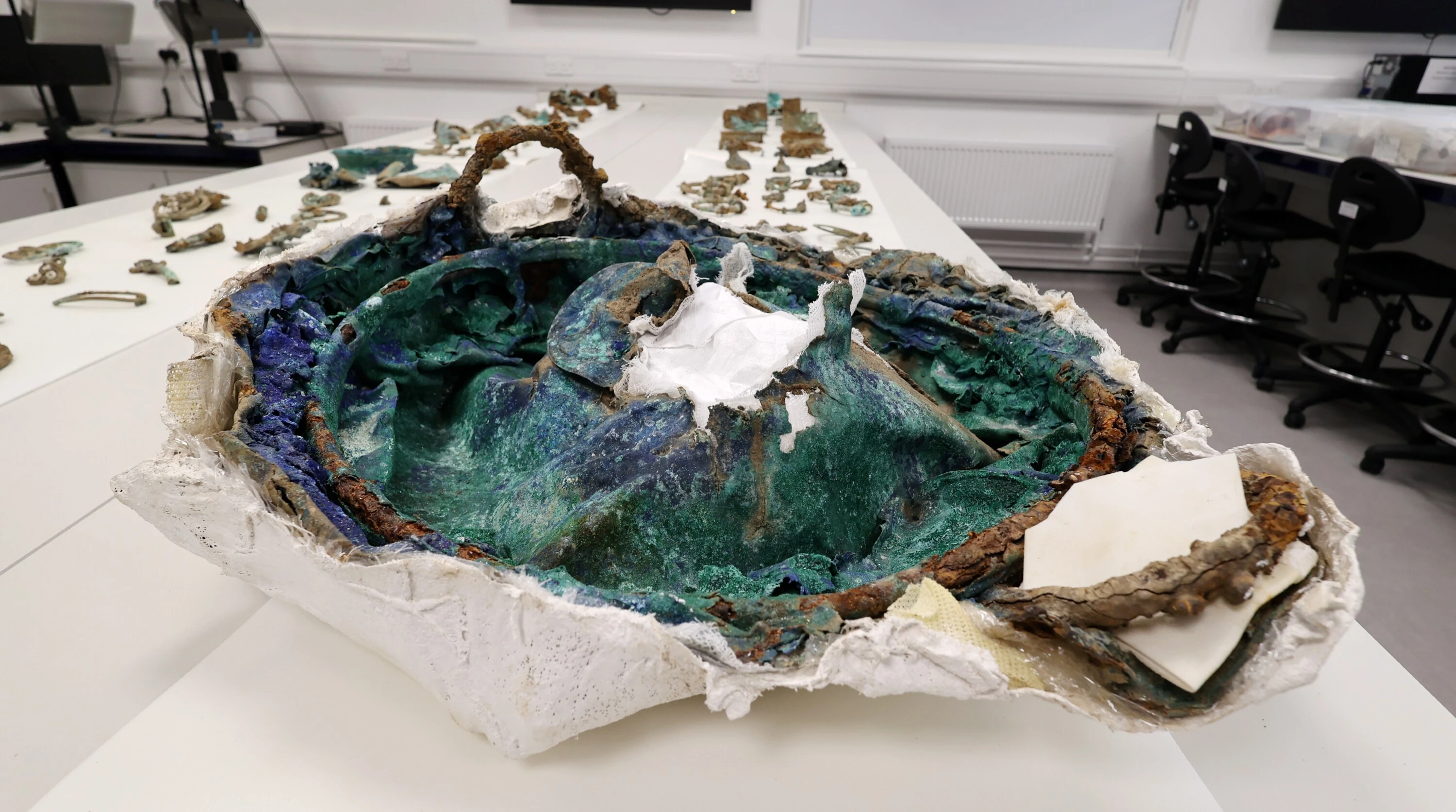
Archaeologists in Yorkshire have now revealed one of the biggest and most important iron age hoards ever found in the UK. More than 800 objects have been dug up from a field near Middlesbrough, including horse harnesses, iron tyres, spears and vessels for feasting. A massive cauldron decorated with fish and another vessel carved with face masks and coral, believed to be a wine-mixing bowl, were also among the loot.
Radiocarbon dating confirmed that the objects date back to the first century, around the time of the Roman conquest of Britain under Emperor Claudius, and are thought to be associated with a tribe called the Brigantes who controlled most of northern England.
If your knowledge of iron age Britain is slightly lacking, you might be thinking ‘so what’s the big deal?’ Well, it’s actually a major discovery that has the potential to alter our understanding of Britain 2,000 years ago. Four-wheeled wagons and chariots revealed by the dig had never been found before in Britain during this period.
The find has been described as internationally important. Experts involved said the objects may lead us to reassess our understanding of wealth, status, trade and travel among Britain’s iron age tribes.
Some of the objects were first discovered by a metal detectorist in 2021, who contacted Durham University’s archaeology department. Durham professor Tom Moore confirmed that the assemblage was likely to qualify as Treasure, and set to work with experts from the British Museum to recover the ruins. The site was excavated in 2022, but the researchers' findings were not announced until the paper was recently published.
History buffs will be happy to hear that you can soon go and see the discoveries in the flesh. Yorkshire Museum in York has acquired the hoards, and plans to open an exhibition to showcase the 2,000-year-old objects from May 15 2026.
Did you see that a £25 million waterfront project will transform this underrated northern town?
Plus: the best place to live in every British region.
A vast Roman road network has been discovered in England.
Stay in the loop: sign up to our free Time Out UK newsletter for the latest UK news and the best stuff happening across the country.
Discover Time Out original video