[category]
[title]
Rent anything from sunhats to proper shoes at the city's hiking centres when visiting these three mountains in Seoul

Shopping, sightseeing and street food are part of everyone's itinerary when visiting Seoul – but what about adding some summits? Bordered by over a hundred mountains, some of the most spectacular views of the capital are from one of its peaks.
Some like Bukhansan are up to 2,700 feet tall, meaning you shouldn't exactly show up in your Converse shoes and $20 windbreaker. The good news is: you don't need to spend extra for a new jacket or waste precious luggage space on hiking shoes if you wish to head up those mountains.
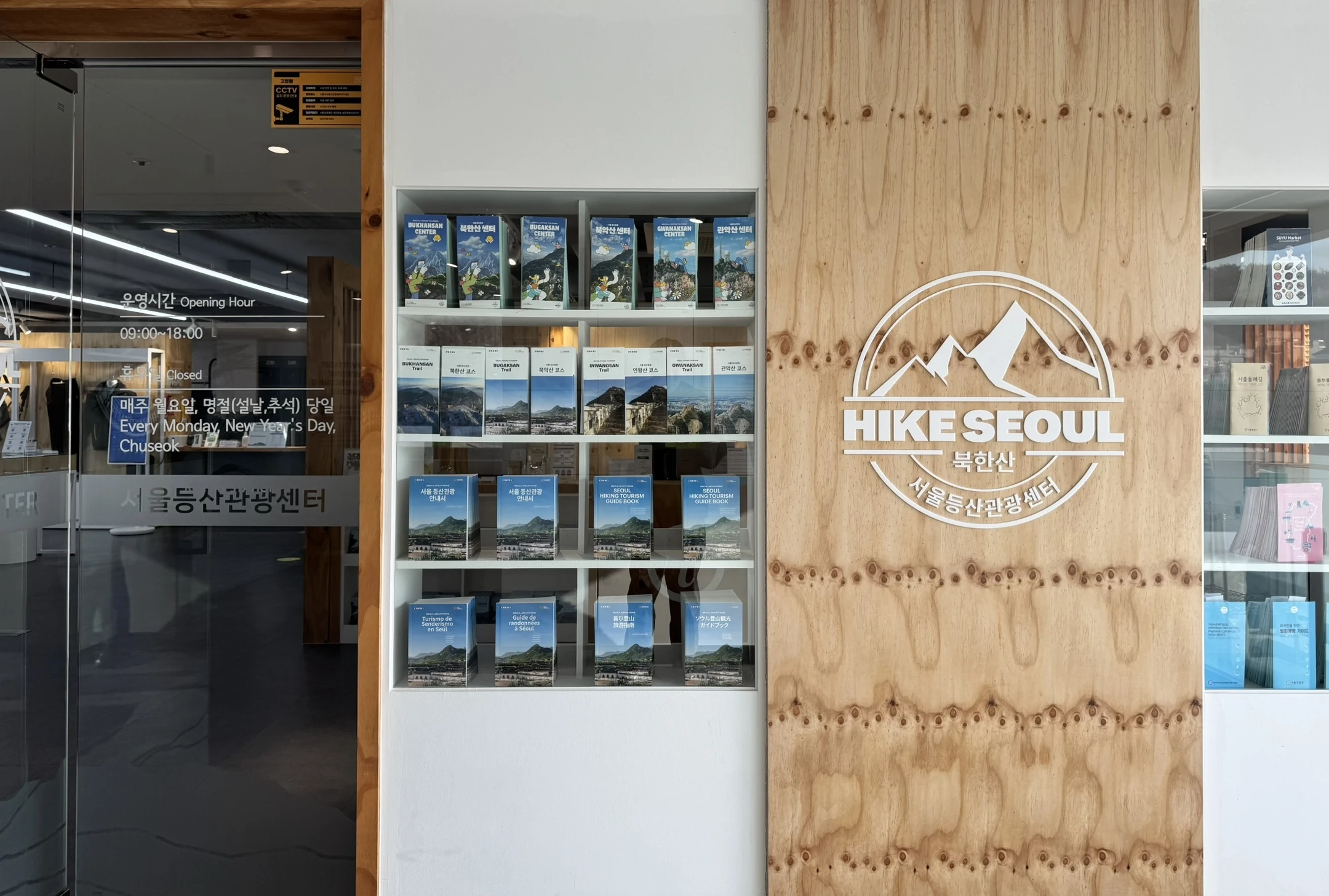
In 2022, the Seoul Metropolitan Government and Seoul Tourism Organisation launched their Seoul Hiking Tourism Centre initiative, which offers foreign visitors free advice and trail maps from local expert guides and an extensive rental inventory of hiking gear at highly subsidised rates.
With my legs craving for a hike but my luggage bursting at the seams from winter wear, I headed to give the service a try.
Just 30 minutes from the city centre via the Sinseol-dong subway station, Bukhasan Ui station is located near the mountain's eastern trailheads and just five minutes from the Seoul Hiking Tourism Centre. The facility is the first of three venues, with Bugaksan's opening in 2024 and Gwanaksan following in 2025.
Beyond its accessibility, I opted for Bukhansan due to its dramatic granite peaks and trail variety, which means you can adjust your course if you ever find it too challenging, or vice versa.
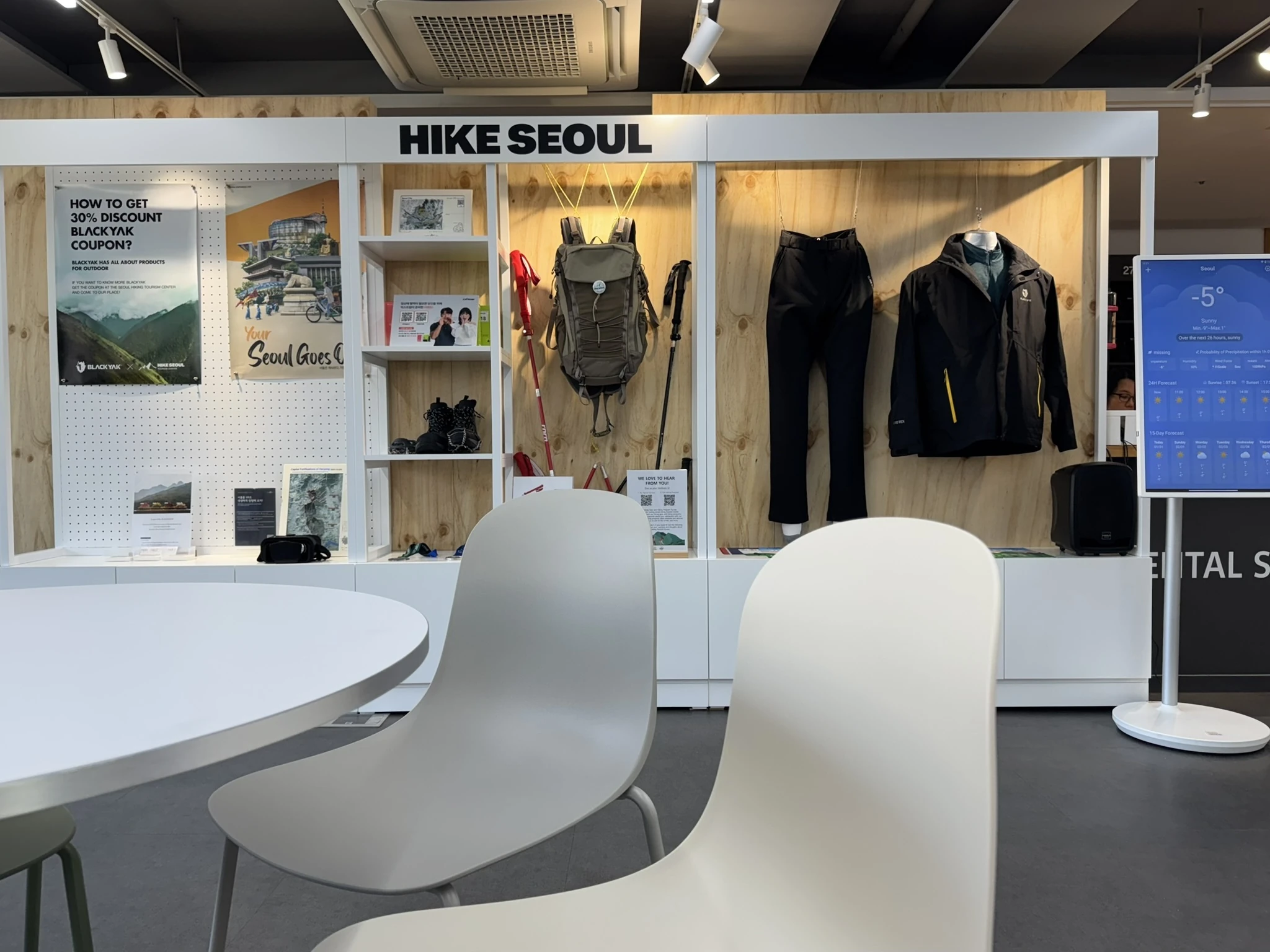
The hiking centre on the fifth floor was incredibly spacious and welcoming. Apart from the rental service, the site includes a resting lounge, two changing rooms, and lockers – all complimentary for tourists. There is even a shower facility on the basement floor (towels not provided).
Visitors can reserve their gear via Klook or walk in to seek advice from staff before deciding which gear to rent. Services are rendered in Korean, English, Chinese and Japanese.
I approached a staff member, Ian, who immediately guided me to a map section to determine my course before recommending items for the hike. The catalogue includes the essentials: hiking jackets, shirts, pants, shoes, bags, and gloves. Come summer, the shades, sunhats, and umbrellas will prove useful, while the crampons are handy in winter when surfaces are covered in ice. There are even joint bands and trekking poles if you need the extra support.
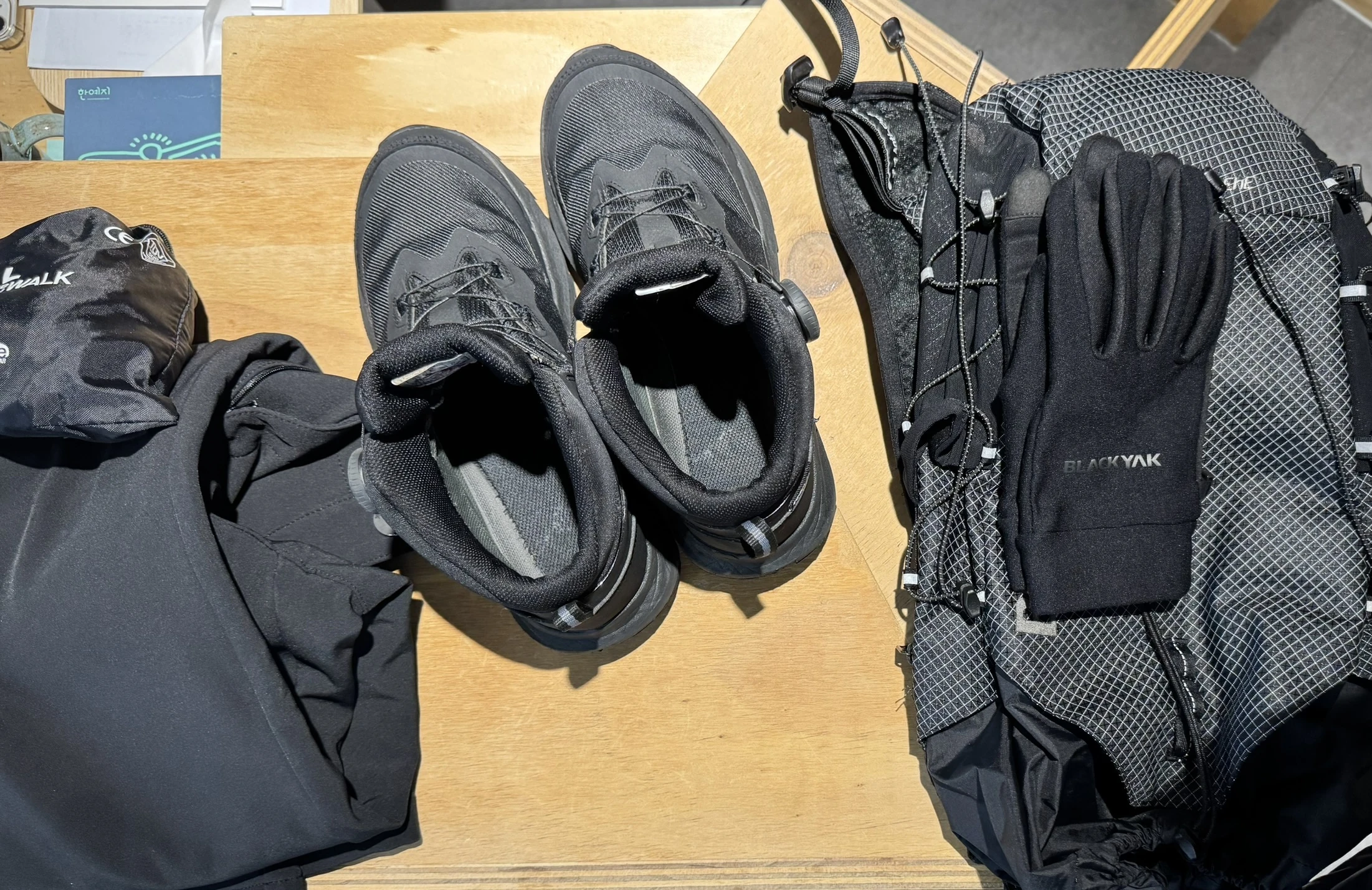
I ended up with a bag, pants, shoes, and gloves. Ian also advised crampons, as the weather was 3 degrees Celsius that day. My grand total? Less than S$12 for the whole day. Visitors are expected to return the gear by 4.30pm, though I was given a number to call or text should I need an extension.
I was surprised at how new the equipment seemed after three years of use. I later learnt that items made from Gore-Tex are cleaned with dedicated detergents, and all clothing is steam-sanitised on-site and deep-cleaned regularly. Believable, given the excellent state I saw.
The next question would be, how did they perform?
The short answer is: Fantastically.
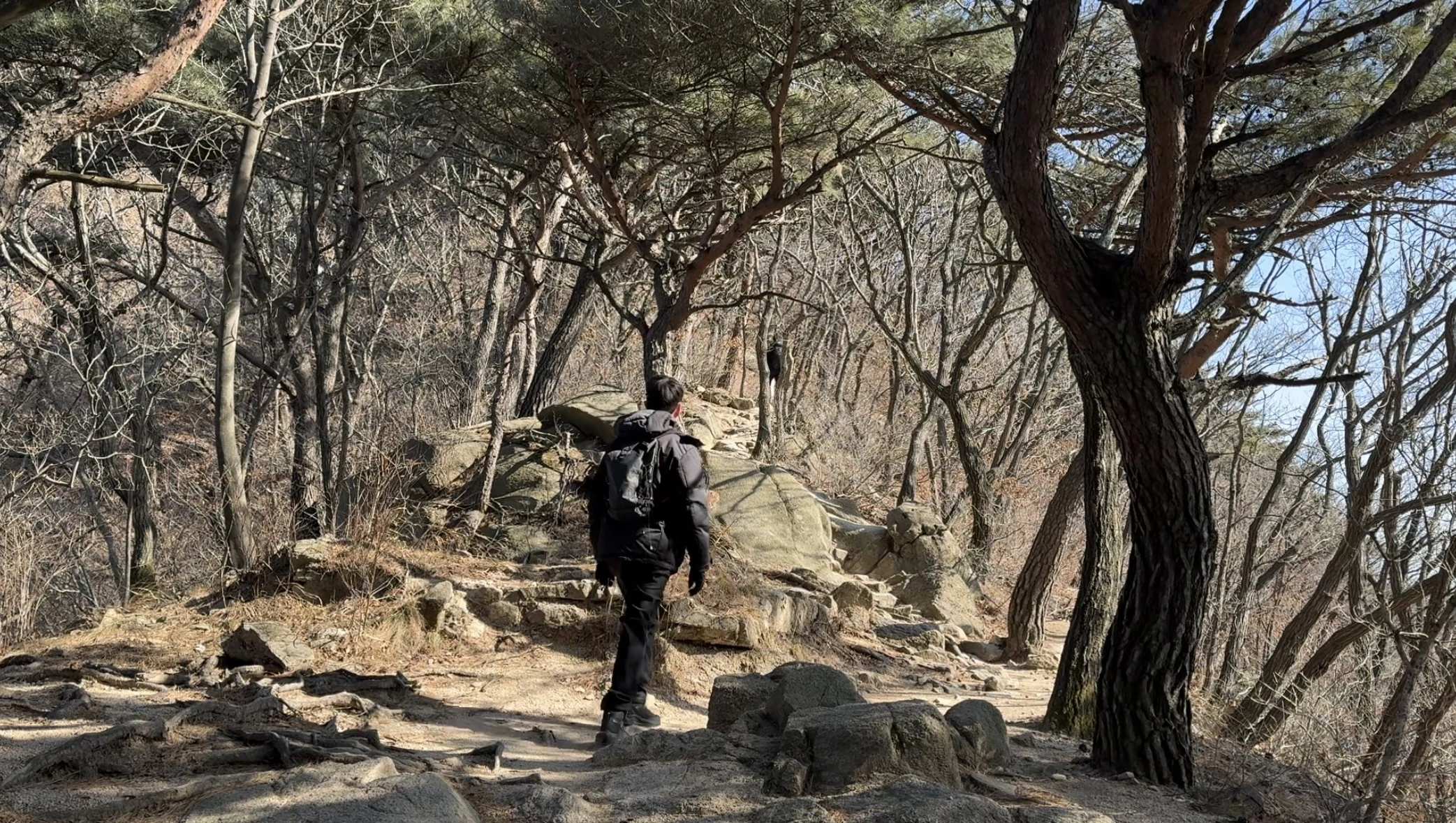
I chose to hike up to Yeongbong peak – an easy trail only 3.5km from the hiking centre. The first 30 minutes can actually be completed by car, but I chose to trudge up the boardwalk running parallel to the road. Along the way, I was greeted by local eateries and even chanting drifting forth from a temple hidden in the forest.
The trail officially began once I reached the Baegundae Information Centre. Proper hiking gear provides protection against the elements without hindering mobility, and this was where the rental gear really shone.
Most of the items are from Black Yak – a well-established Korean outdoor brand known for its durability, comfort, and suitability for mountain environments. The small hiking bag allowed me easy access to my water while keeping my belongings secure. The gloves and pants kept me warm without adding bulk, and the stretch kept me nimble. I found myself wishing I had rented the jacket over my puffy winter coat. Most impressive were the shoes. I detest hiking boots for their chunky weight, but the sneaker-like ones from Black Yak were light, breathable, and had excellent grip, allowing me to navigate between rocky steps, tree roots, and dirt trails with ease.
I kept a comfortable pace on the clearly marked trails, and in another 30 minutes, I arrived at Harujae Pass, with Yeongbong Peak just 200 metres away. At a height of just over 600 metres, it’s a popular, beginner-friendly destination with big payouts – as reflected by the constant presence of locals on the trail.
The last segment was the steepest but never proved to be difficult. While there is a small rock face that requires holding onto a railing, it was the only technical portion and lasted barely two minutes.
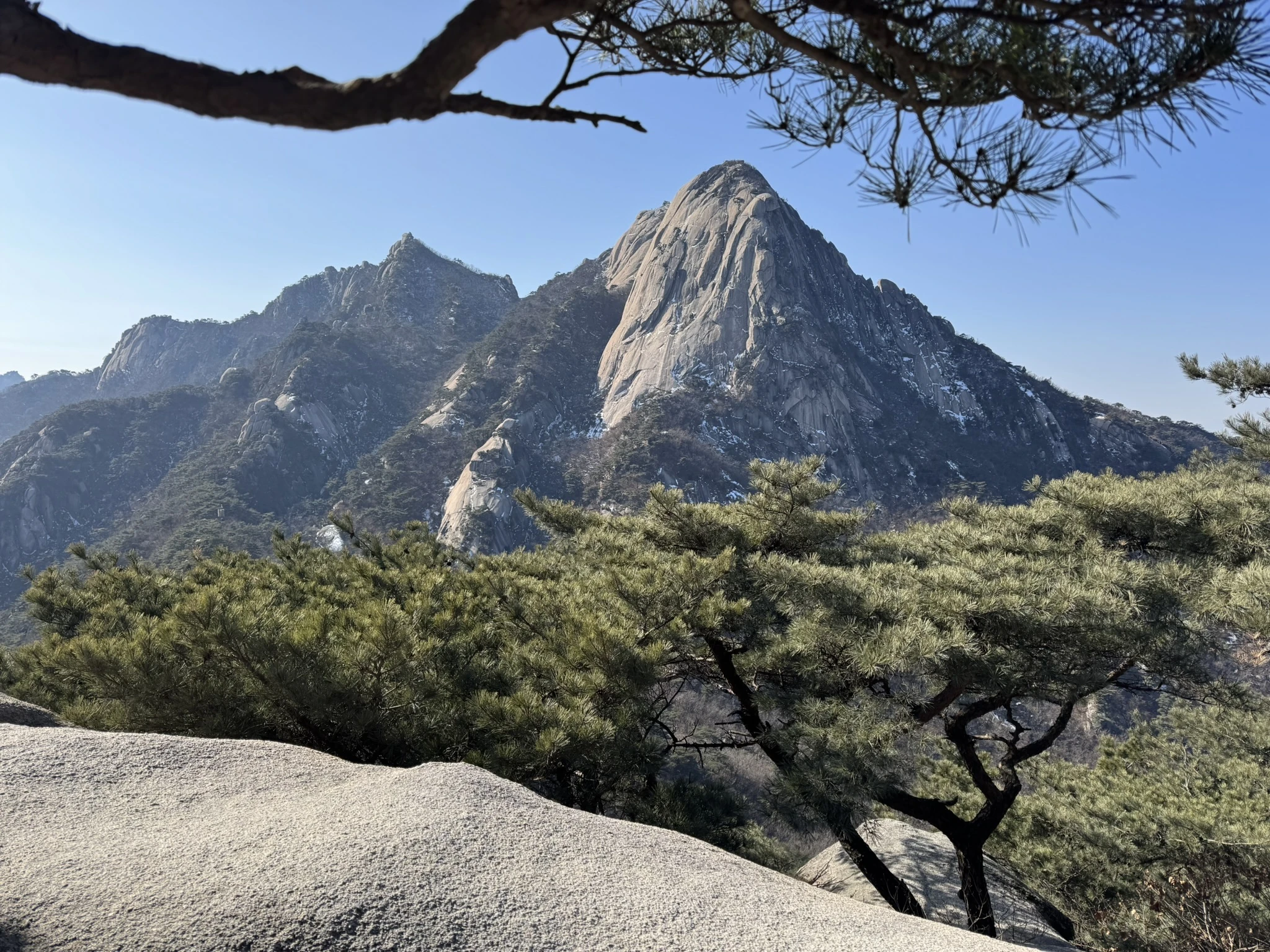
And the staff at the centre were right – the views approaching the top are spectacular. Levelling out into a small clearing at the top, it offers sweeping panoramic views of the city in one direction and pristine vistas of the mountain range in the other. More than a few locals gathered to make cup noodles, with hot water from their thermos at the ready. Others preferred to sit on the rocks, sipping their coffee.
I myself stayed there for a good 30 minutes just soaking it all in – struck by how, in this city, even an unprepared visitor with no gear can find their place on the mountain.
Seoul Hiking Tourism Centre
Bukhansan:
5F, 52, Samyang-ro 173-gil, Gangbuk-gu, Seoul, Republic of Korea
Tue-Sun, 9am-6pm (returns by 4.30pm)
Gwanaksan:
B1, 23, Sillim-ro, Gwanak-gu, Seoul, Korea
Thu-Tue, 9am-6pm (returns by 4.30pm)
Bugaksan:
88, Samcheong-ro, Jongro-gu, Seoul, Republic of Korea
Wed-Mon, 9am-6pm (returns by 4.30pm)
Have you heard? These are the best spring travel destinations in Asia 2026
Plus: Chiang Mai and Da Nang are among the world’s top cities for digital nomads in 2026, says Forbes
Stay in the loop: sign up for our free Time Out Asia newsletter for the best travel inspiration straight to your inbox.
Discover Time Out original video