[category]
[title]
This slower route through Cambodia’s Southern Coast is one shaped by old-world hotels, pepper farms, crab markets and a coast quietly coming into its own


We were somewhere between the second cocktail and the third when she said it. I'd asked, almost reflexively – the way you do when you're in Phnom Penh, and the conversation turns to history – whether she'd ever been to the genocide museum. She shook her head, not uncomfortably. "A lot of us haven't," she said. "We just want to move forward."
Most visitors to Cambodia arrive with a fixed itinerary: fly into Siem Reap, spend three days at Angkor Wat, leave – or linger in Phnom Penh just long enough to visit the Killing Fields and Tuol Sleng. Both are valid. But heading south through Phnom Penh, Kampot and Kep made room for a different picture of the country to emerge.
Why go to the South of Cambodia now?
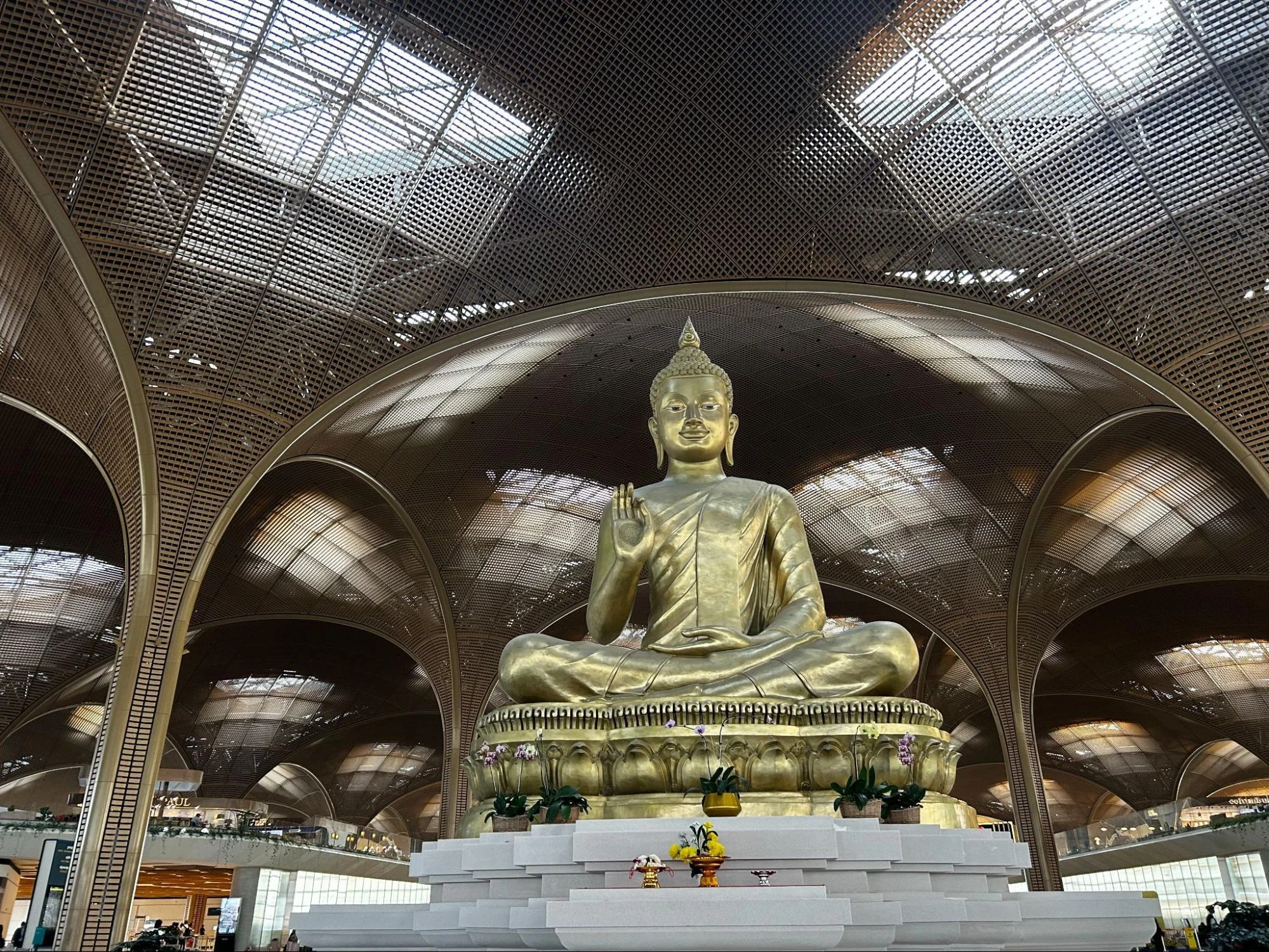
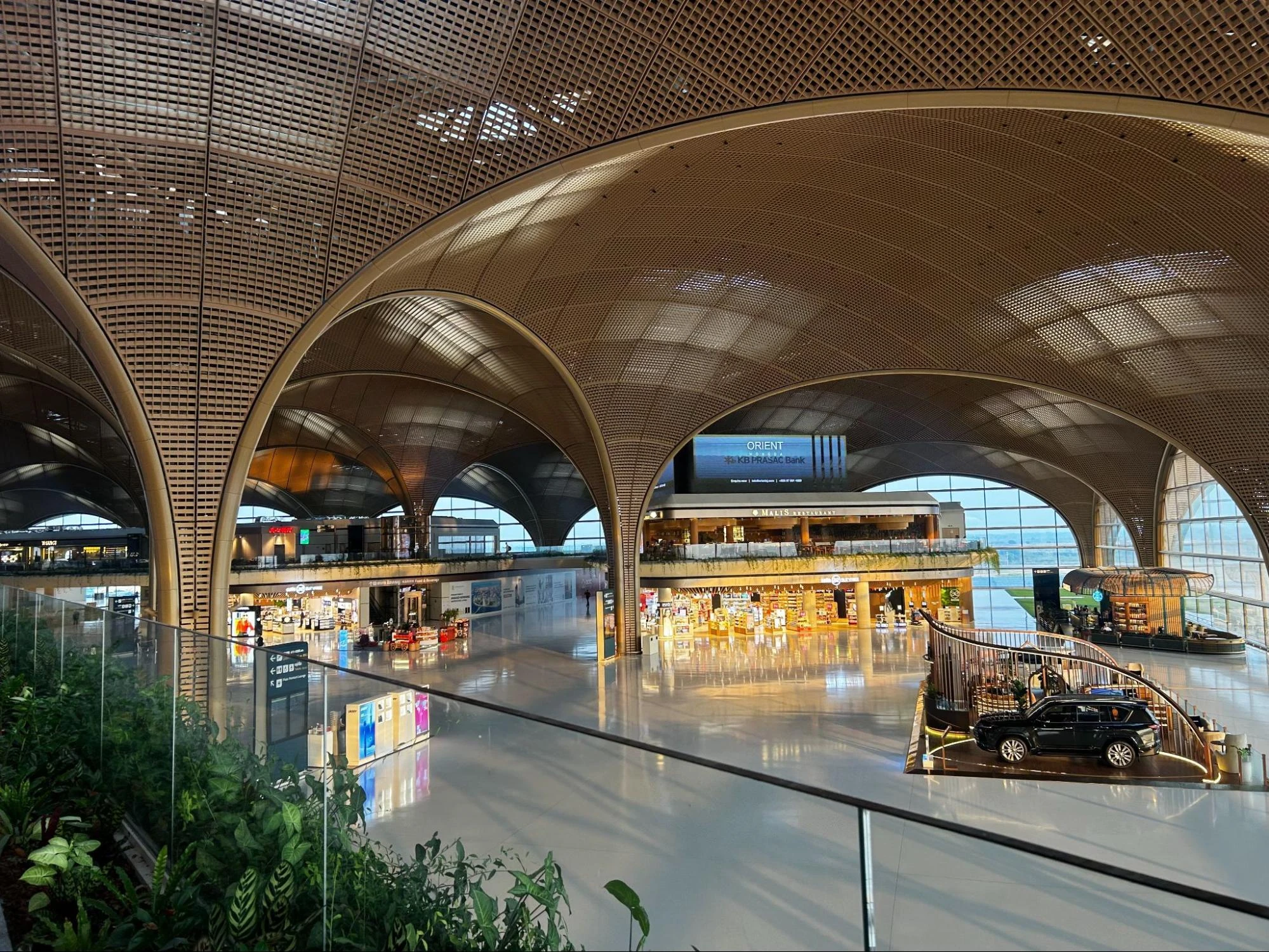
Phnom Penh and Cambodia’s southern coast are changing quickly – and together, they now make a more compelling trip than many visitors might expect. The capital, once treated as little more than a gateway, has become somewhere worth slowing down for. There’s now a homegrown café culture, internationally recognised bars, and a new creative energy that didn't exist a decade ago. Further south, Kampot's agrotourism scene and Kep's quiet coastal pull complete a route that feels genuinely of the moment. Newer infrastructure helps: Phnom Penh Techo International Airport (KTI) is larger than its predecessor and handles more routes, though it sits slightly further from the city centre.
Designed by Foster + Partners, the terminal feels vast, airy and almost unusually serene, with structural “trees” inspired by the rumduol, Cambodia’s national flower. It struck me as a mixture of an Apple Store and Singapore’s own Changi Airport. Impressive, yes, though also large enough to suggest it was built with Phnom Penh’s future firmly in mind.
A car was waiting outside arrivals. Four days, three stops, one continuous thread of pepper, salt and sea.
Phnom Penh
“How long should I stay in Phnom Penh?” is a question that probably haunts every first-time visitor to the city. I’d say give it at least two nights; and even then, you’d barely be scraping the surface of the city.
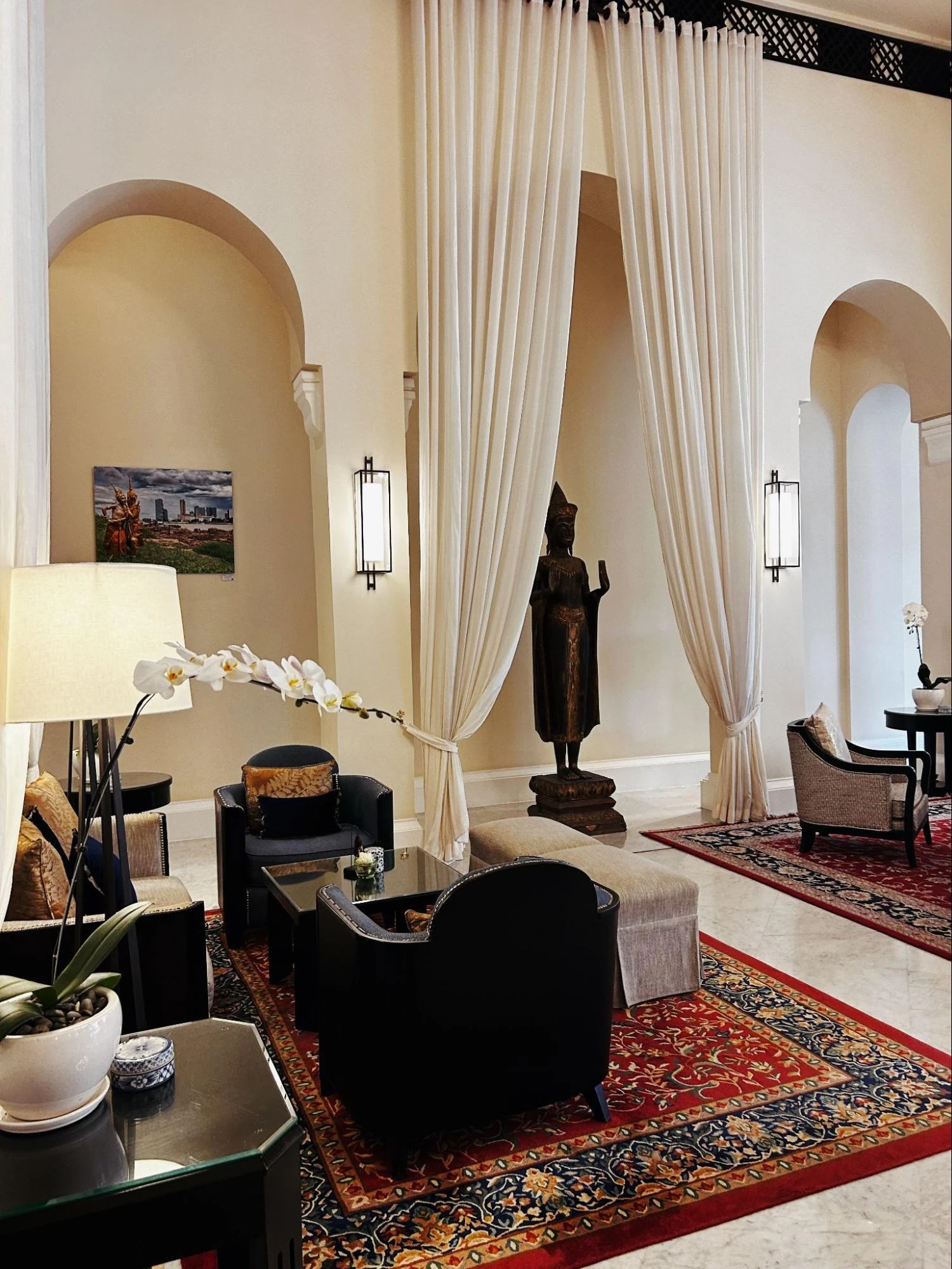
We headed straight to Raffles Le Royal. Perhaps fitting, as the hotel once housed foreign correspondents during the Khmer Rouge era. In the original 1929 building, the lobby channels a certain colonial-era grandeur: soaring ceilings, arched windows, polished marble and richly patterned rugs that bring warmth to all that symmetry. Overhead, tiered chandeliers glow softly down the centre of the room. But Khmer sculptures are placed with enough authority to remind you exactly where you are.
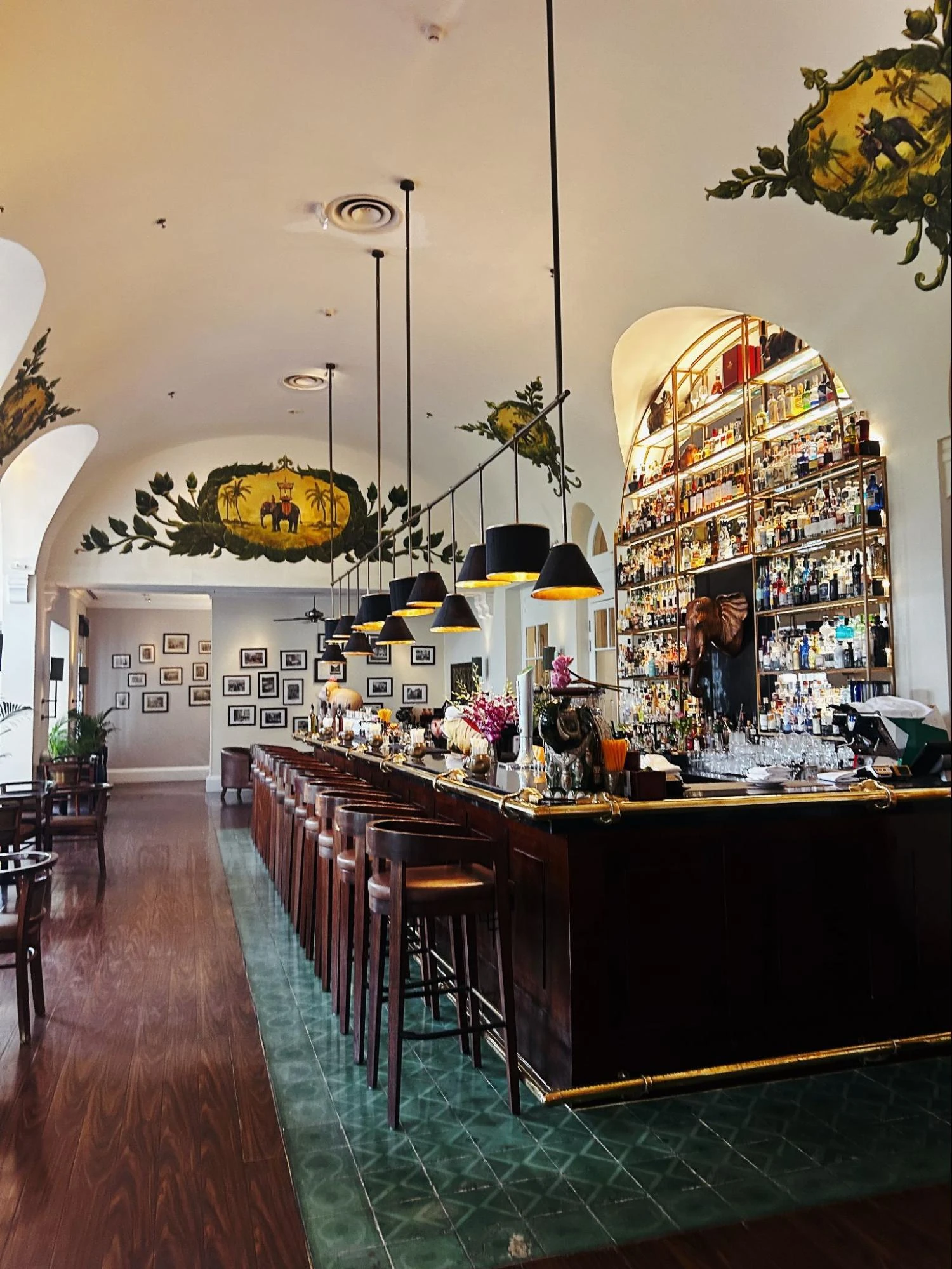
The Elephant Bar is the place to settle in first – over 200 gins on the menu, and one signature cocktail one should order for the story alone: the Femme Fatale, a heady mix of champagne, cognac and crème à la fraise des bois, originally crafted for Jacqueline Kennedy during her visit in 1967. It's still on the menu today.
The city's bar scene has grown up around that old-world anchor. Bassac Lane is where locals point you for an evening – a narrow alley of low-lit bars that hums from sunset onwards; worth wandering even if you're not drinking. For something higher and newer, Rosewood Sora Sky Bar landed 65th on Asia's 50 Best Bars list last year. I ordered an Old Fashioned out of habit. The more interesting order, it turns out, is from their Build & Sip menu. The cocktail series was conceived by Director of Bars Jonas Vittur, presented in a colourful Lego-brick format that sounds gimmicky until the drinks arrive. What you get are Khmer flavours built into Japanese-influenced constructions.
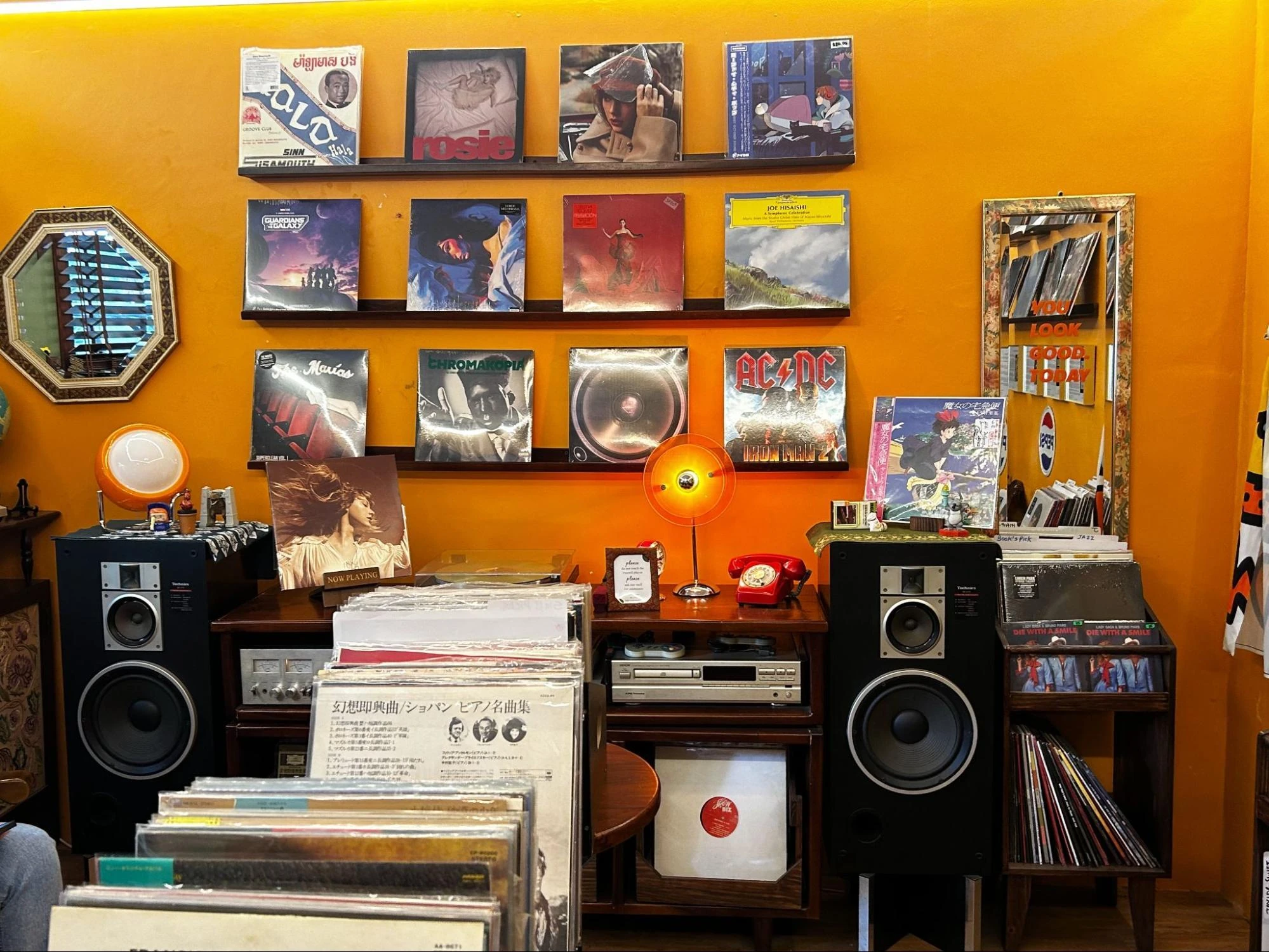
Phnom Penh’s present tense comes through in the places shaping its newer cultural life. Le Melodie is a vinyl café-bar preserving pre-genocide Cambodian music, where old rock-and-roll legends play not as background ambience but as an act of preservation. Over at Samai Distillery, Cambodia’s first premium rum distillery, the Kampot Pepper Rum is the bottle to try – fragrant, softly spiced, and a neat preview of the flavours waiting further south.
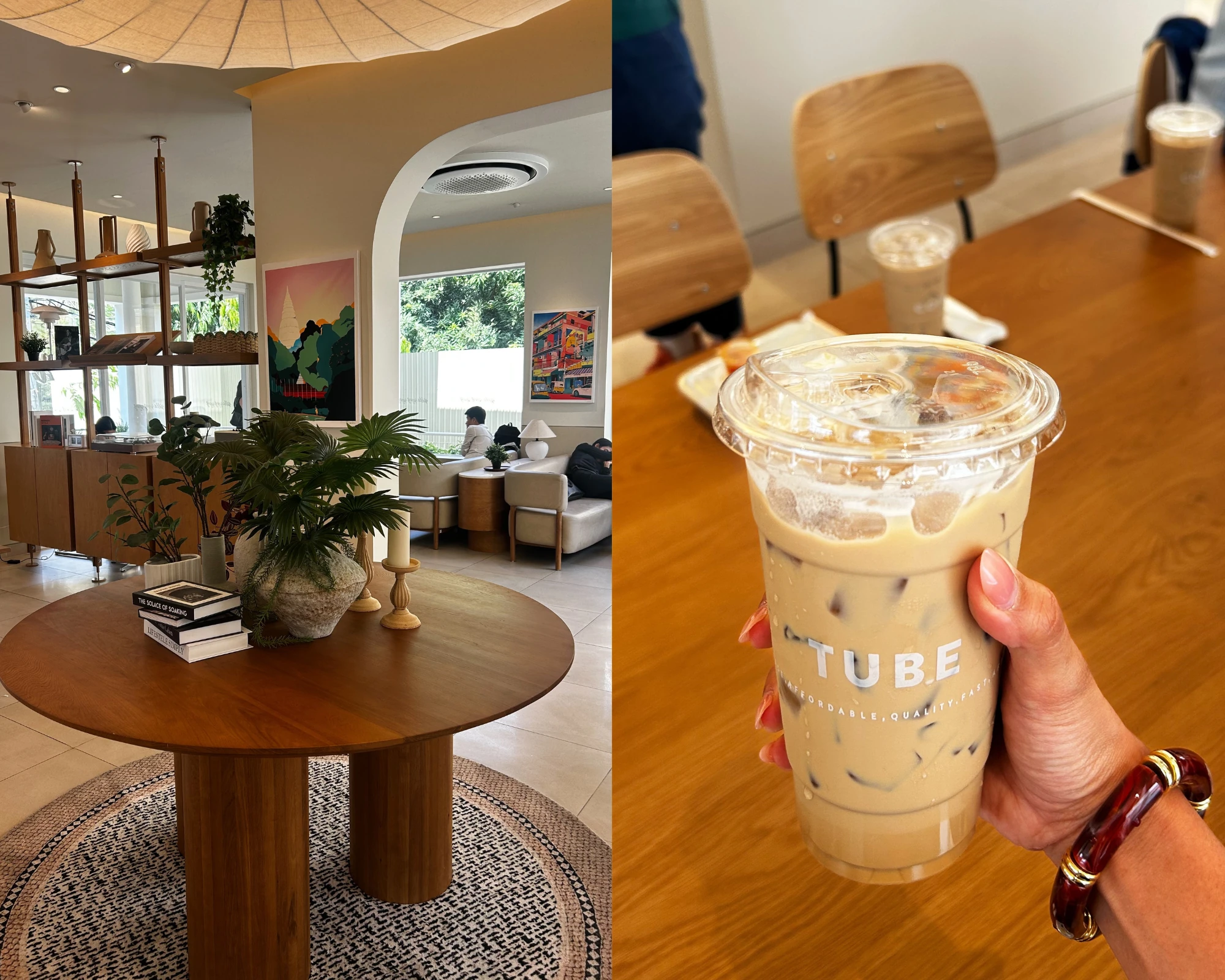
Then there’s Tube Coffee in BKK1, set inside a former villa once used by US embassy residents, where the city’s newer creative class now passes through for drinks and meetings. With coffee culture here only really resurging over the past 15 years, it feels like another marker of a Phnom Penh that is changing quickly, but not without absorbing its past along the way. Even the city’s walls seem in conversation with that shift, with murals by artists like FONKi layering ancient Angkorian motifs into scenes of contemporary Cambodia.
Kampot
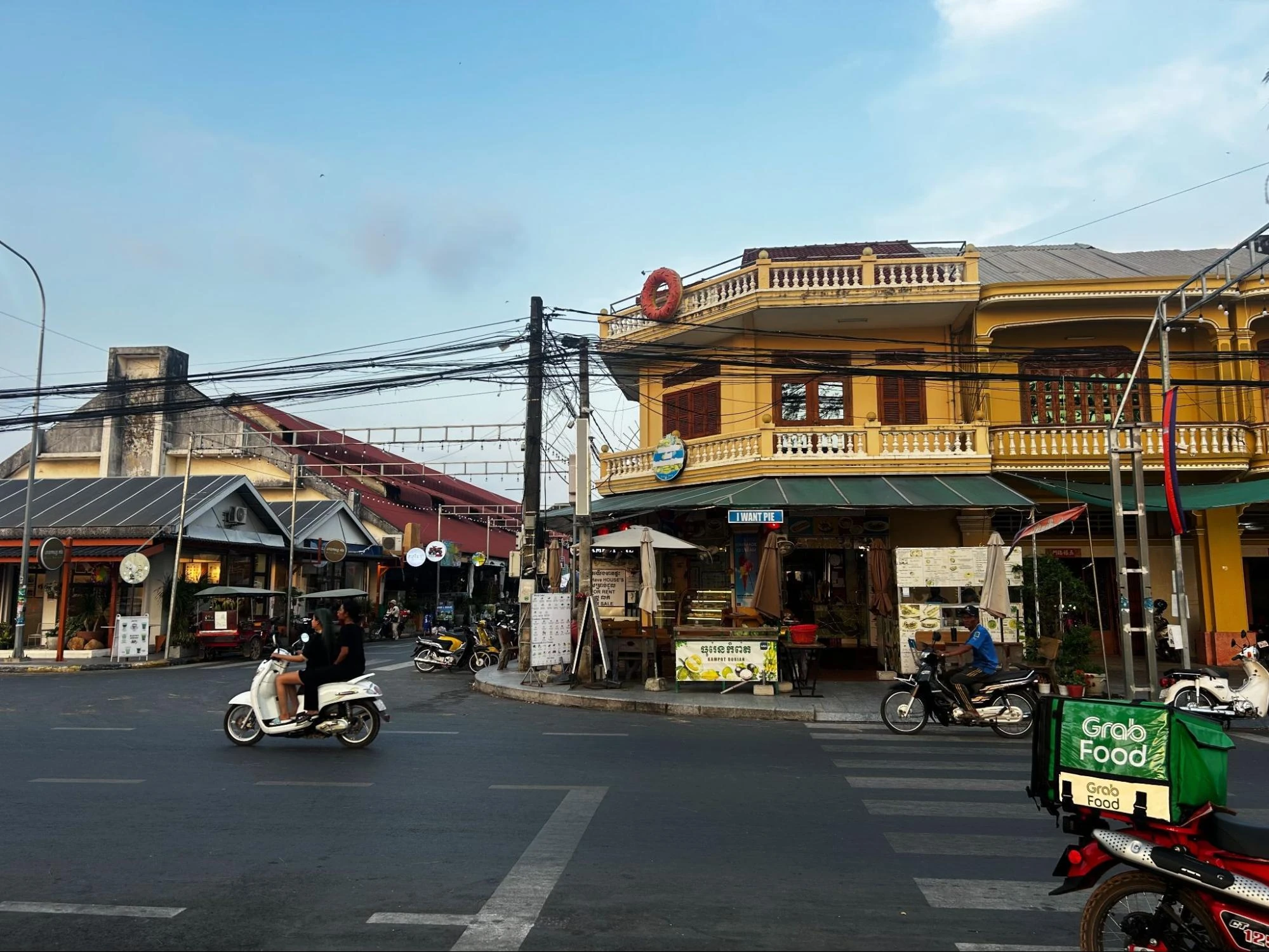
Three hours south of the capital, Kampot announces itself with a durian roundabout. It sounds like a joke until your guide explains, with complete seriousness, that Cambodians consider Kampot durian the finest in the country because of the terroir. The road has changed by this point, Phnom Penh's dense, hooting streets long replaced by something wider and flatter, palm trees and open sky.
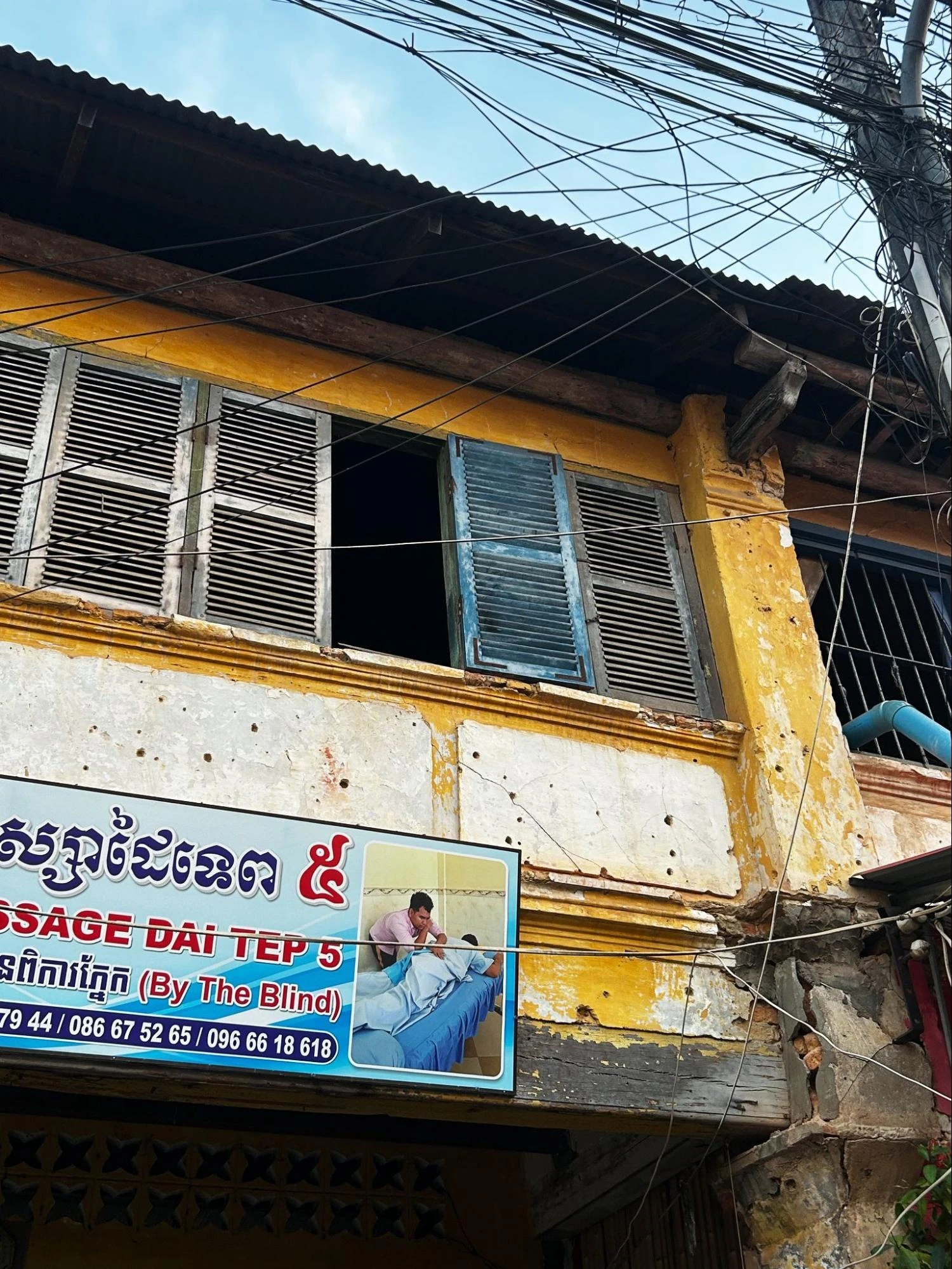
Kampot is a riverside town of low-rise shophouses and faded shutters. It has the unhurried quality of somewhere that was briefly important, then left alone long enough to develop its own rhythm. History still lives in the walls here – literally. On one street, a dilapidated Chinese shophouse, now a massage parlour, still wears its bullet holes unplastered, as if the building simply decided to keep the record.
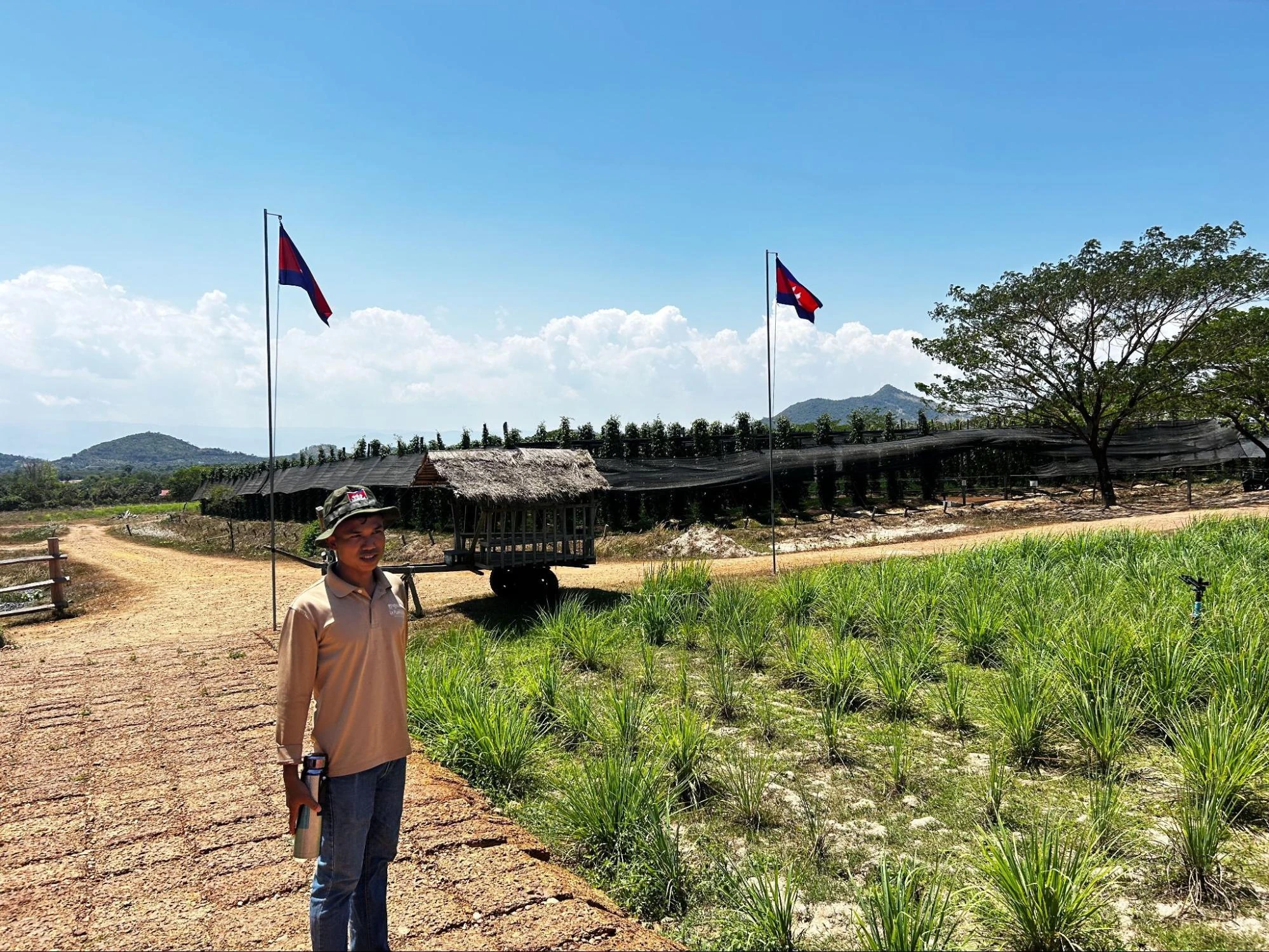
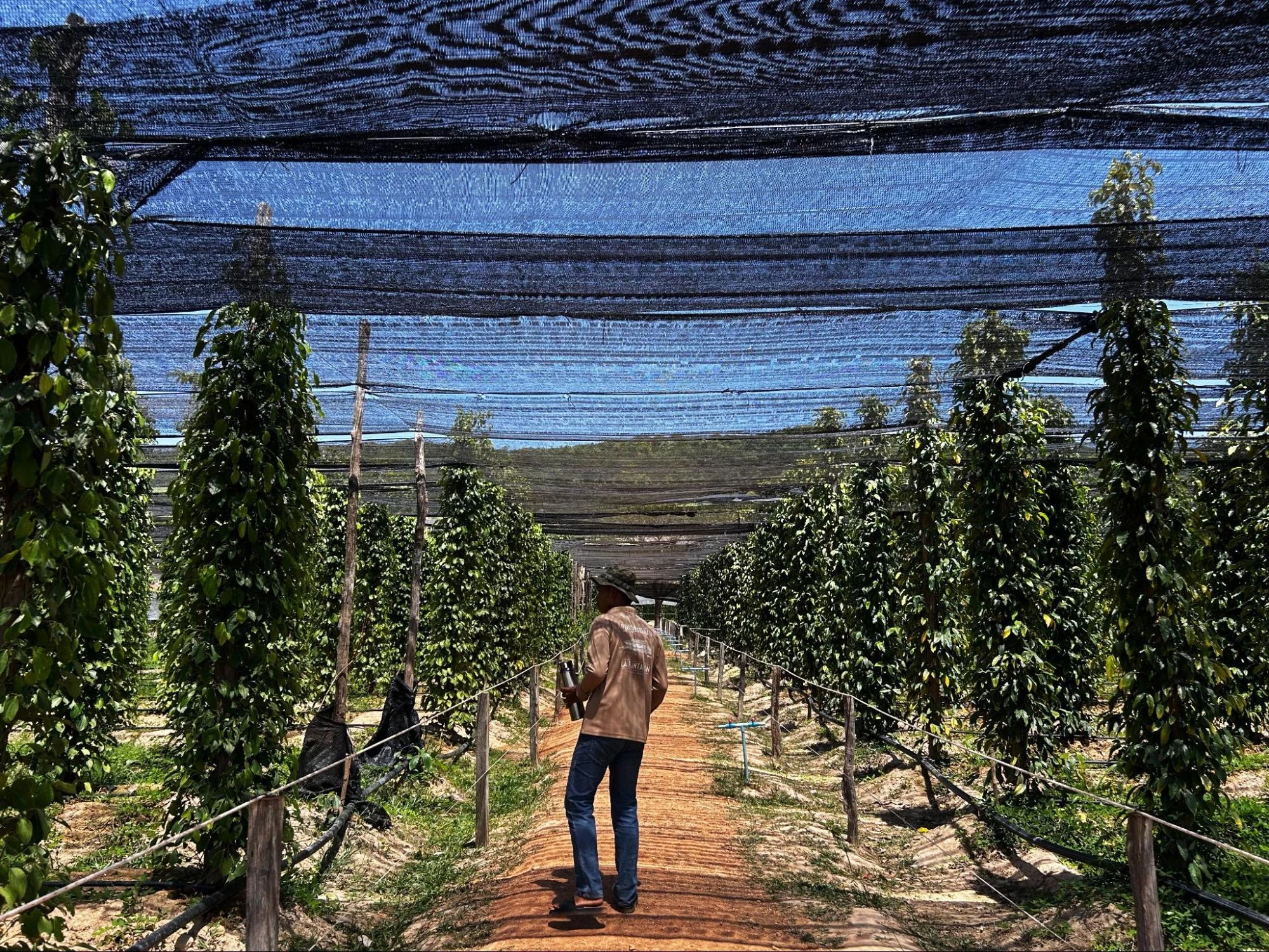
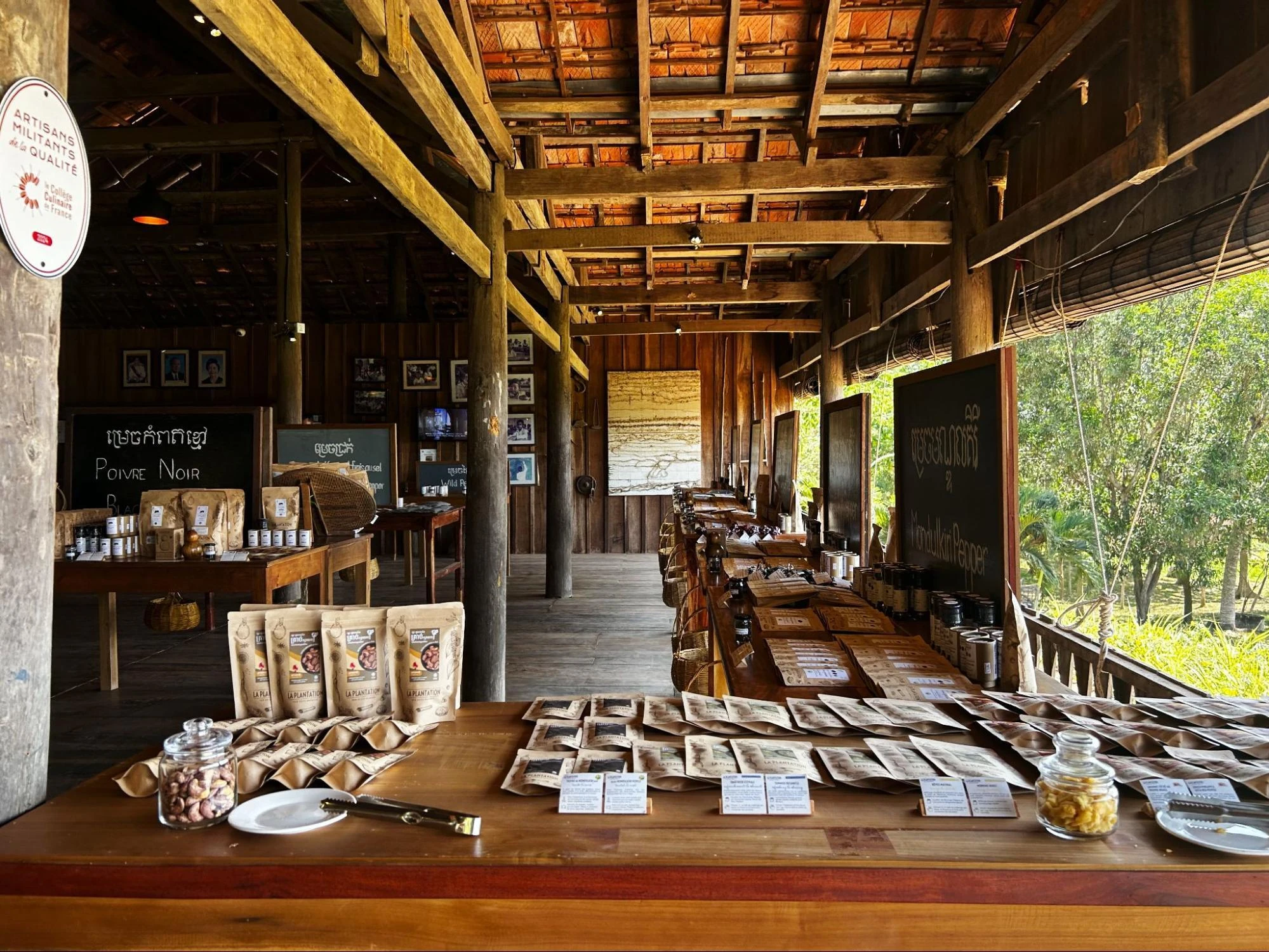
The reason chefs worldwide know Kampot's name has everything to do with what grows around it. La Plantation is the best place to understand why. It’s a working organic farm and agrotourism site open daily, with guided tours that take you through the pepper vines, spice gardens and fruit orchards. The vines grow upward on wooden poles in neat rows, the smell up close earthy and alive – nothing like the dusty grind in a supermarket jar.
Grown in the narrow strip between the mountains and the sea, Kampot pepper owes its reputation to a rare mix of soil, climate and painstaking hand-production. The French expanded cultivation in the late 19th century, and by the early 20th century, it was already being exported to Europe as one of the world’s finest spices. Wars and the Khmer Rouge nearly wiped it out. Its revival only began in the early 2000s, when surviving farming families rebuilt the industry, and Kampot pepper later earned protected geographical status.
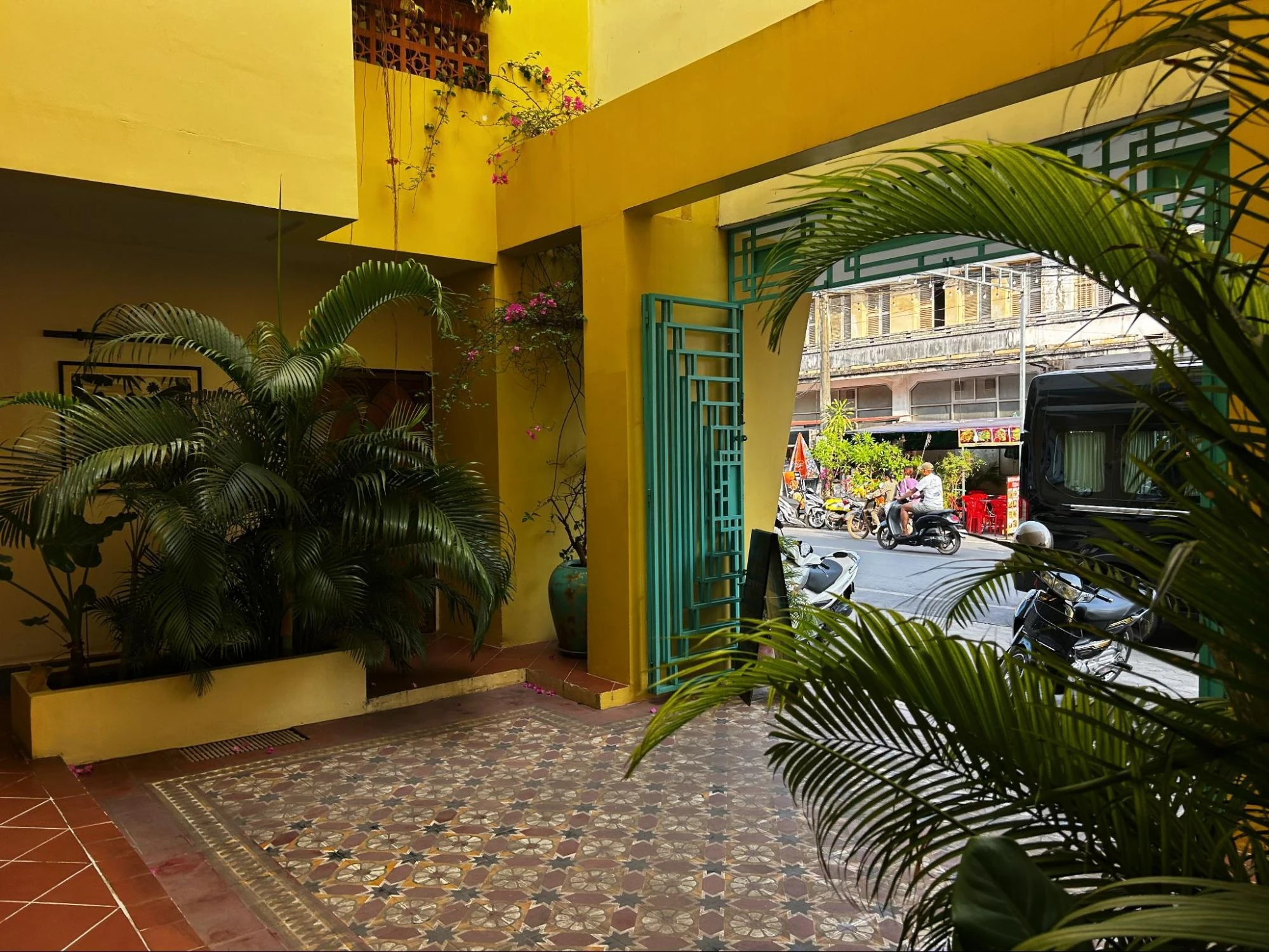
After a sweltering afternoon among the vines, Hotel Old Cinema is a welcome landing. The building has lived several lives: originally a Chinese theatre staging live performances in the 1930s, it later screened Kung Fu films, was relaunched as 7 Makara Cinema after the Khmer Rouge fell in 1979, and then left to decay for decades. French-Dutch owners rescued it in 2016 and restored it into something with genuine character, which is the right call for a building like this.
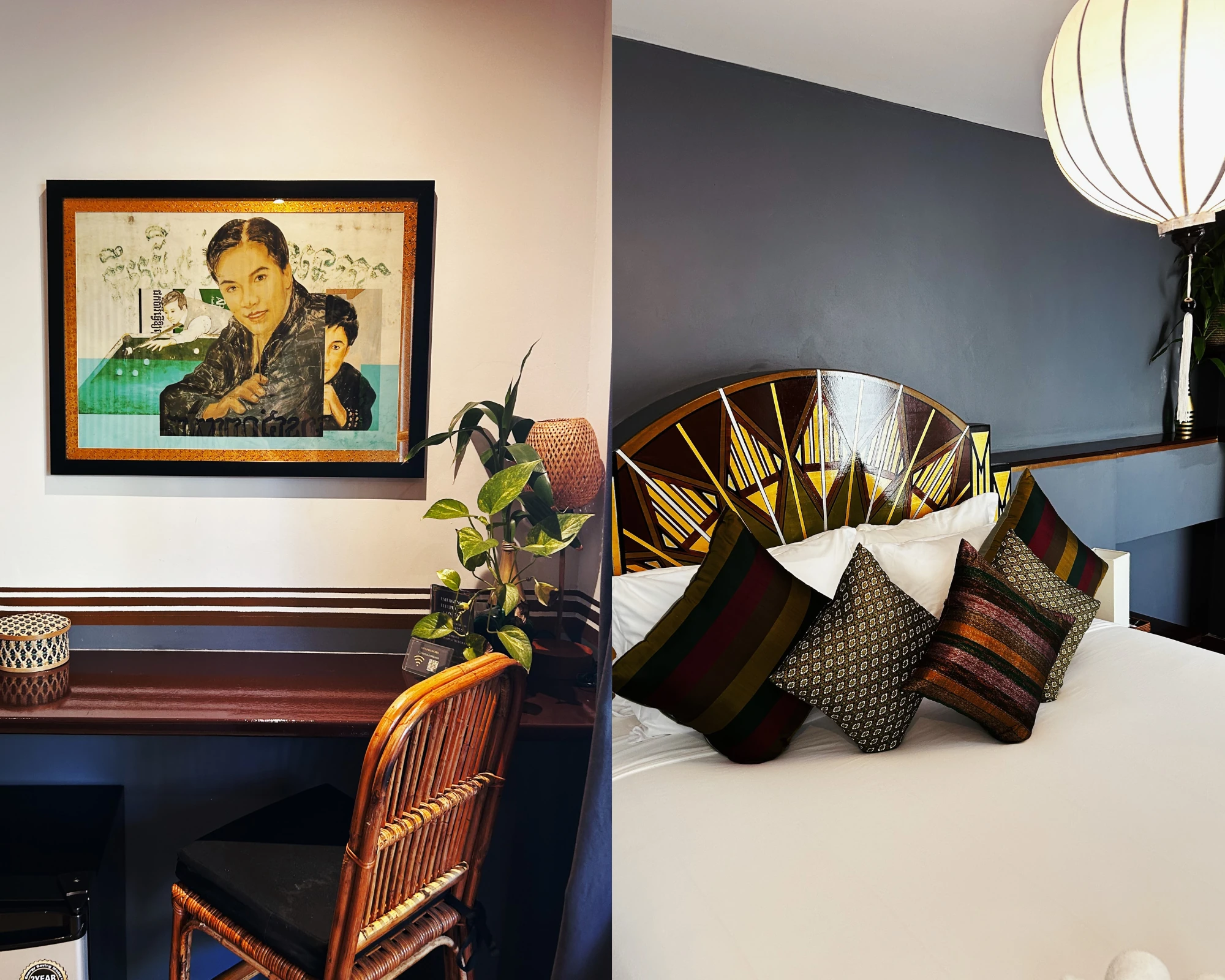
There are just eight rooms, each one a devoted tribute to Cambodia's 1950s Art Deco era: terracotta floors, rattan furniture, vintage film posters that nod to the building's cinematic past. My room came with a private balcony, ideal for reading to what I assumed were bird sounds – until I discovered they were played over loudspeakers to attract swiftlets, whose nests, made of hardened saliva, are harvested and sold as a delicacy. Somehow that detail made the place feel even more Kampot.
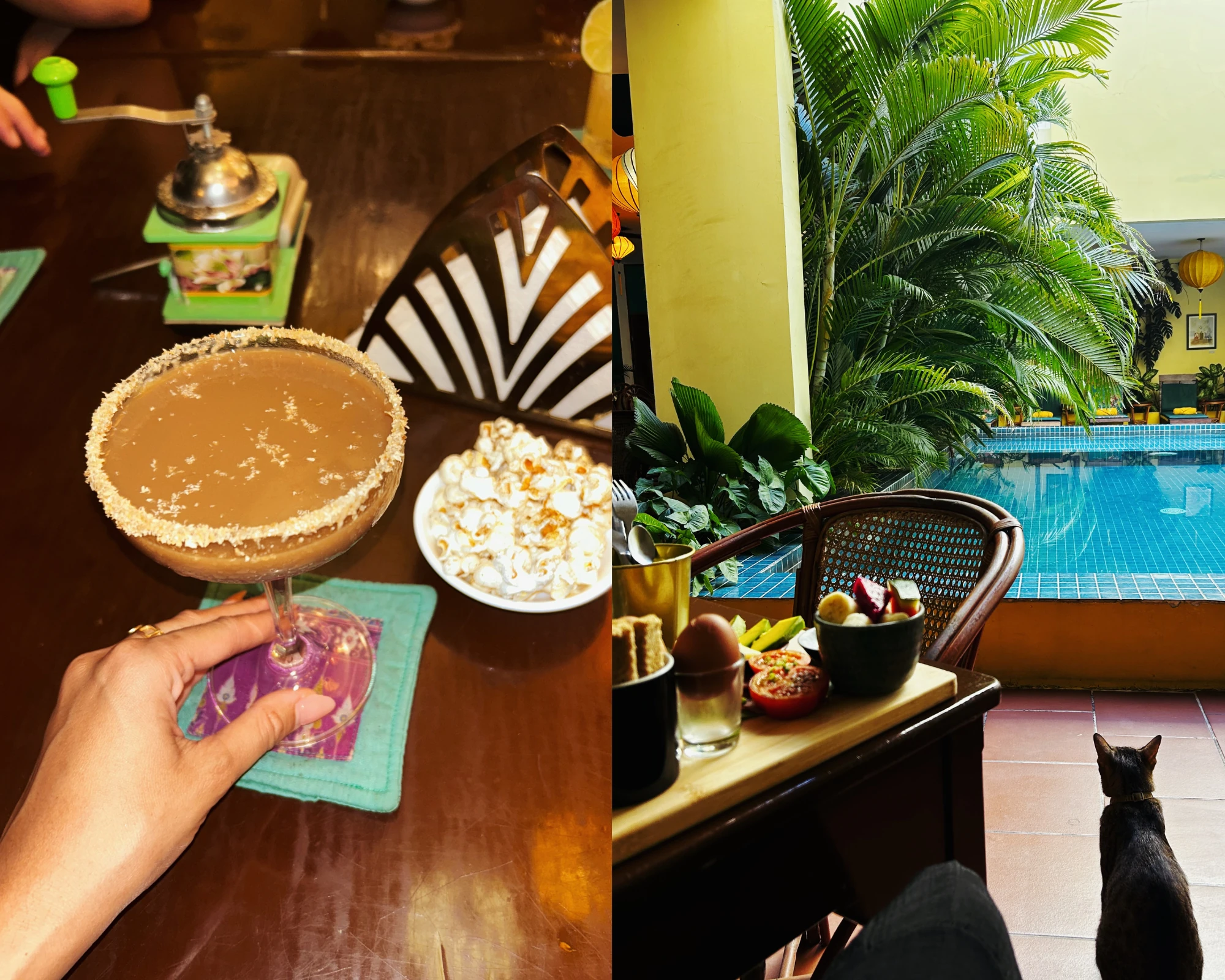
Here’s something else that might surprise you: the in-house bar is actually really good. My nightcap comes in the form of a Cafe Duang Martini – the hotel's take on an espresso martini, built with Stolichnaya vodka, coffee liqueur, coconut liqueur, sweet milk and salt, coconut flakes rimming the glass. And now I can’t imagine having an espresso martini without the coconut flakes. Breakfast the next morning was equally good – a Western spread and coffee served from a retro French press by the pool, with the hotel cat for company. Though if I'm honest, it was probably more interested in my food than in me. And who could blame her?
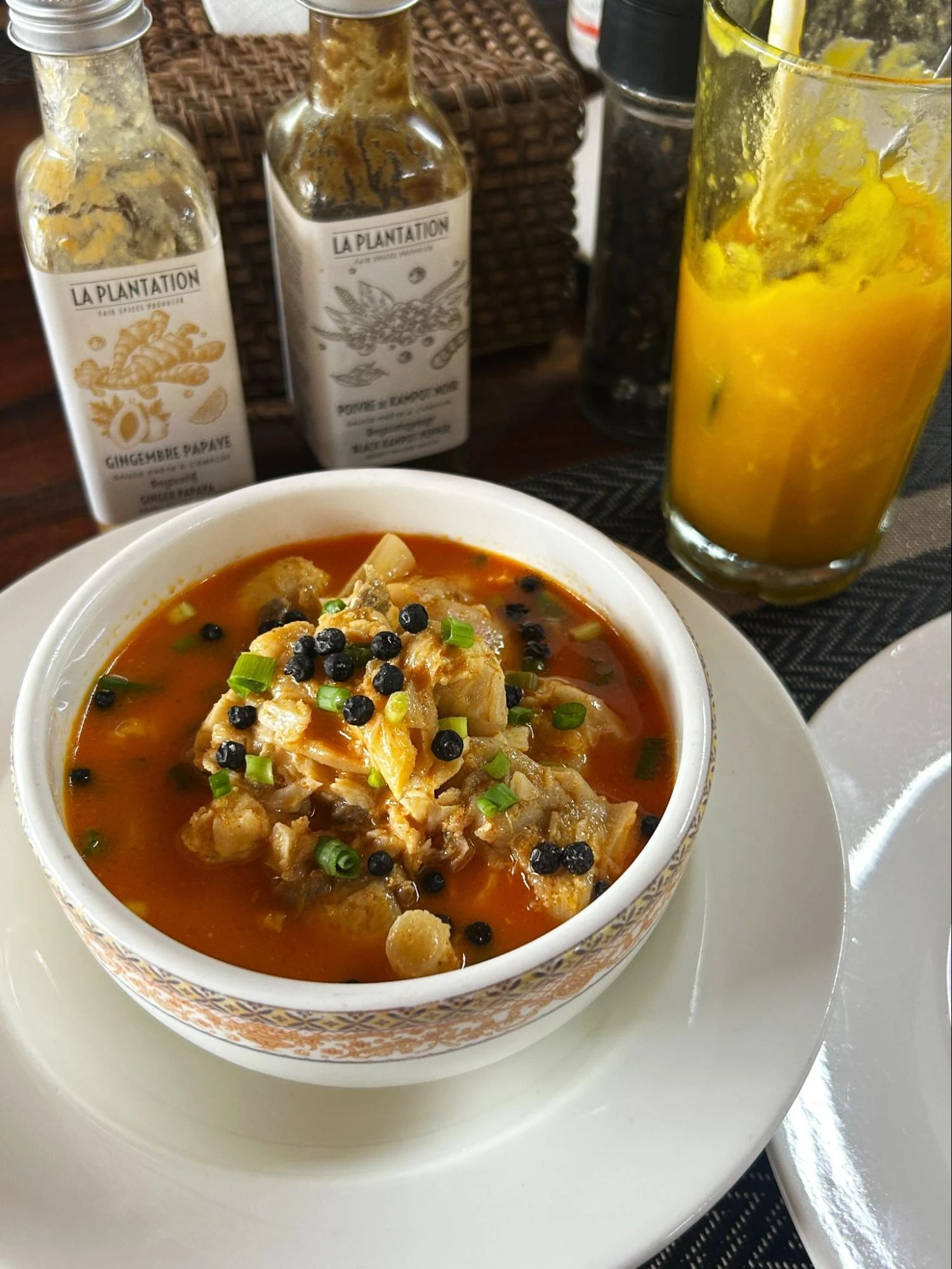
Kampot, it turns out, is also fun to explore on an empty stomach. My first taste of Amok was the Fish Amok at La Plantation, served in a curry-like form. But I came to learn that this dish comes in many renditions. The Crab Amok at Kdam Kampot Restaurant – a restored boat moored along the Kampot riverside – was something else entirely: steamed crab curry with the texture of a thick, silky custard, bound with eggs and coconut milk. In fact, it was closer to otak-otak than anything I'd had before. The better version, in my humble opinion.
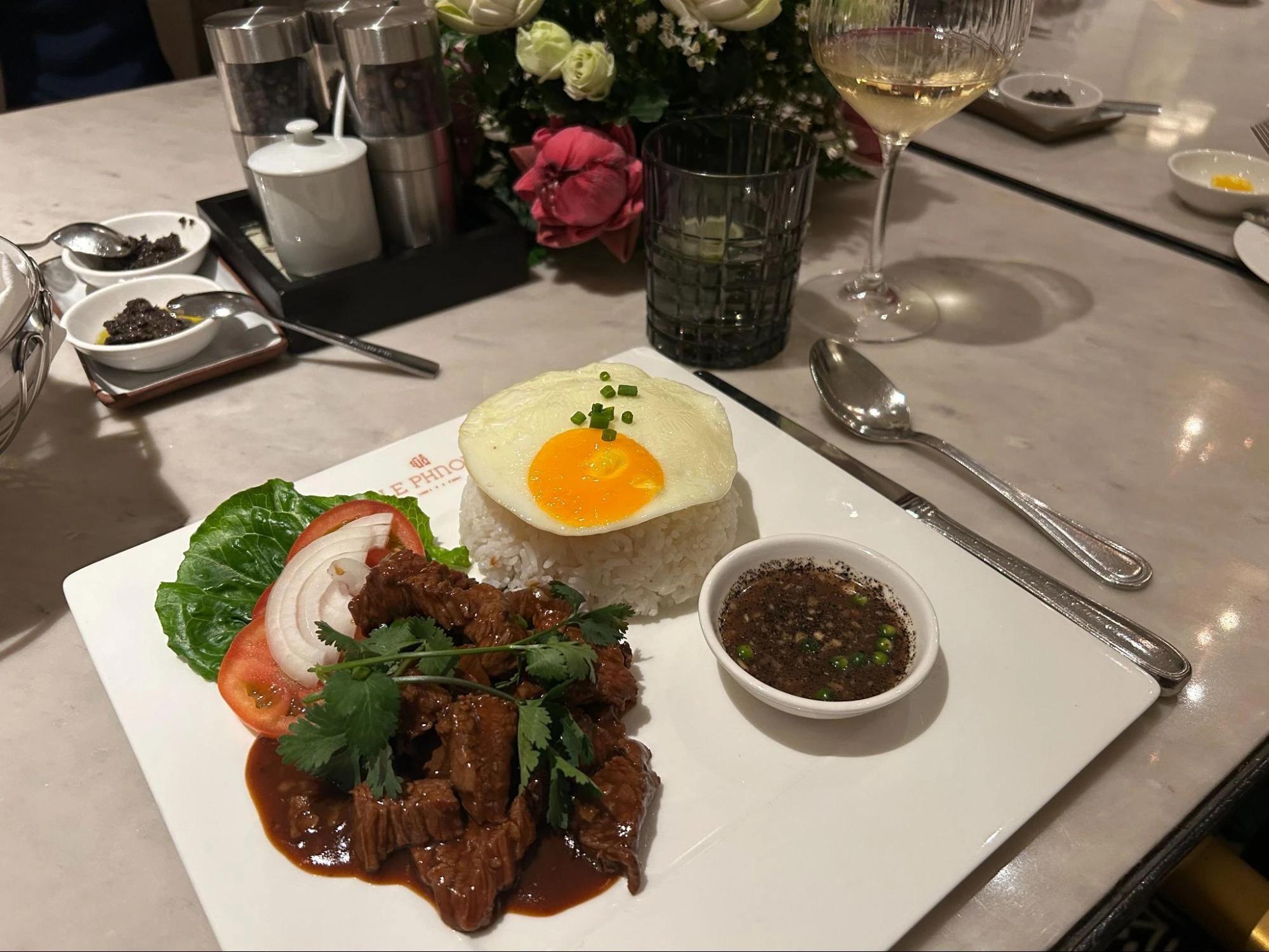
Then there was Lok Lak. I had four versions across the trip, each one tasting noticeably different from the last. For the uninitiated, it’s a Cambodian stir-fry of beef, chicken or shrimp, wok-tossed and served with rice and a lime-pepper dipping sauce. Our Cambodian friends told us it's their default order, the way chicken rice is for Singaporeans.
What struck me during my trip so far was how well-seasoned everything was. It wasn't until later that the connection became obvious: nearly everything we ate had been touched, in some way, by Kampot pepper and Kampot salt. The two great ingredients of southern Cambodia, present in almost every dish. Which is as good a reason as any to head further south – toward the salt fields, and then the sea.
Kep
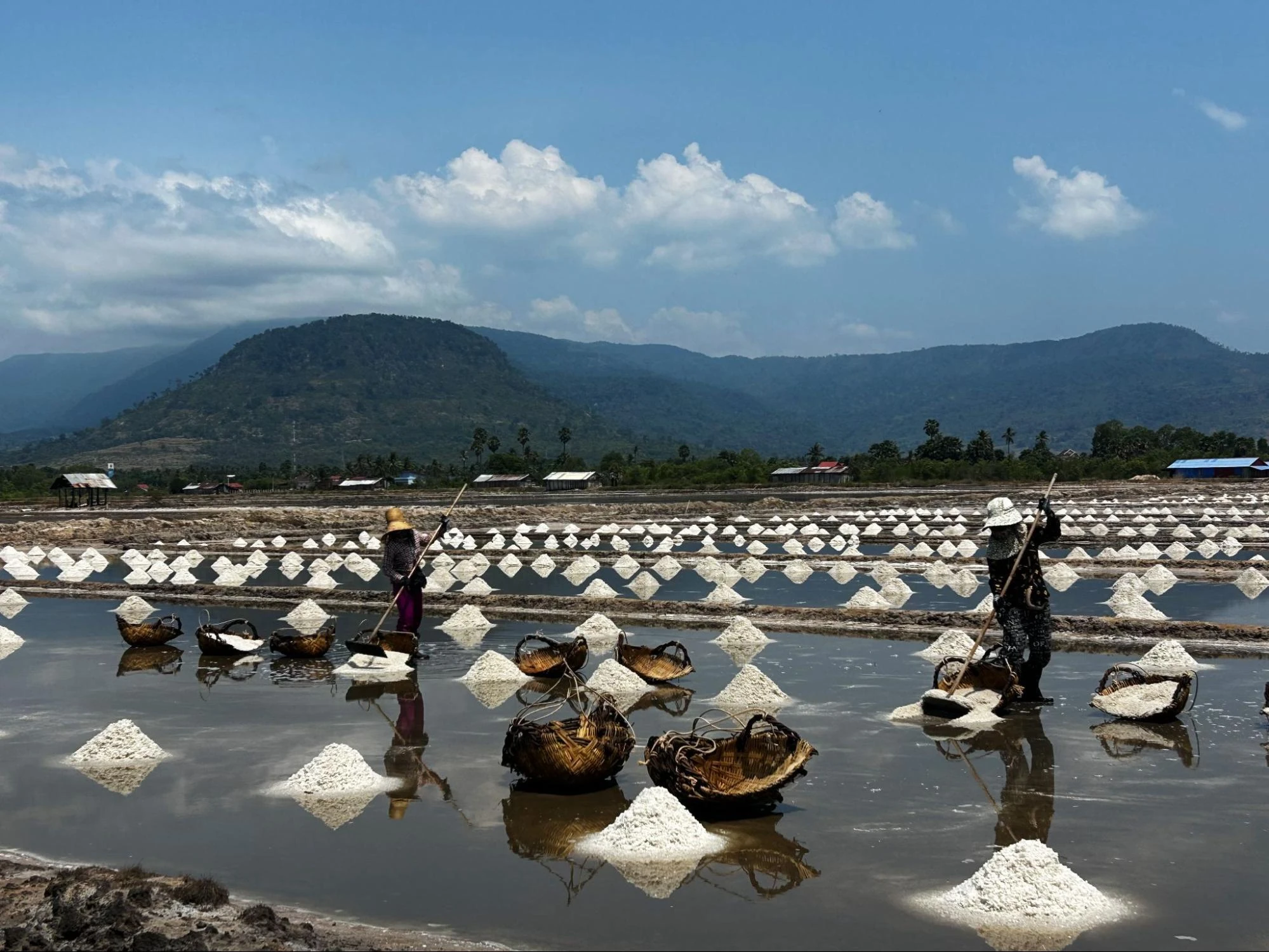
The route south from Kampot to Kep takes you past the salt fields. As our van approaches, I see the flats stretch out white and blinding under the midday sun, workers moving across them in the early hours before the heat peaks. It’s a 29-day process: seawater drawn through four evaporation pools, stage by stage, until the final flat is ready to collect. The season runs November to May – rain is the enemy, and when it comes, the farmers simply wait. The premium yield is fleur de sel, skimmed patiently from the surface and produced in small quantities. The rest goes out as coarse salt, raked into baskets by hand. Salt has been produced along the Kampot-Kep coast for more than 1,300 years, and what remains today feels like more than a working industry: it is a cultural landscape shaped by generations of inherited skill, shared labour and life by the sea, even after the Khmer Rouge years devastated much of it.
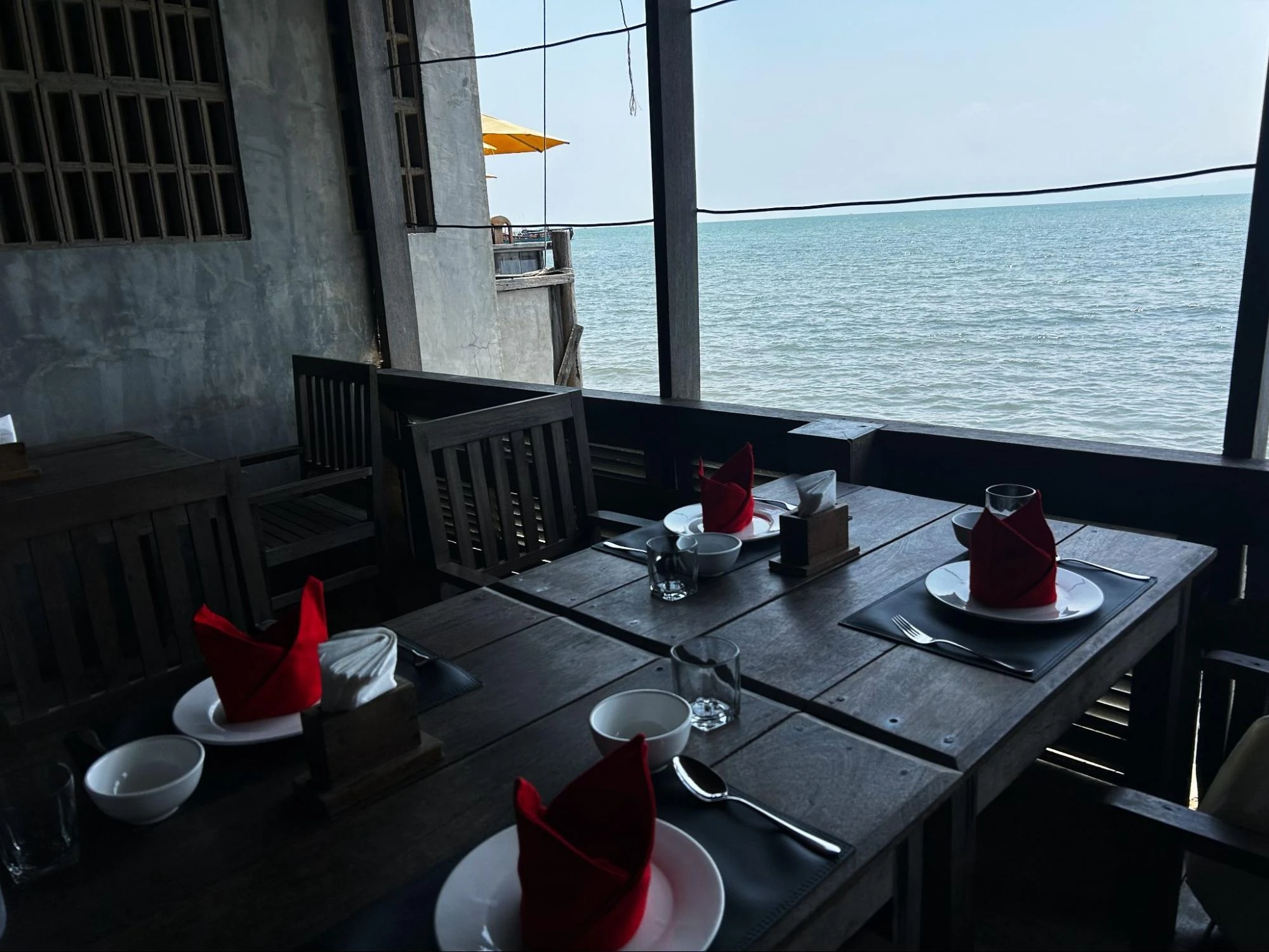
Kep eases you in. The road narrows, the pace drops, and by the time the sea comes into view, you're already somewhere else entirely. The first stop, before checking in anywhere, should be the Kep Crab Market. It’s a string of waterfront stalls where the catch comes straight off the boats and onto the grill. It's been the town's culinary calling card for decades, and it earns the reputation. We ate at Holy Crab, right next door to the market, with fresh catches, sea views and fishing boats moving slowly past. The coconut curry crab is the order – rich, fragrant, the kind of dish that makes the journey feel immediately justified. The fish sour soup, sngor, is the quieter revelation: sharp, bright, the sea distilled into a bowl.
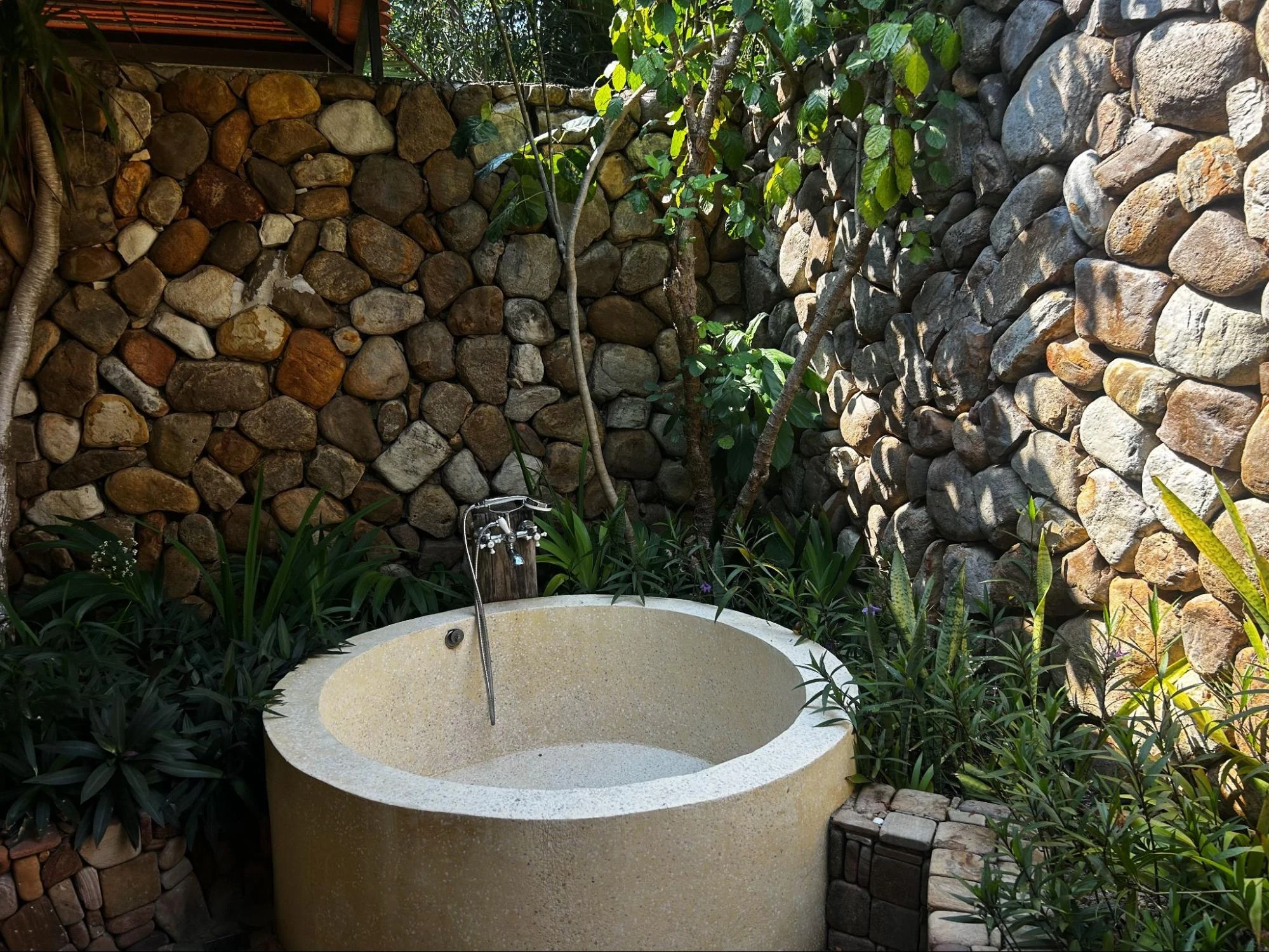
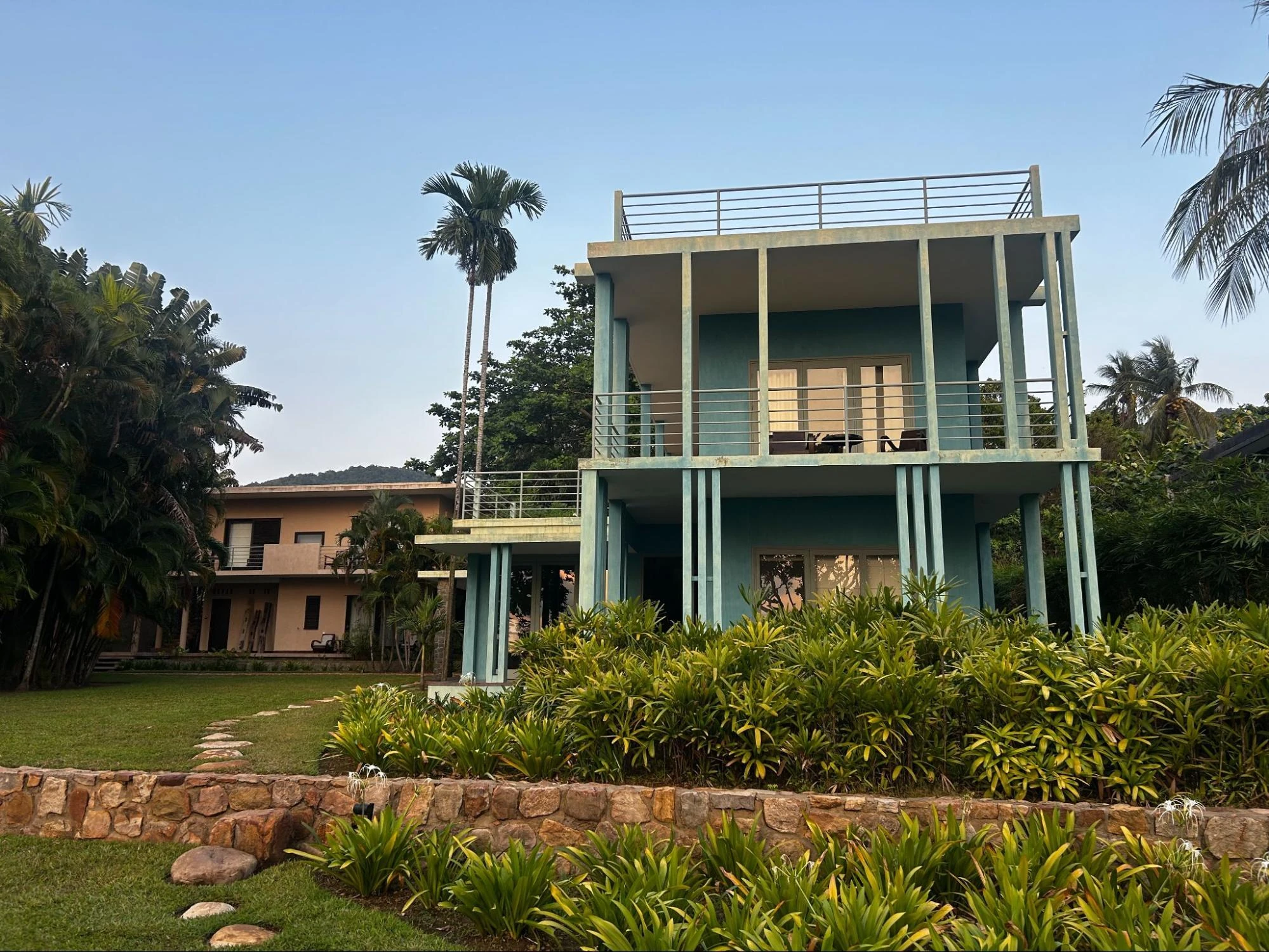
From there, it’s time to check in and slow down. We stayed at Samanea Beach Resort & Spa, where spacious villas come with outdoor bathrooms and a pace of life that feels worlds away from the three-hour drive back to Phnom Penh. The reception sits inside a restored seaside cottage – a remnant of the land's history – and the spa is tucked into a mangrove forest, with treatments using organic, locally sourced ingredients. There’s also a private pier, should you feel like ending the day with nothing more strenuous than appreciating the sea breeze.
For something more architecturally driven, Knai Bang Chatt is the other address worth knowing. Built around three restored colonial villas designed by New Khmer architecture pioneer Vann Molyvann – a student of Le Corbusier – the property's 18 rooms blend raw concrete, teak, and Cambodian artefacts, with an infinity pool gazing out over the Gulf of Thailand.
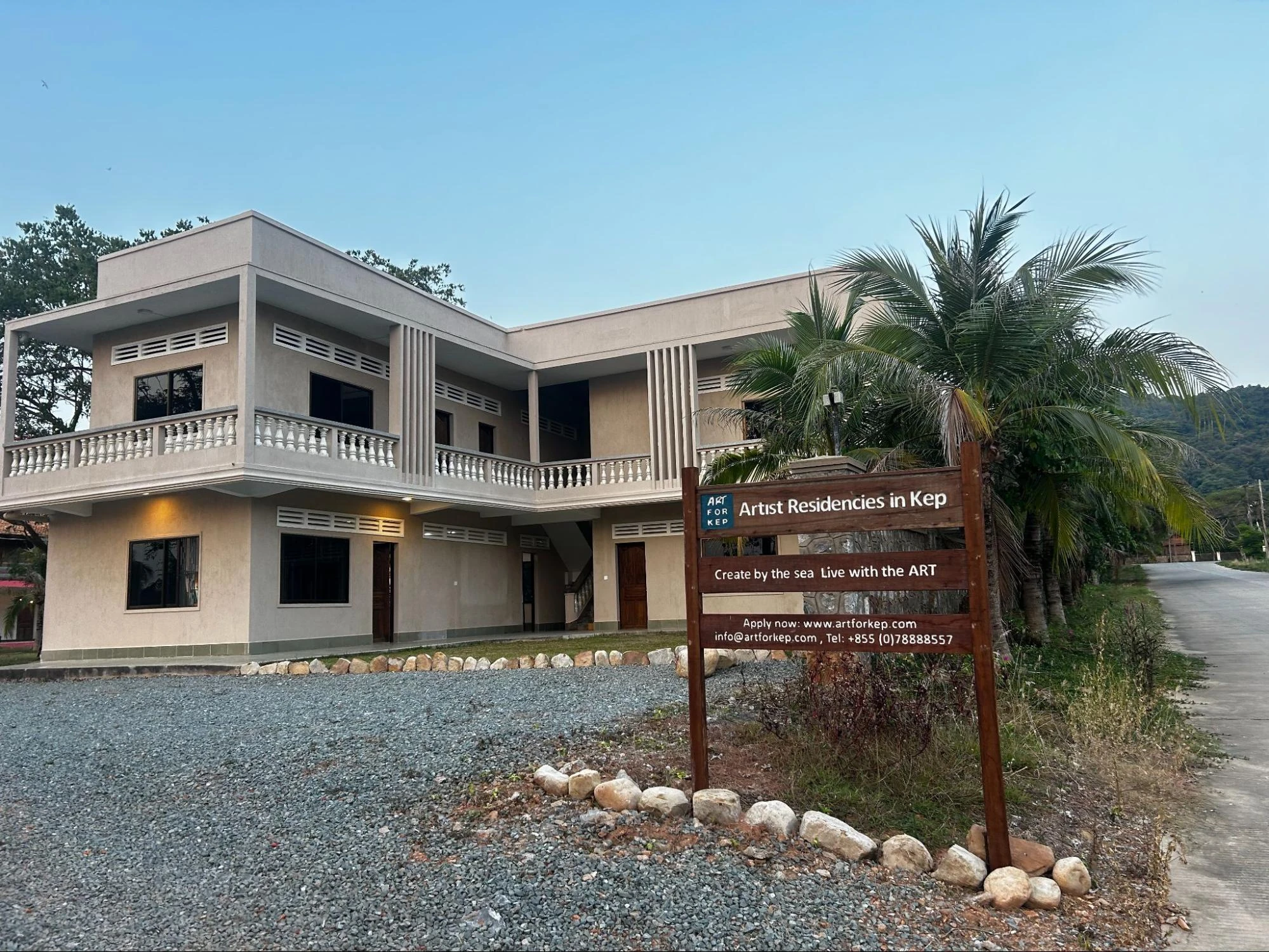
The town was once the coastal retreat of the Cambodian and French elite. The Khmer Rouge years hollowed it out. What's here now is something rarer – a place still quietly becoming, with enough history in its bones to give that process weight. An artist residency programme, Art for Kep, founded by Jef Moons and supported by both Knai Bang Chatt and Kep West, brings three artists a month to live and work here. An underwater art gallery and a Cambodia film festival are in the works. Kep still feels understated, but that may not last for long.
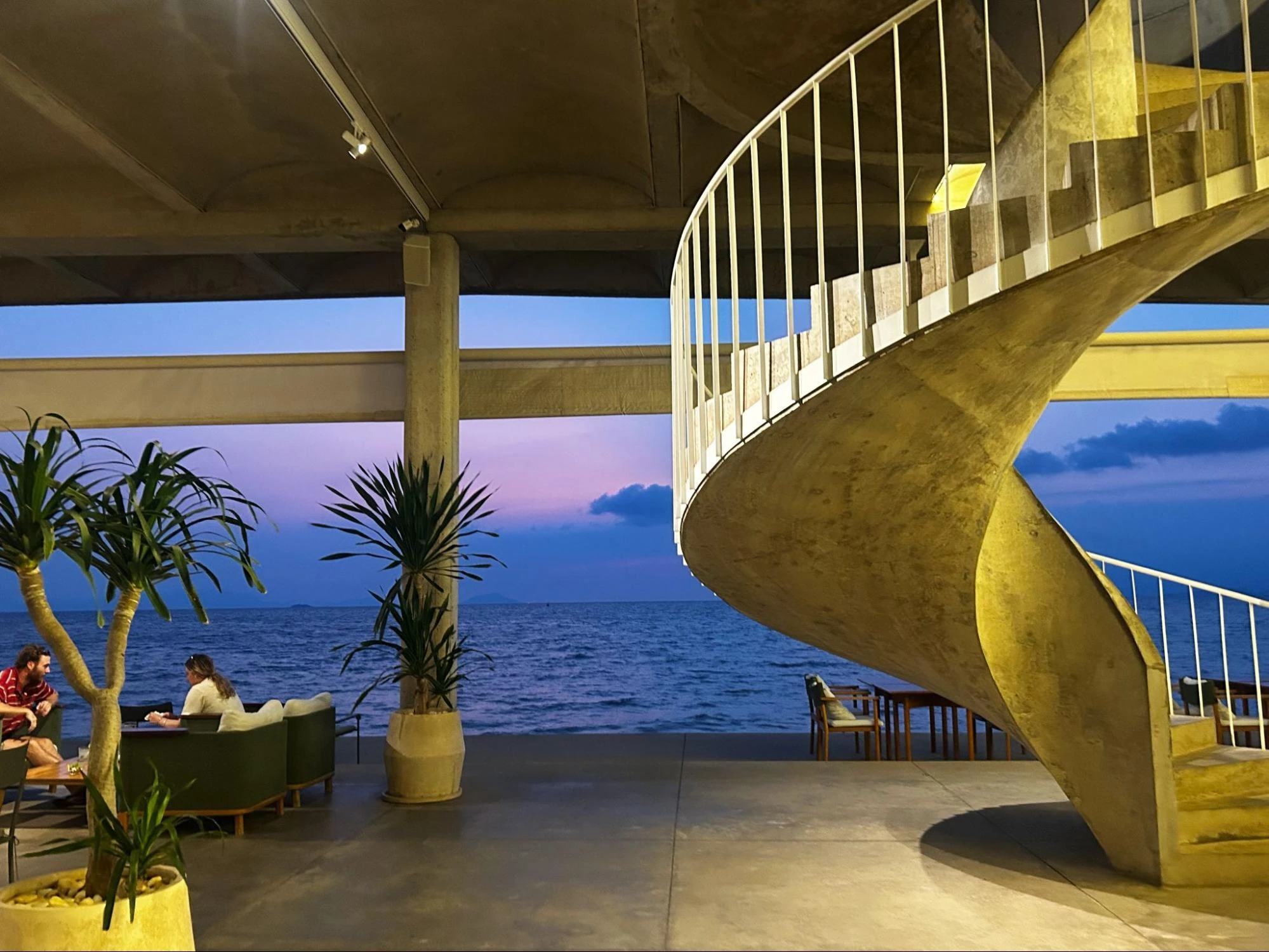
We ended the day at The Wave at Kep West as the sky turned purple, then pink, then a deep orange. We stayed until the orange was gone and the full moon had taken over. Nobody checked their phone. Nobody mentioned Angkor Wat.
This trip was courtesy of the Cambodia Tourism Board.
Discover Time Out original video