[category]
[title]
The ancient Khmer temple complex of Vat Phou in southern Laos may be one of Southeast Asia’s oldest places of worship


Angkor Wat often steals the spotlight as Southeast Asia’s most iconic temple complex, but over in southern Laos lies a site that quietly predates it by centuries. Vat Phou, an ancient Khmer-era sanctuary set at the foot of Mount Phou Kao, is believed to be one of the region’s earliest places of worship.
The sprawling temple complex may not draw the same crowds as its Cambodian counterpart, but its history and setting overlooking the Mekong plains make it one of Southeast Asia’s most underrated cultural landmarks.
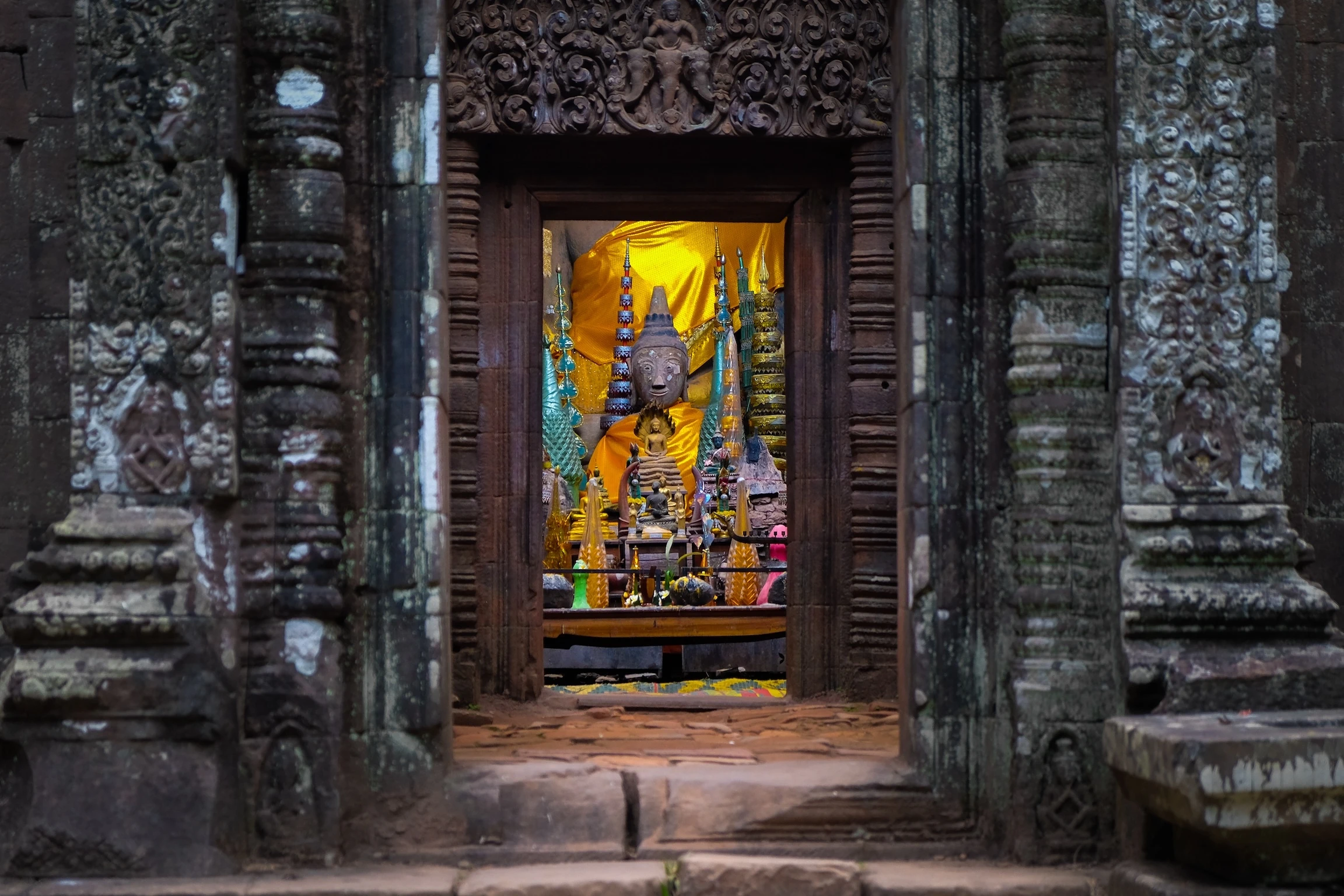
Vat Phou is an ancient Khmer temple complex in southern Laos, set at the base of Mount Phou Khao near the Mekong River in Champasak province. Now a UNESCO World Heritage Site, the sanctuary dates back to the 5th century, though most of the ruins visible today were built between the 11th and 13th centuries during the Khmer Empire.
Originally dedicated to the Hindu god Shiva, the temple was designed around the sacred mountain behind it, believed to represent Mount Meru in Hindu cosmology. Over time, Vat Phou evolved to incorporate Buddhist influences, and archaeological evidence –including a fifth-century Sanskrit inscription – suggests the site predates Angkor Wat by centuries, making it one of Southeast Asia’s oldest known places of worship.
Vat Phou sits in southern Laos, near the small riverside town of Champasak, about 40 kilometres south of Pakse. Pakse itself is the capital of Champasak Province and the main gateway to the region, making it a natural base for travellers exploring southern Laos.
Vat Phou unfolds across three terraced levels climbing up the hillside, giving the site a dramatic sense of scale. Visitors begin at the lower grounds before making their way up stone stairways flanked by frangipani trees, eventually reaching the main sanctuary at the top–once dedicated to the Hindu god Shiva.
Along the way, you’ll pass intricately carved stone pavilions and ancient ruins, many decorated with detailed Hindu sculptures. Look closely, and you’ll spot lintels illustrating scenes from Krishna mythology, as well as carvings of elephants and crocodiles etched into the stone.
Behind the upper sanctuary, a natural spring continues to flow. These were once believed to carry sacred water used in temple rituals. Midway up the complex, two symmetrical palace structures offer panoramic views across the Mekong plains, while a small museum nearby displays statues of Shiva, Vishnu and later Buddhist artefacts discovered at the site.
From Pakse, the journey takes roughly an hour by car. Travellers can reach the site by tuk-tuk, local bus, motorbike or guided tour, many of which combine Vat Phou with other nearby sights. The temple complex is open daily from 8am to 6pm, and entry costs around 50,000 kip for foreign visitors.
Have you heard? A new NIHI resort is opening on Indonesia’s Rote Island in May 2026
Plus: All you need to know about Wonderfruit 2026: dates, ticketing, and new Kyoto edition
Stay in the loop: sign up for our free Time Out Asia newsletter for the best travel inspiration straight to your inbox.
Discover Time Out original video