



The Hungarian capital is home to Time Out Market Budapest, the culinary and cultural hub that brings the best of the city together under one roof. Located within the historic Corvin Palace on Blaha Lujza tér, Time Out Market Budapest comprises 11 top-class dining outlets, three bars and five event spaces, for some 540 seated guests. Find out more!
101 Bistro is already a name that resonates in Budapest – and since September, it has also numbered among the 11 kitchens at Time Out Market Budapest.
Lu Boen, founder of the 101 family (101 Bistro, 101 Tigris, 101 Neo and 101 Bao), has been working to bring Hungarian and Asian cultures closer together for more than two decades. We talked to him about how authentic dishes are created, why Time Out Market Budapest was the next step, and what a Taiwanese retiree’s bar has to do with the fact that freshly and expertly folded dumplings are still steaming on plates in Budapest today.
How did gastronomy come into your life?
I opened my first restaurant after university around 2003, with the help of my father. At the time, there was a huge lack of Asian food in Budapest – I missed it so much that I thought: if no one else is doing it, I should. That’s how Ramenka was born, which was probably the first ramen place in the capital.
Then I fell in love with hospitality. I really enjoyed the connection with guests, and I always loved talking about the differences between cultures. I found myself right in it – I somehow felt like a bridge between the two worlds.
What does ‘connecting cultures’ on a plate mean to you?
When we develop a dish, we look at three aspects: culture, ingredients and expertise. We look at how accessible local ingredients are, at what price they are available and what kind of technology is required to prepare the dish.
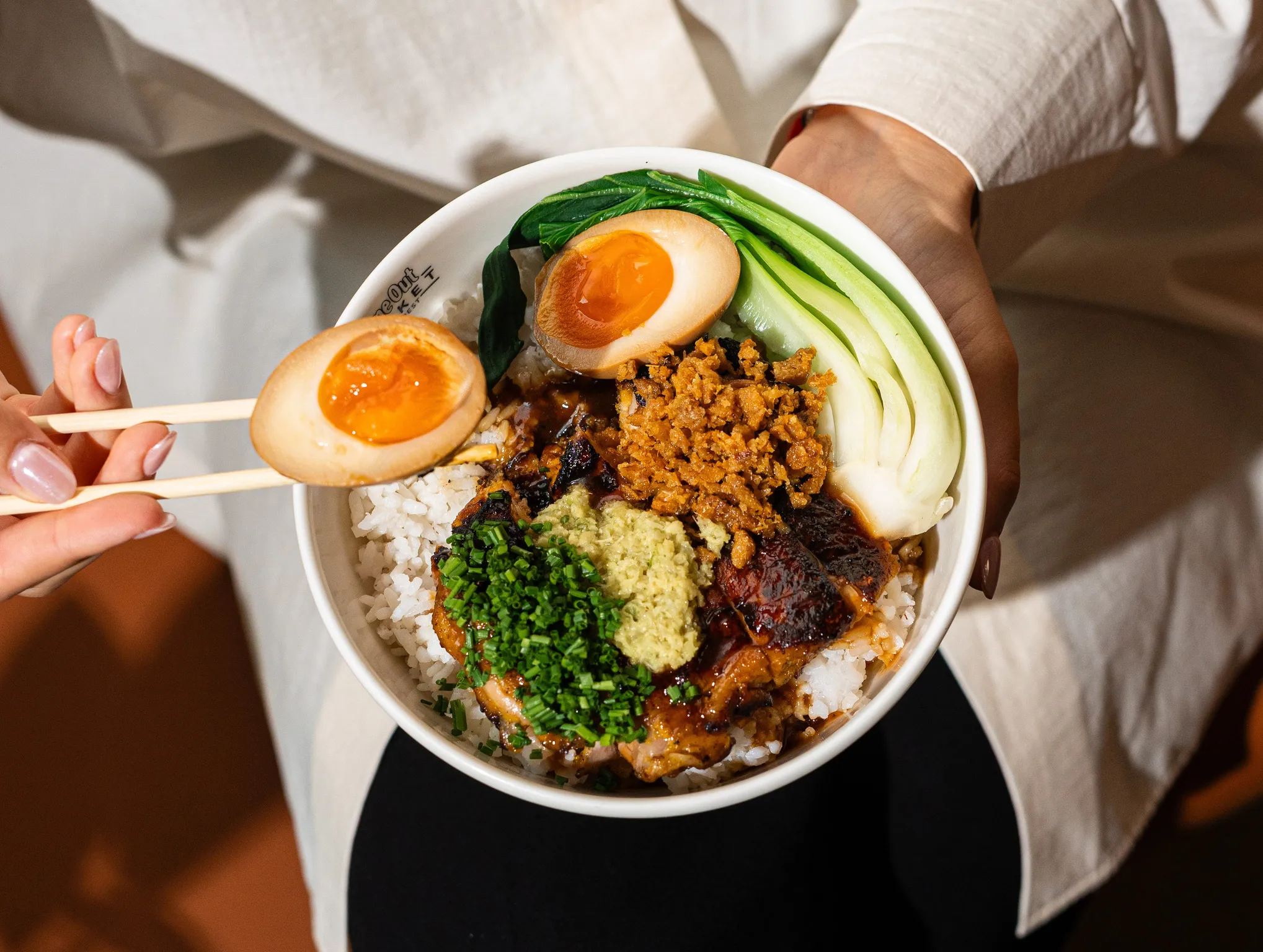
For some Chinese dishes, the chef develops his skills over decades – just think of folding dumplings, which requires a lot of practice. We find the balance in the triangle of these three factors. Each of our restaurants has its own theme: 101 Bistro focuses on cocktails and small plates; 101 Tigris specialises in noodle dishes; 101 Neo offers a more innovative, faster dining experience, while 101 Bao is a street food unit that exclusively relies on Taiwan’s signature gua bao.
Is it easier to popularise authentic Asian dishes in Budapest today?
For a long time, Hungarians had misconceptions about Asian cuisine. Since the 1990s, the image has been defined by the Chinese fast-food culture, and many people still consider this to be the Chinese cuisine. Our task is not only to present authentic flavours, but also to break down these misconceptions.
Fortunately, things have changed a lot now: thanks to cheaper travel, more and more people are trying real Asian dishes in-country. Hungarians are completely open to the flavours, but for example, offal or fish heads are still foreign to many – even though such things were not uncommon in the history of Hungarian cuisine. In cookbooks from the 1960s, we also find snails, eel and frogs’ legs. These ingredients have somehow disappeared over the years.
After Ramenka, you moved to China. What happened there?
I naively thought that if it worked in Budapest, it would surely go down even better there. I stayed for three years and opened Western-style restaurants – I sold chimney cakes, ran a hamburger restaurant and a steakhouse.
I had to admit that I didn’t know the local customs well enough. I had a big ego, and convinced myself I could change things, but I greatly underestimated the local food culture. I had someone send back a steak because it was too raw – they just don’t serve rare beef in that country.
How does this Chinese experience relate to how 101 Bistro works today?
When I lived in China, I really missed Western bar culture: just sitting down with friends for a beer or a cocktail. That’s when I met an older Taiwanese man and the bistro he ran, which immediately appealed to me. He opened the place in his retirement years for his own pleasure – there was no fixed menu, you could only order drinks, and a few fresh dishes were prepared every day, served on small plates. This experience gave me the impetus to create something similar at home. That’s how Asian bistro culture took shape here: small plates, diverse flavours and an environment where people just have a good time together.
Why Time Out Market Budapest? Why did you feel like you wanted to introduce yourself here?
We had been thinking about opening a place in a mall for a long time, but we couldn’t find the right location. We regularly participate in festivals in the summer – including Sziget – and we felt that we already had experience in this bustling, vibrant environment.
When Time Out Market Budapest contacted us, we knew right away that this was what we were looking for. We were already familiar with the concept, we had been to gastropubs in other cities – Osaka, Barcelona – so the opportunity to be part of this international network was very appealing.
Moreover, the audience here is really special: open-minded, curious visitors who like to try new things. Exactly the kind of people we like to tell about our culture and our food.
How did you create the menu at Time Out Market Budapest?
We expected a lot of international guests and tourists to come, so this is a good opportunity to introduce everything we have done so far to those who don't know us yet. We have selected our most popular and favourite dishes – this is our so-called ‘101 Bistro Favourites’ compilation.
There was a novelty, though. We brought a wok, so we also introduced two completely new dishes – Taiwanese crab fried rice and Chinese fried noodles – which are only available here. There is also a bao that you can only taste here. So, there are three dishes in all that are only available at Time Out Market Budapest.
Which dishes are the most popular?
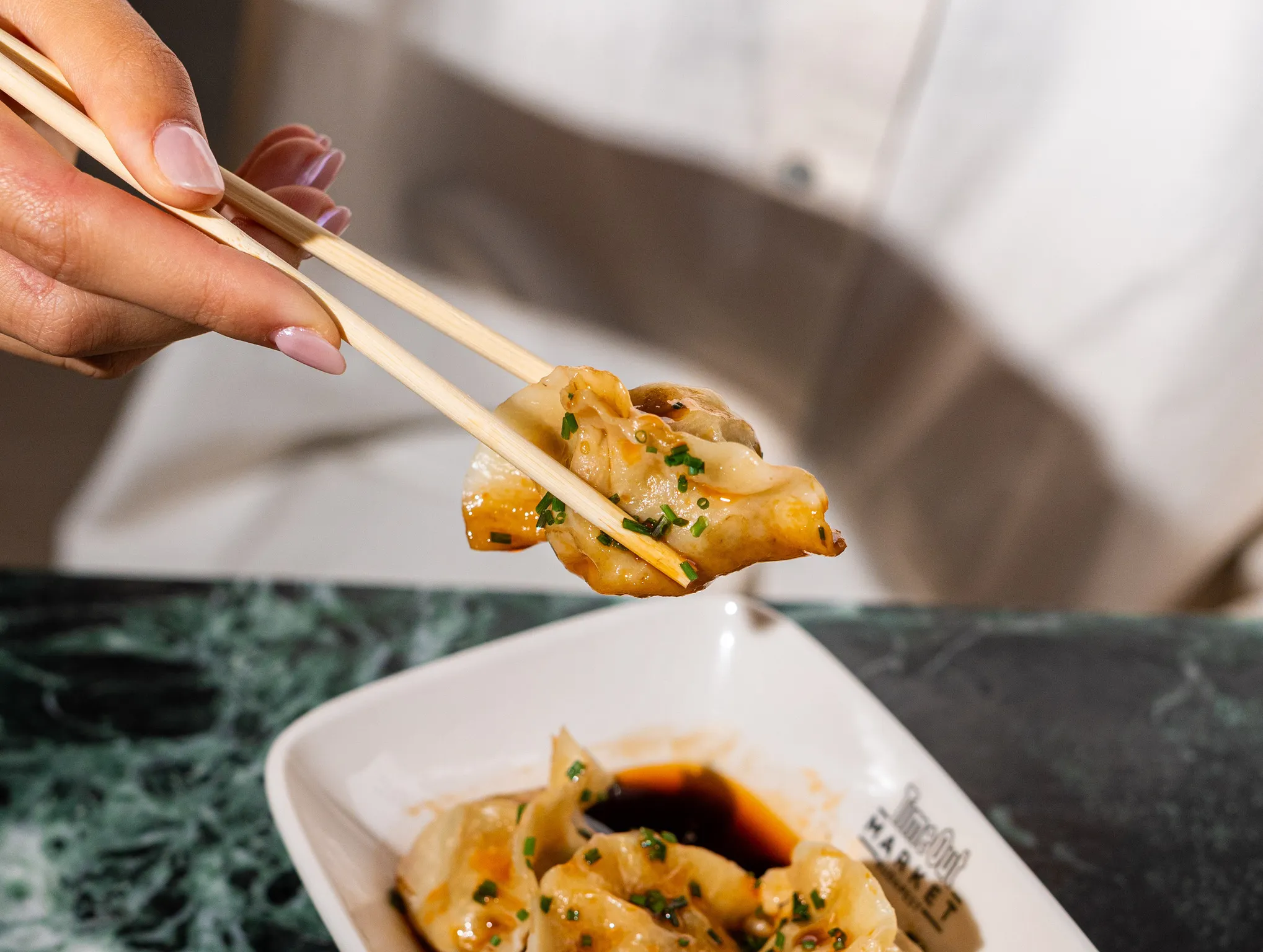
Clearly the dumplings, pork bao, Sichuan spinach and aubergine san bei. The dumplings are based on a family recipe – my grandmother makes them the best, she has been using the same recipe for decades. My mother also makes them this way, so it’s a truly multi-generational, reliable family recipe. Making dumplings is something that can only be truly mastered with experience and long practice. It takes years of work. Here, a Chinese lady makes them – anyone else just can’t just fold them perfectly.
How does the team operate in the kitchen?
Teamwork is very important here. Basically, there is no single chef who takes the spotlight, like in many other restaurants. We work in a completely collaborative manner and try to involve everyone’s creativity – this often results in really good things. The creator of a given dish is responsible it: he or she develops the recipe, determines the ingredients, and also how it looks and how it is served. Of course, making dumplings is a specialised skill that only a Chinese chef can do really well – her experience is essential.
For example, we now have a Nepalese colleague who will be testing a Nepalese-Chinese food combination, and a Mongolian team member who brought his mother’s fermented onion recipe – we will combine it with noodles. That’s what excites the team: the novelty, the experimentation.
What are the three words that best sum up the essence of 101 Bistro in Time Out Market Budapest?
Asia comes to mind first – that’s obvious. But definitely openness, which is also our slogan: be curious, be open-minded. We have a kind of curiosity in us, so we are very receptive to new things. We like to experiment, there are no boundaries.
Then there is our international nature: we draw inspiration not only from the traditional world, but also from other cultures. Our team is very diverse, and we are specifically looking for people who come from different backgrounds and bring their own cultural recipes with them.
Finally, teamwork – that everyone has a place in the concept.
If someone were to stop by your counter at Time Out Market Budapest right now, what would you recommend they first try?
In colder weather, I would recommend the Tainan beef soup – it has been cooked for 16 hours, perfect for the season. But if you were to ask me for my personal favourite, it would definitely be the dumplings. My son and I love them, we simply can’t get enough!