

[image]
[title]Ahead of his performance at Teatro Ópera ON on March 27 (tickets here), the legendary John Malkovich spoke in an exclusive interview with Time Out about his relationship with tango, his admiration for Latin American literature, his bond with Buenos Aires, and his interest in exploring the human cost of ideology, violence, and power.
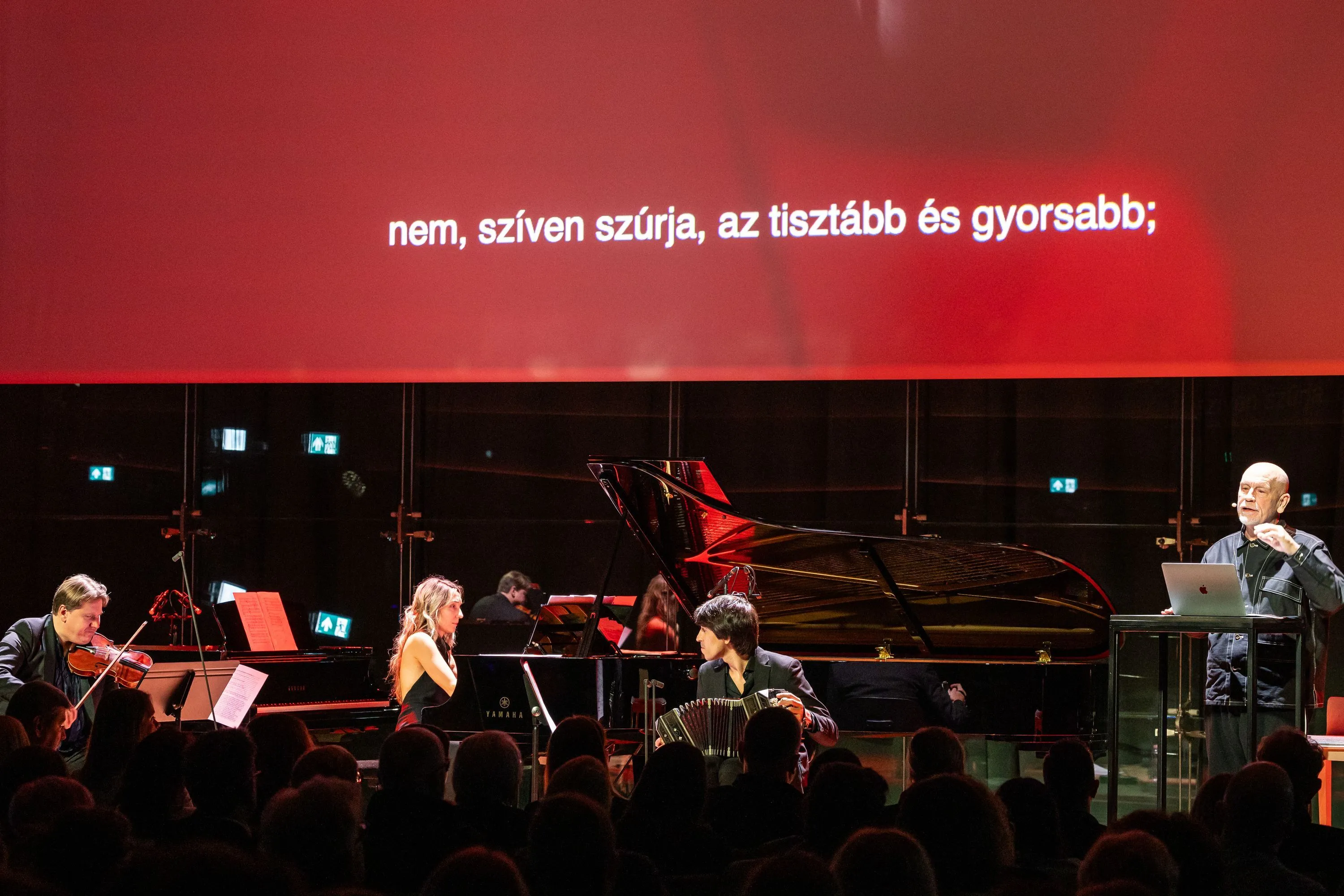
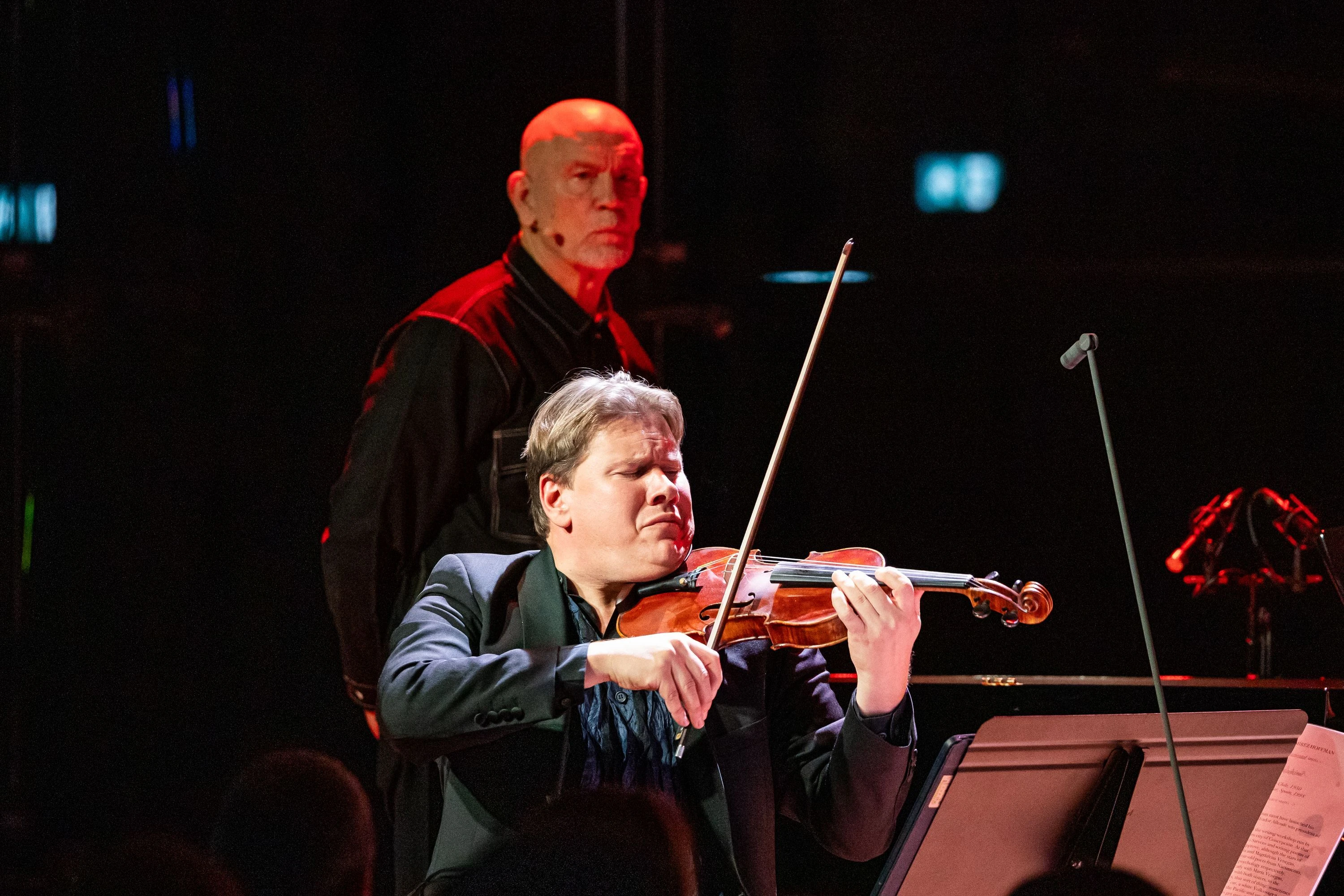
With more than four decades of experience, the actor and director returns to Buenos Aires with El Infame Ramírez Hoffman, a stage experience that combines literature, music, and performance, based on texts by Chilean writer Roberto Bolaño. Created by the actor himself and pianist Anastasya Terenkova, the show merges the work of one of South America’s most celebrated literary voices with compositions by Ástor Piazzolla, Leonid Desyatnikov, Antonio Vivaldi, and Giovanni Sollima, performed by a trio completed by violinist Andrej Bielow and Argentine bandoneon player Fabrizio Colombo.
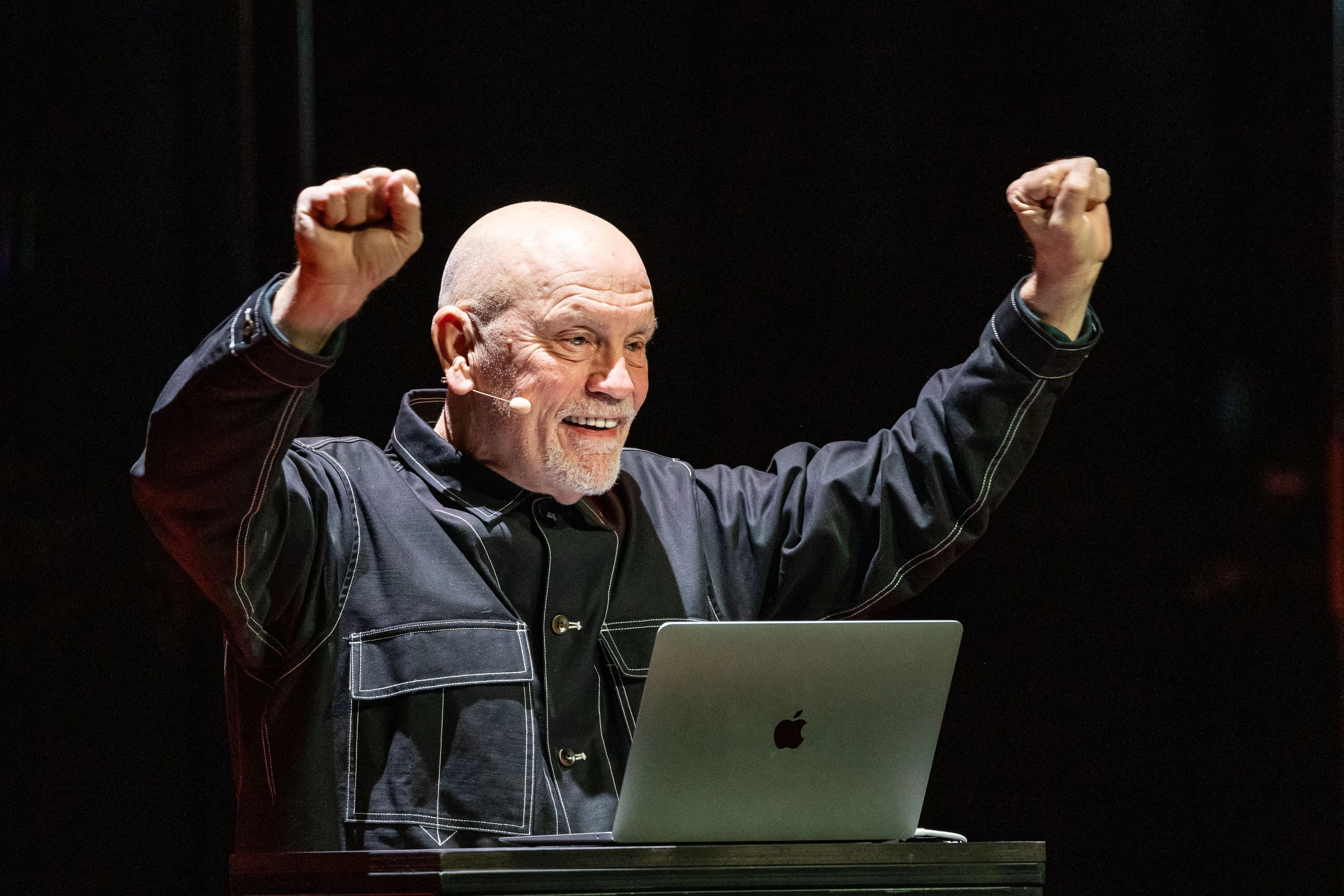
How did your connection to tango begin?
Under the premise that opposites attract, I felt that tango was perfect for telling this story. Since many of the characters in Bolaño’s book are set in South America, tango seemed like the natural accompaniment, but it also works as a contrast. While this character represents emptiness and waste, tango is exactly the opposite: impetuous, reflective, and deeply passionate. Ramírez Hoffman embodies squandered talent, whereas tango is a full expression of great beauty. It is pure life.
I was probably first aware of tango at nineteen, through Gato Barbieri’s soundtrack for Last Tango in Paris. It’s such spectacular and evocative music that, personally, I don’t think the film stands without it. For this show, the backbone is Ástor Piazzolla and Leonid Desyatnikov, a wonderful contemporary Russian composer. They represent the two main strands of the genre in the piece. But there is also a great deal of modern classical music by Max Richter, Fazıl Say, Lera Auerbach, Alfred Schnittke, Alberto Iglesias, and Giovanni Sollima, alongside classical works by Erik Satie, Johann Paul von Westhoff, and Antonio Vivaldi.
All that music is extraordinary, but tango sets the tone—a nuance of loss that in English we might call “elegiac,” functioning almost as a lament. If Bolaño’s novel is essentially a funeral for the characters’ talent, tango is the ideal counterpoint because it is dreamy and promises so much beauty and fulfillment.
"Tango is spectacular and evocative music".
This work has a strong South American imprint. What does it feel like to finally present it in Buenos Aires?
Sometimes I wonder why no one else thought to do this thirty or forty years ago. People often ask me why I’m interested in South America, and I find that a strange question. What would be strange is not being interested in a region with such history and such an immense literary culture—Gabriel García Márquez, Ernesto Sábato, Mario Vargas Llosa, Roberto Bolaño, and many others—along with the incredible music of Argentina, Brazil, and Chile. For me, it’s an honor to be here.
El Infame Ramírez Hoffman is a piece about the human cost of things: the cost of beliefs, ideology, cruelty, and violence. These themes have been present throughout human history and will continue long after we are gone. The underlying question is whether any of it makes sense, and at what price. That is very present in Bolaño’s writing and in the music of this work, which inherently describes waste and loss.
El Infame Ramírez Hoffman blends live music, acting, and recitation. How would you define this show that unites Bolaño’s literature with music, particularly tango?
I’ve spent much of the past twenty years collaborating with classical music in different formats: operas with theatrical elements or pieces that, like this one, are simply the combination of music and prose. Although it is staged in a theater, it is not strictly a play, but rather the telling of a story based on Roberto Bolaño’s novel Nazi Literature in the Americas. The book is a collection of apocryphal obituaries of Nazis who squander their lives on fantastical literary obsessions and ideology. Of them all, Ramírez Hoffman—the final character in the novel—is the most captivating and tragic because he represents the testimony of a visionary talent wasted and of what should never have been done. It is a total waste of the gift of expression.
You might also like: The Infamous Ramírez Hoffman in Buenos Aires: everything you need to know
In 2016 you were in Buenos Aires presenting Report on the Blind, based on the chapter of the same name from Ernesto Sábato’s novel On Heroes and Tombs. What memories do you have of the city?
Buenos Aires strikes me as both beautiful and sad. There is something very melancholic about it; it’s as if tango rises directly from the pavement. I remember enjoying visiting the cemetery, something I don’t usually do, but there it felt deeply reflective about the human condition. And the food is fantastic, of course. I’ve had excellent Argentine wines over the years in Mendoza and in every place where we’ve performed, although I no longer drink as much as I used to.
This time will be special because returning to Argentina is like coming home for our bandoneon player, who is from here. But for me, the main interest is to understand how Argentinians feel about this particular story—one whose very real version they have lived, like many other South American countries. In fact, I spent much of last year in Chile, so I am very interested in hearing what they think about the clarity and message of the show.
As happened with Sábato’s work, I’m interested in seeing how these themes resonate today. Every piece is a work in progress, and it will be very revealing to be in Argentina, as well as Brazil and Chile, to understand its strengths and weaknesses.
"Buenos Aires strikes me as both beautiful and sad".
You travel a great deal and have lived and worked in many cities. Is there any place in the world where you find more inspiration or to which you always like to return, physically or emotionally?
I’m drawn to cities of lost empires, such as Rome, Porto, and Vienna. I also greatly enjoy Mexico City, even though it’s generally not my kind of place because it’s so enormous, noisy, and chaotic. I like Lisbon as well; it’s much more cheerful than Porto, which is like its darker twin. For me, it’s not the city of light but, in a way, the city of darkness—though it’s truly beautiful.
I’m drawn to cities of lost empires, such as Rome, Porto, and Vienna.
Are there places—perhaps a restaurant or a corner of a city—that make you feel as if you’re inside a film or on a stage?
It’s funny, but things don’t often remind me of films because I don’t think about cinema that much. Places may remind me of a certain kind of story, as happens with some spots in Paris, but I don’t really associate real life with fiction.
When I directed the film Dance of the Steps, I used Porto to recreate Lima because I felt that city resembled the South America of my dreams far more than the Peruvian capital itself. Buenos Aires is different, and Santiago has its own character, but there was something dreamy and dark about Porto that I didn’t necessarily find in Lima, where the story was originally meant to be set.
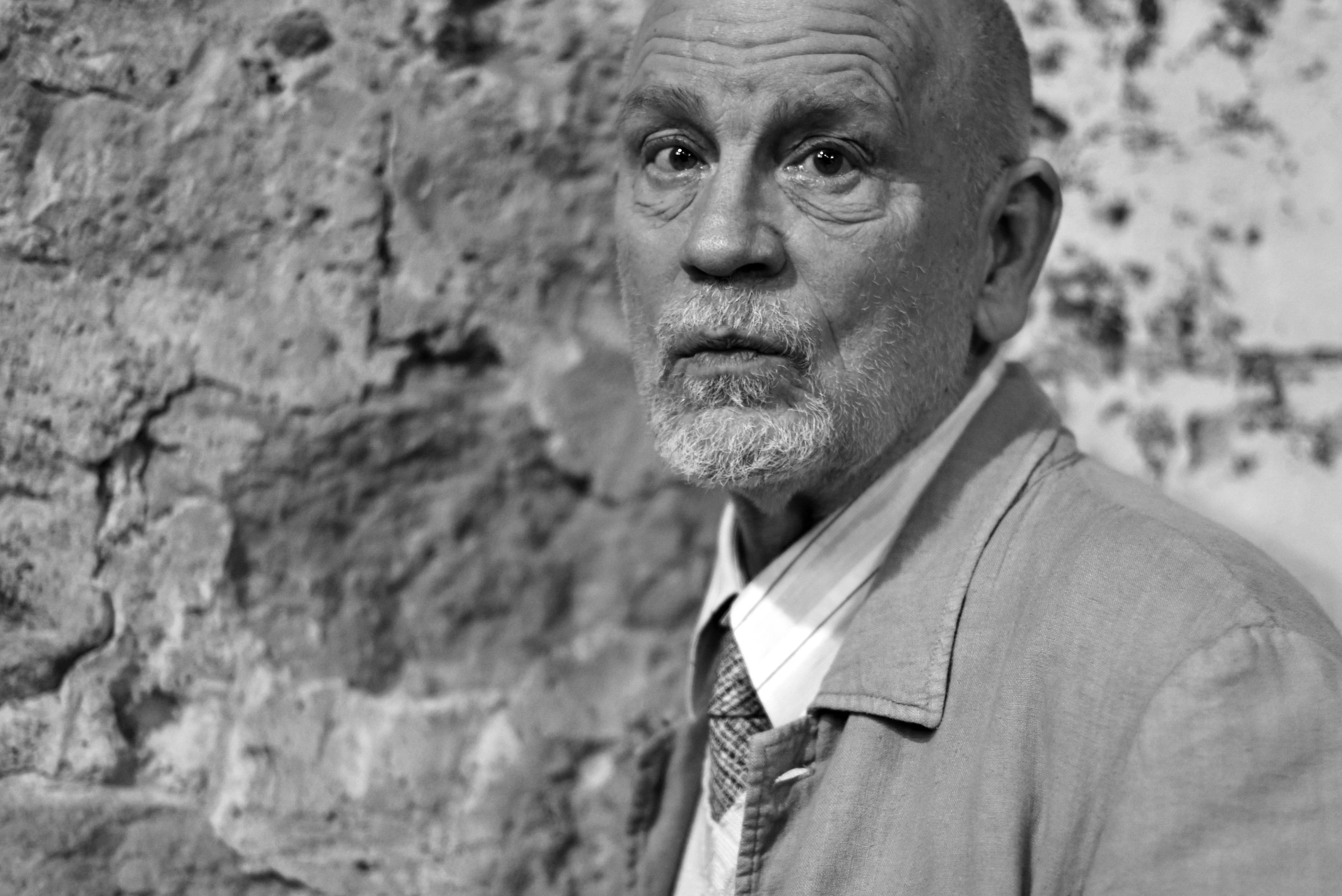
You work in theater, in text recitals, and even produced your own wine—activities that require time and attention. In an era ruled by immediacy, do you see dedicating yourself to these pursuits as a form of resistance?
I don’t think of it exactly that way. I understand it could be seen like that, but I believe it’s really about having a very specific talent: the ability to be fully immersed in whatever I’m doing. Whatever I undertake is the only thing that exists for me at that moment.
I can’t commit to five-year projects anymore because I’m too old, but I can be present in what I do. I think that has become rare today. It seems people simply can’t focus on what they’re doing anymore. They’re always somewhere else or thinking about something else, rather than being physically where they are.
When and where: El Infame Ramírez Hoffman, Teatro Ópera ON. Tickets available.