[category]
[title]
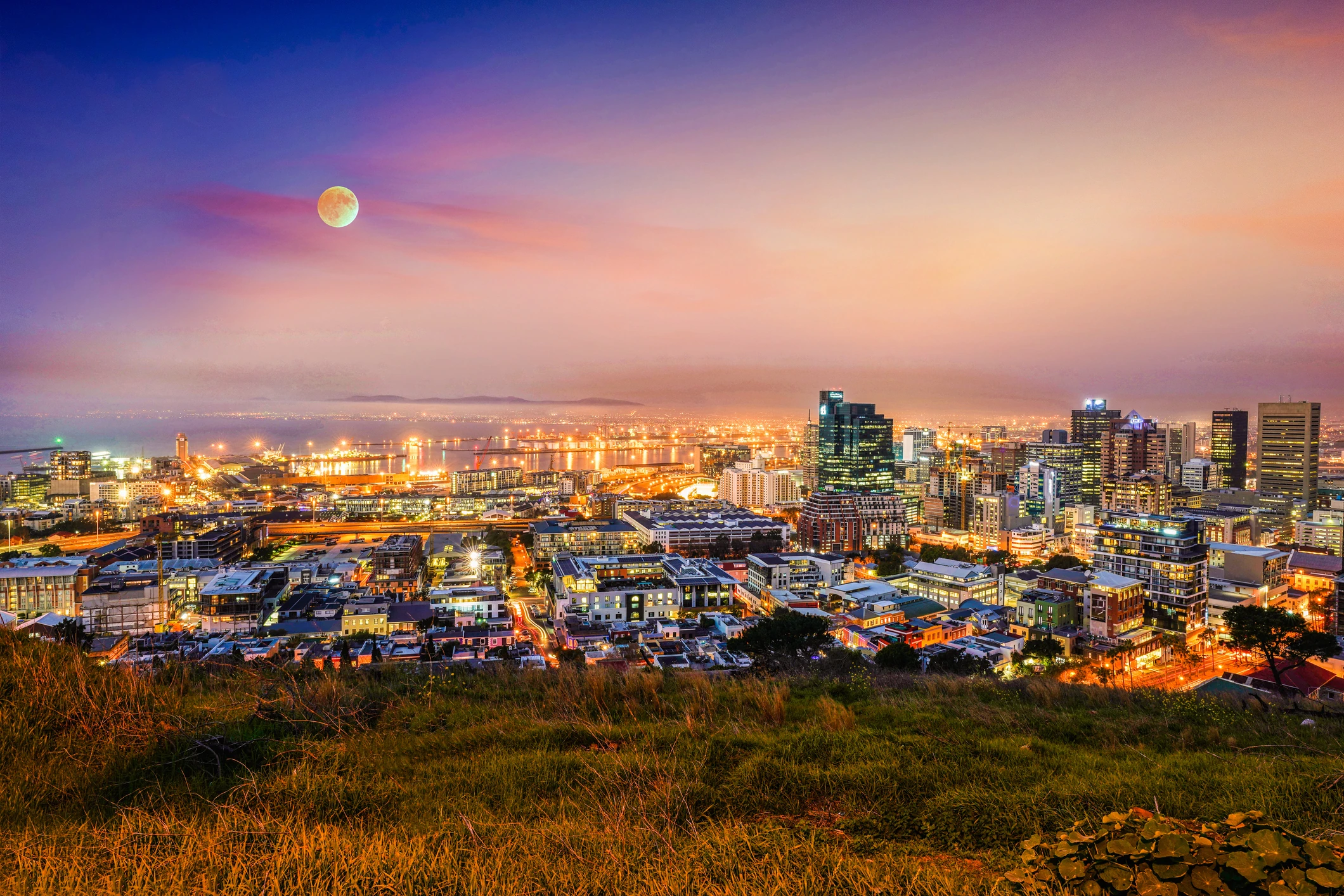
Moonrise will begin at 5:40 PM to 5:50 PM South African time on Sunday, 31st May.


Skywatchers across South Africa will be treated to a Blue Moon on Sunday, 31st May. Is it going to be a blue colour? The answer depends on what type of “Blue Moon” it is.
A Blue Moon is (usually) not blue in colour at all. Instead its about its rarity and timing. So “Blue” is the name given to a full moon event that happens because the Moon’s cycle does not fit perfectly into our calendar. A calendar Blue Moon is the second full moon in a single calendar month. So May 2026 is going to have two full moons – it had one on the 1st May (the Flower Full Moon) and now the second one, coming on the 31st May (the Blue Moon).
Time Out Tip: Moonrise begins at 5:40 PM to 5:50 PM South African time (SAST), close to sunset.
To make it even more weird, there is also such a thing as a ‘seasonal Blue Moon’. This refers to the third full moon in a season that contains four full moons instead of the usual three. A “season,” in this context, is the period of time between a solstice and an equinox. Each season typically lasts three months and typically has three full moons. If the season has four full moons, then third one is called a ‘seasonal Blue Moon’. Which explains how the expression, “once in a blue moon” came about – it’s clearly an uncommon event!
Sometimes, however, the moon can appear blue in colour but this only occurs after major volcanic eruptions or large wildfires. The moon takes on a bluish tint because tiny smoke or dust particles in the atmosphere scatter red light.
The Blue Full Moon on the 31st May is actually the most distant full micromoon of 2026.
What’s a ‘micromoon’? That’s when the new or full moon is at its greatest distance from Earth. So it will look about 7% smaller than an average full moon.
Don’t worry – the moon will always look big when it rises above the horizon. Ever wondered why? Well, Nasa says that it isn’t some trick of the light or atmospheric physics. It’s actually an optical illusion. They are unclear exactly why it looks bigger but clearly we know the moon's physical size doesn't change. Instead, your brain is tricked by context. When the moon is low on the horizon, your brain compares it to foreground objects like trees and buildings, making it appear massively magnified in comparison. That’s the theory anyway.
Did you know? The silver path of moonlight across the ocean is often called a moon glade — a luminous trail that appears to shimmer on the water between the viewer and the moon.
ICYMI: Cape Town voted one of the world's best cities for culture!
Sign up to Time Out Cape Town's free newsletter for expert recommendations on new things to do, see, eat and drink in the Mother City. You can also follow Time Out Cape Town on Facebook, Instagram and TikTok!
Discover Time Out original video