[category]
[title]
When fine water tasting first became a thing, many scoffed at it as bougie and pretentious. I was one of those people.


American anthropologist Loren Eiseley once said, “If there is magic on this planet, it is contained in water.”
It’s a profoundly deep quote, and yet, it’s true. About 71% of Earth is covered by water. Sixty per cent of the human body is made from water. And the water you’re drinking right now is the same as the water our ancestors drank millions of years ago. So, when people talk about water being the life source of everything, it is.
With all this in mind, many think water is water is water. But there are degrees of water. Water by any other name is not water. The water you drink from a tap is not by any measure the same quality as mineral spring water in a glass bottle.
I’m not here to preach to the anti-H2O choir. Also, I’m not a converted “water snob.” Frankly, those were my exact thoughts when I got the opportunity to attend a “fine water tasting”. I mean, how else is water supposed to taste like? Tasted one water, tasted them all, right?
Like many, I made fun of the idea of a water tasting. Who would spend money on something like that? It’s a ruse. A gimmick. A marketing ploy.
The rendezvous point was at Lanzerac Wine Estate in Stellenbosch. To reach The Fine Water Company, one had to navigate ornate garden hedges and a large, opulent cigar lounge.
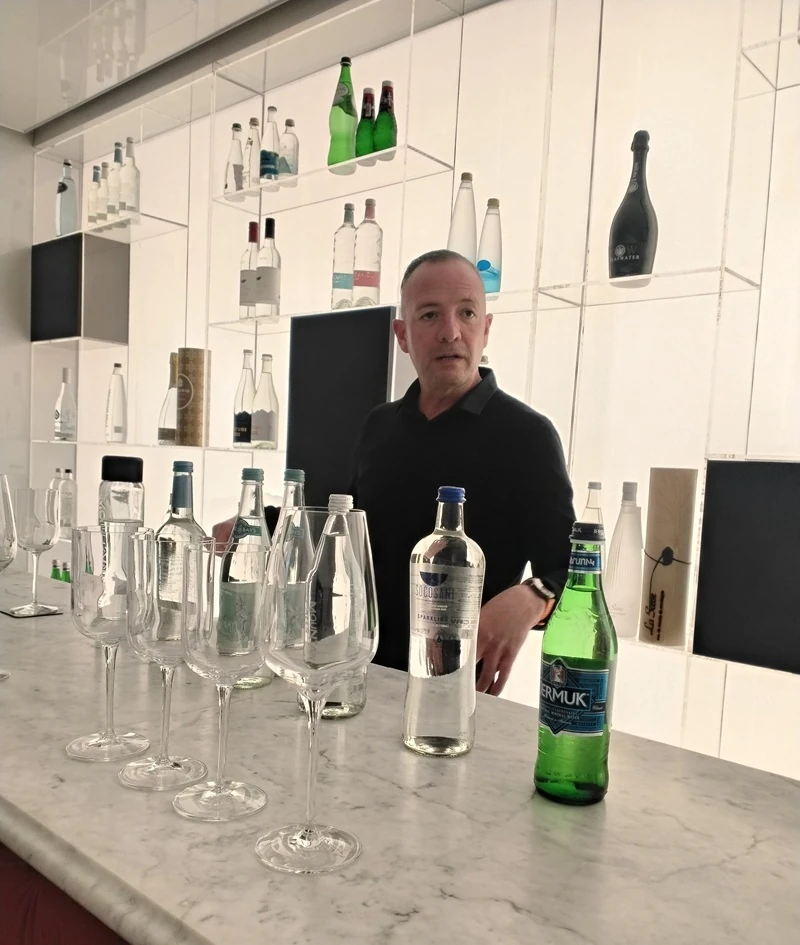
Housed in The Library, the tasting room is a scene from a ‘James Bond’ movie where 007 is introduced to his nemesis in an ice bar somewhere along the Nordic coast. Chic. Elegant. Touch of old-world charm. Low ambience lighting. It whispers, “Come for the tasting, stay for the experience.”
And that’s exactly what it is. Nico Pieterse, one of only two certified water sommeliers in the country, says the room is modelled on a glacier. It plays into the intrigue and theatre of a fine water tasting.
The room is always 18 degrees Celsius; a good temperature to taste water at.
Nico invites us to take a seat at his “water bar.” Before each participant are four fluted glasses. All empty. Not for long.
As an expert, Nico knows his water. Well, he should. You’re paying for his expertise.
That “spring water” you’re drinking from a plastic bottle? It might not be spring water at all. The small print makes all the difference. When it says, “Prepared by osmosis,” that’s when you should be wary.
“Reverse osmosis filtration takes everything out of the water,” says Nico. “When that water comes out on the other side, it’s completely dead. No minerals inside that water. What happens when you take a sip?”
Nico explains that because the water is void of minerals, it dissolves minerals you already have in your body. You drink the water. Dehydration sets in, coercing you to buy another and another bottle of water. “It won’t quench your thirst,” he says.
Even those huge office water dispensers are the usual suspects.
Nico’s advice is to visit a health store and buy Celtic or Celtic sea salt. Add a teaspoon to 5L of reverse osmosis water. It replenishes 93 minerals back into the water.
View this post on Instagram
“Water has taste. If it didn’t have taste, I wouldn’t have a tasting room,” jokes Nico.
Hang on, water really does have a taste. The taste he speaks of comes down to the minerals and the TDS (Total Dissolved Solids). This measures the total amount of mobile charged ions, including minerals, salts, or metals dissolved in a given volume of water. These are the very minerals we need to survive. The first thing Nico does when buying mineral water is look for the TDS.
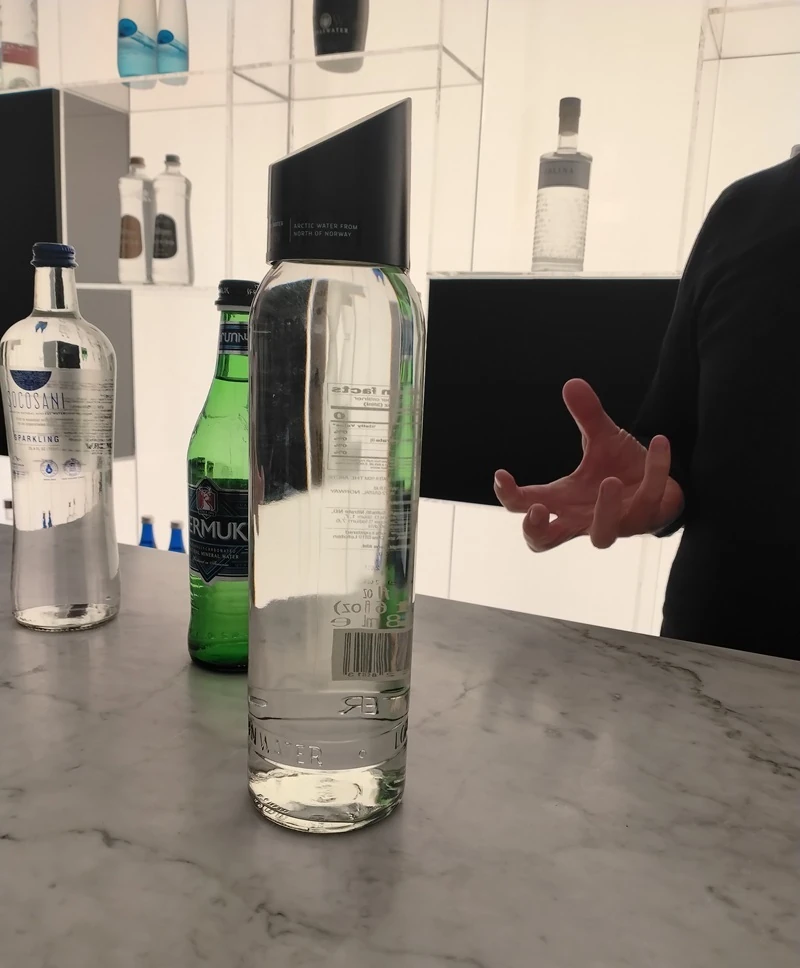
Nico takes a bottle of mineral water from a shelf and places it in front of us. The clear glass with a nondescript cap holds 200 000-year-old glacial water from the Lofoten Islands in Norway. It has a TDS level of 30 mg/L.
Don’t worry, you don’t have to trek all the way to a glacier for decent mineral spring water. Locally bottled Mountain Falls is certified carbon-neutral, has a pH balance of 7 and a TDS of 345.
The complexity of a water tasting comes through when Nico pours three variations of still and sparkling mineral water.
We’re encouraged to savour the unique textures and aromas. Nico describes one water as milk without the colour, and I can’t untaste it once he says this. Thick and slimy on the tongue due to the high mineral count, it feels weird and foreign at first, almost brackish.
We get to sample water from natural and volcanic springs. He tells us how mineral content, source, and filtration methods shape the water’s character. Some waters taste light; others grainy. For those coffee aficionados, the type of water used even affects your brew.
The most impressive part is that we get to taste water as old as life itself, from mineral-rich springs to soft glacial run-offs.
View this post on Instagram
Time Out tip: Nico has an extensive collection of bottles, many of them collectors' items. If you ask nicely, maybe you'll leave with a pretty keepsake.
When fine water tasting first became a thing, many scoffed at it as bougie and pretentious. I was one of those people.
Now, I’m inclined to change my mind.
Nico invites participants to a sensory exploration, sharing a few educational tidbits along the way without sounding preachy. He gives you the facts. He encourages you to taste and decide for yourself.
And after your 45-minute tasting experience has ended, you’ll realise that water isn’t just water by any other name.
More info:
Sign up to Time Out Cape Town's free newsletter for expert recommendations on new things to do, see, eat and drink in the Mother City. You can also follow Time Out Cape Town on Facebook, Instagram and TikTok!
Discover Time Out original video