[category]
[title]
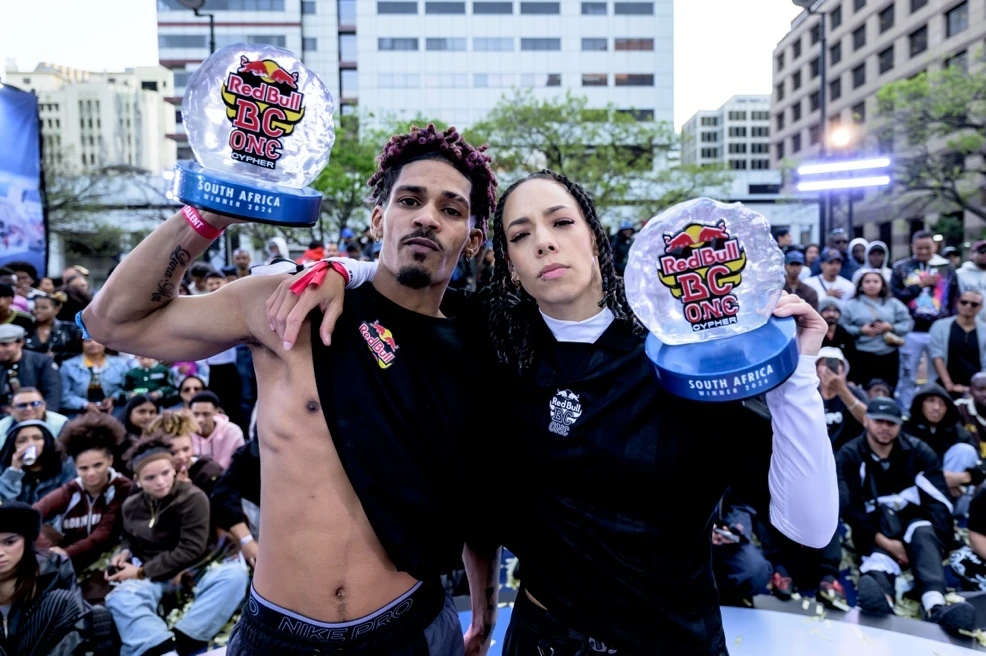
Courtnaé Paul, B-Girl and DJ, secured a spot at the Red Bull BC One World Final after winning the national title at Thibault Square in Cape Town.

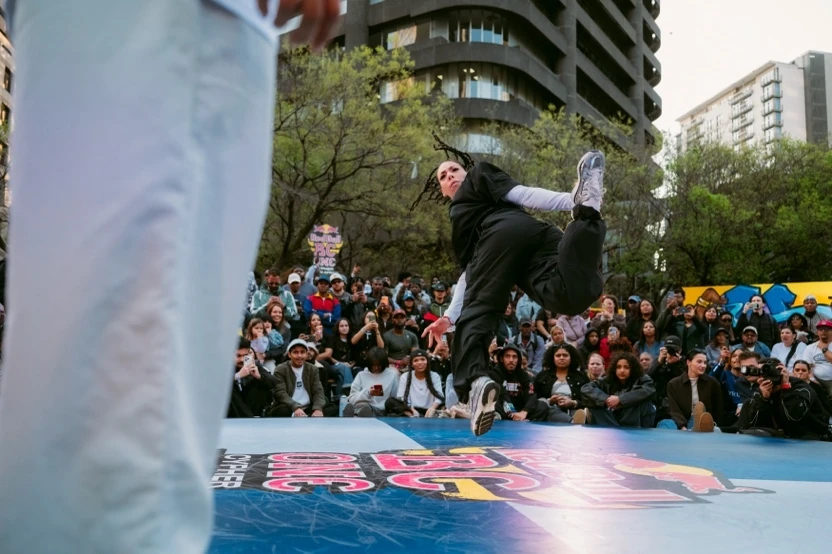
“Death by a thousand cuts” is how B-girl Courtnaé Paul describes her dance approach to someone who hasn’t seen her perform: that, and her explosive attacking style.
The four-time national champion is heading to Toronto, Canada, in November for the Red Bull BC One World Final. The Durban-born talent brings individuality and a healthy appetite for pressure into one of breaking’s biggest battles.
Courtnaé is taking it in stride. She jokingly admits the pressure is there, but it’s part of the dopamine effect. It’s the fire that fuels her determination. Come 29 November, when the four-time Red Bull BC One South Africa champion steps into the circle at the World Final in Toronto, Canada, there will be plenty to go around.
The B-Girl and DJ secured a spot on the international stage after winning the national title at Thibault Square in Cape Town in September. B-Boy Toufeeq claimed the other South African position, earning the pair the opportunity to represent the country at one of the world’s most prestigious one-on-one breaking competitions.
Breaking might look effortless when a dancer nails a difficult move. The physical demands are anything but casual.
“People grossly underestimate the physicality of breaking,” Courtnaé clarifies. She compares the discipline to gymnastics, where strength, control and repetition are essential.
A single move can take months to master, yet competitors must combine technical precision with creativity and musicality in rounds lasting just 45 seconds.
At Red Bull BC One, there is no fixed playlist. No rehearsed routine to fall back on. Dancers must react to the DJ. Read their opponent and make split-second decisions in the circle.
Breaking isn’t a casual pastime. Courtnaé puts in the hard graft. The award-winning B-Girl trains five to six days a week, putting in two to three hours a day. She also works with a dance coach and a strength and conditioning trainer to prepare her body for the demands of competition.
That commitment comes with a cost. Training on an elite level requires time, resources and support, things that aren’t always easy to secure for South African athletes.
The bigger story for Courtnaé is what South African dancers can bring to the global stage.
She recognises that competitors from countries such as China can benefit from more established training facilities, coaching networks and institutional support. South African breakers often have to forge their own path, building careers while navigating fewer resources.
But she believes local dancers have something that cannot be manufactured. “Our character is something that will carry us.”
There’s also the existential elephant in the room. As a woman of colour and a queer athlete in a male-dominated culture, she knows that not everyone enters the circle on equal footing.
“Females in the space have to constantly do that,” she says of having to prove themselves. “And then you add on all my other little tabs, and suddenly the air gets a bit thinner.”
But it is what it is, she adds. “And I have to figure out: do I constantly feel like a victim, or do I just try to break through these stereotypes, which is why I say for me, it’s not about going somewhere and winning. It’s about how do we make the impact? How do we show people that a different version of this thing exists?”
She brings up the “person of colour” topic. “When it comes to international conversations on being Coloured, that’s a derogatory term, yada, yada. So for me, the representation is important.”
Courtnaé emphasises that a good role model is as good as she can be, “because my community needs it”.
View this post on Instagram
Courtnaé’s journey has involved plenty of improvisation outside the dance circle. Born in Durban, she moved to Johannesburg at around 21 to pursue greater opportunities.
She worked across different performance gigs, gradually building a career that has included dance, DJing, social media and sports coverage, including work with SuperSport.
Lockdown prompted another turning point. After competing in Red Bull E-Battle and reaching the top 32 worldwide, she began taking breaking more seriously.
Her progress hasn’t come without personal hardship. She lost her father when she was around 13, and her mother died in the year before her most recent national victory.
Competing internationally soon after her mother’s death was particularly difficult. Winning again carried a meaning beyond the title. Over time, she’s also become more comfortable with her place among the world’s best.
During earlier competitions, she questioned whether she belonged, particularly when facing dancers with greater backing and international recognition.
Now, she is approaching the World Final with a different mindset. “I’m just going somewhere to dance.”
The Red Bull BC One World Final takes place in Toronto, Canada, on Sunday, November 29, 2026.
Sign up to Time Out Cape Town's free newsletter for expert recommendations on new things to do, see, eat and drink in the Mother City. You can also follow Time Out Cape Town on Facebook, Instagram and TikTok!
Discover Time Out original video