[category]
[title]
The first-ever Skift Mega Trends Africa event has amplified the focus on aligned execution to realise the continent's full potential.


The growth of travel and tourism in Africa has long needed to move beyond the theoretical and visionary conversations - and the first-ever Skift Mega Trends in Africa, hosted in Cape Town by the Millat Group, set out to prove exactly that.
The event was all the spectacle, but even more so about execution - placing Africa squarely within the global travel conversation.
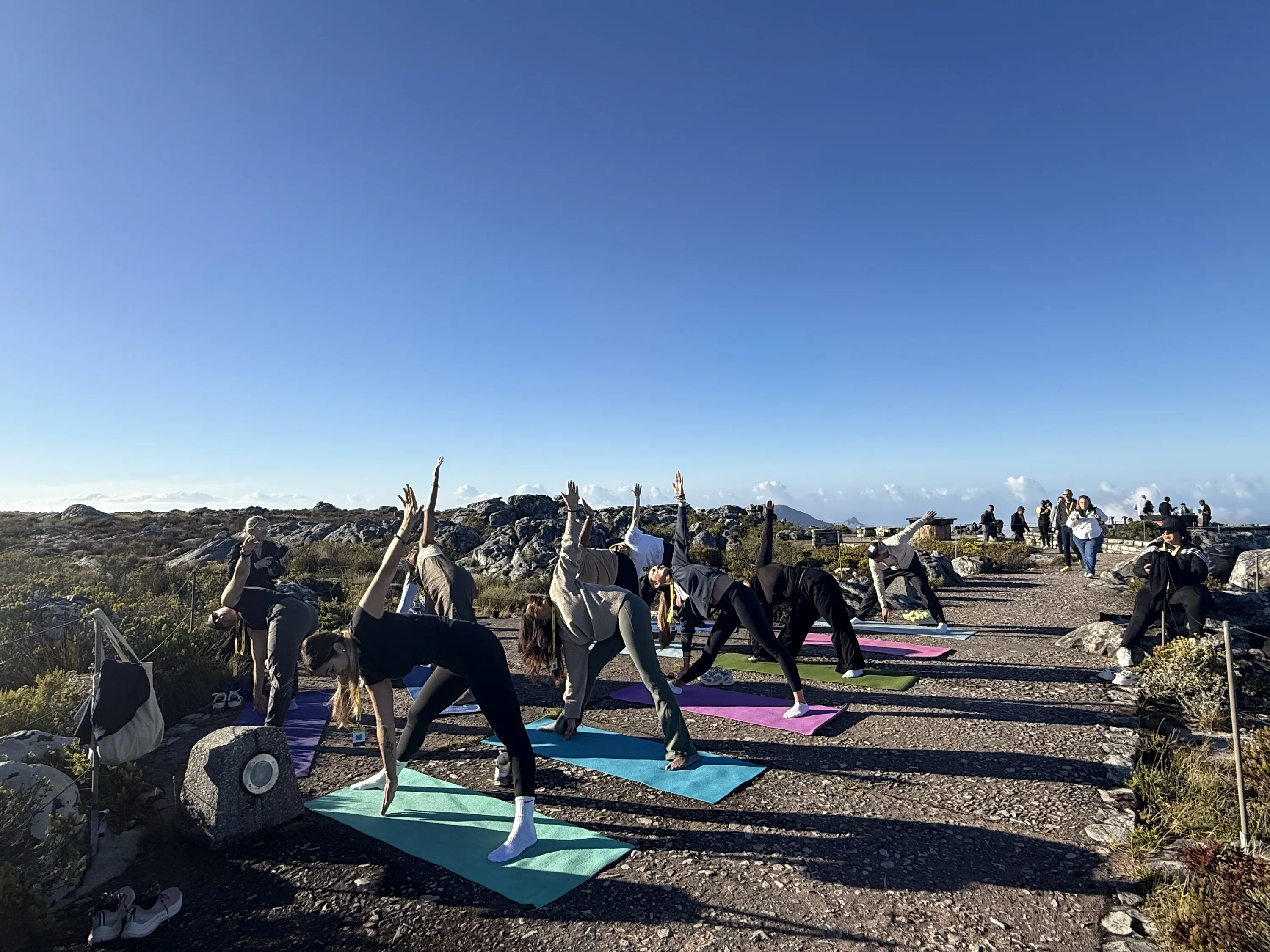
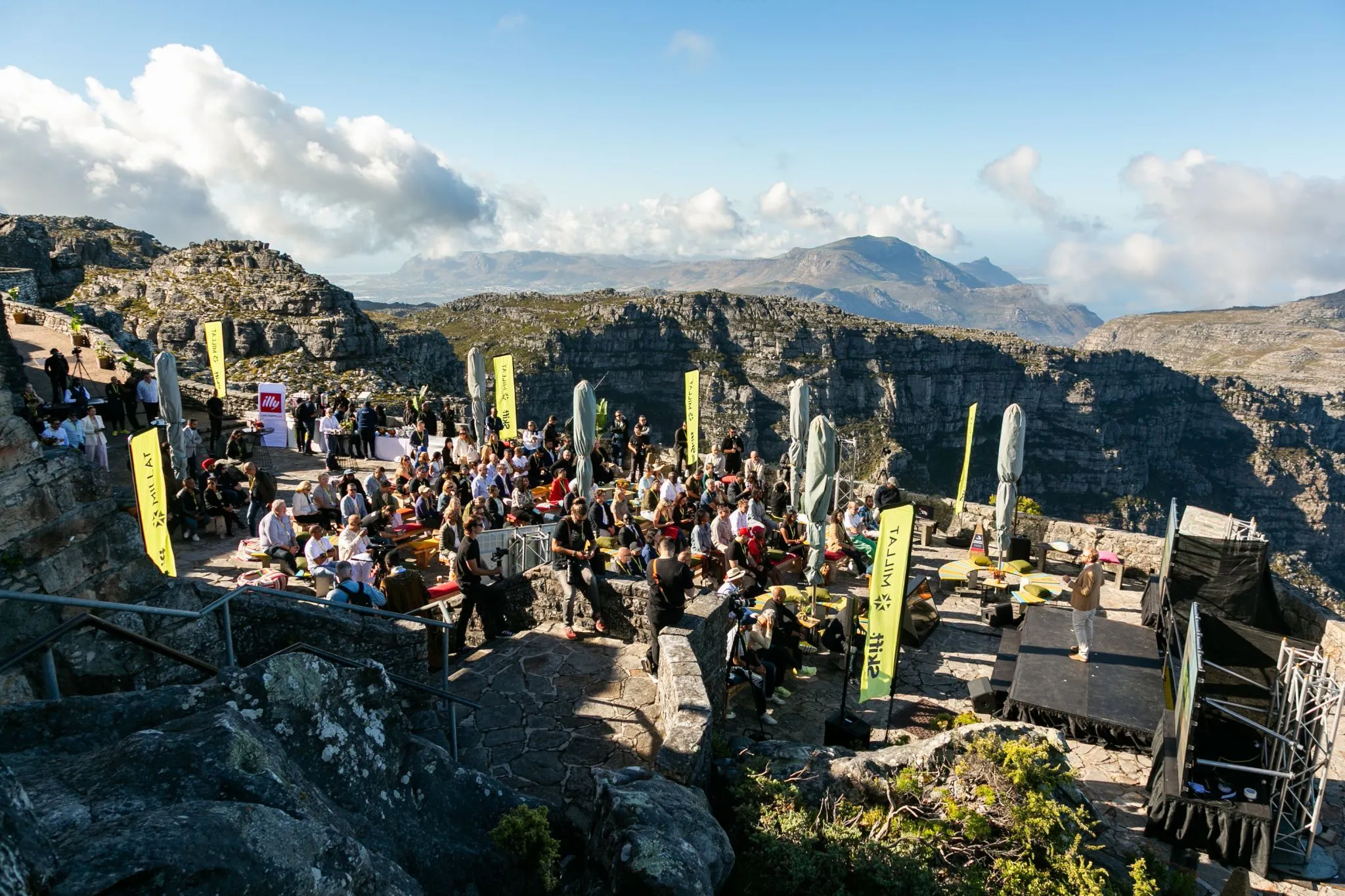
As the sun rose over Table Mountain, delegates gathered not in a convention centre, but 1,084 metres above sea level. Yoga mats were rolled out, coffee was poured, and guided tours of the mountaintop unfolded in the open air. All before the first mega trends slide deck was unpacked.
As Hamza Farooqui, founder and CEO of Millat, explained, this was a showcase of what can be done in the city and on the continent, “This wasn’t mega trends in an auditorium. This was open air, in nature, in what is very uniquely South Africa. That execution should give people reassurance that it’s doable. South Africa can do it. South Africa has done it.”
The format mirrored emerging trend lines: How global travel trends intersect with local realities. Wellness, luxury beyond the safari and experience-led travel were not discussed in abstraction but demonstrated in place, using Cape Town's assets as context.
One of the strongest themes to emerge was the need to dismantle the idea of Africa as a single destination.
“Africa is seen as one country,” said Wilson Tauro, Country Manager Southern Africa for Air France–KLM. “If someone sneezes in Ghana, the whole world thinks it’s happening across the continent.”
Tauro contrasted this with Europe, where each destination is clearly defined in the traveller’s mind. In Africa, tourism remains concentrated in a handful of gateways. In South Africa alone, he noted, nearly 90% of tourists visit Cape Town and the Kruger, with little effort to push travel beyond those points.
The data supports this imbalance. North Africa accounts for more than half of the continent’s arrivals, noting that Africa as a whole captures roughly 5% of global tourism.
“The industry hasn’t done enough to communicate what’s unique about Angola, Ghana, Nigeria,” Tauro said. “That’s where attention needs to go.”
From an investment perspective, Wafeeq Pandey, Managing Director at Goldman Sachs, framed tourism as a structurally supported, long-term opportunity rather than a cyclical play.
“When you look at Africa through macro fundamentals, what drives growth globally is population growth and productivity,” Pandey said. “Across Africa, we’re seeing a growing workforce, increased urbanisation, rising education levels, and higher incomes. Structurally, that supports long-term discretionary spend.
Tourism, he argued, benefits directly from these fundamentals, while also offering something investors often seek in Africa: currency protection.
“Africa is not a homogeneous market. There are hard currency inflows, increased intra-African trade, and growing human capital flows. All of that supports a stronger base for intra-Africa travel and long-term tourism growth,” Pandey said.
For Skift co-founder and CEO Rafat Ali, the conversation is most certainly about execution.
“The operating capability is everything,” Ali said. “From the airport, transport, hotel - every touchpoint. If they have a seamless experience once, they’ll come back.”
Ali illustrated the point with two contrasting examples. Iceland, once a peripheral destination, moved rapidly onto the global travel map after its volcanic eruption, driven by a combination of accessibility and execution. Visa access for Western travellers was simple, flights followed, and once awareness took hold, the destination required little traditional marketing.
"Iceland didn’t even need to market,” Ali said. "They were just on the map, that's all it took.”
By contrast, Qatar demonstrated the risk of exposure without follow-through. While the FIFA World Cup placed the country firmly in the global spotlight, the absence of a clear post-event tourism strategy left hotels underutilised once the crowds departed. The promise was made, but execution stalled.
For Ali, the lesson for Africa is clear: Visibility alone is not enough.
Destinations must align access, infrastructure, and experience, and crucially, sustain that effort beyond a single moment. Without consistency at every stage of the journey, first impressions become final ones, and repeat travel is lost.
Hospitality and tourism expert Lee-Anne Singer acknowledged the event was proof of what can be achieved when alignment exists.
“What Cape Town delivered here shows what’s possible,” Singer said, but also highlighted a critical constraint when it comes to skills funding and access.
“In South Africa, we have a young workforce hungry to work, looking for dignity and hope,” she said. “There is money. There is will. There are people. But government has to make it easier to access those funds, and industry has to use them.”
For Farooqui, the readiness required to move the tourism growth and investment needle is about ecosystem thinking, not individual gain.
As the sole African representative on the World Tourism Board executive committee, Farooquii further amplifies this continental view, particularly as frameworks like the Single African Air Transport Market and visa reform across the continent needs stronger focus.
“As a small, self-made entrepreneur, what we’re trying to create was not about Millat,” he said. “Skift was not about Millat. It was about ecosystem. Look at the people here, from the travel trade to investors. It’s about awareness across the broader industry.”
“When the continent gets stronger, the ecosystem gets stronger,” he said. “Everyone knows what needs to be done. It just needs will, let's just get it done. Hopefully that message will land with policymakers and we'll make Africa even greater."
Discover Time Out original video