[category]
[title]
Led by local guide Yanga Gijani, this eye-opening journey addresses the gaps left by conventional history books, uncovering stories of the people who shaped Cape Town long before it became one of the world’s favourite cities.


Cape Town’s history is written all over its streets. It rises along the reclaimed Foreshore and the looming Castle of Good Hope, is etched into the grand façades lining Darling Street, and stretches through the Company’s Garden, where the city’s colonial beginnings are usually explained through the Dutch East India Company, British rule, and the conflicts fought over control of the Cape.
But that is only one version of the story.
The Black History Route, led by South African tour guide Yanga Gijani, begins by asking whose history has been preserved, whose has been pushed to the margins and what changes when the city is viewed through the experiences of Indigenous people, enslaved communities, and displaced families. What still needs to shift, in light of those who resisted racial oppression?
Taking this walking tour with Gijani poignantly addresses that historical knowledge gap. I’m not surprised when he shares that barely any of what he has used for his tour is included in the official tour guide curriculum.
Many of us know about the Jameson Raid. Kratoa, perhaps and most likely only since the push to rename Cape Town International after this fierce female protagonist.
It’s the individuals the history books overlook that you come to know along the way, as you visit some of Cape Town’s lesser-known Black historical landmarks. The tour gives you a deeper understanding of the people, events and injustices that shaped resistance to apartheid and South Africa’s eventual democratic revolution.
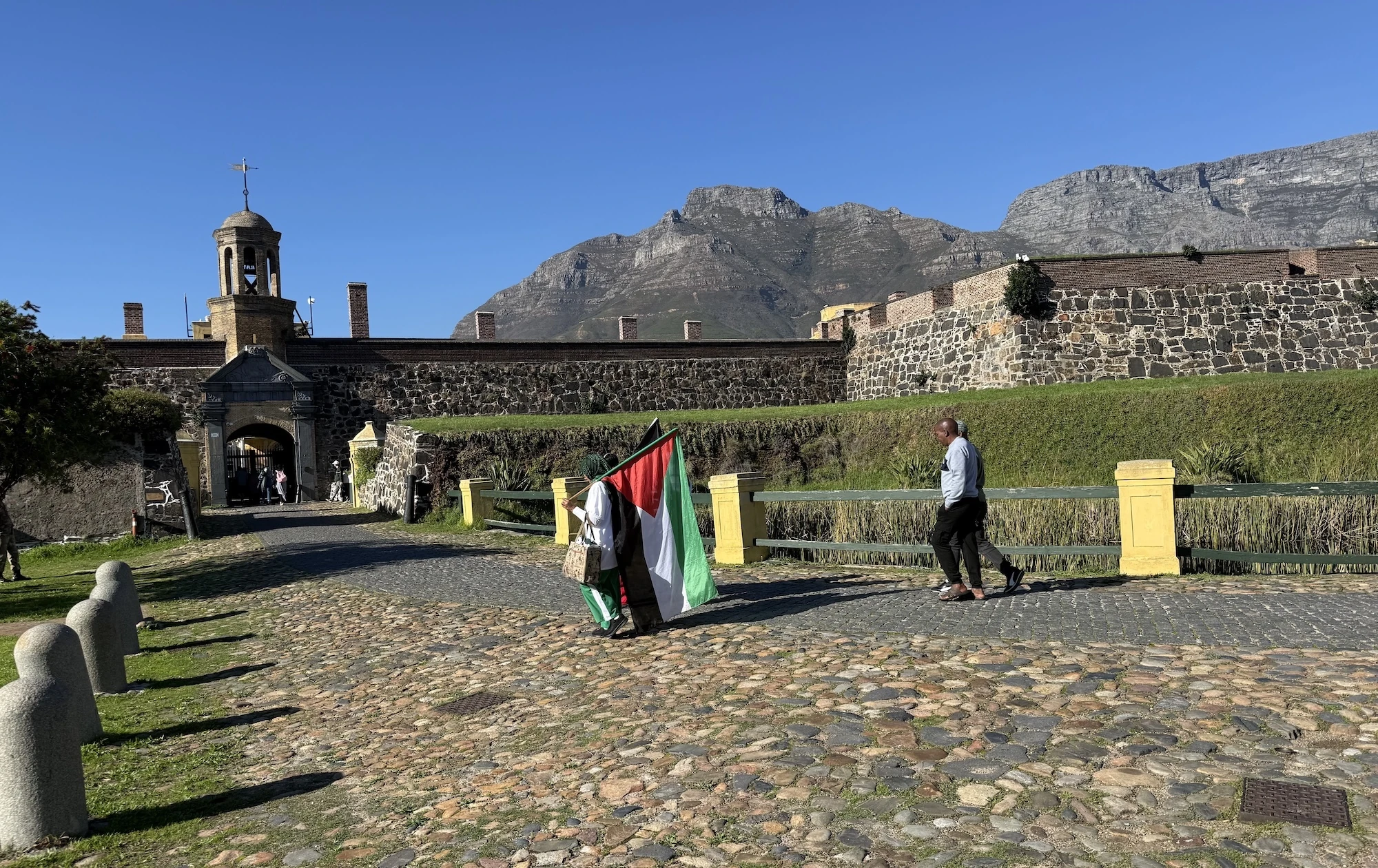
The tour starts outside the Castle of Good Hope – and that distinction matters. Rather than beginning within the walls of one of South Africa’s oldest surviving colonial buildings, Gijani positions the Castle as a backdrop. The decision signals that this will not be another retelling of Cape Town’s history through the lens of commanders, governors and military campaigns.
The Castle may dominate the physical landscape, but it does not get to dominate this story.
Instead, Gijani turns attention towards the Khoekhoe communities who inhabited the Cape before Dutch settlement, the violent disruption that followed colonial expansion and the labour of enslaved people upon which much of the emerging city depended.
The City of Cape Town’s own heritage material recognises that slavery profoundly shaped the city and that enslaved people made major contributions to its construction and distinctive culture.
It is a simple but powerful shift in perspective: stop looking only at who occupied the buildings and recognise who built them, who served inside them, and who paid the human cost of their existence.
With that in mind, Gijani introduces Krotoa, the Khoekhoe woman whom Dutch settlers called Eva.
Krotoa is often reduced to a few lines in conventional accounts of the Cape: a servant in Jan van Riebeeck’s household, an interpreter between the Dutch and local communities, a Christian convert and the first Indigenous woman at the Cape to be baptised.
Yet the facts alone cannot capture the complexity of her position.
Fluent in Dutch and Portuguese, Krotoa worked across cultural and political boundaries at a moment when the balance of power at the Cape was being permanently transformed. She was relied upon as an intermediary while remaining vulnerable to the colonial system she was helping to navigate. Historical accounts show that her movements between the Dutch settlement and her own community also made her a subject of mistrust.
Krotoa was a complicated female archetype embodying intelligence and the ability to negotiate at tables deemed outside her immediate reality. She deserves a far more prominent place in Cape Town’s story instead of being a footnote to Van Riebeeck's story.
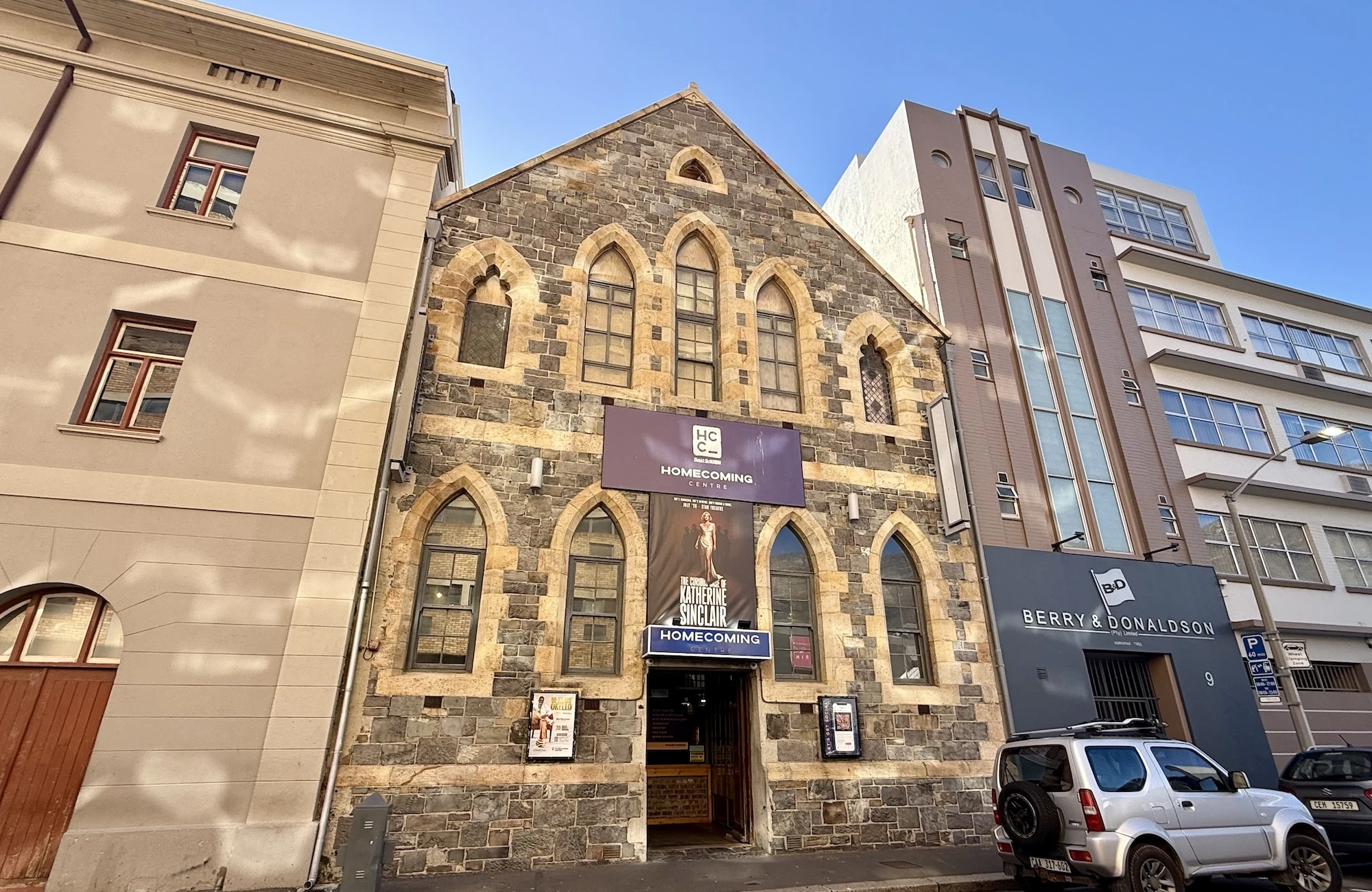
The walk continues towards the District Six Museum on Buitenkant Street, where the history of one of apartheid Cape Town’s most notorious forced removals is preserved through maps, photographs, household objects and personal testimony.
District Six was once a dense inner-city neighbourhood populated by freed slaves, merchants, craftspeople, labourers, and immigrants. It was closely connected to both the harbour and the centre of Cape Town. It was formally declared a white area on February 11, 1966. More than 60,000 residents were eventually forced to the Cape Flats, some of my own ancestors included, while bulldozers destroyed homes and businesses.
But the tour does not treat District Six only as a place from which people were removed.
As the group moves from the museum into the actual neighbourhood, Gijani begins to reconstruct what apartheid attempted to erase. He asks you to imagine a close-knit community filled with people of multiple faiths, cultures and races: the sounds of children in the street, food cooking in family kitchens, Jewish bar mitzvahs, Muslim weddings, church congregations, corner shops, and music spilling from houses. Layers of cultural heritage that still exist today, but still separately along the Cape Flats to the Atlantic Seaboard, spatially dependent on which side of the ‘pencil test’ your genes landed.
Few parts of Cape Town have been reinvented as rapidly as the East City.
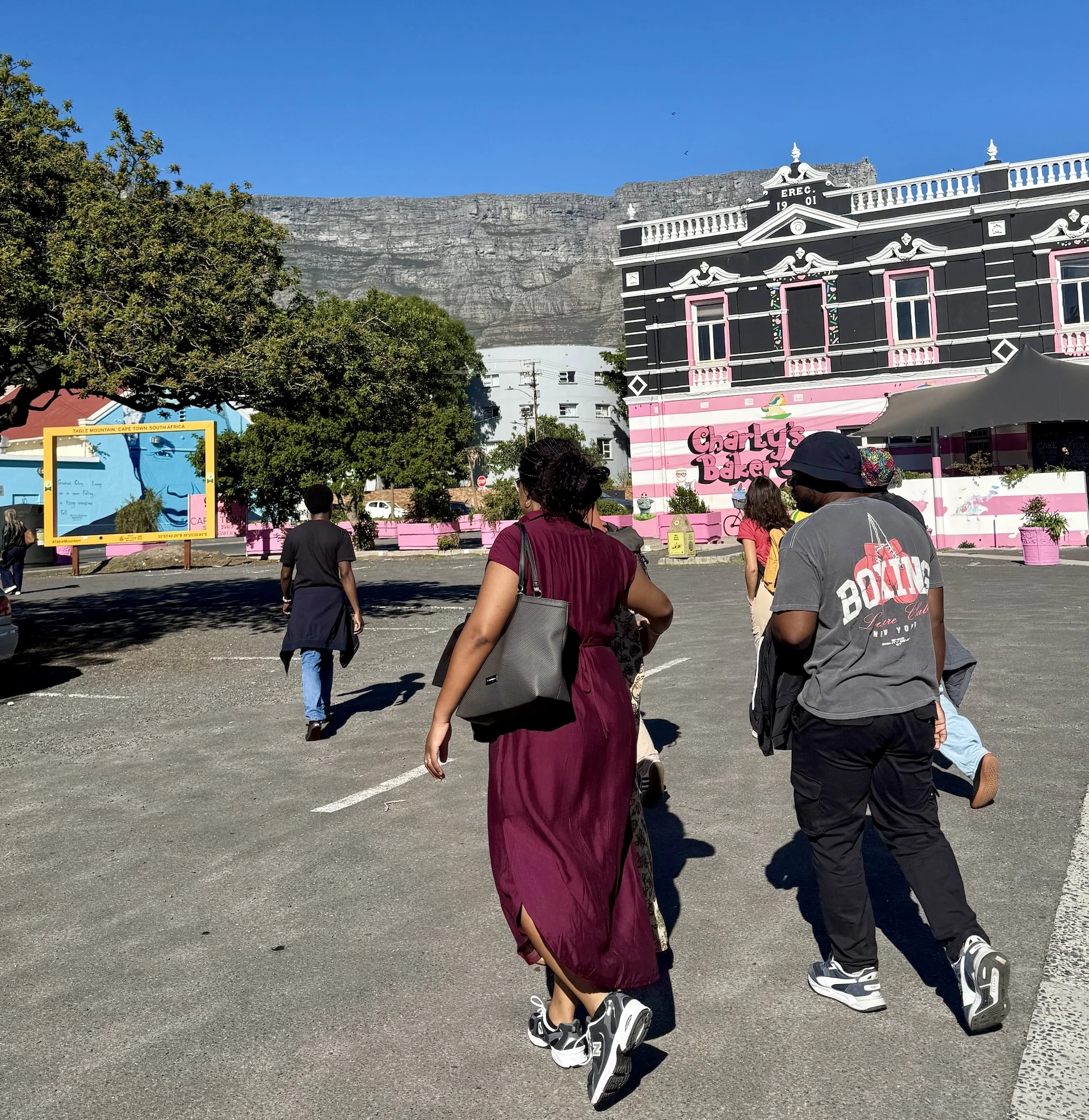
Harrington Street is now lined with bars, boutique businesses, fashionable restaurants, and trendy shops, all meant to appeal to the growing set of digital nomads and tourists who flock here.
The precinct is lively, design-conscious and popular with a new generation of residents and visitors. It’s good for business, and it’s definitely good for the economy through tourism.
Yet, viewed through the story of District Six, that reinvention becomes more complicated.
The polished restaurants and creative spaces may have restored activity to the streets, Cape Town boast an inner-city that is vibey and safer than most other SA cities. Upon reflection, they are a pale substitute for the layered community life that once existed here. Many former residents and working-class Capetonians would struggle to afford the version of the neighbourhood now being created.
Gijani does not necessarily ask participants to reject the city’s revival. He asks them to question who benefits from it.
District Six was not empty land awaiting development. It was a functioning, multicultural neighbourhood with its own rhythms, relationships and social ecosystem. The apartheid state did not simply demolish buildings. It dismantled a vibrant, organic community that underscored what it means to be Capetonian and by extension South African. Mixed, colourful and possibly vexed by typical neighbourly annoyances, instead of deep-seated hatred infused through racial and xenophobic fears designed to divide and conquer.
Gijani conjures an important Afrofuturism, envisioning a Rose Line as a sacred path to spotlight the city's current grappling with affordable housing and with locals' long-promised better access to the city's affluent neighbourhoods. It raises questions about redevelopment, what gets celebrated and what is being done to address past displacements.
They are uncomfortable questions that precisely put this tour in a realm of necessity rather than simply novelty.
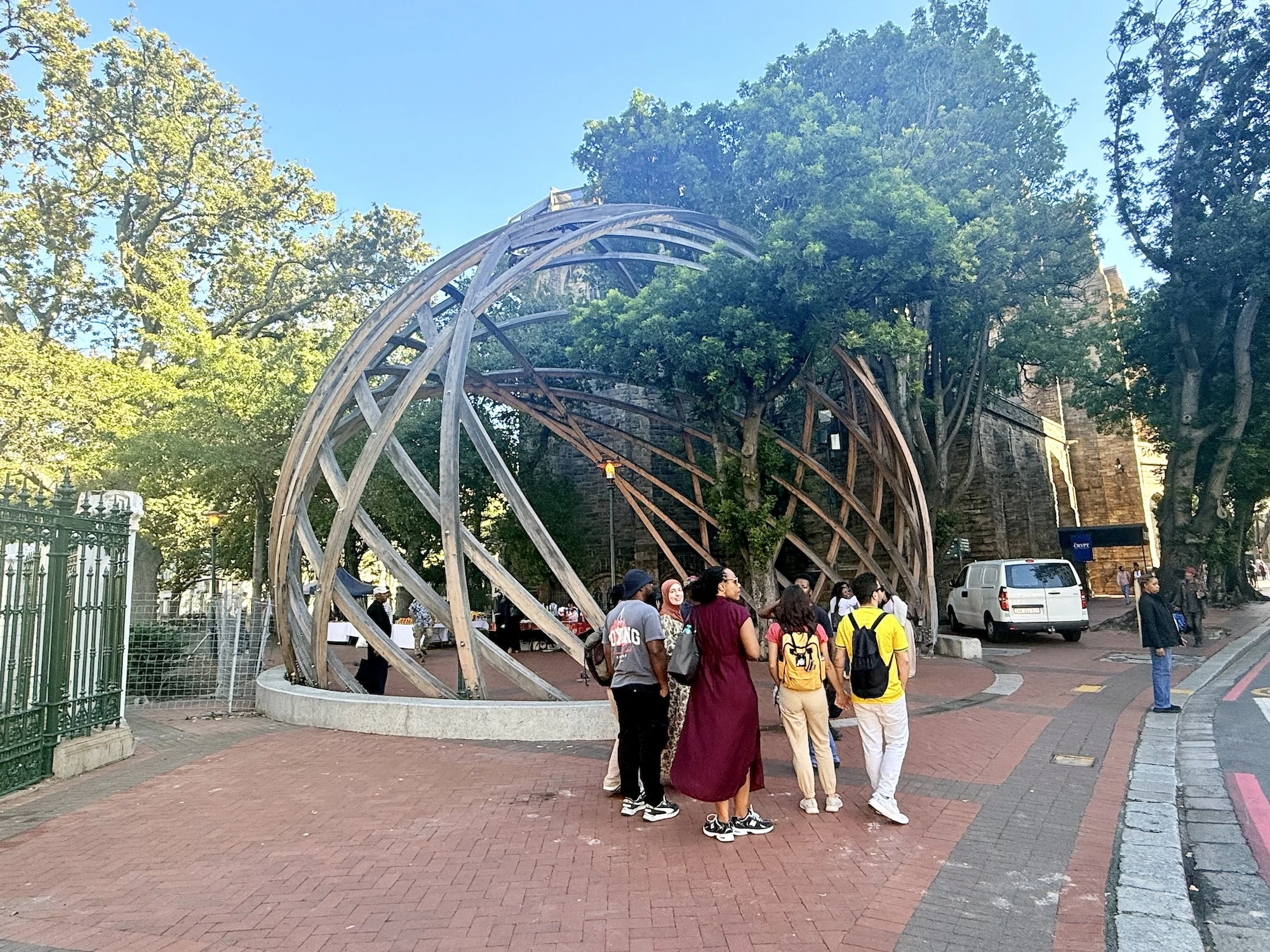
At Church Square, the tone shifts again. This small public space was once associated with the sale of enslaved people. A memorial now marks the site of the former Slave Auction Tree. You’d hardly notice it if you were not seriously looking out for it.
A series of engraved blocks, slightly more striking, lines the square to commemorate enslaved men and women whose identities were frequently stripped away or recorded according to colonial naming systems.
Historical research indicates that enslaved people were sold around Church Square during the nineteenth century, with sales taking place beneath the shade of a large tree. The memorial on the square also honours the contributions enslaved people made to the building of Cape Town and recalls the 1808 slave uprising.
Here, Gijani examines how slavery disrupted ancestry, language and family identity.
He discusses surnames associated with months such as January and September, and names derived from physical characteristics, occupations or places of origin. While the history of each family name differs and broad explanations should be treated carefully, the wider point remains: enslaved people were frequently renamed by those who claimed ownership over them.
Names became another site of control.
Yet those names were also carried forward, adapted and claimed by later generations, becoming inseparable from the identities of many South African families.
One of the tour’s most thought-provoking interventions concerns Afrikaans.
For many Black South Africans, the language remains closely associated with apartheid authority, Bantu Education and the 1976 Soweto uprising. It was the language of government instructions, racial classification and the 'dompas' that controlled the movements of Black people.
But Gijani asks participants to look further back.
Afrikaans did not emerge solely in white colonial households. It is not a white man’s language. Iziko Museums notes that some historians trace its development partly to enslaved people communicating with Dutch-speaking owners. Early Afrikaans was used within Cape Muslim communities and written in Arabic script. At the same time, the language absorbed words and influences from the many Asian and African communities brought to the Cape.
In the Cape specifically, Afrkaaps is a dialect that is both extremely descriptive and hilarious in parts. 'Aweh' is likely the most familiar.
As the tour delves into colloquial expression across various local cultures, it does not erase the later weaponisation of language by the apartheid state. Instead, it restores a history that apartheid itself helped obscure.
The route continues past the Company’s Garden precinct and the Arch honouring the late Archbishop Emeritus Desmond Tutu, past the courts, where old benches bearing racial segregation markings remain as physical reminders of apartheid’s intrusion into ordinary life.
It was not an abstract political philosophy. It decided where people could sit, live, study, work, travel and love. Its cruelty was embedded in signs, benches, permits and administrative offices.
The walk then passes along some of the city centre’s grand old commercial buildings, including the striking Mutual Heights building on Darling Street, with one of the longest carved stone friezes in the world depicting the figureheads of nine Southern African tribes.
They are beautiful structures, again easily missed if you’re not looking for them. Gijani’s tour encourages you to recognise the unique architecture, while also considering the labour and economic systems that made it possible. The city’s impressive colonial buildings did not materialise independently of the society around them. Enslaved and marginalised people helped build, maintain and service Cape Town, leaving an influence visible in its architecture, language, cuisine, religion and everyday customs.
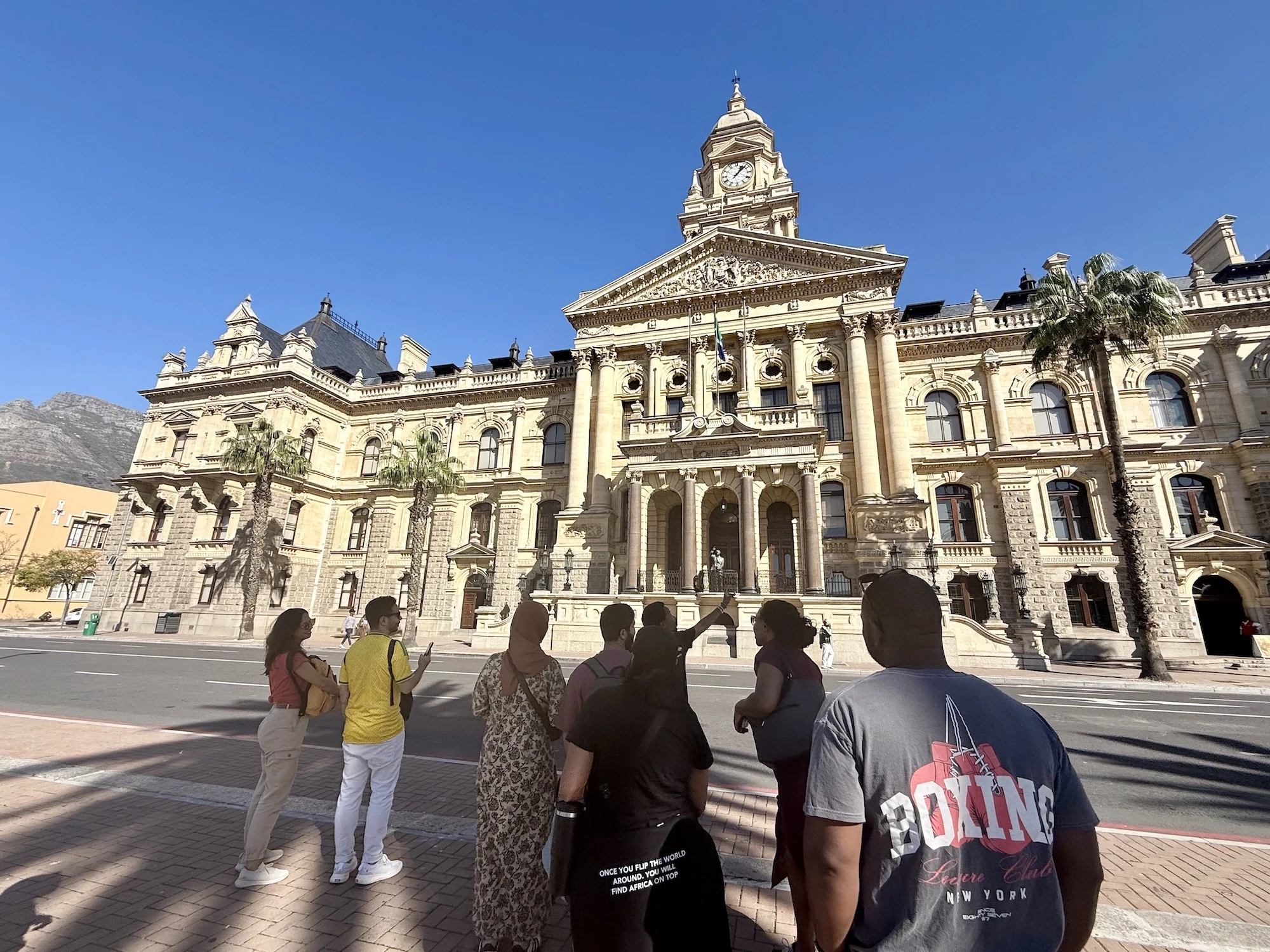
The tour reaches its natural conclusion on the Grand Parade, facing Cape Town City Hall.
It was from the City Hall balcony on February 11, 1990, that Nelson Mandela addressed a vast crowd after walking free from Victor Verster Prison. The location completes a remarkable exploration of South Africa’s historical arc: from colonial occupation, slavery and dispossession to apartheid, resistance and the arrival of democracy.
This is not presented as a neat, happy ending. The inequalities created over centuries remain visible across Cape Town, from its housing patterns to access to land, transport, education and opportunity.
But the balcony does represent a turning point.
After walking through a city marked by exclusion, you are reminded of the country’s enduring political will and public declaration of freedom for all.
Cape Town is extraordinarily easy to consume as a beautiful destination.
Visitors can move between Table Mountain, wine farms, beaches and waterfront restaurants without ever confronting how the modern city came to be divided so dramatically along racial and economic lines.
This tour supplies the missing context.
It explains why District Six remains emotionally and politically significant, why debates about land and gentrification are not merely contemporary disagreements, and why the identities described as Cape Malay, Khoekhoe, Black and Coloured cannot be understood without the intertwined histories of slavery, colonialism and apartheid.
You still see the landmarks. More importantly, you also begin to understand what they mean.
For locals, the tour may be even more important.
Familiarity can make a city invisible. When last have you mindfully walked across Church Square, if at all. Instead we rush to cross the Grand Parade, or are enticed to dine on Harrington Street without really stopping to consider the lives that occupied these spaces before us.
What I especially enjoyed was how Gijani turns the city centre into an open-air archive.
His tour demonstrates that history is not confined to museums or academic books. It remains set in paving stones pounded beneath our feet, daily. Looking into the polished façades, are we comfortable with our reflections, or are we allowing history to continue to divide us?
You may not agree with every interpretation offered along the route. That’s history, though, shaped by the ones who get to tell the story. The reason to take this tour is to explore responsible storytelling that leaves room for debate, encouraging you to examine what you were taught, notice what was omitted and remain curious enough to keep learning.
Discover Time Out original video