[category]
[title]
The German-born activist established the NPO 10 years ago, the catalyst being the murder of Franziska Blöchliger (16) in Tokai Forest in 2016.

Every year, come the start of August, South Africa pulls out all the stops. Marketing goes into overdrive. Companies and brands post meaningful quotes alongside grainy images of the historic 1956 women’s march to the Union Buildings.
Restaurants and retailers advertise “Women’s Day” specials. The spirit and resilience of South African women are celebrated because look how far we’ve come.
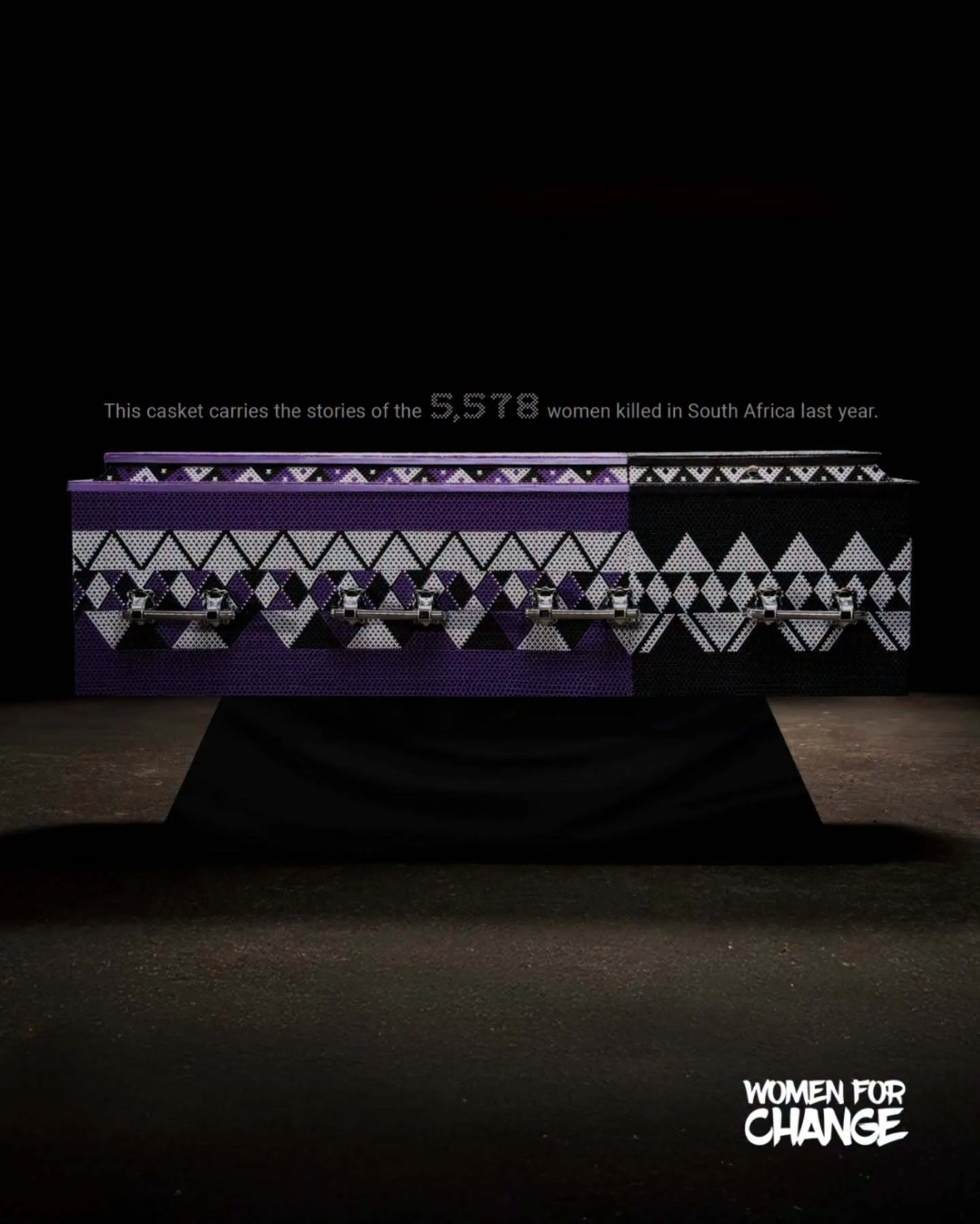
Then there’s the other side to Women’s Month. The dark, ugly side that always brings us back to reality. The side that reminds us that our nation has some of the highest rates of gender-based violence (GBV) in the world.
Data from the Human Sciences Research Council (HSRC) shows that over 35% of women aged 18 and older have experienced physical or sexual violence in their lifetime. The most recent case involving the murder of 17-year-old St Stithians pupil Cameron Waldeck-Cooks puts a stain on commemorating the month. So do hundreds of other cases that go unsolved or unprosecuted.
When Sabrina Walter, the founder of Women For Change (WFC), sends a note to say she’s running late for our interview, it’s understandable. Forty-five minutes spent on an interview is time taken away from her work. Time best spent on advocating for victims of violence.
It feels almost capricious when I ask what it means for her to be a woman today. Sabrina is direct in her answer: “I think being a woman in 2026 means celebrating our achievements while we also navigate inequality, violence, discrimination and fear for simply being a woman.”
View this post on Instagram
The German-born activist established the NPO 10 years ago, the catalyst being the rape and murder of Franziska Blöchliger (16) in Tokai Forest in 2016.
Sabrina was instrumental in calling for action. She joined a walk in March to mark the 10-year-anniversary of Franziska’s death. She would have been 26 today.
“What really struck me in that moment when it happened, not just that it was an absolutely horrific incident, but also the power of community,” says Sabrina. “Because when we found out, I think two days later, I put up a Facebook post, an event, and we called it Woman for Change.”
A week after the murder, about 4,000 showed up, placing flowers and ribbons at the scene in Tokai Forest. “It’s painful that Franziska became the actual reason why Woman for Change was born. But I'm sure that, looking back, that tragic incident also helped a lot of women, a lot of survivors, when we started that organisation.”
Several years later, Uyinene 'Nene' Mrwetyana's 2019 murder after walking into a post office in Claremont caused a wave of protests, with community members waving posters and chanting, "Say her name!"
Initially started as a survivor-centred non-profit organisation, WFC has evolved into a safe space for survivor support, digital mobilisation, and systemic reform.
The G20 Women’s Shutdown in November last year was a pivotal moment for the NPO. Launching the Purple Movement, WFC mobilised peaceful nationwide protests. Its digital advocacy campaign, encouraging social media users to replace their profile picture with a purple heart, carried immense weight.
The power of collective action led President Cyril Ramaphosa to officially classify GBVF as a National Disaster in November 2025. Sadly, Sabrina knows firsthand that the wheels of justice move slowly. “When President Ramaphosa announced or classified it officially as a national disaster, it really was the beginning of something and not the end. It wasn’t the goal; it wasn’t the accomplishment.”
She explains that South Africa has some of the most progressive legislation and policies, but the implementation thereof is lacking. “What we continue to see is the delayed investigation, the implementation, inconsistent policing, poor communication between different departments.
“We see many shortages of forensic resources. We know that most police stations in Cape Town probably do not have even a rape kit. So that is something that should have come with the classification, and it has still not happened.”
WFC, like many other organisations and women’s shelters, doesn’t get sustainable funding from the government. It doesn’t work with the government or the SAPS. Its role is to hold these departments accountable.
Funding is a huge problem in the GBV and femicide space. Without funding, Sabrina iterates that organisations can’t exist. “Without funding, women can’t find safe housing. Without funding, we can’t look into prevention. We can’t look into education. We need education at schools.”
When speaking about education, she stresses the importance of consent and healthy relationships. Parents should play their part and have these uncomfortable discussions at the dinner table. “It should actually start at home. Changing societal norms,” she says.
View this post on Instagram
Regular police procedure goes as follows: Victims report the incident at the police station. The perpetrator is arrested. This is not what survivors see in reality, adds Sabrina.
The stories of young girls and children who were sexually assaulted by family members are shocking, she says. Parents making excuses for their sons’ behaviours. Families defending the offender.
Sabrina mentions Cameron Waldeck-Cooks and the negative comments and victim-blaming WFC received on social media. “The comments are vile that we’re receiving. The messages. The hate we are getting. Simply sharing what has happened. What has transpired. What the police have said.”
View this post on Instagram
For Sabrina, WFC is deeply purpose-driven work. “I believe it really fulfils me even if it’s hard,” she smiles.
In April, she was named to Time 100’s list of the most influential people. The accolade doesn’t sway her. Although she’s grateful for it spotlighting WFC’s work, she says many things mean more to her. “I don’t think it has changed my sense of responsibility, because I know how important this platform is for millions of people.”
What strikes me is Sabrina’s positivity. She works with the most vulnerable and has seen monsters with faces. And yet, she remains hopeful. “It really is hope and seeing the power of community. I don’t think we can wait for government. Everything goes back to civil society.”
She is all too aware that change won’t happen overnight. And by that, Sabrina means more men should be attending Women’s Day events and spaces that spotlight victims’ stories, “because they are the ones we are speaking to.” Brands and private companies should show their support and donate to GBV causes, not just during Women’s Month or 16 Days of Activism.
“Ending gender-based violence is not women’s responsibility during Women’s Month. It requires every single South African every single day.”
More info:
Sign up to Time Out Cape Town's free newsletter for expert recommendations on new things to do, see, eat and drink in the Mother City. You can also follow Time Out Cape Town on Facebook, Instagram and TikTok!
Discover Time Out original video