

[image]
[title]The Mother City has always been a great place for surprise wildlife encounters. It could be a caracal on the mountain, a few dolphins with your Tobago’s brunch at the Radisson, or a horny Tahr on the paths of Table Mountain. Sunfish in the Robinson dry dock, or orcas in Kalk Bay harbour? We’ve had those too.
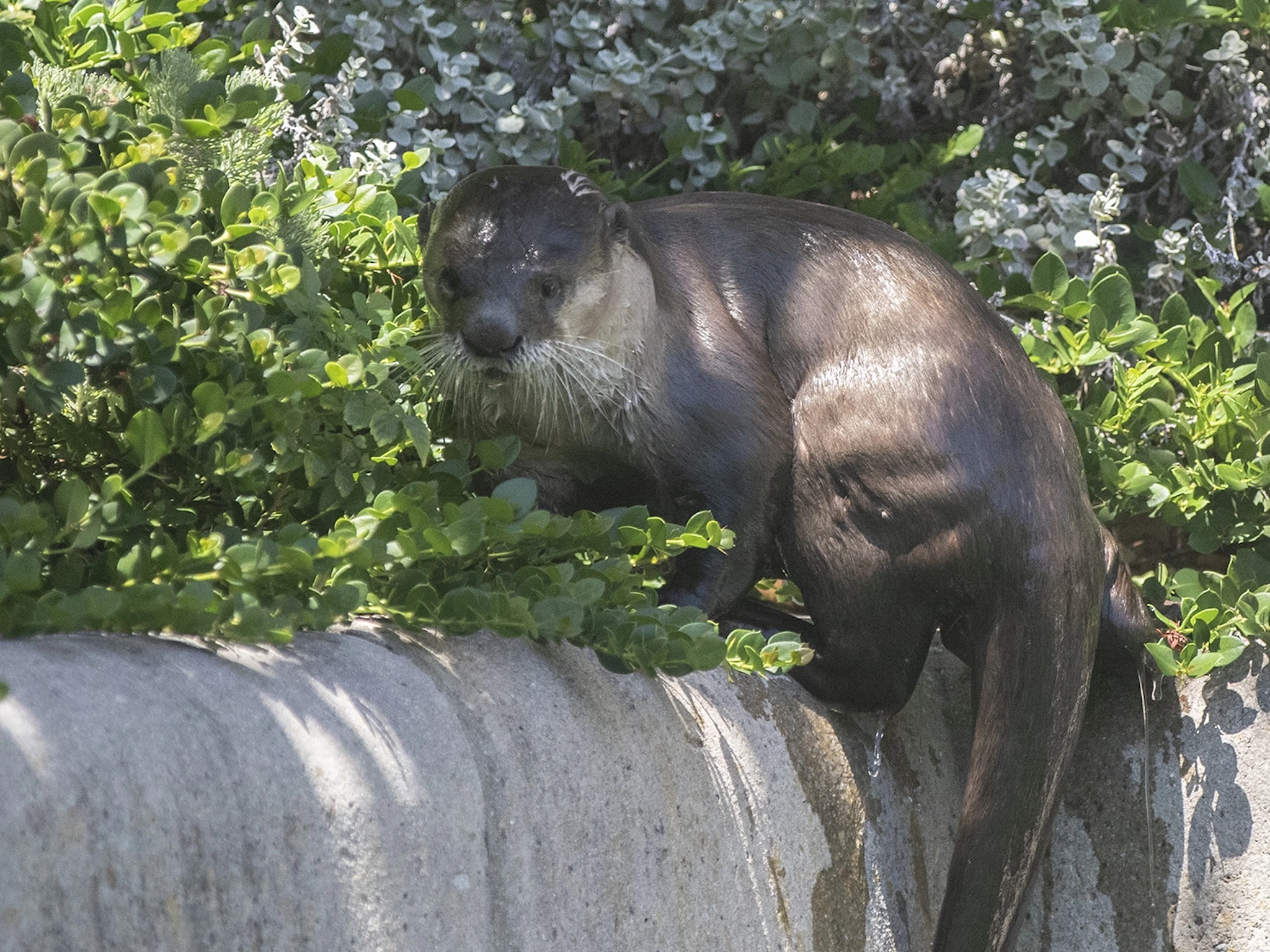
But right now, all eyes – and aaaaawws – in the city are on the Cape clawless otters that you’ll find living in and around Cape Town. There are otters in Glencairn and Simon’s Town that you might be lucky enough to see at sunset, and this family became Instagram stars recently:
View this post on Instagram
But for many tourists and locals, some of the city’s most charismatic “did you just see that?” sightings are happening in the canals of the V&A Waterfront and near Green Point Park, where Cape clawless otters are living their best semi-aquatic lives alongside joggers, shoppers and kayakers.
“Cape clawless otters are native to the Cape Peninsula coastline and have always occurred in the broader region,” explains Martine Viljoen, who runs the Two Oceans Aquarium’s Marine Wildlife Management Programme. “Their presence in highly urban spaces like the Waterfront became more noticeable during the COVID-19 lockdown period, when reduced human activity allowed wildlife to explore areas they had not usually been observed to frequent.”
Lockdowns meant playtime for the otters, but as residents began emerging, the inevitable human-wildlife conflict – from otters chasing stand-up paddleboards to eating fish out of ponds – meant something had to be done.
The Urban Otter Project launched in 2022 as an extension of the Two Oceans Aquarium’s Marine Wildlife Management Programme. Its aim was to monitor the otters, reduce the chances of stressful human-wildlife run-ins, and add daily observations to a growing research database on how otters behave. Camera monitoring and educating residents and water-users about the otters were also key pillars of the project.
But happily, as life returned to normal post-COVID, it seems the urban otters of Cape Town are returning to their natural rhythms and are less often seen in and around the V&A Waterfront.
“Over the past few years, sightings have become infrequent and irregular, with occasional evidence – such as scat – and rare night-time appearances, rather than daily activity. This suggests otters are currently passing through rather than occupying the area,” says Viljoen. “In contrast, more stable and regularly observed otter families are currently seen in quieter, more natural areas such as Kommetjie, where conditions are better suited to long-term occupancy. Recent sightings have also been more consistent along the Sea Point - Mouille Point corridor and Green Point Park, suggesting otters may have naturally shifted back as human activity returned to normal.”
In fact, the famous Deep South gang was spotted again recently on the boardwalks of Kommetjie:
View this post on Instagram
Learn more about Cape clawless otters
Cape clawless otters (Aonyx capensis) are carnivorous members of the mustelid family, which also includes badgers and weasels, and are found across sub-Saharan Africa in permanent water bodies. In and around the Cape Peninsula, they’ve adapted not only to coastal urban living, but to the reality of sharing space with people.
‘Clawless’ refers to their front paws: no claws, but highly dexterous fingers and opposable thumbs that make them expert at feeling around under rocks, digging into muddy bottoms, and rummaging through submerged nooks for crabs and other morsels. They do still have small claws on their back feet, though.
Their tail is flattened for propulsion, and their back paws are only partially webbed; a handy adaptation for moving about on land, too.
Otters have highly sensitive white whiskers (vibrissae) that detect the movements of prey underwater, and large molars for crushing rather than slicing their preferred prey, which includes crabs, small sharks and fish.
Though otters spend much of their time in the ocean, they rely on fresh water. In the Waterfront and around Green Point, that meant canals and stormwater systems (check out this otter taking a stormwater shower!), but also freshwater pools and fountains at hotels and residences. Which often led to conflict.
The collective nouns for otters could not be cuter… a group of otters is commonly called a ‘raft’ when in the water, and a ‘romp’ when on land!
So, what should you do if you see an otter?
Whether you’re walking, SUPing, swimming or paddling:
- Keep a respectful distance (do not approach or follow)
- Walk backwards away from the otter slowly. Use a jersey or jacket to gently usher the otter away from your feet if they come to investigate
- Do not block the otter’s path to water
- Keep dogs leashed and well away
- Never feed or attempt to photograph closely