[category]
[title]
Durban Beyond the Beach: Start at KwaMuhle Museum to understand the city’s past


We left Durban’s familiar beachfront behind for a day exploring the city through its history, communities, food, culture and sport. First stop: KwaMuhle Museum, where the stories of migration, labour and apartheid set the scene for everything that followed.
If you know Durban mainly through its beaches, promenade and Indian Ocean views, there is another side of the city waiting to be explored.
It is a Durban of history, communities, food, culture and sport, and you don't necessarily have to travel far to find it.
That was the idea behind a township tourism experience organised by Durban Tourism, which took us on a day-long journey through the city, starting in the centre and eventually making our way to KwaMashu.
The itinerary was designed to give us a taste of Durban beyond the beach, but what I particularly enjoyed was that the experience began before we even reached our first destination.
We climbed into the minibus, and our tour guide immediately got to work.
From the moment we left, we were being given context about Durban, its people, its history and the movement of communities into the city.
It made the journey feel like part of the experience rather than simply transport between attractions.
By the time we arrived at KwaMuhle Museum, we had already begun to understand that we were about to see a very different side of Durban.
And it was the perfect place to start.
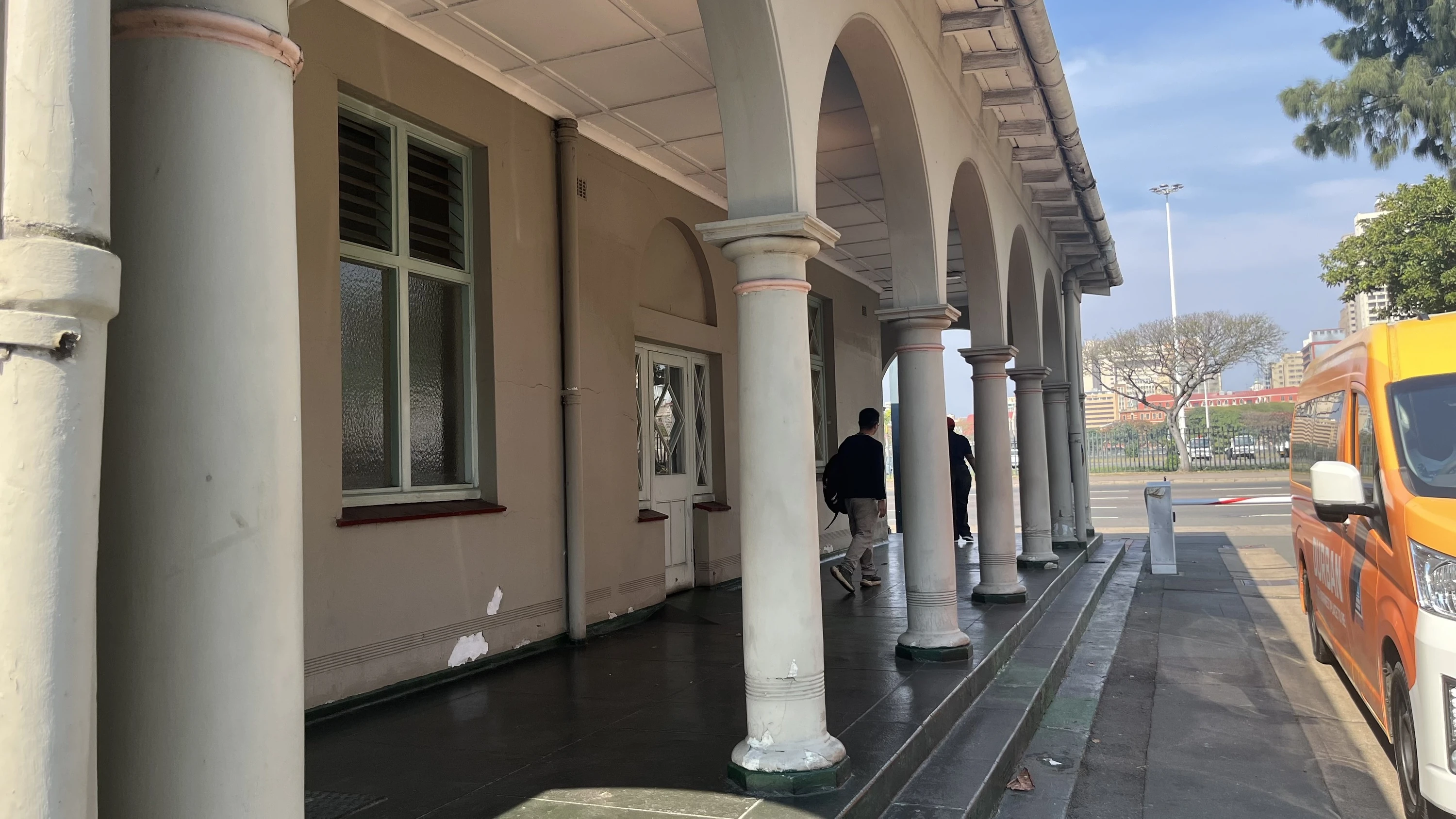
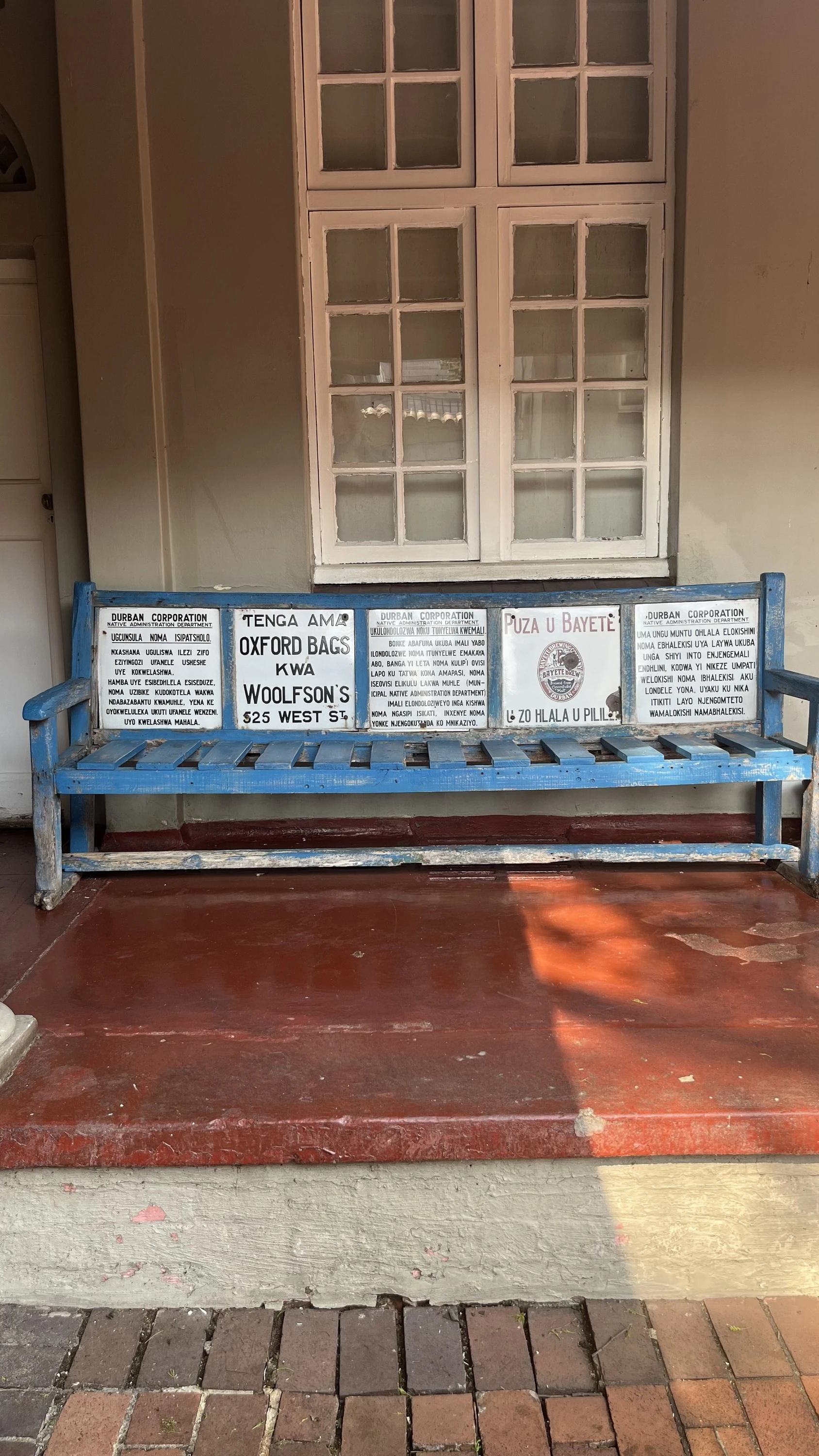
KwaMuhle Museum is housed in the former headquarters of Durban's Native Administration Department, an institution that was central to the city's system of labour control.
Today, the building tells the story of Durban's urban development and the people who lived and worked in the city, including the systems that shaped their lives during and leading up to apartheid.
That history is important because Durban's growth was deeply connected to migration and Black labour.
The city's authorities wanted Black workers in Durban because their labour was needed, while simultaneously trying to control their movement and prevent permanent urban settlement.
This became known as the Durban System.
The system included permits controlling the presence of African people in the city, segregated accommodation and the municipal control of beer production and sales. Revenue from the municipality's beer monopoly helped fund parts of the system, including hostels, beer halls and policing.
So when you walk into KwaMuhle, you aren't simply entering a building containing an exhibition about apartheid.
You are walking into a building that was itself part of the machinery of control.
That makes the museum a particularly powerful starting point for understanding Durban.
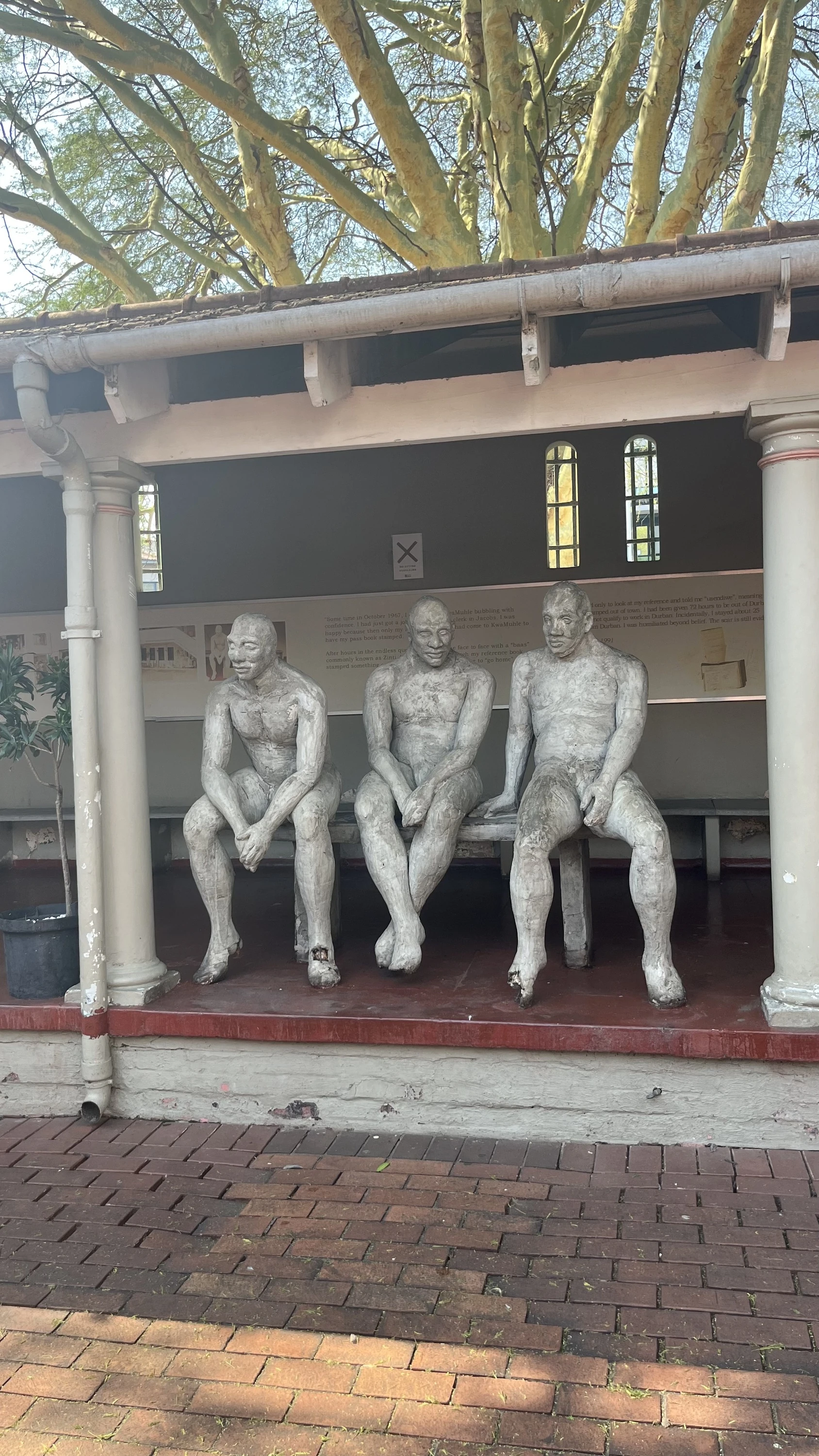
One of the things that immediately caught my attention was in the courtyard.
Three large concrete figures sit together, looking out across the space.
The sculpture, The Shadows of the Past, was created by Durban-born artist Ledelle Moe and represents migrant workers.
The figures are naked, symbolising a lack of protection, while their seated positions speak to the idea of waiting.
It is difficult to walk past them without stopping.
And once you know what they represent, the sculpture becomes even more striking.
These are people who came to Durban in search of work, part of a migrant labour system in which the city needed their labour while imposing strict controls over their presence.
The physical stillness of the three men contrasts with the movement at the heart of their story.
People arrived. They waited for work. They waited for permission. They waited within a system that determined where they could live and how long they could remain.
Suddenly, the sculpture is no longer simply three figures sitting in a courtyard.
It becomes a visual introduction to the history you are about to encounter inside.
For me, it was one of the most memorable parts of the visit.
Inside, the museum continues to unpack the story.
The permanent Durban System exhibition examines the system of control imposed on African people in Durban. At the same time, the Mkhumbane Gallery uses photographs to document life in Mkhumbane, forced removals and the development of townships.
Photographs, objects, and displays help you piece together the story rather than simply throwing dates and historical facts at you.
That was something I particularly enjoyed.
The exhibitions are informative, but there is enough to look at and engage with to keep you moving through the museum and asking questions.
And because our guide had already been giving us historical context on the journey, what we were seeing inside didn't feel disconnected.
The stories started to join up.
The migration we had been hearing about was no longer an abstract historical concept. It was connected to real people, real neighbourhoods and the development of a city that still bears the imprint of that history.
Heritage Month can sometimes make us think of monuments, famous historical figures and major events.
But heritage is also about understanding the everyday experiences that shaped the places we live in.
KwaMuhle does that particularly well.
Its exhibitions focus not only on government policy and apartheid-era control, but on the people who experienced those systems and the communities that developed around them. The museum describes its purpose as providing different perspectives on Durban's urban growth and the history of its residents.
And that is what made it such a strong opening to our day.
We weren't just being shown a list of attractions.
We were being given the history needed to understand the city before experiencing more of it.
KwaMuhle was only our first stop.
From there, the minibus took us further into the city, and the day began to shift from history into other parts of Durban's identity.
Our guide continued sharing stories along the way, while we moved towards the next chapter of the experience.
I'm not going to give too much away just yet.
Let's just say that the next stop took us somewhere where the history of Durban becomes even more personal.
And it was only one part of a day that would eventually take us from heritage and history to food, community and, finally, the roar of a rugby crowd in KwaMashu.
This was only the beginning.
If your Durban itinerary normally starts at the beach, KwaMuhle is a good place to change direction.
It gives you context for the city you think you know and introduces you to stories that are easy to miss if you only experience Durban from its tourist hotspots.
And with a knowledgeable guide bringing those stories to life along the way, the experience becomes more than a museum visit.
It becomes the first chapter of a much bigger story about Durban.
Next in Durban Beyond the Beach: Part 2.
KwaMuhle Museum
Where: 130 Bram Fischer Road, Durban
Opening hours:
Monday to Friday: 08:30–16:00
Saturday: 08:30–12:30
Sunday and public holidays: Closed
Admission: Free
Photography: Photography at Durban Local History Museums requires prior permission.
Follow Time Out Durban on Instagram, Facebook and TikTok! To get the coolest news, features, and things to do straight to your inbox, sign up for our newsletter.
TIME OUT DURBAN RECOMMENDS:
📍 The best things to do in Durban
🍽 The best restaurants in Durban
🏨 The best hotels in Durban
🛏️ Where to stay in Durban
📢 Latest news from Durban
Discover Time Out original video