[category]
[title]
As Durban marks 166 years since the first Indian indentured labourers arrived in Natal in 1860, we explore their lasting influence on the city's bunny chow, spice markets, historic buildings and cultural heritage.


There are few places quite like Durban. The smell of freshly ground spices at Victoria Street Market, the old shopfronts of Grey Street, a good bunny chow, and places of worship that have served generations of families.
Much of what makes Durban distinctive has been shaped by its Indian communities, whose history in the city stretches back more than a century and a half.
Today, 16 November, marks 166 years since the SS Truro arrived at Port Natal carrying 342 Indian indentured labourers from Madras, now Chennai.
They were the first of more than 152,000 workers brought to Natal under a colonial labour system that continued until 1911.
Their journey was not an easy one. Indentured labourers were bound to employers under restrictive contracts, often enduring harsh working conditions, poor accommodation and discrimination. Much of their labour supported Natal's expanding sugar industry.
Some returned to India. Others remained, raising families and building communities that would become an enduring part of KwaZulu-Natal.
Walk through Victoria Street Market today, and you'll find a trading tradition that stretches back generations. Indian market gardeners, including formerly indentured workers, helped establish the produce trade that eventually gave rise to the Indian market in Victoria Street.
The surrounding Grey Street precinct, now centred on Dr Yusuf Dadoo Street, developed into one of Durban's best-known commercial areas. Its historic buildings, arcades and shopfronts reflect generations of Indian merchants and families, including traders who came to Natal independently of the indenture system.
And then there's the food.
Durban's curries, rotis, samoosas and spice blends have developed their own character over generations, influenced by Indian traditions, locally available ingredients and the communities who made the city their home.
Perhaps no dish tells that story quite like the bunny chow.
The hollowed-out loaf filled with curry is now synonymous with Durban, but its beginnings are less certain. One account traces its name to Indian traders known as banias in the old Grey Street area. Other accounts link its development to workers needing an inexpensive, portable meal, or to racial segregation, when Black customers were prevented from eating inside certain restaurants.
Whatever its precise origins, the bunny chow developed in Durban long after the first indentured labourers arrived. It has become one of the city's most recognisable contributions to South African food culture.
The same history of adaptation and continuity can be seen in Durban's temples, mosques, Tamil traditions, festivals and family ceremonies. These are places and practices that remain part of the city's everyday life.
For some descendants, understanding their connection to indenture begins with an old photograph or a family document.
That's what happened to Selvan Naidoo, director and curator of Durban's 1860 Heritage Centre.
In a personal account published in 2023, Naidoo described how a photograph of his grandmother Amurtham Varden's old green identity document prompted him to investigate his own ancestry.
His search eventually took him to the archives in Pietermaritzburg, where he found his grandmother's birth certificate. The colonial registration numbers recorded on it helped him trace two branches of her family.
Through her maternal ancestry, Naidoo discovered a connection to Chillee Nursoo, a 28-year-old woman from Nellore in India who arrived aboard the SS Truro on 16 November 1860.
Another branch led him to Camachee, his great-great-grandmother, who arrived from Chittoor in August 1864 aboard the Saxon.
She was 29 years old and travelling with three children, including six-year-old Vurden, who would become Naidoo's great-grandfather. The family was assigned to William Palmer of Cato Manor.
Among the documents Naidoo uncovered were records of the colonial agency's allocation of workers to their employer.
But his family had preserved something far more personal.
Camachee had brought a small Vinayagar sculpture with her from India. According to Naidoo, the 10-centimetre figure remains in his family today, in his sister's care.
It is a remarkable connection to a woman who crossed the Indian Ocean with three young children more than 160 years ago.
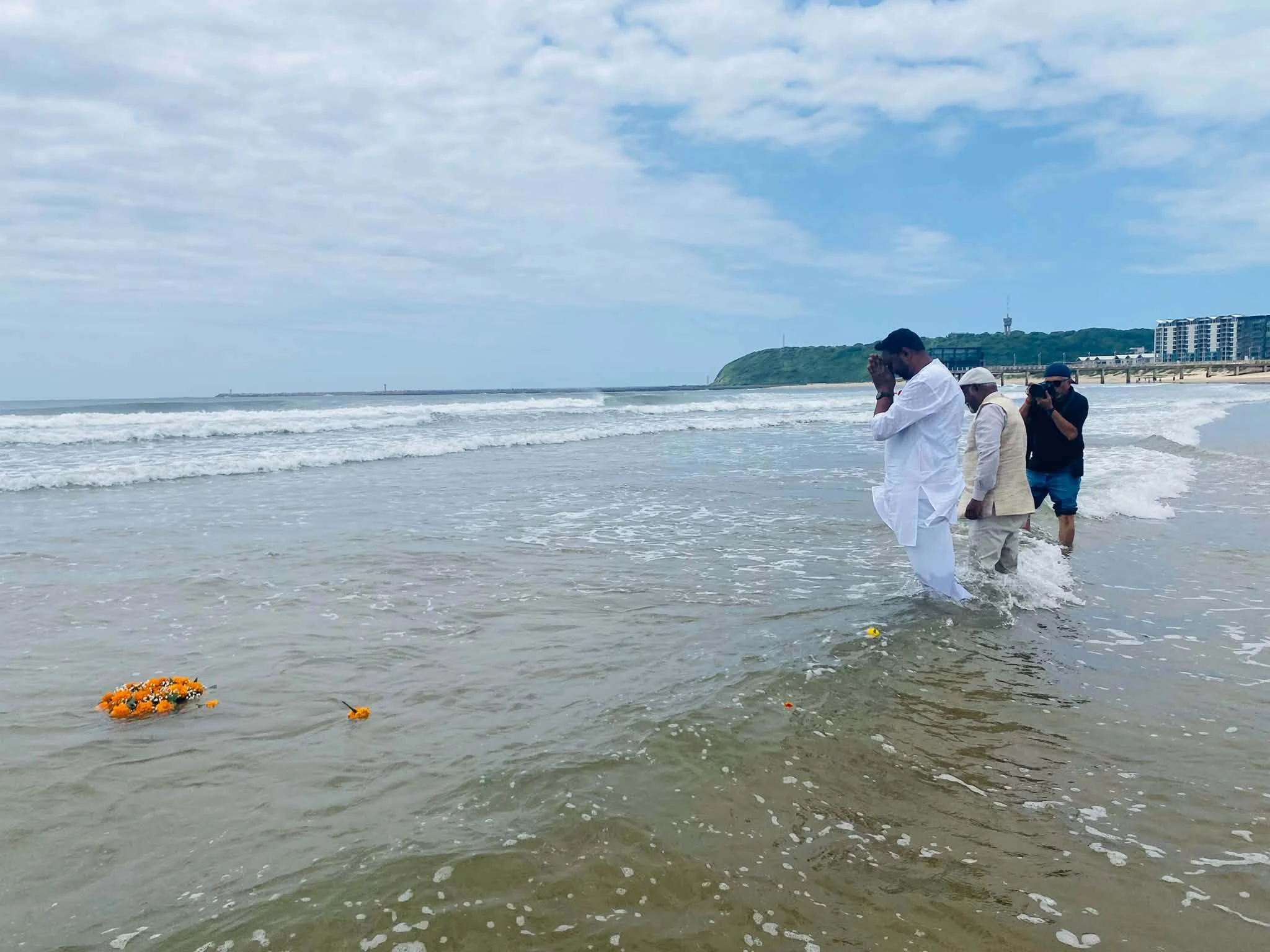
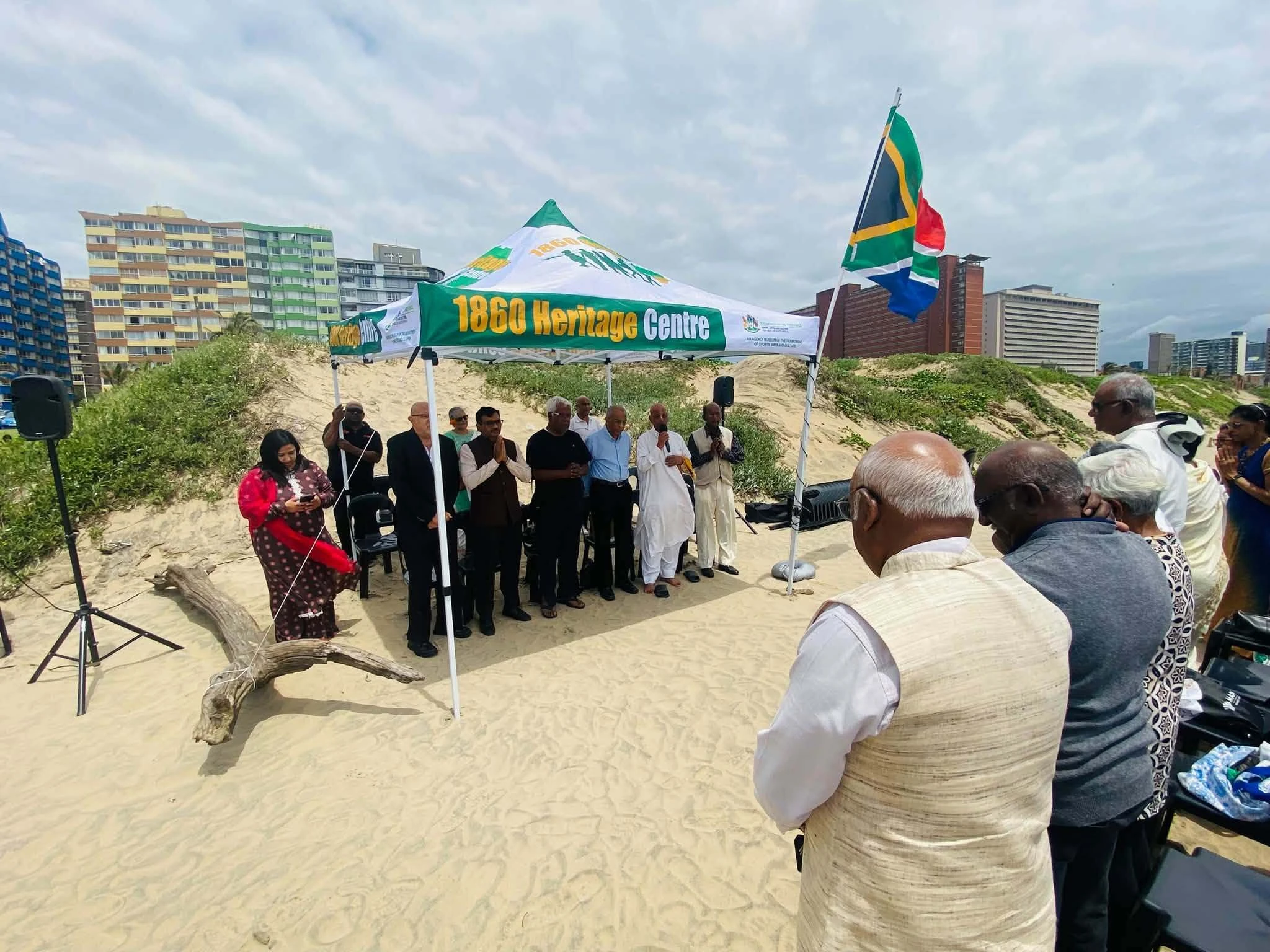
To mark today's anniversary, the 1860 Heritage Centre organised a programme of remembrance across Durban.
Morning prayers were scheduled at the centre in Greyville, the Methodist Church on Lorne Street, Badsha Peer Park near Victoria Street Market and the Durban Hindu Temple on Somtseu Road.
The main commemoration was scheduled for South Beach, with interfaith prayers and a symbolic offering of marigold flowers to the Indian Ocean.
The anniversary also comes as Durban waits for the completion of its long-promised beachfront memorial to indentured workers.
Originally intended for the 150th anniversary in 2010, the memorial remains unfinished. Its bronze sculpture depicting an indentured family is now expected to be completed in September 2027.
There is much to appreciate about the culture, food and traditions that have grown from Durban's Indian communities. But the history of indenture also demands that we remember the exploitation and hardship endured by the people who came before them.
For anyone curious about that history, the 1860 Heritage Centre in Greyville is a meaningful place to begin.
And perhaps the next time you wander through Victoria Street Market, look up at the old buildings of Grey Street or sit down to a Durban curry, you'll recognise another layer of the city's history.
Selvan Naidoo's family research is documented in In Search of My Indentured Roots, published by the 1860 Heritage Centre in November 2023.
TIME OUT DURBAN RECOMMENDS:
📍 The best things to do in Durban
🍽 The best restaurants in Durban
🏨 The best hotels in Durban
🛏️ Where to stay in Durban
📢 Latest news from Durban
Follow Time Out Durban on Instagram, Facebook and TikTok! To get the coolest news, features, and things to do straight to your inbox, sign up for our newsletter.
Discover Time Out original video