[category]
[title]
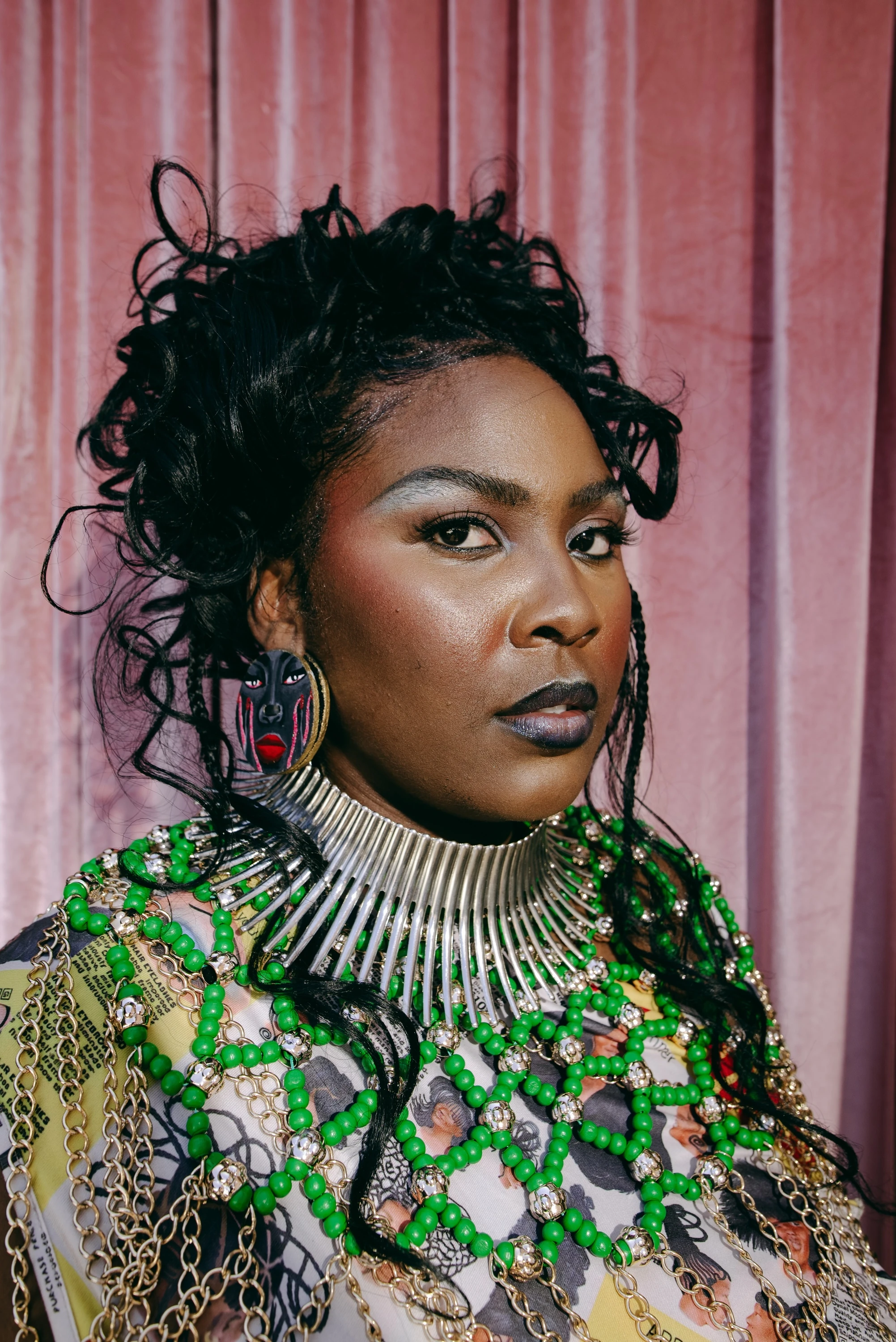
The KZN-born Afro-Fusion artist talks about her new album Volume 1, finding her sound, industry burnout and why she'd rather be called a diva than be a "nice girl" who gets walked over.


Ask the KZN-born artist about the moment she decided not to quit music and you might expect a triumphant story about rediscovering her passion, finding her purpose and deciding to fight another day.
Instead, Sphiwe Moya, the woman behind the Umzulu Phaqa moniker, laughs and tells me she hasn’t changed her mind.
“I honestly still feel the same,” she says.
That is perhaps the most revealing thing about the singer-songwriter’s journey. Because while she has just released her debut solo album, Volume 1, she isn’t pretending that the struggle that pushed her to the edge has magically disappeared.
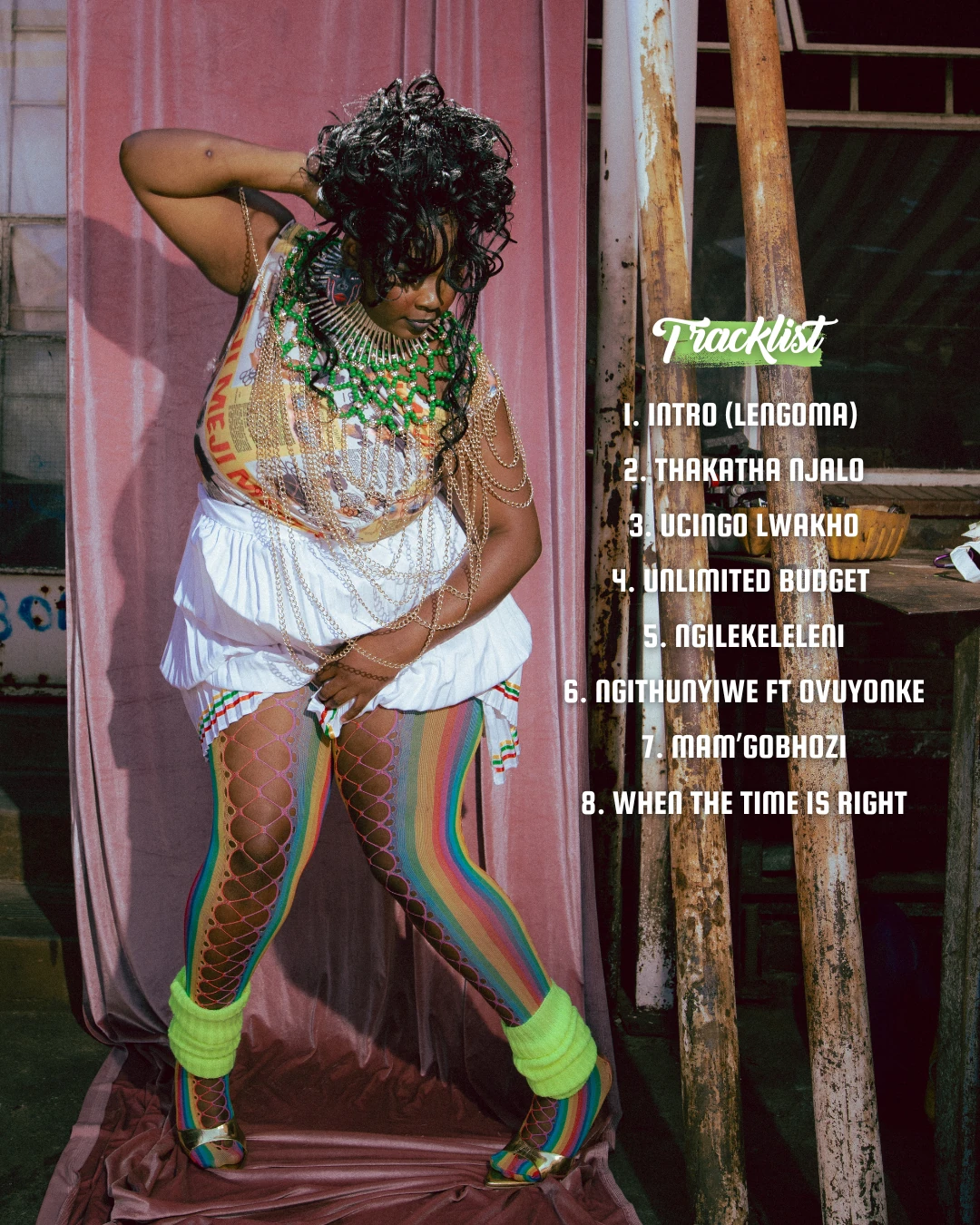
The eight-track album, released on 24 July, is a significant milestone for the Afro-fusion artist, whose work draws on contemporary pop, isiZulu storytelling and traditional influences.
But for the artist, making the album isn’t necessarily proof that everything is finally working out.
It is proof that she is still figuring it out.
“I’m still in the breaking up and going back and breaking up stage of this career,” she says.
It is an unexpectedly candid answer from an artist whose career has, from the outside, seemed to be gathering momentum.
Her music journey began almost by accident during the Covid-19 pandemic. Bored with the disruption to school and looking for something to do, she began posting videos on social media around 2019 and 2020.
People responded.
Then came collaborations and industry recognition, including work with established artists such as Sjava and Sun-El Musician. Her name began travelling further than she had perhaps expected.
What began as something she did because she was bored became a career.
But careers, she has learnt, are not always kind to the people trying to build them.
Her decision to step away from music earlier this year came after a period of mounting frustration. In April, she publicly announced that she was parking her music career, saying she would return when she had gathered the strength.
In our conversation, she explains that the problem was not a lack of ambition.
It was the repeated experience of trying, failing and finding herself back where she started.
“I don’t like to fail,” she says. “I’m somebody who likes to do something and it works out.”
The music industry, however, has taught her that failure is often part of the job.
“You are gonna fail a lot of times, probably more times than you’re actually gonna win.”
Eventually, the disappointments became too much.
“I’m strong, but I’m also a human being,” she says. “I’m tired of being let down, I’m tired of just trying and trying and trying and finding myself in the exact same place from where I started.”
Her description of the music industry is strikingly unromantic.
She compares the relationship to a bad boyfriend: you know it isn’t good for you, you know you should leave, but something keeps pulling you back.
And she isn’t going to manufacture a happier ending for the sake of a good story.
“If some different opportunity comes up, I’m going to take it,” she says.
Perhaps that tension explains Volume 1 better than anything else.
Umzulu Phaqa describes herself as an Afro-fusion artist. She is comfortable with the idea that the current album can be called “Zulu pop”, but she doesn’t want the label to become another box.
“Currently it is Zulu pop,” she says. “But in general, I’d say fusion. I’m a fusion artist.”
The distinction matters.
She has been encouraged to follow the money and move towards the sounds currently dominating South African music.
“If you want to make money, go to piano, go to three-step,” she recalls being told.
But she wasn’t interested.
“I don’t want to do it that way.”
That decision comes with a cost. The KZN-born artist acknowledges that taking the road less travelled might mean waiting much longer for commercial success.
“Even if it means it takes 20 years, that would suck, but it’s fine. We’ll do it that way.”
It is a stubbornness that runs through her music.
Her sound is informed by her upbringing in KwaZulu-Natal, where music was part of the fabric of family life. Her grandfather, a sugar-cane farmer, loves playing guitar, while both her parents sing for fun. She also grew up as a pastor’s child, surrounded by church music and the idea of blending spirituality with sound.
The result is a musical identity that refuses to sit neatly in one place.
That is exactly how she likes it.
For her, artistic independence is also a feminist issue.
She speaks admiringly of women such as Zoe Modiga, women who, in her view, have resisted the pressure to become versions of what the industry thinks a successful female artist should look and sound like.
“I’m a big fan of people who don’t conform,” she says.
She believes female vocalists in particular are often given an unspoken formula for success.
“There’s a thousand of us that all look the same, that all do the same thing, sound the same. And it’s boring, man.”
She wants something different.
“We should embrace being a little bit quirky and weird and standing out.”
That insistence on standing out comes with another familiar burden for women in creative industries: the “diva” label.
Umzulu Phaqa has little patience for it.
“The narrative of ‘diva’, ‘she’s a diva’, ‘she’s a bitch’ – bore me again,” she says.
Her argument is not that difficult women don’t exist. It is that women who assert themselves are often punished for doing exactly what men are expected to do.
“At some point, you will have to become a diva in order to get the things that you want.”
For the singer, being assertive is not an attitude problem.
It is survival.
“If you don’t say anything and you still want to be Miss Humble, Miss Nice Girl, oh, that’s not going to work for you.”
“They will step on your head, they will bully you, they will isolate you, they will blackball you.”
So if being firm earns her the label?
“I would rather you call me a diva, but I have it my way.”
And she laughs when reminded that, during the process of trying to get the interview, I had jokingly concluded that she must be one.
“I am a diva, dog.”
The title of her favourite track on Volume 1, “Unlimited Budget”, initially sounds like the sort of song that belongs to an artist dreaming of financial freedom.
It is, but not quite.
The song is rooted in her faith and the idea that God’s capacity to provide is not limited to money or conventional measures of success.
The track has been described as a gospel-pop song centred on faith, resilience and divine provision.
For her, an unlimited budget means something much more personal.
She wants freedom.
She wants to be able to live like a normal person while pursuing an abnormal career.
“Sometimes I just want freedom,” she says. “I want to be able to enjoy my life as a regular human being while also being able to pursue my passions.”
There is a loneliness to being an artist, she says, that people outside the industry don’t always understand.
And her version of abundance isn’t necessarily about becoming extraordinarily wealthy.
“I don’t want to be rich like Bill Gates or anything,” she says. “But I want to have enough to be able to help the next person if I can.”
She imagines being able to open her home to someone who needs shelter.
“That’s the abundance that I mean.”
It is a striking sentiment from an artist whose career has recently made her question whether the pursuit is worth the emotional cost.
That brings Umzulu Phaqa back to the woman who wanted to quit.
What would she say to herself now?
Her answer is perhaps the most generous thing she says throughout our conversation.
“You say to her, ‘Baby, it’s okay if you want to quit.’”
There is no motivational speech. No insistence that successful women must persevere at all costs.
Instead, she gives herself permission to rest.
“You are not a weird person for feeling exhausted. You are not a weird person for wanting to take a break.”
Sometimes, she says, stepping away is precisely what is needed to gather your thoughts, resources and creative energy.
“If you need a rest, girl, rest.”
It is advice she wishes she had followed more readily herself.
Because the singer and songwriter is still uncertain about her relationship with music.
She hasn’t magically fallen back in love with the industry.
She hasn’t decided that the struggle was worth it.
She is still questioning.
But she has also made Volume 1, a project that sounds like an artist deliberately choosing her own path, even when that path is slower, harder and less commercially obvious.
And perhaps that is the most honest kind of resilience.
Not pretending you never wanted to walk away.
Knowing you might still walk away one day.
But for now, having something left to say.
And Umzulu Phaqa certainly does.
Volume 1 is available on streaming platforms.
And where does a women who spends so much of her life creating, performing and navigating the music industry go to feel most at home?
Quite literally, home.
Umzulu Phaqa doesn't eat out much, there aren't many restaurants where she lives in Thorneville, and when she wants a taste of KZN, her favourite spot is her mother's kitchen. "Definitely my mom's cooking," she says.
Volume 1 is available on streaming platforms.
Follow Time Out Durban on Instagram, Facebook and TikTok! To get the coolest news, features, and things to do straight to your inbox, sign up for our newsletter.
TIME OUT DURBAN RECOMMENDS:
📍 The best things to do in Durban
🍽 The best restaurants in Durban
🏨 The best hotels in Durban
🛏️ Where to stay in Durban
📢 Latest news from Durban
Discover Time Out original video