[category]
[title]
At Teatteri Takomo in Helsinki, a new play on Richard Clayderman explores art and taste, with two English-subtitled shows.


One of the most intriguing premieres this spring comes from Takomo, one of Helsinki’s most exciting small theatres, known for its bold, experimental productions. Let’s Talk About Richard (Puhutaan Richardista), written by rising playwright Arni Rajamäki, takes on an unlikely subject: Richard Clayderman – and the thorny question of what actually counts as art, and good taste.
They’re the sort of questions that feel faintly dangerous right now. What is good taste? What is bad? What is art? They hover in the air, endlessly implied, rarely asked outright. Say it too bluntly and you risk being branded either a smug elitist or a tone-deaf populist. Safer, perhaps, to keep quiet.
Except the debate isn’t going anywhere. Only recently, Finnish media lit up over critic Kaarina Hazard and director Leea Klemola, whose dismissive comments about author Satu Rämö’s hugely popular Nordic noir novels reopened the familiar culture wars around taste and value.
Rajamäki’s play dives straight into that hornet’s nest. Premiering at Teatteri Takomo on 15 April 2026, it kicks off with a deliciously sharp premise: a group of cultural snobs gather to ‘hate-listen’ to a Clayderman concert. His syrupy, romantic piano music represents both the pinnacle of bad taste and a baffling mystery – because, somehow, people genuinely love it.
If the theme feels current, Clayderman himself doesn’t. The so-called ‘Prince of Romance’ – and undisputed king of elevator music – has largely faded from view. For many lovers of high culture, his tinkling piano isn’t just bad music; it’s practically an affront to the instrument.
‘I’m a millennial, and a lot of people my age don’t even know who he is,’ Rajamäki laughs. Still, Clayderman has been lurking in their imagination since childhood.
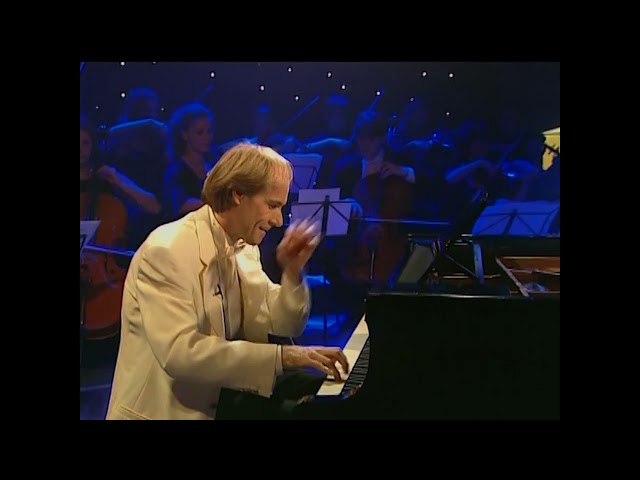
‘My brother is a pianist. Even when he’d just started playing, he was already laughing at Clayderman. That stuck with me. I became curious – who is this guy?’
The answer is unexpectedly tragic. Born Philippe Pagès, Clayderman was once a promising classical pianist, tipped for a serious career. Then his father fell ill, the family’s finances collapsed, and he was forced to abandon that path. What followed was a very different kind of success: global fame, tens of millions of records sold, and a reputation as a musical punchline among the very circles he might once have hoped to join.
His best-known piece, the late-1970s hit Ballade pour Adeline, has since become a staple of weddings, dinner parties and anywhere else that requires a soft-focus piano soundtrack.
‘I’ve toyed with the idea that he’s a victim,’ Rajamäki says. ‘But it’s hard to feel sorry for someone with that level of income.’
The line between art and entertainment is something they resist drawing too neatly – even if today’s cultural climate makes it hard to avoid. Public funding for the arts is constantly questioned, and artists are routinely mocked if their work doesn’t sell. Commercial success increasingly doubles as a measure of value.
By that logic, Clayderman should be revered: his records have sold over 70 million copies.
‘Writing this play has made me take art more seriously,’ Rajamäki says. ‘The question of what art is – and what art and entertainment mean to us – started to feel heavier.’
In the play, art is taken so seriously it tips into comedy. ‘The humour comes from how intensely the characters hate Clayderman’s music. But if you hate something enough, it starts to resemble love.’ They trace the idea back to In Search of Lost Time, where obsessive cruelty edges into a kind of devotion.
That said, Rajamäki is quick to add: ‘Art is deadly serious to me as well. I’m not interested in mocking it.’
So where is the line? ‘It’s difficult to draw,’ they admit, before offering one definition: ‘Entertainment shrinks the world; art expands it. In theatre, art leaves room for interpretation.’
That openness is built into Let’s Talk About Richard. ‘If this were an opinion piece, it would have a clear conclusion. But as a work of art, it can move beyond simple yes-or-no arguments.’
Writing the play meant months of listening to Clayderman at home – much to their partner’s dismay. So, has their opinion changed?
‘No,’ Rajamäki says, without hesitation. ‘It hasn’t improved. If anything, it’s even more irritating. There’s no hidden mystery there. It is exactly what it is.’
Clayderman’s music will feature in the production – though director Ami Karvonen is reportedly still weighing just how much the audience can take. How long can a room full of culture lovers endure the king of kitsch?
Crucially, this is also a rare chance for international audiences to experience Takomo’s work. While performances are in Finnish, two shows – on 3 May and 14 May – will feature English subtitles, opening the theatre’s distinctive, boundary-pushing style to a wider crowd.
Premiere: 15 April 2026
Venue: Teatteri Takomo, Helsinki
Playwright: Arni Rajamäki
Director: Ami Karvonen
Cast: Noora Dadu, Minttu Mustakallio, Anssi Niemi, Sofia Smeds
Sound design: Tatu Nenonen
Set design: Jaakko Pietiläinen
Lighting: Heikki Paasonen
Costume design: Tiina Kaukanen
Performed in Finnish. English subtitles available on 3 May and 14 May.
Discover Time Out original video