[category]
[title]
Violence, silence and family divisions lead to depression and self-isolation in this Market theatre adaptation about a man who warmed hearts with his music while he was frozen inside.


Adaptations are always tricky because most people’s experience is that once you’ve read the novel, short story, biography or whatever form of literature a play is derived from, the production often reads very differently from the original work.
What I can tell you is that the Market Theatre’s adaptation of DALRO Can Themba Merit Award-winning short story, Mr Duiker Sang the Blues by Dyondzo Kwinika, has prompted me to re-read the original literature.
It’s perhaps a little unfair to wonder if I would hold the same opinion of the literature that I did before seeing this production, but the seed has been planted. All I can do is water it.
Whose story is it anyway?
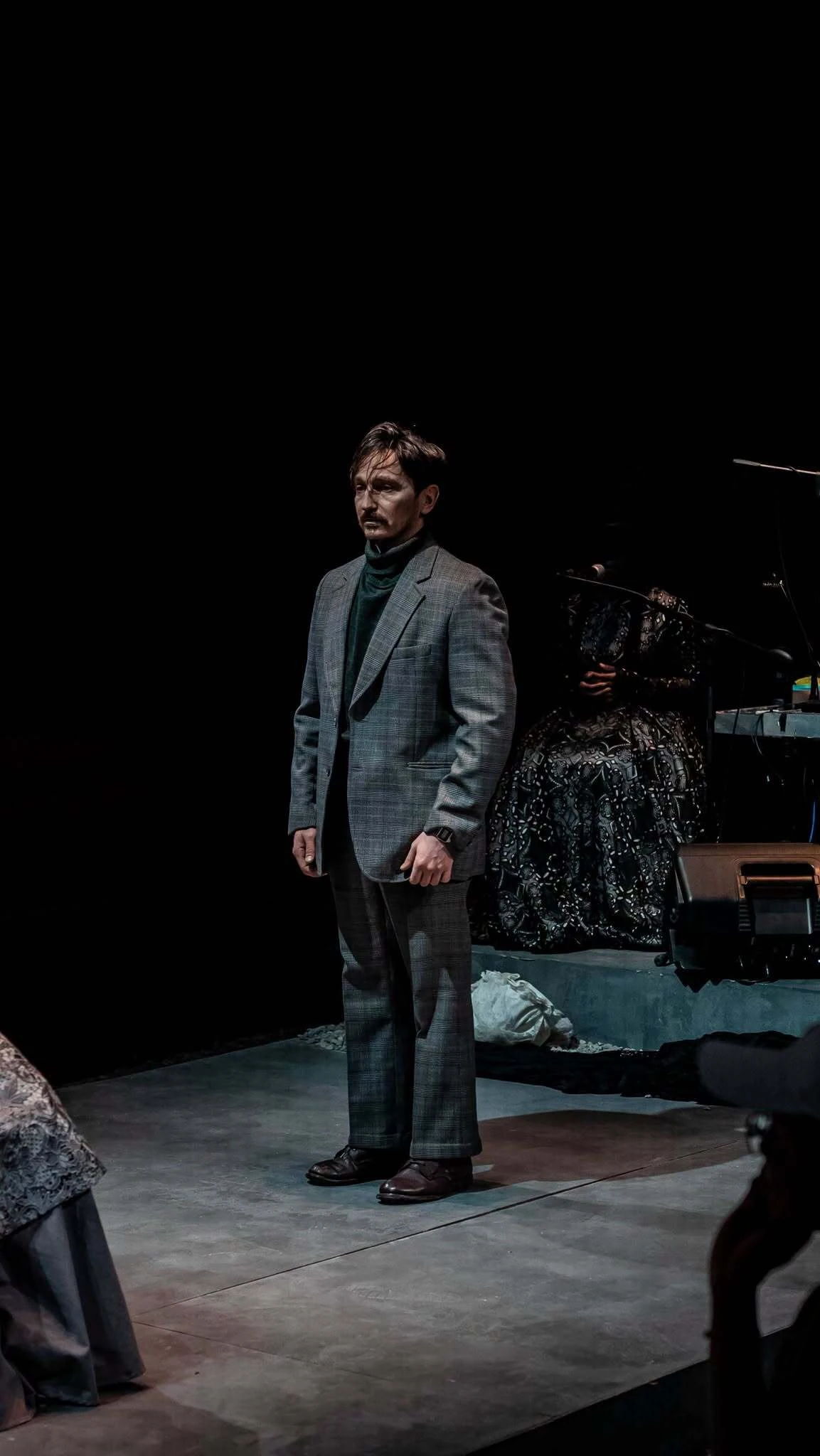
It’s hard to imagine Desmond Dube outside of his Clientèle Life commercials which he has done for more than two decades. But the switch to sharing recollections of the birthday party of five-year-old Themba, who is now 31, reintroduces Desmond the thespian. The man is fully prepared with the mannerisms of his character Ebenezer, his emotions and text delivered impeccably.
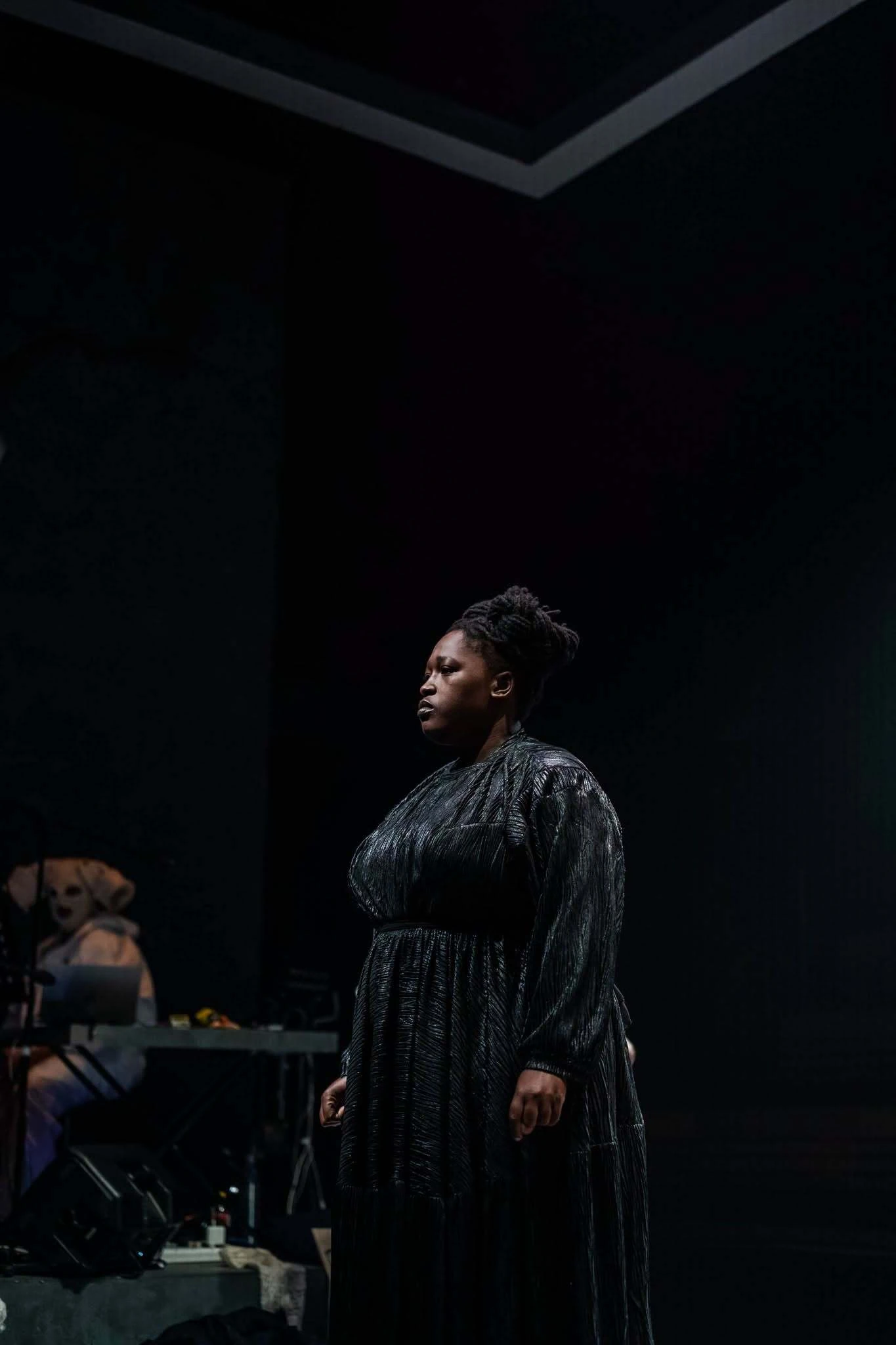
Tankiso Mamabolo meticulously executes Marubini (Maru) with a different kind of seriousness that is fit for the adult character she embodies in this production.
Her versatility is emphasised by how Maru’s anger is completely different from that of Tankiso’s student role in The Fall, which was based on the #FeesMustFall movement.
While he does not join his family on stage, the play centres around Themba, the Brown Antelope. The poetic recitals of Brown Antelope’s journey through life and the references to how weather conditions affect this species are an apt representation of Themba’s emotional turmoil, which ultimately results in his demise.
How the plot is a reminder of art being a mirror to society
What happens when a woman’s own family forgets the identity that they gave her for more than two decades, just because she is now someone’s wife? How does a family reconcile their daughter’s decision to keep her child away from them? When someone no longer wishes to be a part of this world, are they selfish to take their own life, or are the loved ones left behind selfish for wanting the deceased to continue living, not for himself but for them?
These are some of the questions I grappled with after the curtain fell. But I also made a few observations.
Maru’s parents sit far apart for most of the play. For me, this symbolises the dysfunctional division in the family. The journey of Maru’s life unpacks how this silenced woman is forced to swallow her emotions because of the neglect she experiences despite living under the same roof as her parents.
But as the story unfolds, it becomes clear that Maru is not the only child who was “seen, not heard” in this household. Audiences are introduced to her brother Themba’s own experiences with a father who never asked if what he thought his son needed actually aligned with the said son’s desires.
There’s irony in the acknowledgment that Themba listened to his boyfriend Josh, played by William Harding. This character has the fewest lines and is the only one who only starts speaking more than 15 minutes into the play. Josh’s character speaks to the quietly loud existence of closeted queer people whose existence society would rather sweep under the rug.
Themba’s father perfectly mirrors this erasure through his inability to use the words gay, homosexual, queer or any reference other than “it” when referring to his son’s sexual orientation.
Finding solace in music was but putting plaster on a gaping wound for Themba, as his suffering would later prove to be greater than this source of comfort.
Where did it all go wrong?
While Themba’s mother (played by Nomathamsanqa Ngoma) tried to teach her son that a man’s strength was in the holding back, his father was determined to expose him to violence, volatility and the lack of interest in exercising restraint.
Told through his father’s eyes, Themba’s story is a recollection of how an accident that rendered a toddler wheelchair-bound sliced the boy’s family in half. But can it truly be called an accident when the circumstances around the incident reek of a father’s criminality?
The bruises on Themba’s mother, the nights his father did not come home—these are all a reminder that sons don’t only learn when their fathers actively sit them down and teach them things.
View this post on Instagram
There are also lessons in how their fathers model their own perceived idea of masculinity and manhood.
The masks worn by the cast only made sense to me at the end of the play. Sometimes people wear masks to conceal how much pain they are in because suffering doesn’t just exhaust the individual going through it; it also wears out their loved ones as they observe this, knowing deep down that their brother, lover, sister, mother, best friend et cetera no longer wishes to continue fighting.
These masks are perhaps the most selfless thing that depression patients can do for their loved ones, because the masks are essentially to protect the patient’s loved ones from knowing the true extent of how much they are really done with this life.
RECOMMENDED
📍 The best things to do in Johannesburg
🛏️ Where to stay in Johannesburg
🏨 The best hotels in Johannesburg
🍽 The best restaurants in Johannesburg
🍺 The best pubs and bars in Johannesburg
Follow Time Out Johannesburg on Facebook, TikTok and Instagram!
Discover Time Out original video