
[category]
[title]
What began as a personal frustration has become a photographic exploration of the conditions people learn to live with.


Some stories about Johannesburg are found in its galleries and exhibition spaces. Others begin much closer to home, on the streets people walk every day and in the communities they know best. For photographer Simphiwe Fuwe Molefe, one of those stories begins with a smell that enters his room through the window.
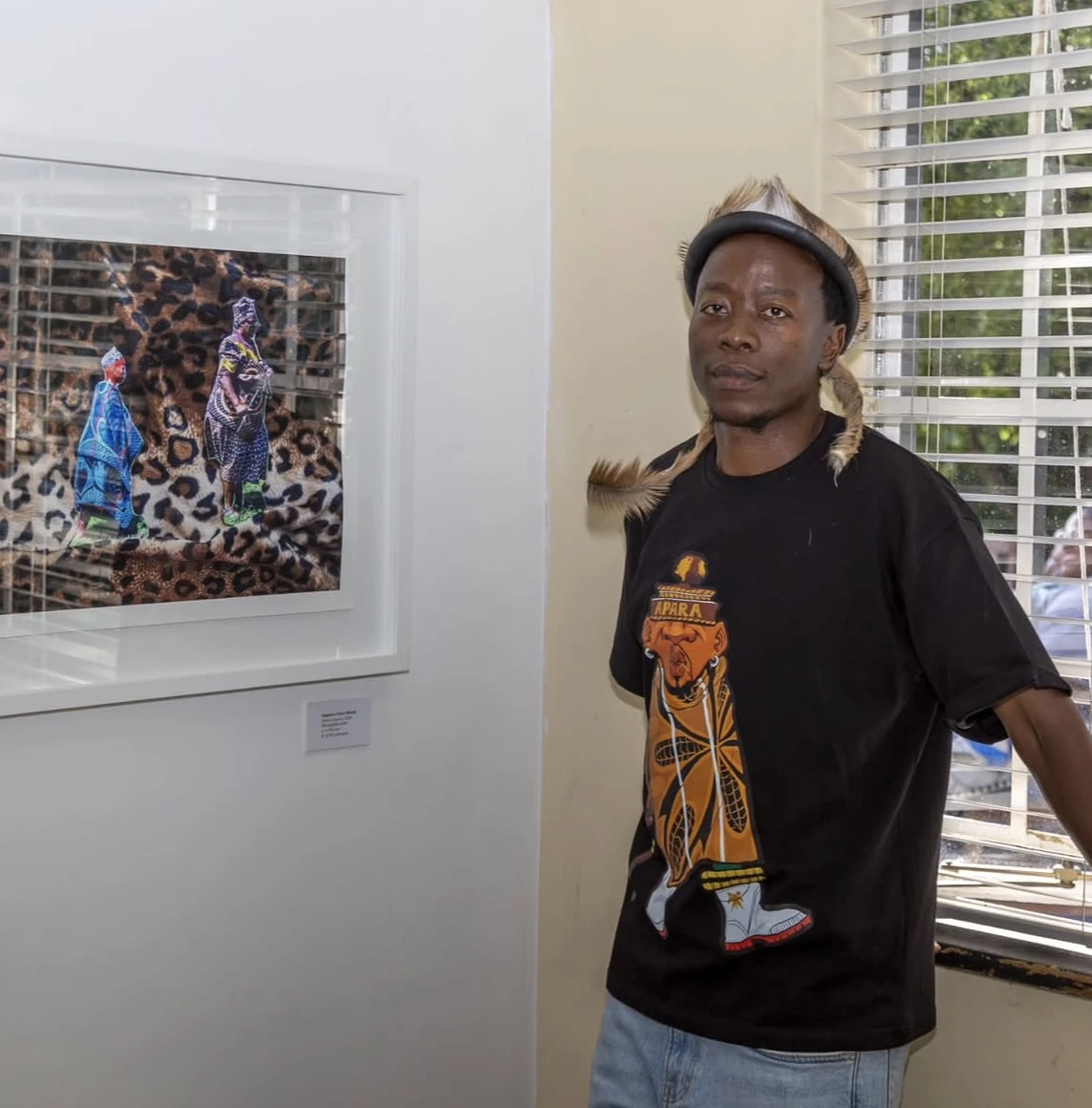
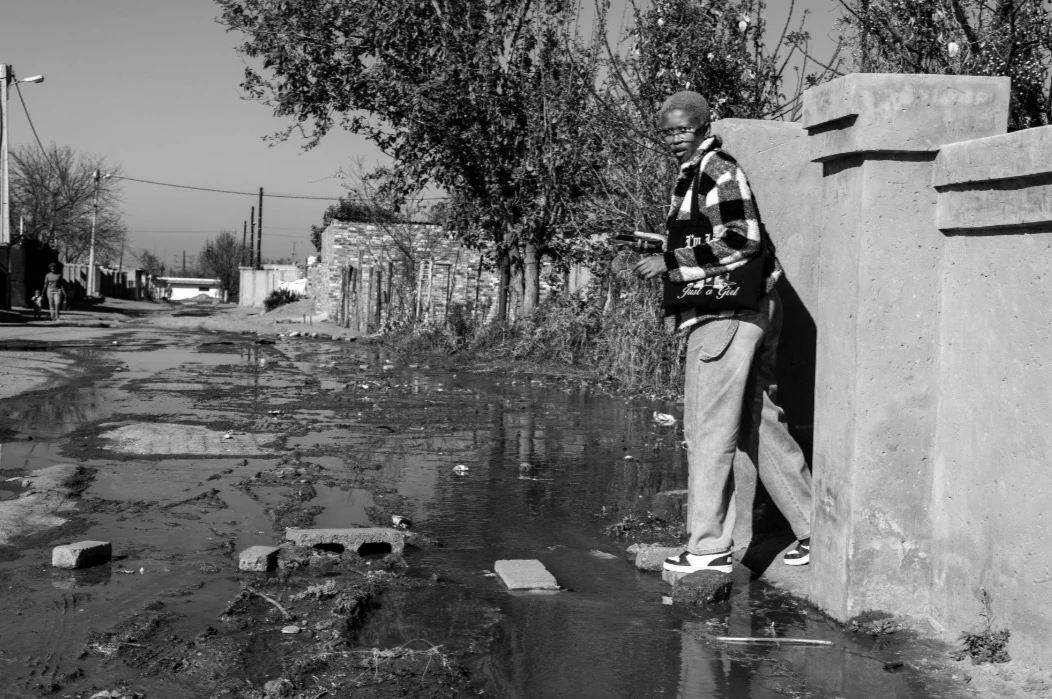
Based in Katlehong, Simphiwe is documenting the recurring sewage problem in Palmridge, where he lives, through his photographic project The Smell That Greets Me. The work examines how residents navigate these conditions and raises questions about infrastructure, dignity and public accountability.
We wanted to speak to Simphiwe because his photography brings a different perspective to Johannesburg's cultural landscape. Rather than focusing on the city's familiar landmarks, his work draws attention to the people and experiences that shape life in its townships, offering readers a closer look at the communities behind the images.
The idea for The Smell That Greets Me came from personal frustration. The sewage problem is not something Simphiwe observes from a distance. It affects his own surroundings, sometimes reaching into his home before he has even stepped outside.
“Some mornings the smell enters my room through the window. It is something I wake up to, something that enters my personal space before I have even stepped outside,” he says.
Photography gave him a way to explore the problem beyond his own frustration. He began thinking about how residents adjust their routines to accommodate conditions that continue to affect their lives, and how easily recurring problems can become accepted as part of the environment.
Smell cannot be captured directly in a photograph, but Simphiwe uses his images to draw attention to the circumstances surrounding it. The project is also shaped by his relationship with the people he photographs. These are his neighbours, and he shares the conditions he documents. Conversations with residents have helped him understand their experiences and consider ways of seeking assistance.
Simphiwe is careful not to reduce his subjects to the difficulties they face. The people in his photographs have families, responsibilities, ambitions and lives that extend beyond the sewage problem. He wants viewers to recognise the conditions affecting the community without allowing those conditions to define its residents.
That sensitivity is connected to his own understanding of home. Born in Nquthu, KwaZulu-Natal, and now based in Katlehong, Simphiwe draws on both places in his exploration of identity and belonging. He knows Katlehong through its daily routines, relationships and memories, and his work reflects the complicated feelings that can come with living somewhere you care about while questioning the conditions around you.
His photographic journey began in 2018, when he bought an entry-level Canon camera to document kasi diski. He wanted to showcase the football talent in his community, an interest that eventually led him to the Of Soul and Joy Photography Programme, which he joined in 2019. The programme introduced him more deeply to documentary photography and helped him explore how images could communicate experiences beyond the moment they capture.
Language is another important part of his practice. Simphiwe often draws on phrases he hears or words spoken by the people he photographs when choosing titles for his work. I'm Just a Girl, Where's Uber??, for example, reflects a woman's frustration with a situation affected by inadequate infrastructure. The River That Never Dries takes its name from a phrase that came to mind while he was photographing a scene. Rather than explaining exactly what viewers should see, these titles offer another way to interpret the images.
His work has been exhibited at platforms including FNB Art Joburg and the Johannesburg Stock Exchange, allowing his photographs to reach audiences beyond the communities where they were made. Simphiwe acknowledges the support of Rubis Mecenat and Easigas through Of Soul and Joy in helping him develop his practice and access these opportunities.
He also believes emerging photographers need sustained support beyond exhibitions, including mentorship, publications, professional networks and opportunities to develop their work over time.
For young photographers hoping to document their own communities, his advice is straightforward. You do not need expensive equipment or established industry connections to begin. Simphiwe started with an entry-level camera and a subject he knew well, and he encourages aspiring photographers to work consistently, spend time with the people they photograph and remain curious about their surroundings.
He also recommends seeking out community programmes, workshops, exhibitions and open calls to develop skills and build relationships with other photographers. The important thing is to start making work rather than waiting for someone else to open a door.
Through The Smell That Greets Me, Simphiwe turns a problem affecting his own home into a subject that demands wider attention. The project asks why some communities continue to live with conditions that should be addressed, and why residents are often expected to adjust to them.
For Johannesburg audiences, his photographs offer an opportunity to look more closely at life beyond the city's best-known destinations and consider the everyday realities shaping the experiences of fellow residents.
Follow Time Out Johannesburg on Facebook, TikTok and Instagram! While you're at it, sign up for our newsletter to receive even more of the best of your city.
TIME OUT JOHANNESBURG RECOMMENDS:
📍 The best things to do in Johannesburg
🏨 The best hotels in Johannesburg
🍽 The best restaurants in Johannesburg
🛏️ Where to stay in Johannesburg
📢 Latest news from Johannesburg
Discover Time Out original video