
[image]
[title]Sit under a chandelier in Sandton and we will happily pay R250 for a pizza. We do it without flinching.
There is nothing wrong with that. I love pizza. It carries generations of craft: the fermentation of dough, the obsessive pursuit of balance. Italians have every right to be proud of what their people have made, protected and shared with the world.
In 2017, UNESCO inscribed the art of the Neapolitan pizzaiuolo as intangible cultural heritage.
Food does not acquire meaning only when an institution gives it a certificate. But meaning does acquire power when people insist on naming it, recording it, paying for it and putting it on a pedestal.
Food is political because belonging is political. It tells us whose childhood counts as nostalgia, whose technique counts as expertise and whose everyday meal is allowed to become a national treasure. We often speak about food from elsewhere with reverence, then speak about our own food as if familiarity has made it ordinary.
Take inyama yenhloko. Depending on the language, place and person, you may spell it as inyama yentloko in isiXhosa, inyama yenhloko in isiZulu or simply intloko/inhloko. The plain translation—head meat—can sound confrontational to somebody raised to encounter meat only after it has been separated from the animal and sealed beneath plastic. On the plate, it is something else entirely: cheek, tongue and the soft, fatty seams around bone, cooked slowly until connective tissue becomes silk and the broth carries the deep, rounded flavour of the animal.
Long before “nose-to-tail” became language for expensive restaurants, people here understood that time, salt, heat and attention could turn what others ignored into the centre of the meal. This is food rooted in deep tradition and loved across the country—from rural communities and taxi ranks to local eateries and, more recently, high-end restaurants.
There are plenty of excellent places to find it in Joburg. These are some of my favourites.
At Half Clutch in Ebony Park, O’Neil Selomo’s kitchen is open to the air. Wood fires burn beneath enormous pots. Cow head, tongue and mutton bones are all on offer on a menu built around broths, pap and an orange chilli sauce that wakes up the whole plate.
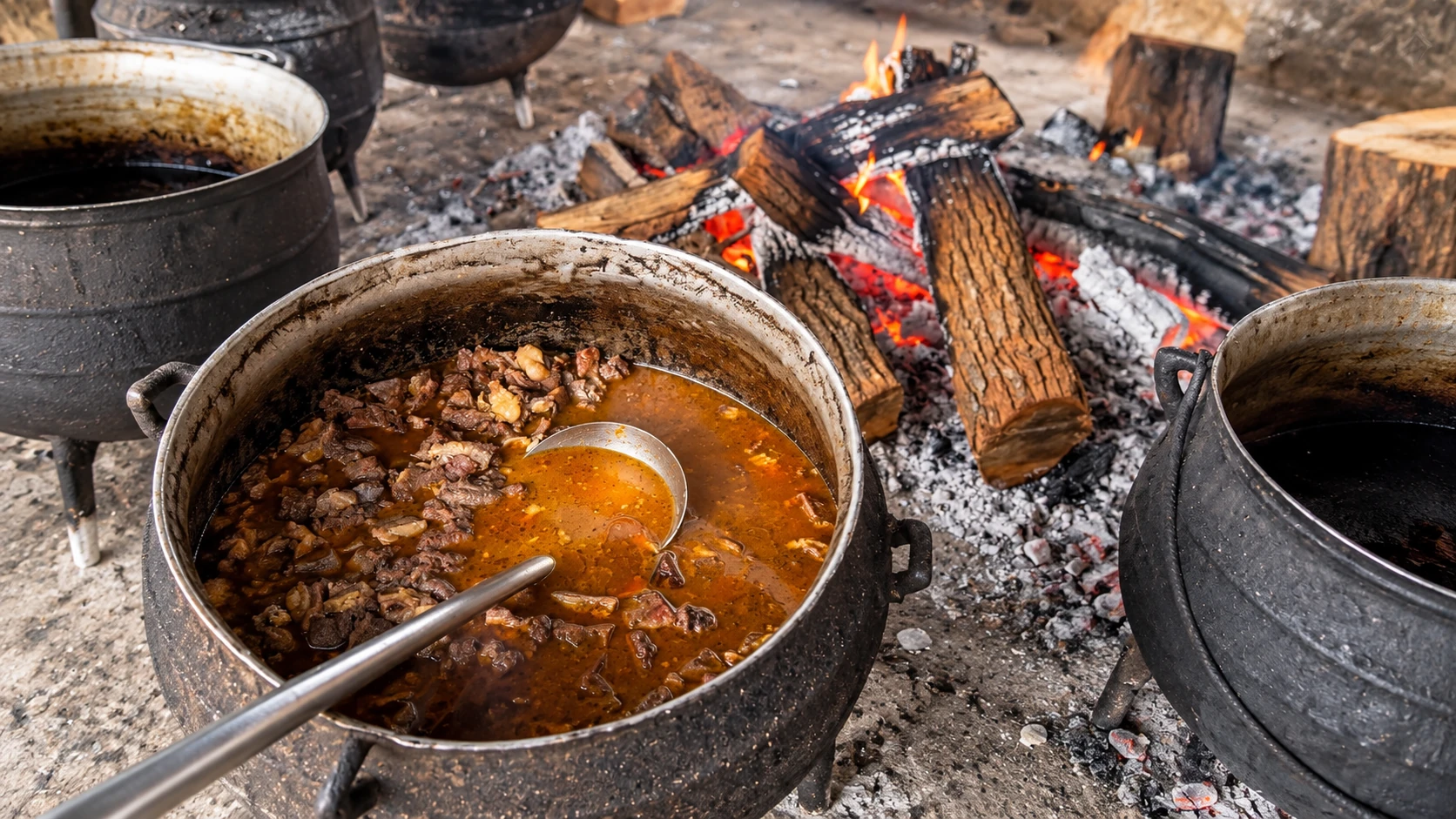
Half Clutch preserves inyama yentloko in the most honest way possible: by cooking it beautifully, every day, for the people around it.
Madala Hostel in Alexandra is more complicated. The hostels were engineered for a migrant labour system that separated Black men from their families and treated human beings as units of industrial supply. Their histories include control, deprivation and violence. They are also living places: homes, archives and strongholds of culture. To romanticise the hostel is dishonest. To see only ruin is another kind of dishonesty.
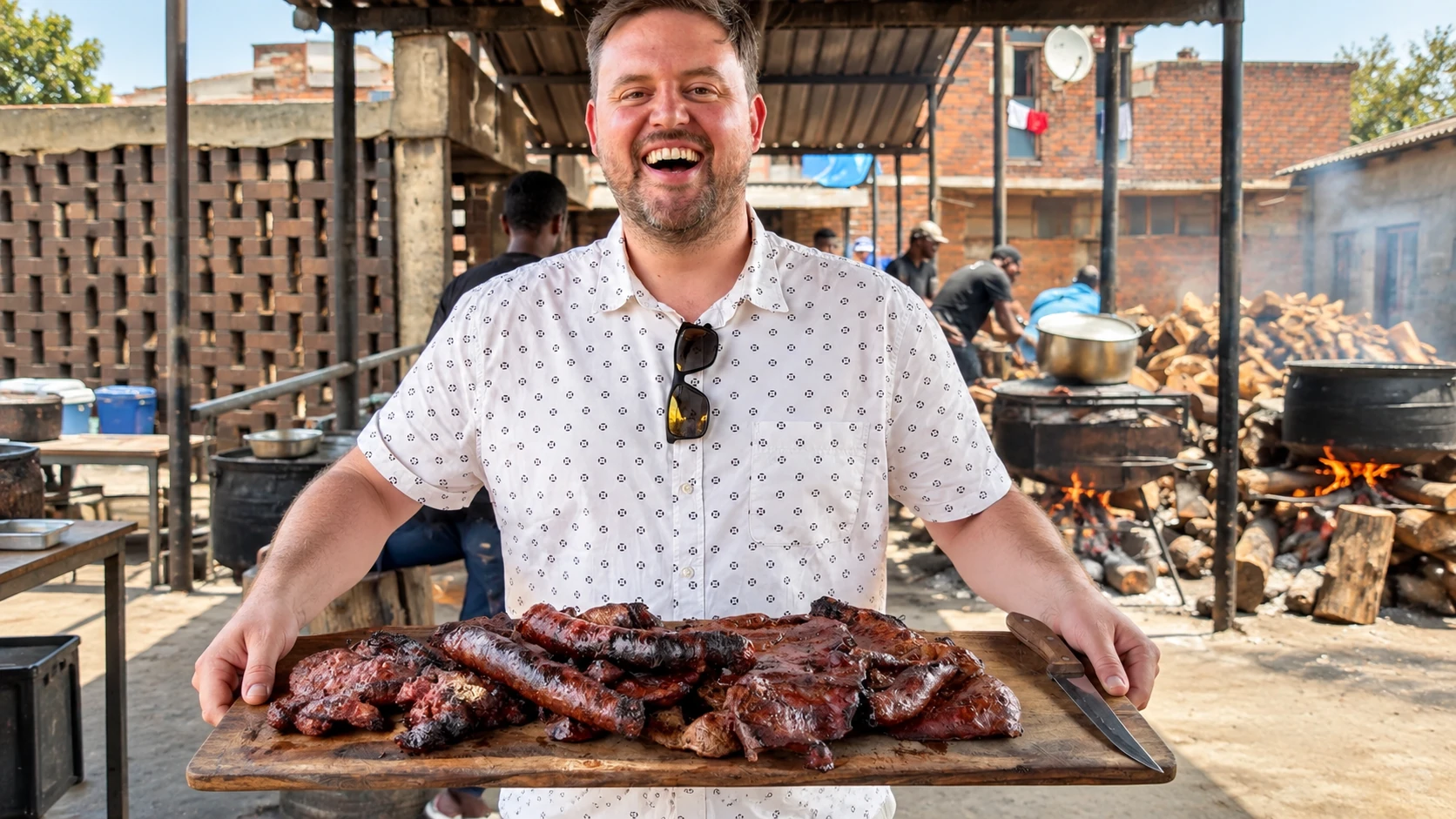
The first time I climbed the concrete staircase, there were no bannisters. Maskandi moved through the corridors. Smoke from cooking fires cut through the air. Upstairs, young men worked axes through cow heads beside enormous pots. Bone fragments flew. Then I stepped into one of the cleanest working kitchens I have ever seen.
ICYMI: Johannesburg Shisanyamas worth sinking your teeth into
Mthunzi Ngema has cooked inyama yenhloko there since 1996. In a bucket hat and overalls, he checks the pots with the kind of quiet concentration that cannot be faked. He pours broth from a blue jug and reads its consistency by instinct. Around him, the heads are broken down, the pots are scrubbed silver and the food is built from almost nothing: water, salt, spice and time. The result is soft, fatty beef in a broth that feels both elemental and exact.
Ngema is an expert and deserves to be seen as such.
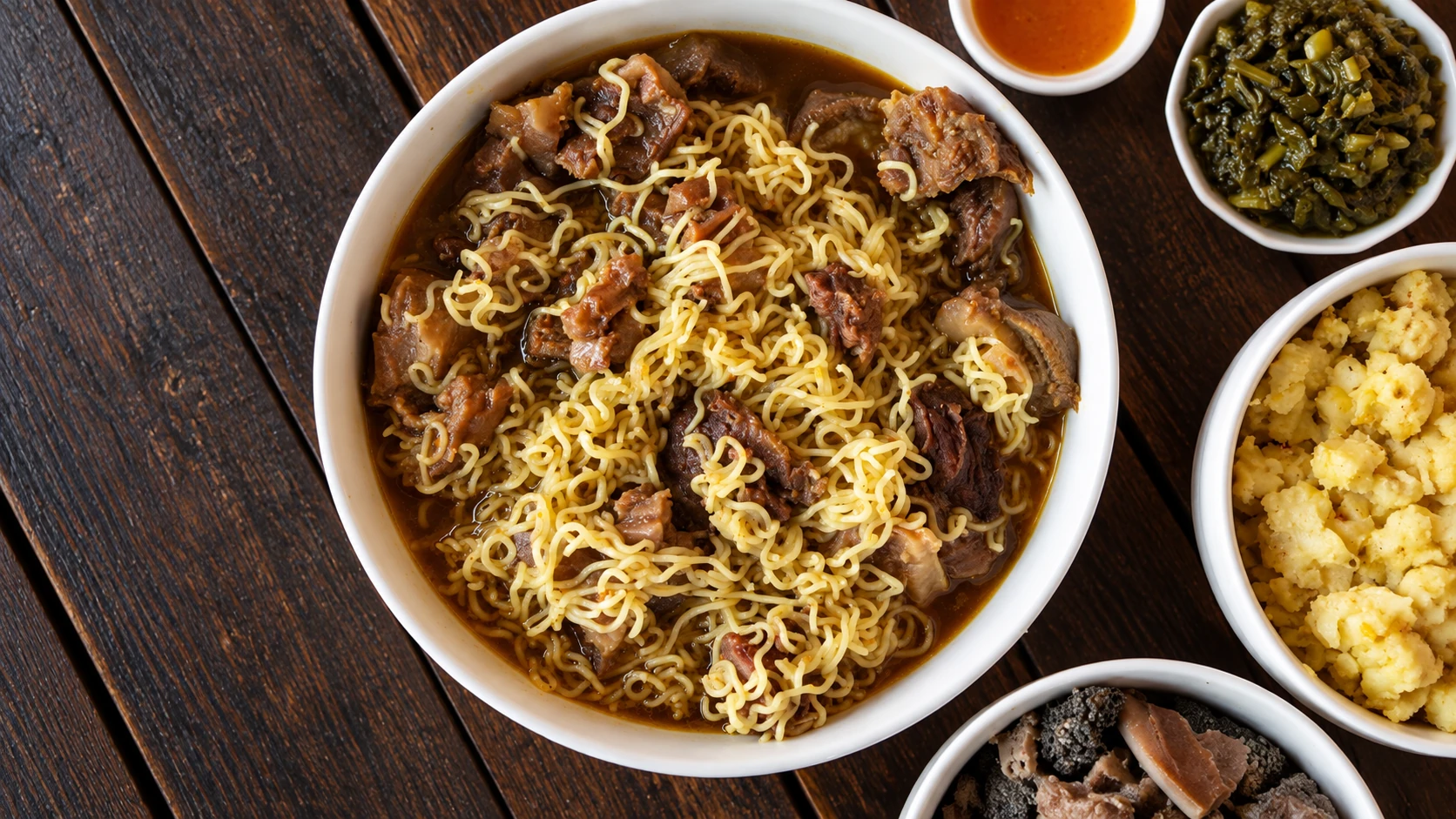
At Mogodu in the North, Andy Bophela is testing another part of the dish’s future. The business began during the pandemic, first operating from an apartment, and grew into a fast-casual home for foods too often left outside the formal restaurant economy: mogodu, inhloko, hardbody chicken, chicken feet, beans, lamb and goat. Their isithebe platter puts several of these traditions together with confidence and care.
People are tempted to call this “elevating” traditional food. I understand the intention, but the word bothers me. It implies the food was low until a polished counter, better branding or a higher-income customer lifted it up. The food was never low. What mogodu in the North is doing is expanding the stage: giving the dish another context, another audience and another economic possibility without asking it to disguise itself.
If you come here, you need to try inyama yenhloko noodles. They’re properly addictive.
It’s my hope that we start seeing foods like this for what they are: a living and delicious part of our culture. The techniques used to make them are on par with those of any global food culture. It’s time we gave these stories the platform they deserve and allowed the world to see more of South Africa’s brilliance.
Know before you go
- Half Clutch: Republic Road, Ebony Park, Midrand, 1632
- Madala Men’s Hostel: 2075 Roosevelt Street, Alexandra, Johannesburg, 2014
- Mogodu in the North, Riversands: Riversands I-Hub, Block 6, Unit F9, 8 Incubation Drive, Riverside View, Fourways
- Mogodu in the North, Morningside: 4 Hill Road, Morningside, Sandton
Follow Time Out Johannesburg on Facebook, TikTok and Instagram! While you're at it, sign up for our newsletter to receive even more of the best of your city.
TIME OUT JOHANNESBURG RECOMMENDS:
📍 The best things to do in Johannesburg
🏨 The best hotels in Johannesburg
🍽 The best restaurants in Johannesburg
🛏️ Where to stay in Johannesburg
📢 Latest news from Johannesburg