[category]
[title]
Take a tour of an old communist kino with a bold new makeover


Originally opened in 1963 as the German Democratic Republic’s flagship cinema, Berlin’s historic Kino International has officially reopened after a massive refurbishment.
Berlin’s favourite Communist-era cinema is back. After an 18-month closure, Kino International reopened officially on February 26, 2026, restoring the 1963 GDR showpiece on Karl-Marx-Allee to its former, concrete-clad glory… but with a few 21st-century upgrades snuck in behind the scenes.
Built between 1961 and 1963, as the Berlin Wall was freshly slicing the city in half, Kino International was designed by urban architect Josef Kaiser as the premiere film palace of the German Democratic Republic (GDR). It opened on November 15, 1963 with the Soviet revolutionary epic An Optimistic Tragedy, and for more than 25 years served as the grand stage for premieres from the country’s state-run film industry. (Ironically, the first GDR film to deal with homosexuality, Coming Out, premiered here on November 9, 1989 – the night the Wall fell.)
In its GDR heyday, eight rows were reserved for senior party functionaries, and a bunker and private elevator were later added so apparatchiks could shelter in the event of a NATO attack. In a loss for Soviet-era history buffs, those spaces remain off limits.
While the world around it has changed, visiting Kino International is a slice of the past. The broad thoroughfare outside, Karl-Marx-Allee, feels as Stalinist as ever. The cinema’s white concrete structure and gold lettering still tower over the pavement. Original reliefs that showcase idealised life and work under socialism remain on the sides of the building, and the giant hand-painted film posters at the front are among the last of their kind in Germany.
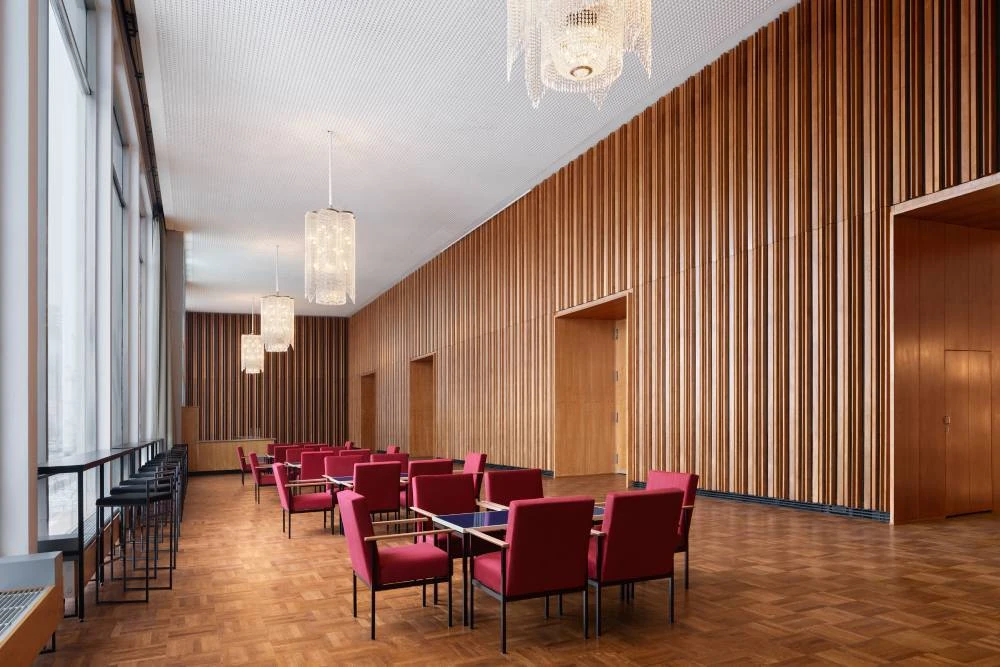
The €15 million renovation has been painstaking – and it’s clear from the moment you step into the foyer beneath its hypnotically modular ceiling and incandescent lighting. Upstairs, a stop at Panorama Bar before your screening is a must, whether it’s for a ‘Fritz’ cola with views to TV Tower or to admire how the boxy chandeliers shine down on the individually restored cherry, elm and ash wall slats.
This is ultra-cool ’60s movie palace it was designed to be
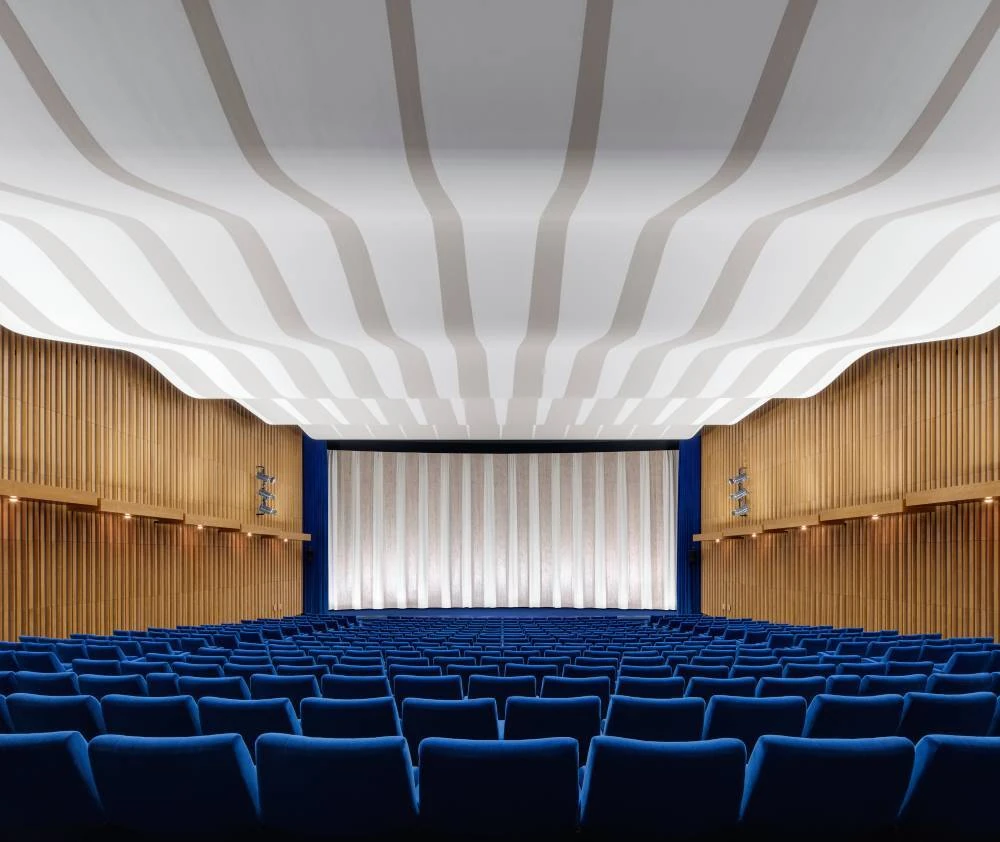
The auditorium now has 506 newly upholstered seats, nearly 50 fewer than pre-renovation, and a rippling ceiling that floats towards the screen. It focuses the eye on a silver stage curtain with 20 million sequins that have been painstakingly restored by a 20-person conservation team. Everything here is angles and lines: squares in the parquet, rectangles in the light fittings, sharp contrasts between dark timber and pale acoustic panels.
Technically, the cinema is now firmly in the present. A Christie laser projector delivers 4K visuals at up to 120 frames per second, paired with a custom-tuned 7.1 surround sound system designed around the hall’s unusual proportions. Forty kilometres of new cabling and piping sit beneath the polished wood. It’s enough to bliss-out the most tech-savvy cinema-goer.
The new Kino International is now protected as a historic monument – as well as a regular Berlinale venue. It’s not here to be a museum, but the ultra-cool ’60s movie palace it was designed to be. And you don’t even have to be in the politburo to get the best seats.
The 50 most beautiful cinemas in the world.
The best movies to catch in the cinema in 2026.
Discover Time Out original video