[category]
[title]


Kyoto is currently at a fascinating junction. While the ancient city has become synonymous with overtourism in Japan, it’s also quietly establishing itself as the country’s premier luxury destination. In recent years, the city has seen some of Japan’s most impressive hotels opening on its historic grounds. Capella Kyoto is one of the latest – and arguably also the year’s most high-profile – new openings, unveiled just this March.
Capella gained widespread renown when its Bangkok property clinched the world's best hotel title in 2024, with a discreet luxury sensibility that feels particularly suited to Kyoto. Here, the hotel has managed to not only showcase the city’s rich artistry but also preserve its quietude, two quintessential Kyoto qualities that have been increasingly drowned out by the noise of the city’s growing popularity.
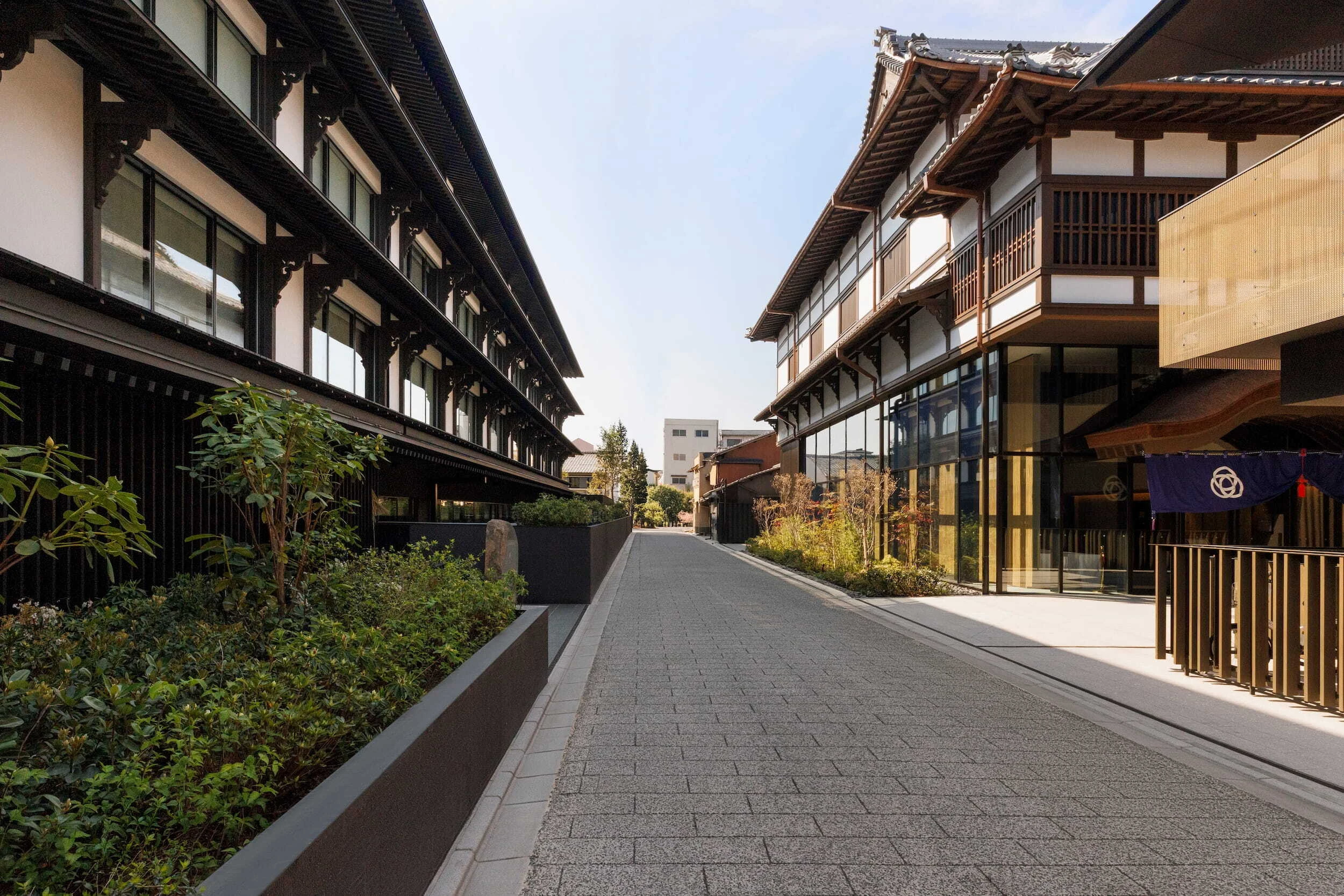
Set in the geisha district of Miyagawa-cho near Gion, opposite a less-trodden subtemple of Kenninji, Kyoto's oldest Zen temple, the low-rise hotel was built on the site of a former elementary school. The Kengo Kuma-designed architecture blends in seamlessly with its surroundings while interiors by Brewin Design Office capture the serene atmosphere of a machiya, the traditional townhouses of Kyoto.
The long hallway that stretches from the entrance into the hotel echoes the design principles of a Zen temple, serving as a deliberate transition away from the streets. In the foyer, the site-specific straw installation by Momoko Fuji fills the air with a grounding, earthy scent. Further in, a curated art collection and sounds from an indoor waterfall help reset the senses. (The hotel has around 500 pieces of art by Japan-based artists, scattered across the property and in the rooms.)
So by the time I reached the Living Room, the heart of the hotel where guests gather for cultural experiences, I was suitably soothed and relaxed. It was a memorable arrival that set the perfect tone for my stay at the first Capella in Japan.
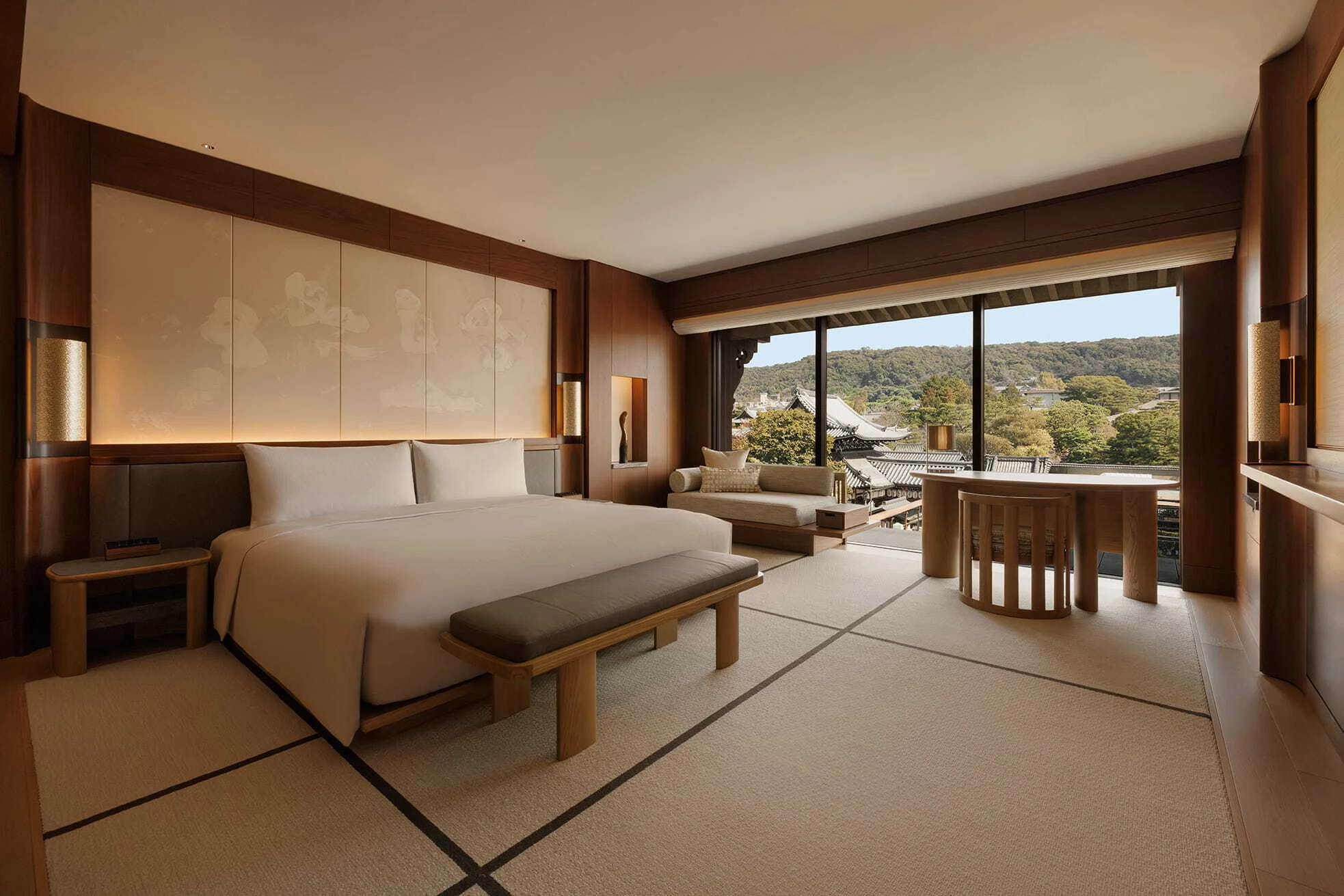
There are only 89 rooms and suites spread across four storeys, starting at 50sqm and appointed with all the pleasures of travel, including complimentary minibars (except alcoholic beverages) and daily treats of Japanese seasonal fruit and artisanal Kyoto confectionery.
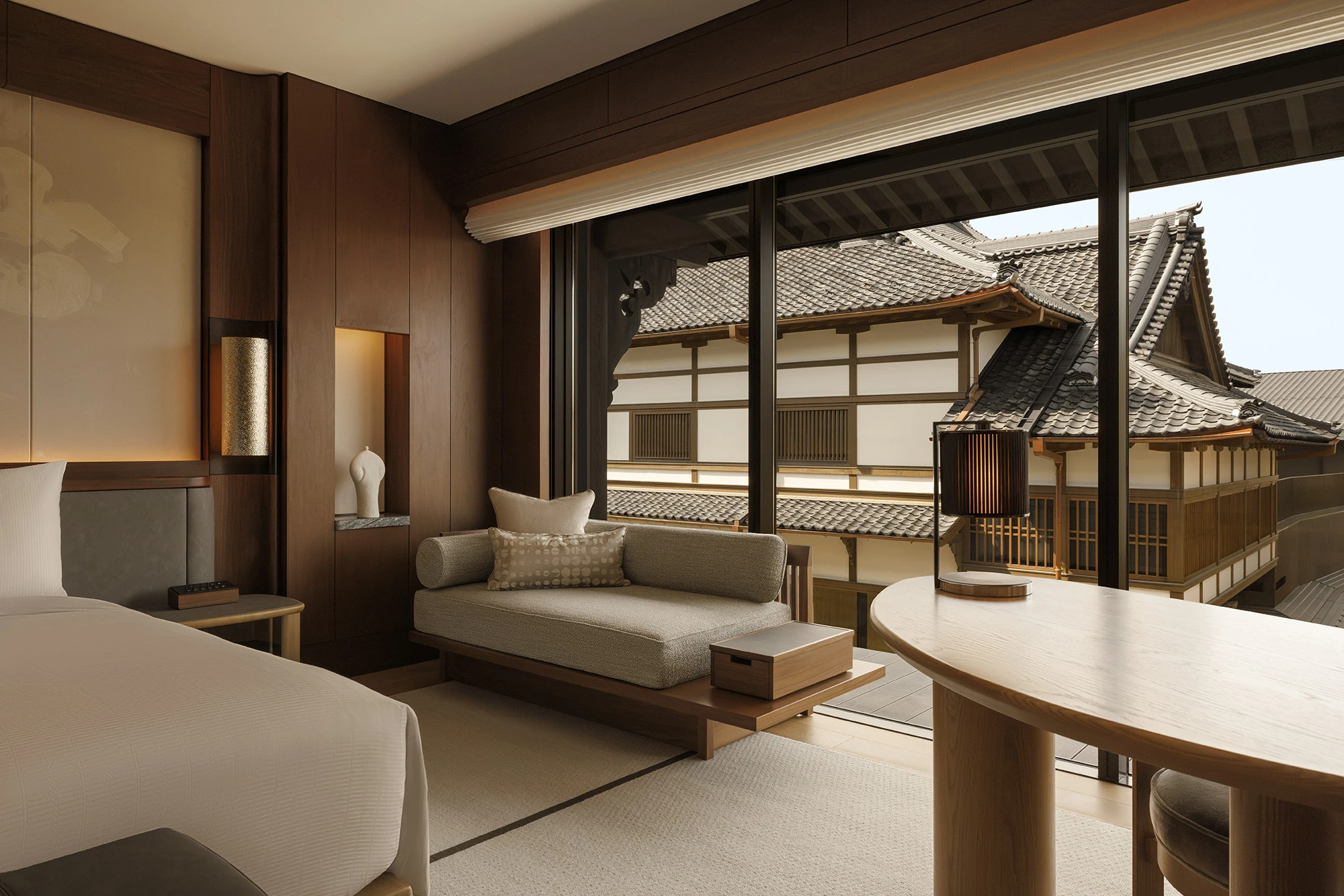
The Premier Temple Room, where I stayed, looks directly into the aforementioned Zenkyoan subtemple of Kenninji just across the road. It’s the kind of hotel view visitors hope for in Kyoto but rarely find.
Inside, there’s an obsessive attention to detail and craftsmanship: a ceramic objet d'art here, a lacquerware sculpture there, all by Kyoto artists. Even the minimalist vase in the bathroom is crafted by long-established Kyoto bamboo artisan Takesada Syoten, while the toiletry boxes can be assembled to reveal a vintage portrait of a geisha.
The headboard above the bed is the room’s visual anchor. Here, the hotel engaged Kyoto’s legendary kimono textile house Hosoo to transform artist Daichiro Shinjo’s calligraphy of Zen philosophy into a Nishijin textile, a prestigious weave historically reserved for Kyoto’s imperial court. The bathroom, meanwhile, is wrapped in dark wood and features translucent washi paper screens that make the space glow like a lantern when lit.
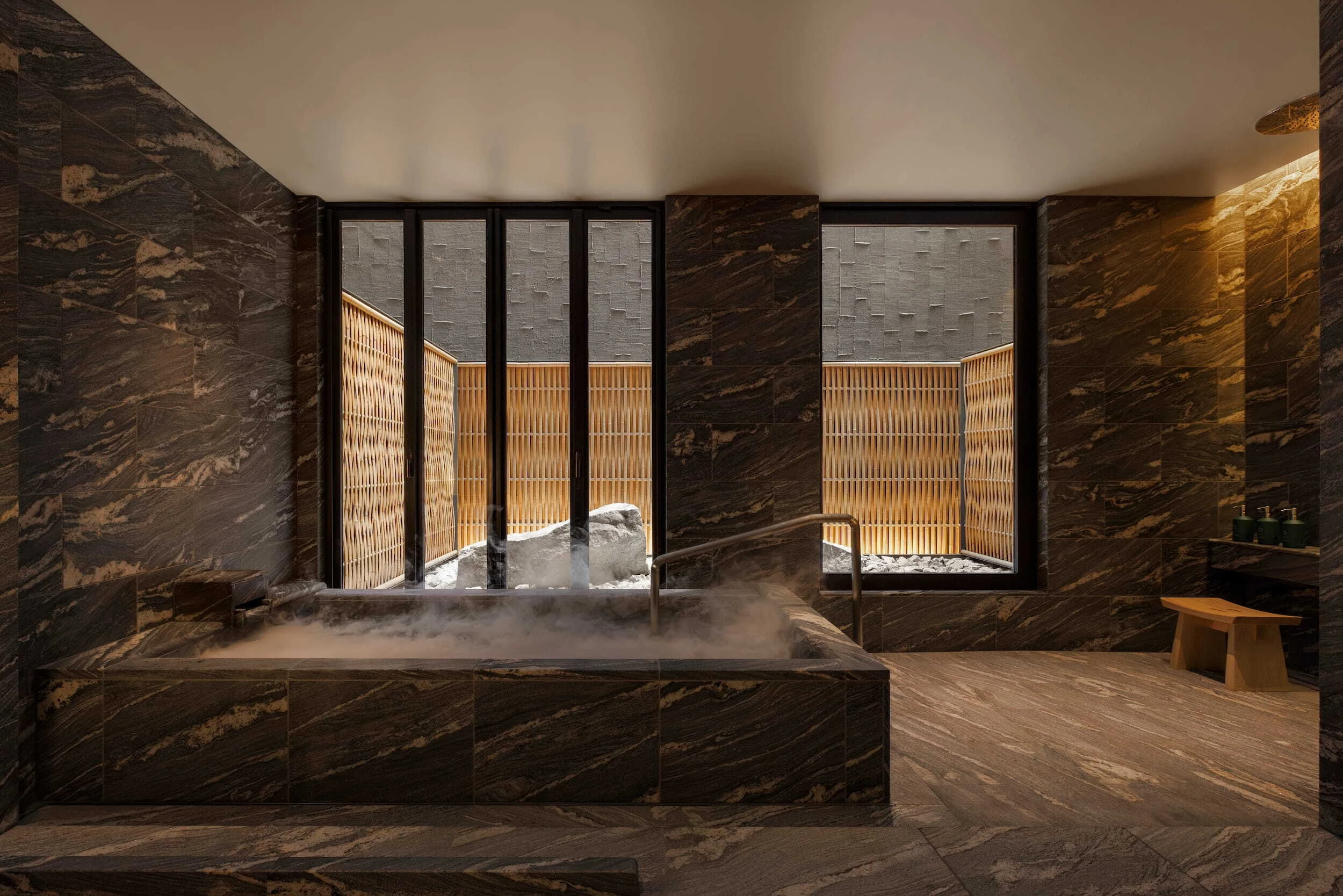
For the ultimate indulgence, Capella Kyoto also offers six Onsen Suites, each with its own private hot spring bath. These look into the tranquil Japanese garden in the hotel’s central courtyard.
Tucked away in the hotel’s two basement levels are a fully equipped, state-of-the-art fitness centre and the pristine Auriga Spa. In the latter, guests can choose to rejuvenate in a private onsen with natural hot spring water, or surrender themselves to pampering treatments from facials to massages.
The steam and dry saunas in the changing rooms offer the perfect way to unwind before treatment, while the relaxation lounge allows guests to linger in the post-treatment afterglow for as long as they want.
Overlooking the hotel's central courtyard with its distinctive karahafu-style awning, French brasserie Lanterne is Capella Kyoto's all-day dining venue. Yoi, by contrast, combines the beloved features of two Japanese dining institutions. Here, an extensive menu of crowd-pleasing Japanese classics inspired by local pubs known as izakaya – think sushi, sashimi and tempura – is served amid the retro stylings of a traditional coffee shop, or kissaten.
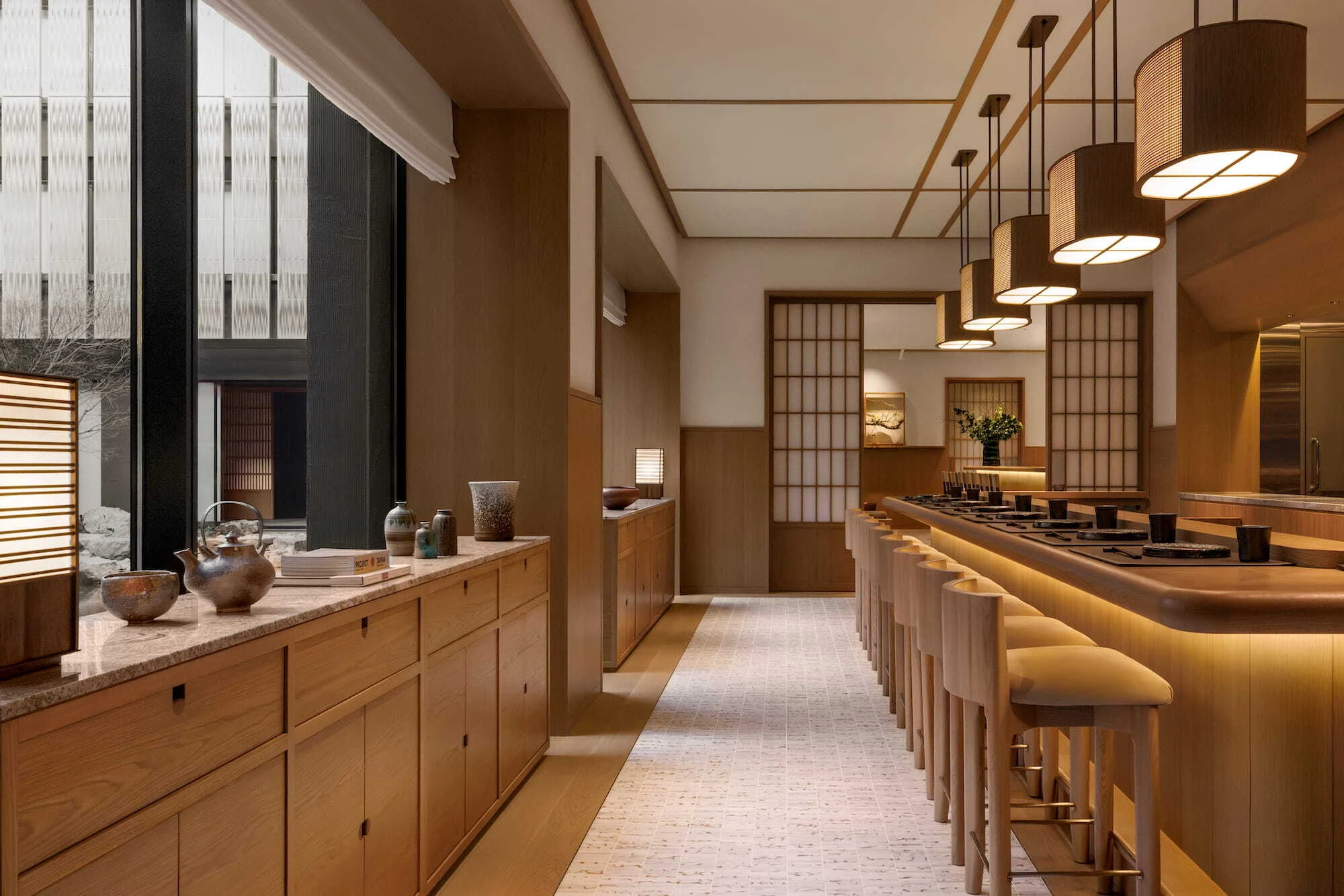
One of the year’s hottest new restaurants, SoNoMa by SingleThread certainly lived up to the hype. This kappo-style establishment with just 12 counter seats has serious pedigree to begin with. It’s the first international outpost of SingleThread, the three Michelin-starred restaurant in Sonoma wine country, California, known for its celebration of farm-to-table produce expressed through a Japanese lens.
For this offshoot, American-Japanese chef Keita Tominaga flips the script by reinterpreting hyperseasonal Kyoto and Kansai ingredients through a Californian sensibility instead. The 11-course omakase dinner was revelatory; it felt like a rediscovery of classic Japanese ingredients I thought I already knew from years of living and dining in Japan. Weeks later, I still dream about the blackfin seabass sashimi served with cucumber and dill sauce, dashi jelly and cucumber ice. It was an utter joy. The fish, cucumber and dashi combination was light and fresh, and felt so natural I couldn’t believe I hadn’t tasted it before.
SingleThread’s famed malted potato did make an appearance, but in a velvety chawanmushi with sake-steamed hamaguri clams, topped with caviar. Then there were the different expressions of various eggplants from Kyoto and the region, used in new and awe-inspiring ways.
A piece of mizu nasu, known for its high water content, was served simply with a sheet of tomato water jelly to accentuate its juiciness. This was followed by a mini eggplant 'sundae' layered with eggplant puree, fried green eggplant soaked in tomato dashi, and a tart sorbet made from kawachi bankan, a Japanese citrus akin to a grapefruit. It was the perfect palate cleanser that primed my taste buds for the savoury main dish: Kyoto Nanatani duck, dry-aged for two weeks, charcoal grilled and smoked with olive wood just before serving.
This dinner was easily one of my most memorable meals this year. SoNoMa has fresh, bold ideas pushing familiar ingredients into new territories, and they're executed thoughtfully in a way that still feels grounded in Kyoto's revered kaiseki traditions. This is exciting, intellectually and on the palate, and reason enough to book a table, even if you're not staying at Capella Kyoto.
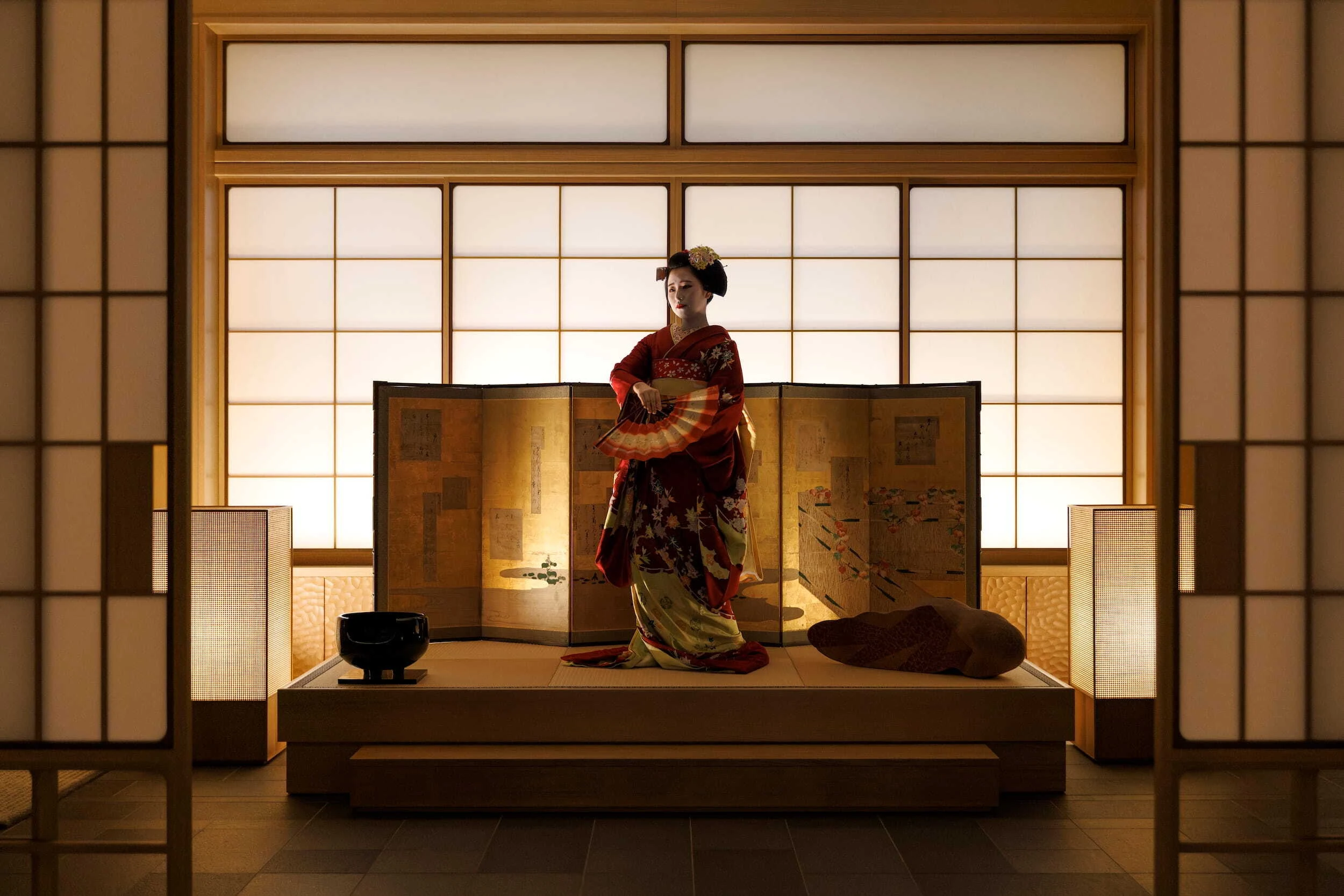
Capella Kyoto excels at bringing beloved Kyoto experiences into its Living Room, the brand’s intimate take on the hotel lobby. This offers guests a more relaxed way to engage with local culture. Daily rituals go beyond the morning breathwork session and daily cocktail hour expected at a hotel of this calibre. Capella Kyoto also hosts traditional Japanese instrument recitals and maiko (apprentice geisha) performances, where guests have the unique opportunity to meet and interact with the artists.
Throughout the day, complimentary Capella ‘Moments’ ranging from sake tasting to local craft workshops make it possible to experience a bit of the city without leaving the hotel’s sumptuous cocoon. The bonsai workshop was a personal highlight: I learned to re-pot and care for a five-year-old Japanese black pine, then took it home as a tangible memory of my time at Capella Kyoto.
Miyagawa-cho, where Capella Kyoto calls home, is one of Kyoto's five geisha districts, filled with stone-paved alleys, wooden machiya and traditional teahouses. Despite being newly built, the hotel's modest, low-rise exterior looks like an extension of the historical Kaburenjo Theatre next door, which still hosts seasonal geisha performances to this day. This was intentional, as Kengo Kuma was also tasked with renovating the entire block, including the aging community centre, in tandem with the hotel’s construction.
Today, the neighbourhood feels rejuvenated, and the hotel looks like it has always been a part of it. Stepping outside, seeing parents picking up their children from the community centre and locals going about their daily life, made me feel like I was staying in an authentic, living neighbourhood.
This is a luxury hotel defined by refinement rather than excess. With its calm interior reminiscent of a traditional Kyoto home, and its devotion to local artistry, heritage and craftsmanship, Capella Kyoto feels like the answer to the question: what would Kyoto look and feel like if it were a hotel?
Address: 130 Komatsu-cho, 4-chome, Yamato-oji-dori Shijo-sagaru, Higashiyama-ku, Kyoto
Closest transport link: Kiyomizu-Gojo Station, Gion-Shijo Station
Book now: capellahotels.com/en/capella-kyoto
Discover Time Out original video