

[image]
[title]In August I travelled to Vilnius, Lithuania’s capital city, to find out more about the country’s appreciation for bees. Within five hours of touching the tarmac, I’d squished one under my sandals. It wasn’t quite the start I’d hoped for.
Luckily, Paulius Chockevičius, founder and CEO of Urbanbee, continued making the case for bringing bees into city centres, politely ignoring the public execution that had just taken place under my big toe.
Paulius is a fascinating contradiction: a former city-slicker turned bee whisperer. Having worked in finance for the best part of a decade in both Vilnius and London, he returned home to set up Urbanbee in 2019, after being inspired by The London Honey Company, which tends to hives on some of London’s most prestigious rooftops, including Fortnum & Mason, Harrods, the V&A and Tate Britain.
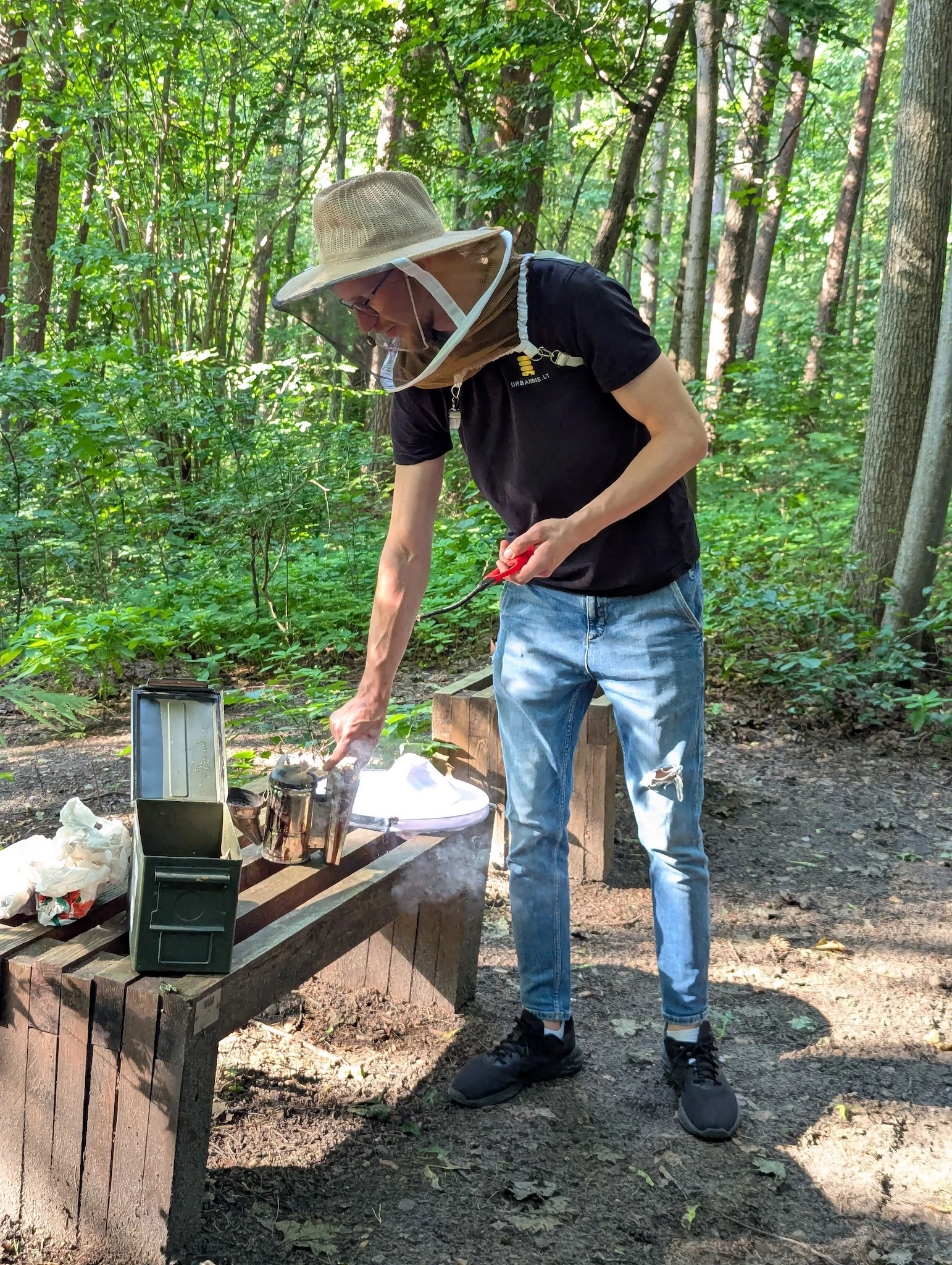
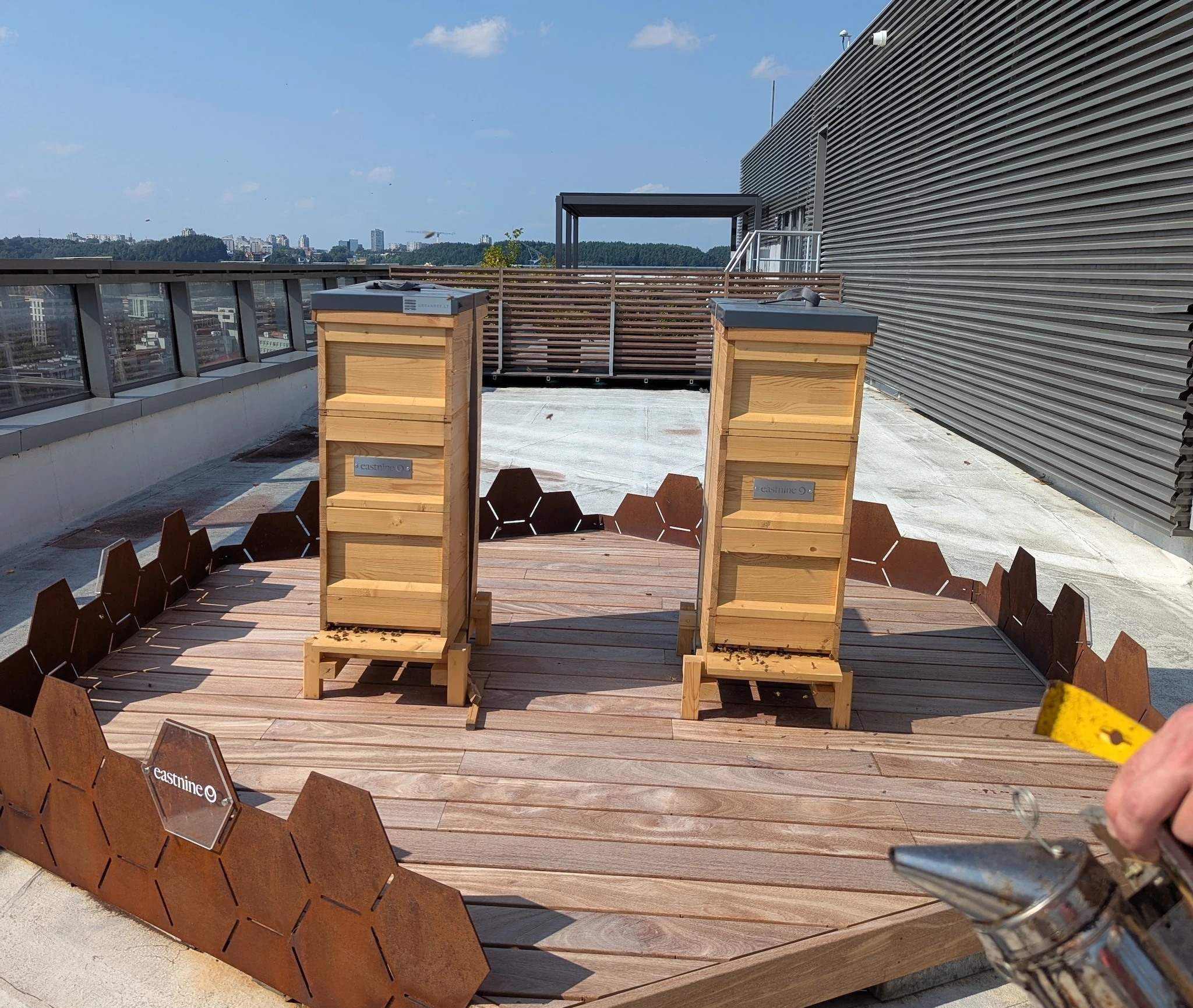
Urbanbee followed a similar blueprint in Vilnius and now works with more than 40 companies, including Vinted. Even the presidential palace has turned its rooftop yellow, offering presidential honey as an official gift for international guests.
On the surface, this is a classic case of corporate burnout gone granola. For Paulius, it’s more of a homecoming. He’s following in the footsteps of his grandfather, a lifelong hobby beekeeper, and reconnecting with his country’s roots. As Europe’s last pagan nation – the country officially adopted Christianity in 1387 – Lithuanians have historically leaned more flower child than pulpit, with bees enjoying something close to sacred status.
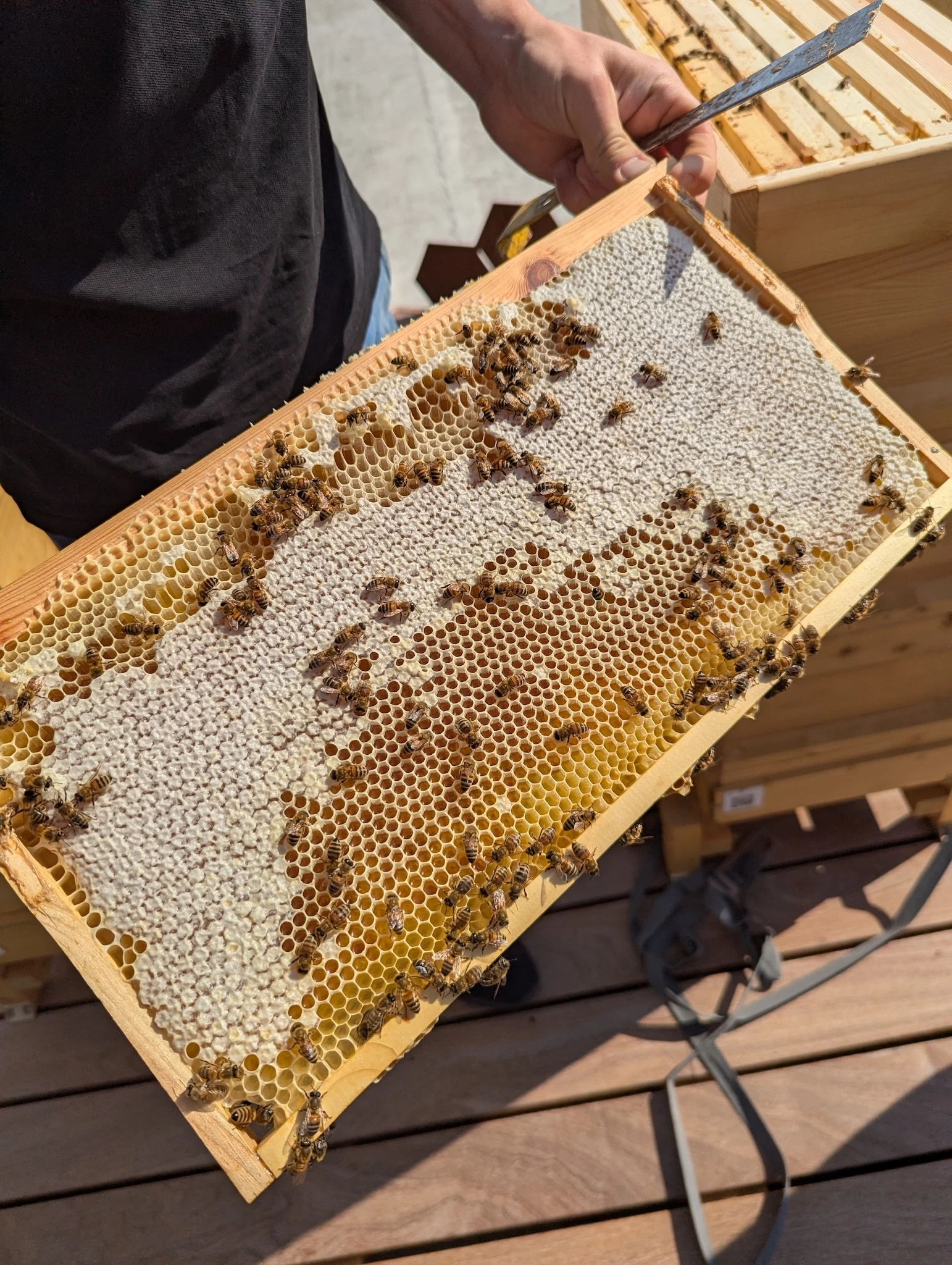
‘I was terrified of bees for most of my life,’ he tells me as we travel to Vingis Park, the city’s 400-acre urban forest, to visit two of Urbanbee’s community hives, which he installed in 2021. It was only when he was introduced to the bee equivalent of a Cockapoo that his fear began to subside. Buckfast bees, I discover, are hybrids that were specifically bred by a Benedictine monk named Brother Adam in the early twentieth century to be resilient, hard-working and, most importantly, well-behaved.
Their disciplined nature starts to feel important when Paulius coaxes more than 100 bees onto my arm. They play nice, even letting me scoop a healthy dollop of honey straight from the hive.
‘They can be trained like dogs,’ Paulius says. Despite their brains only being the size of sesame seeds, they can recall locations and directions, recognise patterns and solve complex tasks. Paulius knows this well. ‘I once trained a bee for a pizza advert,’ he explains. ‘I got it to eat honey from a Papa John’s pizza.’
Despite their brains being the size of sesame seeds, bees can recognise patterns and solve complex tasks
If the handpan-playing and yoga mat hadn’t already given it away, spending a day with Paulius confirms he’s not in the bee business for praise or the paycheque. He takes the welfare of his animals seriously: queens aren’t replaced unnecessarily, only surplus honey is harvested, and smoke is used sparingly. He also keeps six hives at home.
Then things get slightly more mystical. ‘I hear voices,’ he says. ‘I hear bees wherever I am. I always find them.’
As it turns out, Paulius isn’t an outlier. Here, everyone and his grandad has a bee connection. Beekeepers refer to their hives as ‘families’ and the queen as ‘mother’. The Lithuanian word bičiulis, meaning friend, is also derived from beekeeping.
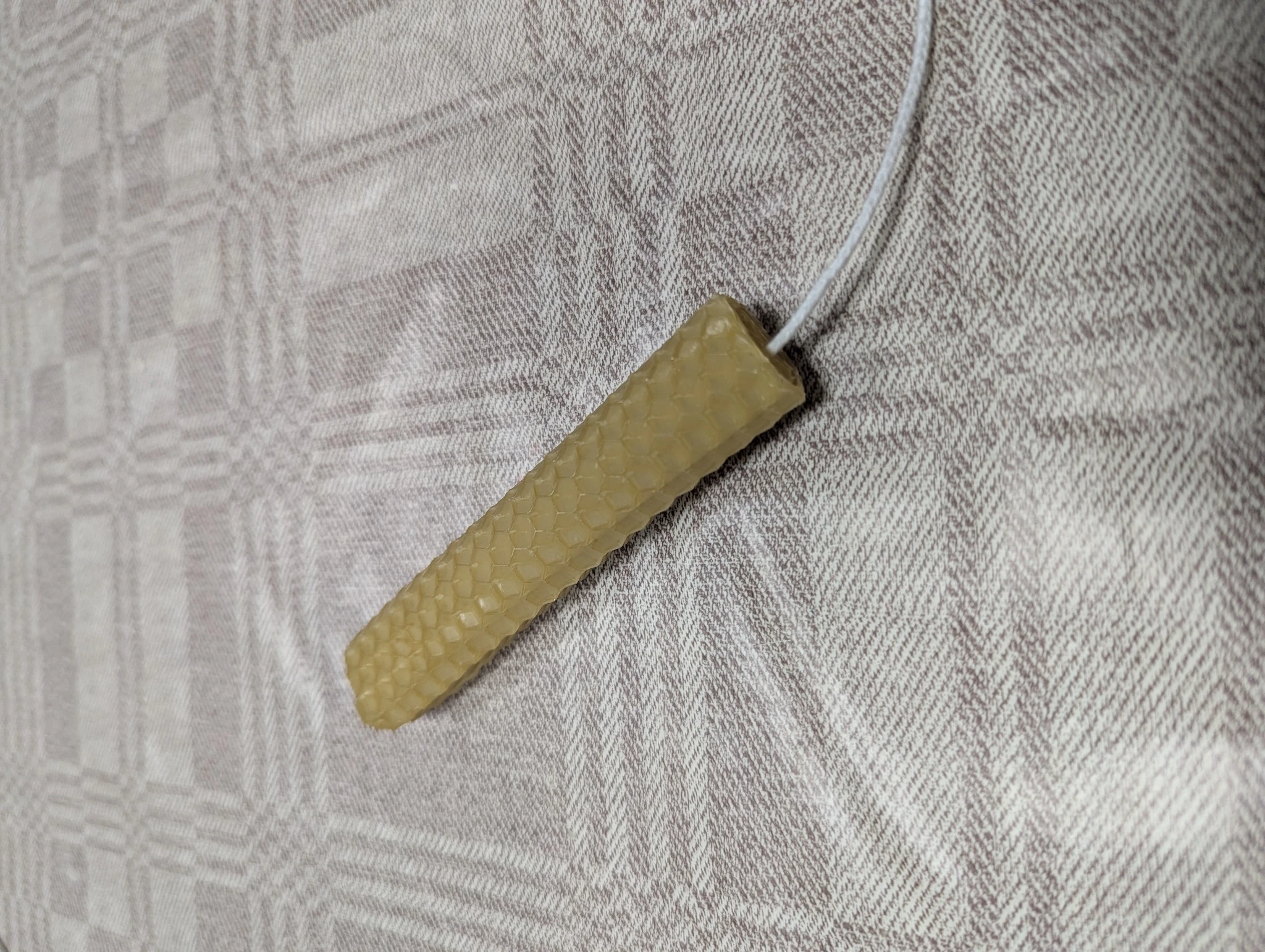
Even ancient bee crafts are having a renaissance. Take Gabriele Babel, who founded Giftija Butikas in Vilnius in 2020, where visitors can learn to make organic beeswax candles. Or Nerija Karpavičienė, who followed suit in 2023 with Provincia, a design-led candle brand in Kaunas.
I have a whack at it myself at the Vilnius Ethnic Cultural Center. For the uninitiated, traditional candle-making involves repeatedly dipping a cotton wick into molten beeswax until a candle slowly takes shape. Simple enough in theory. But three dips in, any hope of handmade Christmas gifts is dashed. What I’ve created can only be described as a waxy tampon.
As for the food, honey remains a staple of Lithuanian pantries - spooned into tea to remedy the common cold, drizzled over cucumber to make one of the country’s most popular snacks, and baked into medutis (honey cake) for birthdays and weddings. The real gear change, though, is happening inside Lithuania’s burgeoning fine-dining scene, where chefs are developing a taste for the sweet stuff.
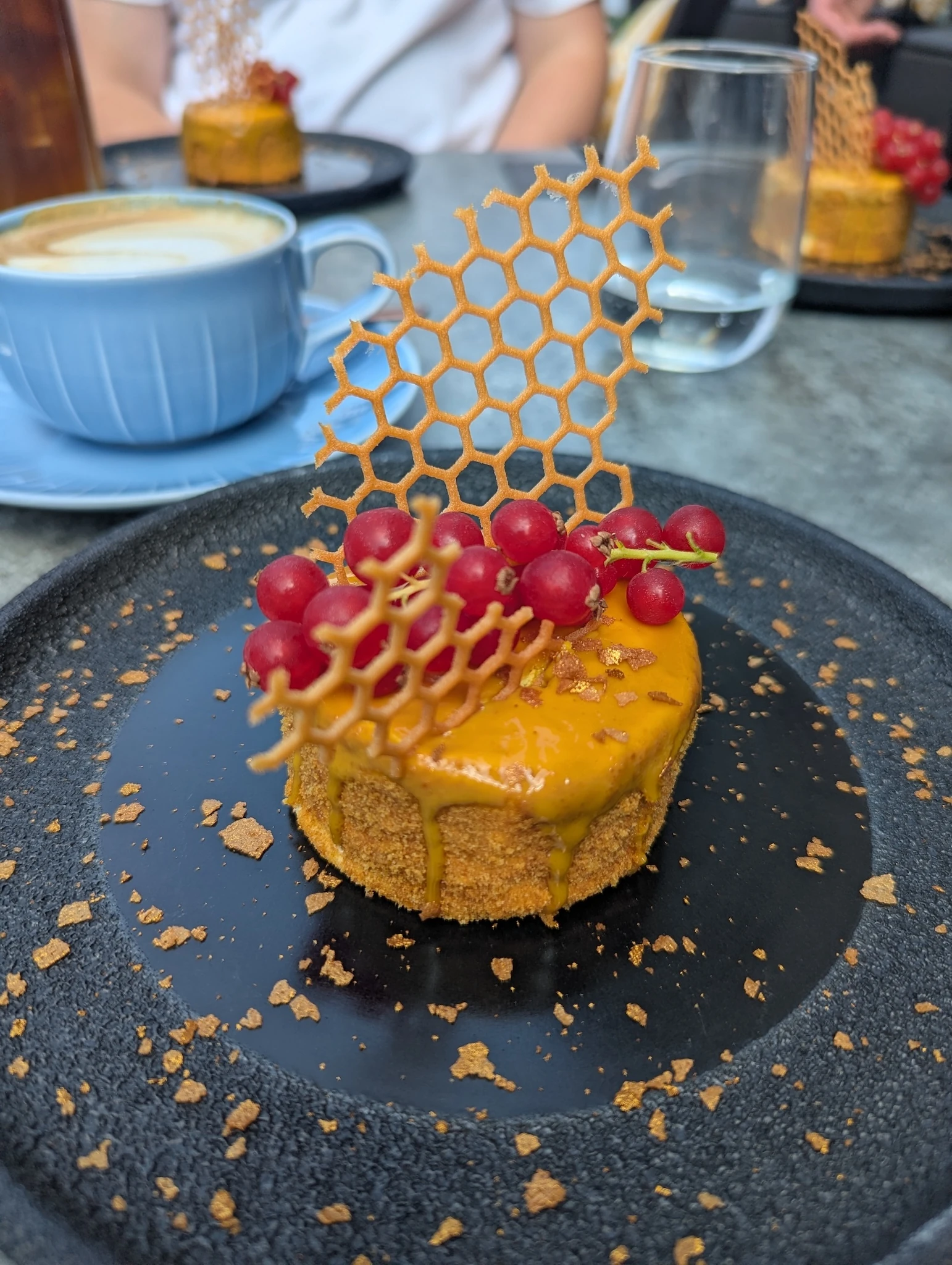
Michelin-recognised Deivydas Praspaliauskas is leading the charge, frequently using honey in savoury dishes. He’s known to substitute it for sugar in mayonnaise, also mixing it with soy and lemon to glaze duck. He takes the same experimental approach at Epotheca, his 16-seater restaurant in a former pharmacy in Vilnius’s bohemian quarter, where menus are more suggestion than scripture.
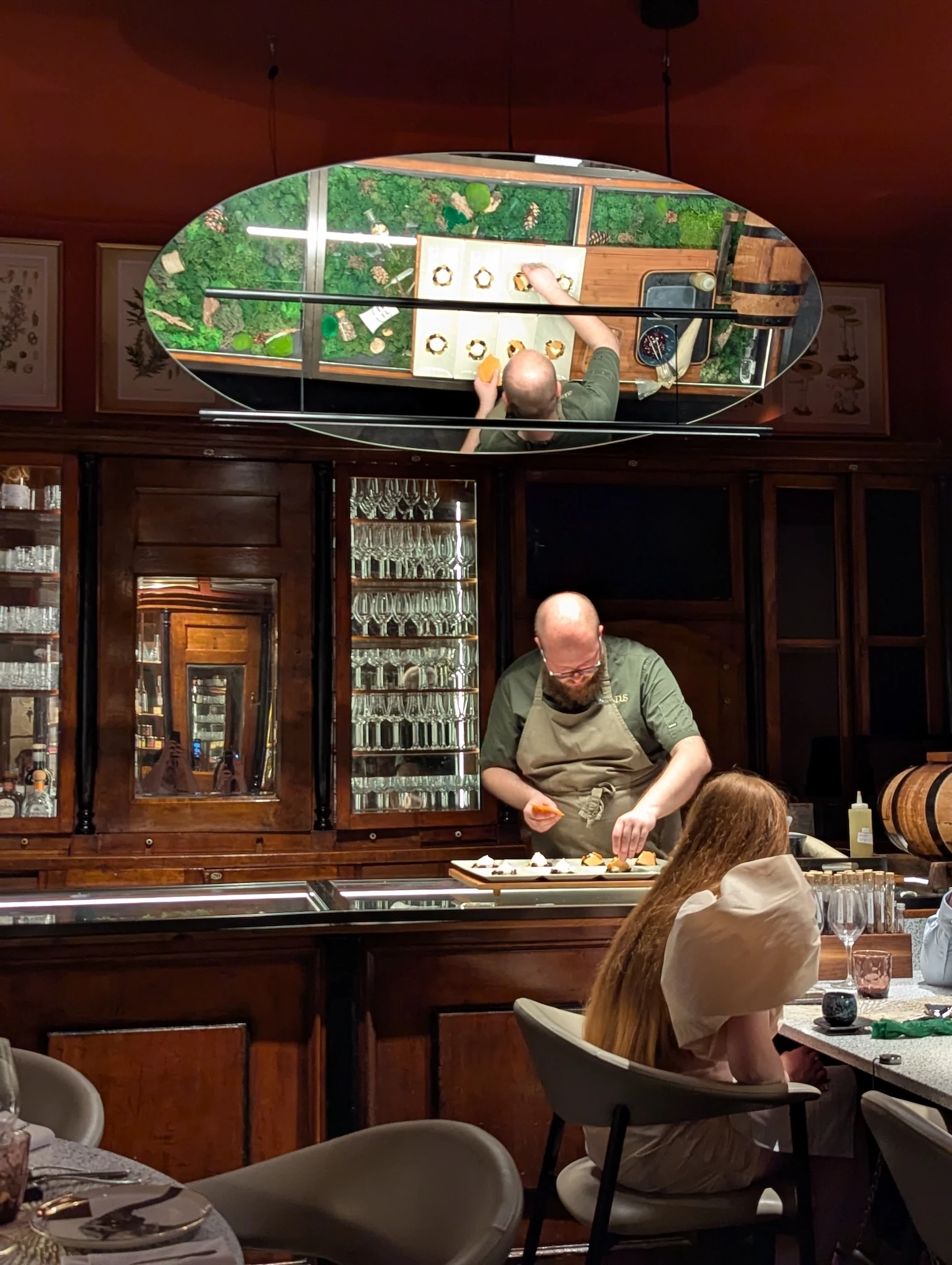
During my visit, a surfboard-shaped mirror gives me a bird’s-eye view of the live theatre below. I watch chef Kasparas Kolosovskis blitz, dice and serve up beetroot bread and whipped butter followed by an almond-cookie dessert topped with liquid-nitrogen ice cream. The unlikely showstopper? A cucumber granita, yoghurt and honey palate cleanser.
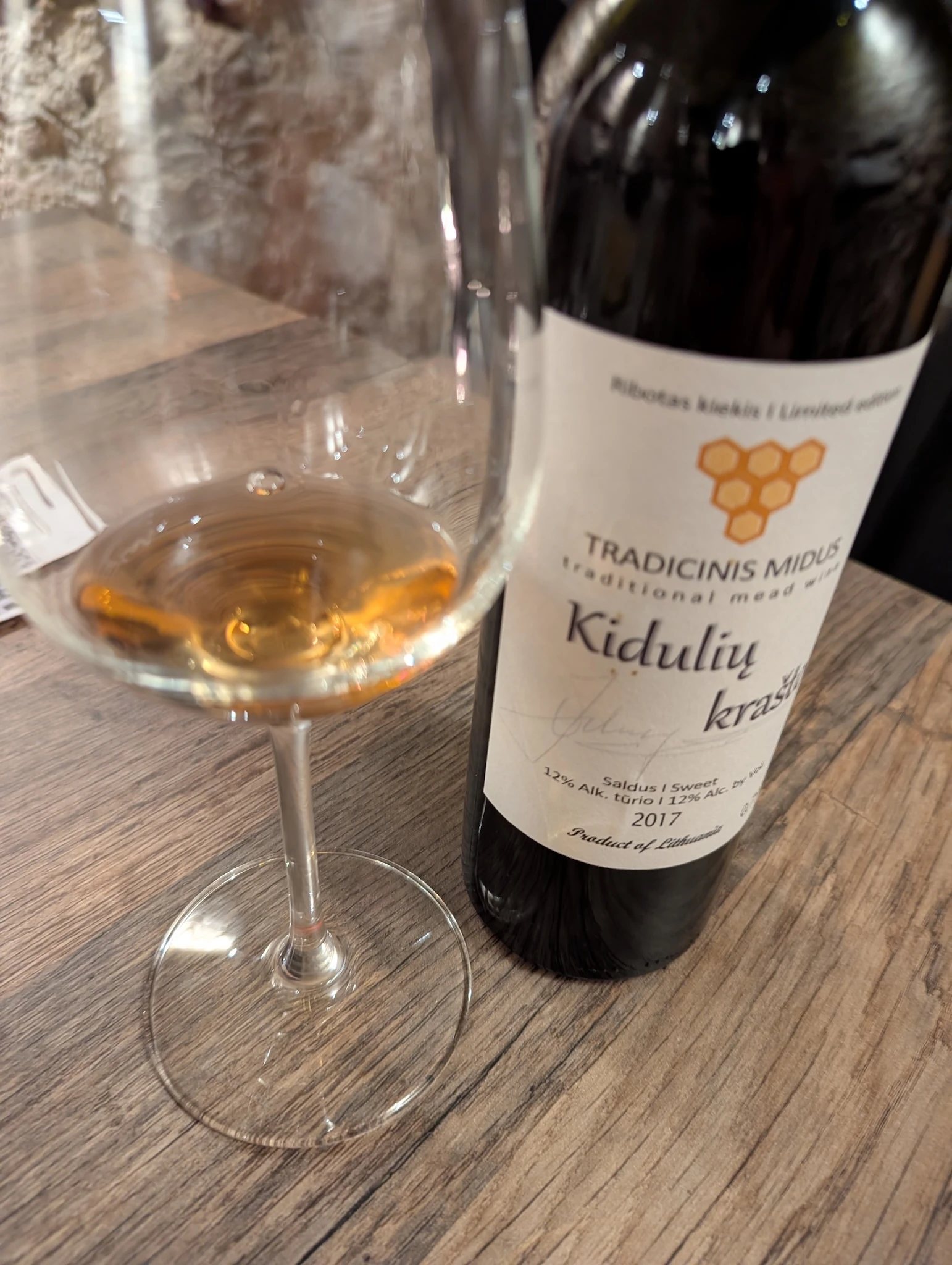
Having lost ground to beer, spirits, and eventually, natty wine, mead is also staging a comeback. Stakliškės mead bagged EU-protected status in 2013, putting it in the same club as Bavarian Beer and Welsh Lamb, while craft producers such as Šušvės Midus are finding new fans with lighter, session-style pours.
My first taste of modern mead comes courtesy of husband-and-wife duo Laima and Aidas, who stumbled into the mead business by mistake. As Laima tells it, Aidas, an IT guy by trade, ‘went to the neighbour’s house to borrow some tuna and never came back’. Then Aidas chimes in: ‘I got distracted by a winemaking kit.’
Fast-forward to 2026 and the pair are award-winning winemakers who spend their spare time running Lietuviški Skoniai, an intimate tasting room in a sixteenth-century cellar in Vilnius’s Old Town.
It’s here I learn that fermented honey was once valuable enough to double as currency, with Lithuania’s Grand Dukes downing the stuff by the barrel. Mead also doesn’t have to be sickly sweet. Of the six I try, my favourite is Agurkinis, a mezcal-adjacent cucumber concoction created as a liquid love letter to the nation’s snack of choice.
I then meet Rasa Nabažaitė, the first registered honey sommelier in the Baltics. She’s on a mission to get us all swirling, sniffing and savouring the sweet stuff, until pairing honey with food feels as natural as cheese with wine.
She regularly teams up with fellow foodie Asda Petru, matching honey with seasonal dishes created at Asda’s Vilnius bakery, Desertų klubas. It’s here my nose gets put to the test as Rasa challenges me to pick out notes of rose and vanilla before things escalate. ‘Are you getting cowshed, cat urine or wet dog?’ Apparently they’re officially recognised aromas.
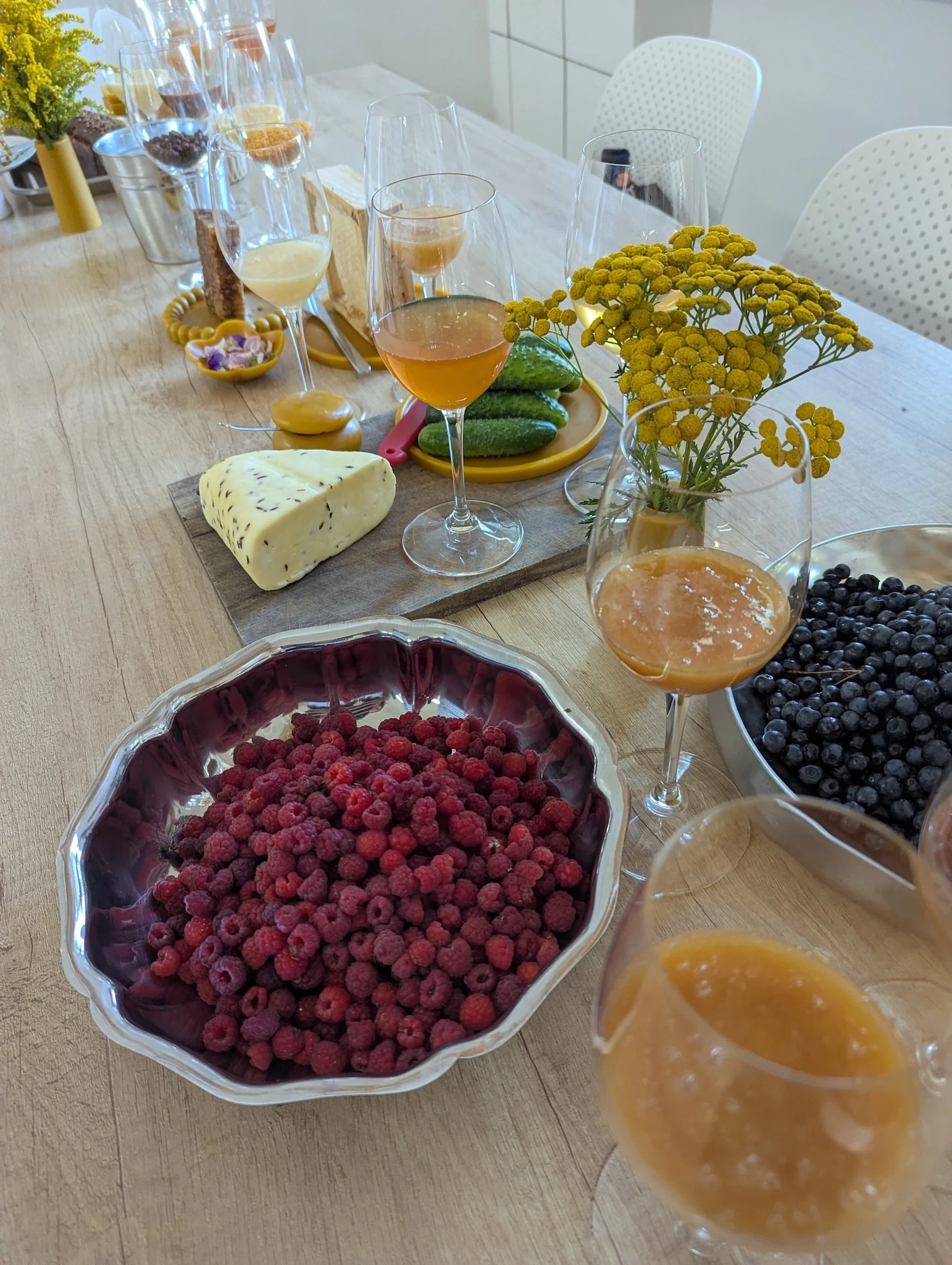
My taste buds have a better time of it with cheese doughnuts paired with Japanese knotweed honey, Boba (a largely forgotten Lithuanian cake) with sakura honey, and potatoes with onion honey, all served on beeswax plates made at Rasa’s family apiary. I give the gold to Whole Foods-coded linden honey with propolis; essentially anti-inflammatory bee glue with the peppery tang of a spicy marg.
The final stop on my bee pilgrimage takes me back to familiar ground: the sauna. I visit Ivãnas Muša Gongã on the banks of the Neris, which, unlike the makeshift Peckham hotboxes I’m used to, comes with a sauna master. Mine, Puntuko Pirtis, calls sauna ‘my lifestyle, my heart’, before getting to work wafting me with leafy bouquets of birch and oak and spritzing the room with a welcome cocktail of water, vodka and propolis.
I’m slathered shoulder-to-shin in honey before the cold plunge
Where does the honey come in? I’m slathered shoulder-to-shin in it before the cold plunge. I expect to emerge from the river like a human fly trap in a one-piece. Instead, I’ve found a new go-to exfoliator.
I guess I’ve gone a bit woo-woo for the cult of black and yellow. Blame it on murderous guilt, or my soft spot for Laima and Aidas, but I no longer see honey as something to just squeeze into my porridge: it’s for drinking, savouring, pairing and scrubbing.
Jess Phillips travelled with Ryanair and was a guest of Go Vilnius. She stayed at Artagonist Art Hotel. Our reviews and recommendations have been editorially independent since 1968. For more, see our editorial guidelines.
Stay in the loop: sign up to our free Time Out Travel newsletter for all the latest travel news and best stuff happening across the world.