[category]
[title]
Hiking to Everest Base Camp is on many people’s bucket lists – here’s everything you need to know before going


A trip to Nepal wouldn’t be complete without lacing up your boots and heading into the Himalayas. Home to the world’s highest peak, Sagarmatha – meaning ‘forehead of the sky’ in Nepali and better known in English as Mount Everest – the region offers days of trekking through breathtaking landscapes. Along the way, you’ll fuel up on dhal bhat and spicy momos, pass yaks, monasteries and Sherpa villages, and unwind each evening in the warm hospitality of traditional Nepali tea houses. All pretty dreamy stuff.
I embarked on a 12-day trek to Everest Base Camp with Plotpackers, a UK-based tour operator designed with solo travellers in mind. Led by two local guides, my group was made up of 12 English-speaking women aged between 21 and 31, with varying levels of fitness and prior travel experience, from countries including Britain, the US, Australia, Denmark and Mexico.
Being part of a large group had its upsides: around 80 percent of the hassle was taken care of, including the booking of overnight accommodation, transfers and organising local guides and porters, which meant you could focus on the experience itself rather than the admin. That said, there were certainly moments when I could feel my social battery dwindling, especially when coupled with the physical demands of an expedition of this magnitude. The days on your feet are long and the conditions can be tough, with visitors often suffering from altitude sickness and coping with freezing temperatures. I quickly learned that pacing yourself is key. While the trek was tough, it was also one of the most satisfying and otherworldly experiences I’ve ever done.
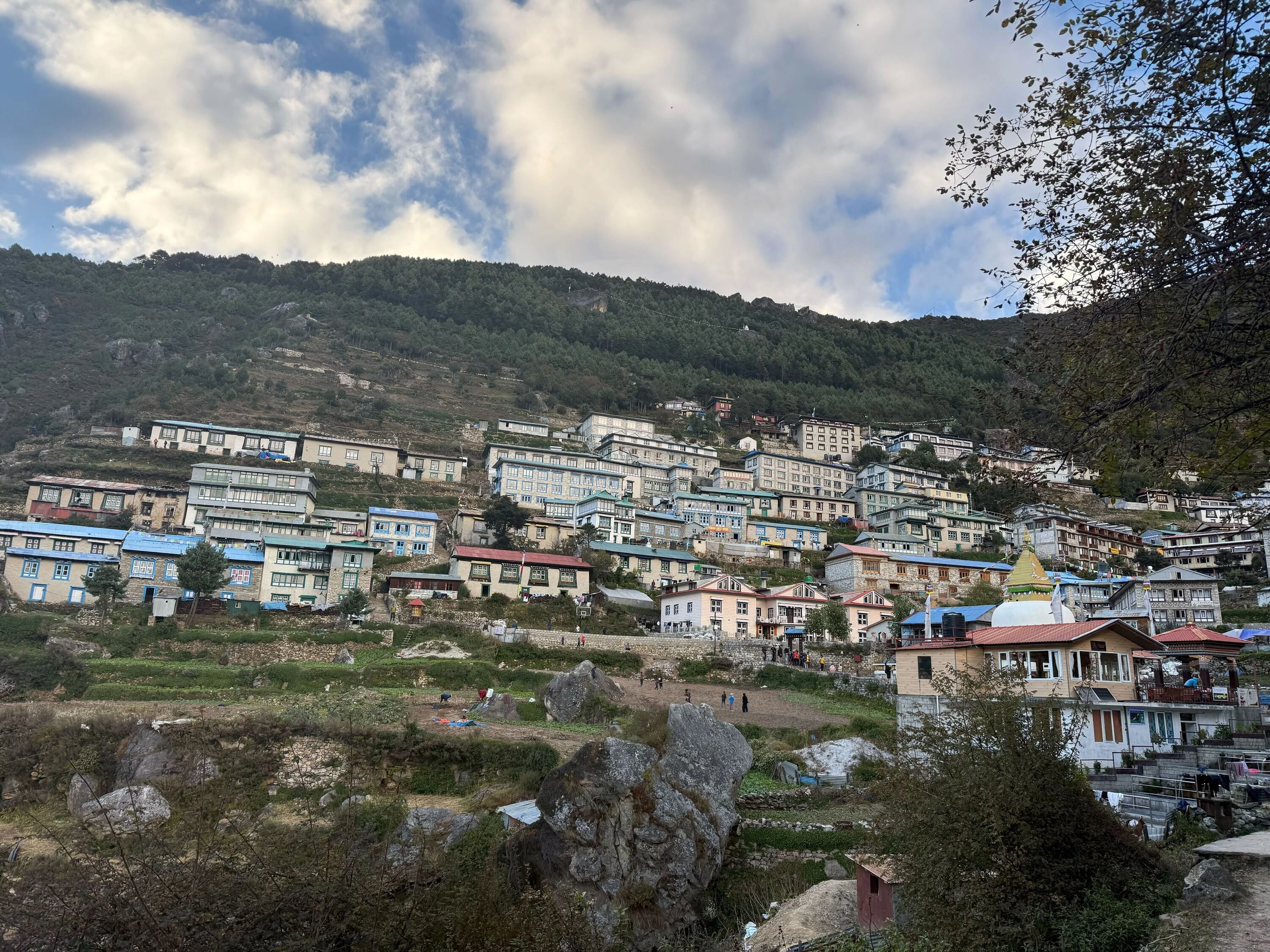
According to Krishna Shahi, bar manager of the Irish Pub in Namche Baazar, one of the key towns on the route, visitor numbers are still not where they were before Covid: he thinks that overseas travel to Nepal has been impacted by viral videos of climbers queuing to reach the summit of Mount Everest, as well as headlines about the Gen Z-led protests in Kathmandu in September 2025. When I visited, in late October 2025, tourism seemed to be business as usual: the route never felt overcrowded, aside from the cluster of groups waiting for photos at the Base Camp rock, nor did it feel particularly empty.
Between the headlines and the reality on the ground, the experience raised plenty of questions that I wish I’d had clearer answers to before arriving. Here’s everything I wish I knew before going.
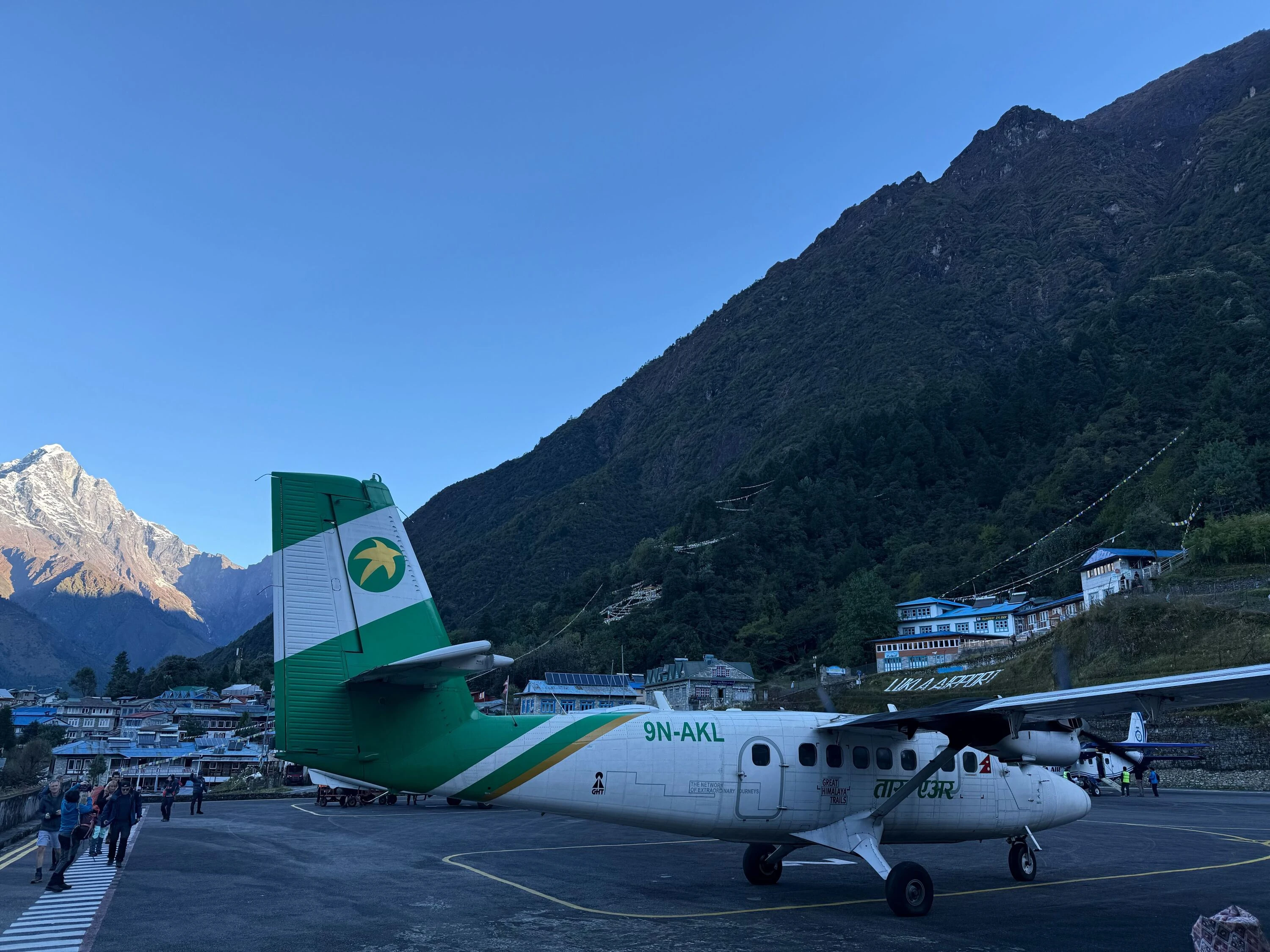
Especially when it comes to transport. To start your trek, you will most likely catch a domestic flight to Lukla airport, which takes around half an hour in the air. We flew from Tribhuvan International Airport, Kathmandu, but during peak season it’s not unusual to be redirected to Ramechhap Airport, which is about a four hour drive from the capital. Wherever you depart from, be prepared for fairly chaotic queues and an early start – we only found out the night before that we’d be flying from Tribhuvan, meaning we could have a few hours extra in bed. The flight to Lukla itself is an experience, the runway being only 527 metres long (for scale, commercial airports have runways of usually 2,000 metres plus). Tip: sit on the left side of the plain on the fly out for the best views of the snow-capped mountains.
It’s also not uncommon for flights to be delayed or re-directed on the day due to extreme weather in the region, so it’s recommended that you leave yourself a few spare days, especially before your return flight home, to account for any delays.
The recommended walk will take about eight days to reach base camp, including two acclimatisation days to help your body adjust to the altitude, covering around 65 kilometres on the way up with an ascent of 2500 metres in total. On the way back down, you’ll be walking for a further three days, covering the same route. Some people choose to pay for a helicopter out of the most remote village, Gorakshep, which can carry four people and costs around US $500.
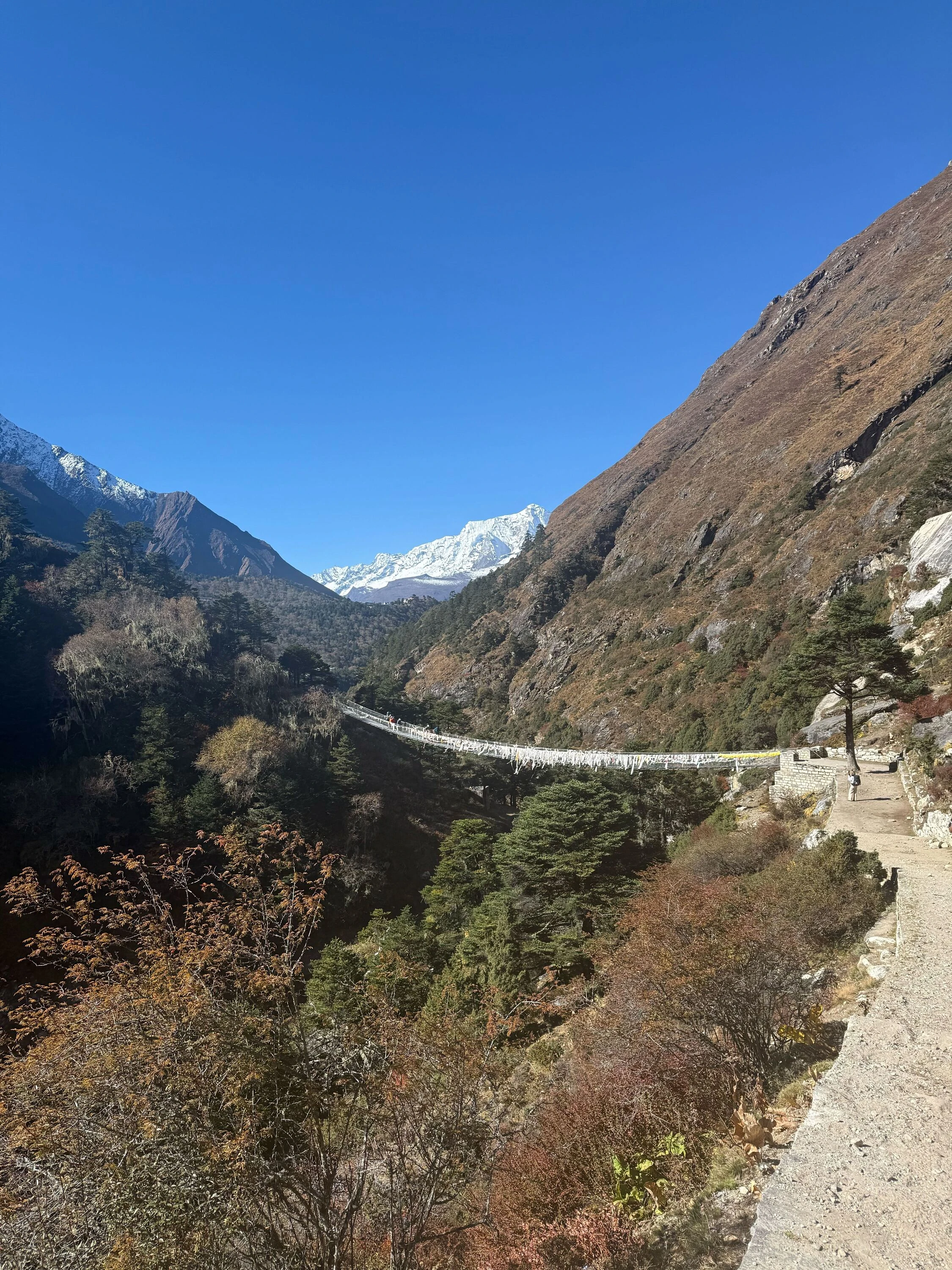
The route itself is generally well-trodden and maintained by the Sagarmatha Pollution Control Committee (SPCC) and local Sherpa communities. You’ll walk up stone steps and cross rope bridges over terrifyingly deep valleys, though it does get considerably more rugged and icy as you ascend (definitely pack crampons). Along the route, you’ll encounter several Sherpa villages with locals selling snacks and bottled water, until the last day or so where it really is just you and the earth.
You need to have a decent level of fitness to enjoy the hike (I’d been going to the gym and running at least three times a week, and personally found it fine), and while it is challenging to walk for up to ten hours a day, it is certainly doable for most able-bodied people after a few months of modest training. It is also nowhere near as dramatic as actually ascending Mount Everest, which is a completely different ballgame, costing tens of thousands of dollars and complex mountaineering expertise. We met everyone from young children and families up to people in their mid 70s doing the hike to base camp.
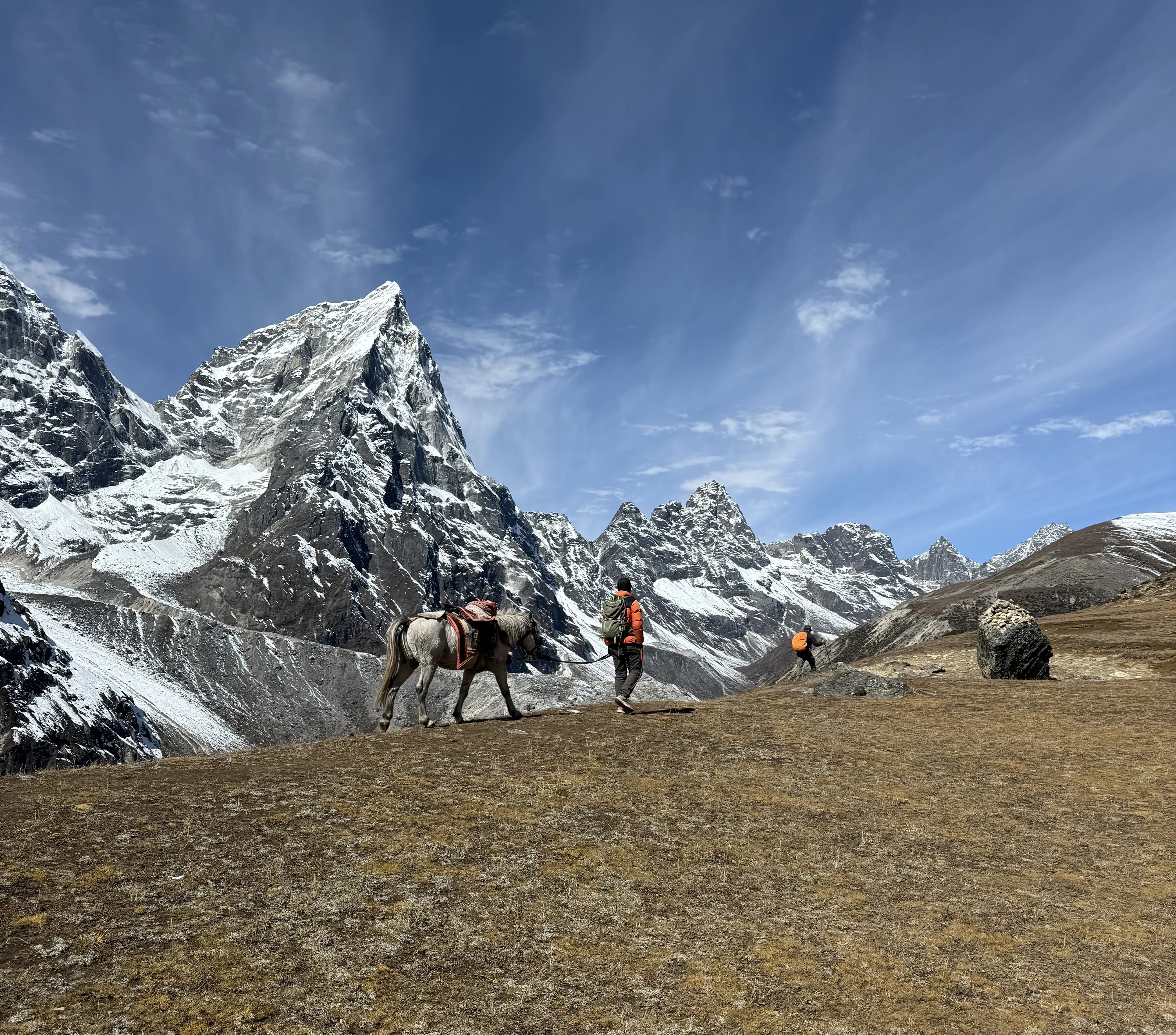
If you think of yourself as a speedy walker, think again: it’s better to go slow and steady as you gradually get used to the high altitude. You’ll probably also have several occassions where you are forced to wait to let convoys of mules or yaks pass on the track, which are used to carry up food supplies and gas to the remote villages. The trick is to pace yourself, eat and drink loads and listen to your body. Oh, and if your guide says that you’ll be walking ‘Nepali gradual’, don’t be fooled: that translates to a pretty steep uphill.
Altitude sickness is one of the biggest concerns on this trek, and rightly so. To help prevent it, I took Diamox (acetazolamide): one tablet each morning with plenty of water. It worked well for me, though I did notice some mild side effects like tingling in my fingers and toes. I’d strongly recommend speaking with your doctor before you travel and picking up any medication at home, although Diamox is also widely available in Kathmandu.
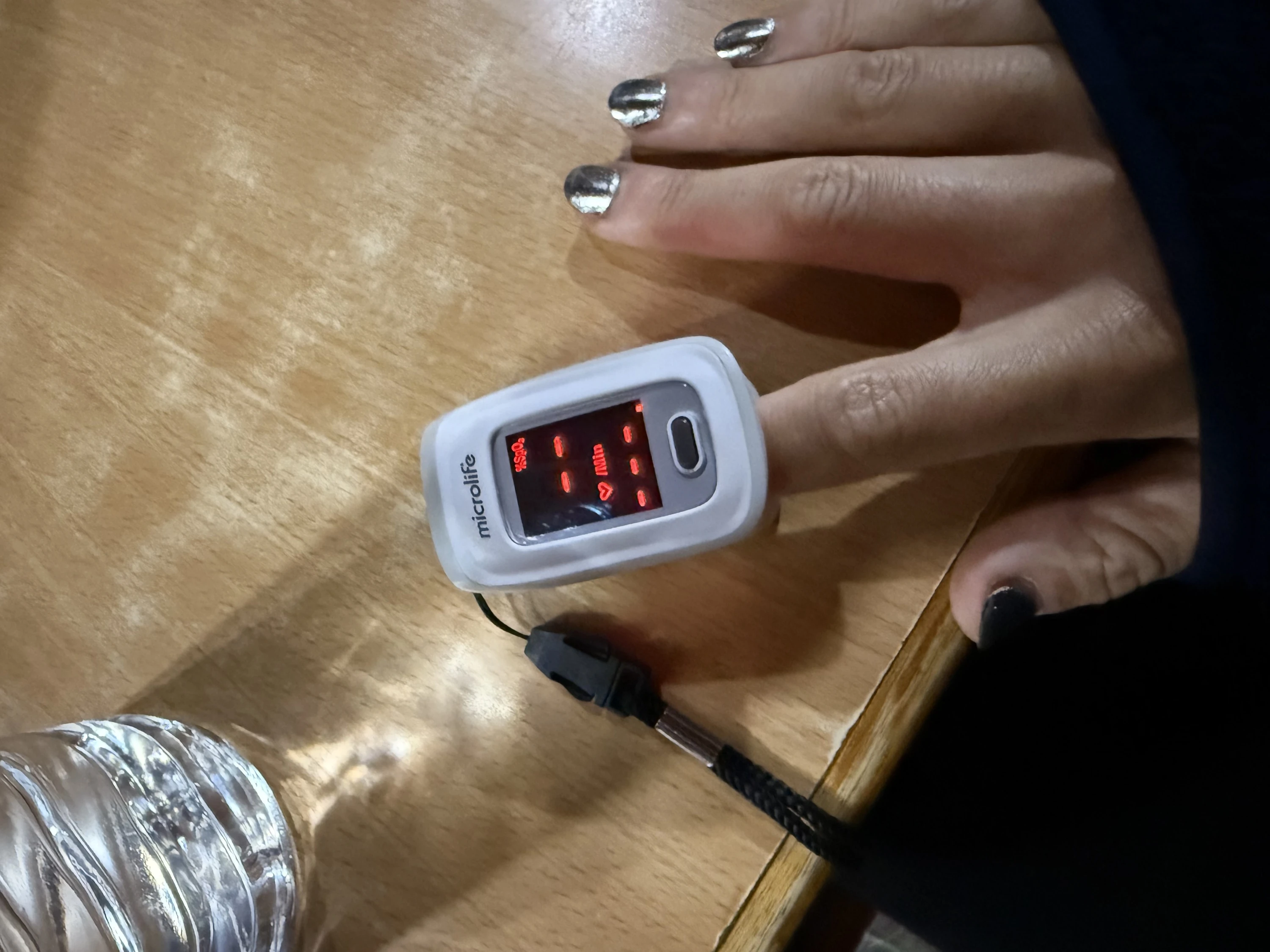
All that said, altitude affects everyone differently. While I experienced only a few headaches and some disrupted sleep, others in my group weren’t as fortunate. Some dealt with vomiting and severe headaches despite taking medication, particularly during the second acclimatisation hike, which reached around 5,100 metres. Monitoring your oxygen levels daily is essential, especially as you approach base camp. We did this each morning with our guide using a pulse oximeter.
It’s also worth preparing for how physically draining the experience can feel. Mornings often start with stiffness and the general discomfort that comes with limited sleep (I averaged about five hours a night). Showers become less frequent, and much more expensive, the higher you climb: I limited myself to two showers across the 12 days, paying 500 rupees for a hot shower in Namche Bazaar on the way up and down, which felt like pure luxury. After several days without a proper wash and wearing the same clothes, it’s easy to feel a bit groggy – but a quick stretch and a wipe-down in the morning can make a surprising difference. Chances are, once you’re out there in the beauty of the mountains, those feelings will soon fade.
I’m telling you now: it really does get freezing up there. We were incredibly lucky to avoid rain, snow and storms for the entire trip, but temperatures still dropped to as low as minus 20°C on some days. On the last two nights before reaching base camp, I slept in two pairs of heat-tech thermals, plus a puffer jacket and a sleeping bag (both provided by the tour), along with a beanie, gloves, and a buff scarf I picked up in one of the small towns along the way. You’ll wake up seeing your breath and even your toiletries can freeze solid – it’s all part of the experience, but definitely makes late-night bathroom trips less appealing. I’d highly recommend bringing heat-up hand warmer sachets to tuck into your sleeping bag at night.
For the trek itself, there were a few things I wish I’d packed. An old iPod with pre-downloaded music, plus wired headphones, would have been ideal for long walking days when you want to conserve your phone battery. The higher you go, the more you’ll pay to charge devices, and Wi-Fi or signal becomes increasingly limited (I paid 1,600 rupees for 48 hours on around day five). Small pre-wrapped packs of tissues for toilet paper, a good SPF lip balm (I found my lips became extremely dry), sun cream, electrolytes, earplugs, an eye mask and your favourite cereal bars are all incredibly useful. That said, try not to overpack. If you’re using porters (more on that below), your main bag will need to stay under 12kg, so you’ll have to be selective. A good tip: save souvenir shopping for the final day.
You’ll find plenty of outdoor gear available to buy in tourist shops in Kathmandu. While these are usually affordable and can be perfectly adequate (I picked up a breathable long-sleeve top and convertible hiking trousers), the brands are often knock-off versions of the likes of Arc'teryx and North Face. The quality may not match official retailers, which can be important when it comes to waterproofs, warmth and protective gear in extreme weather.
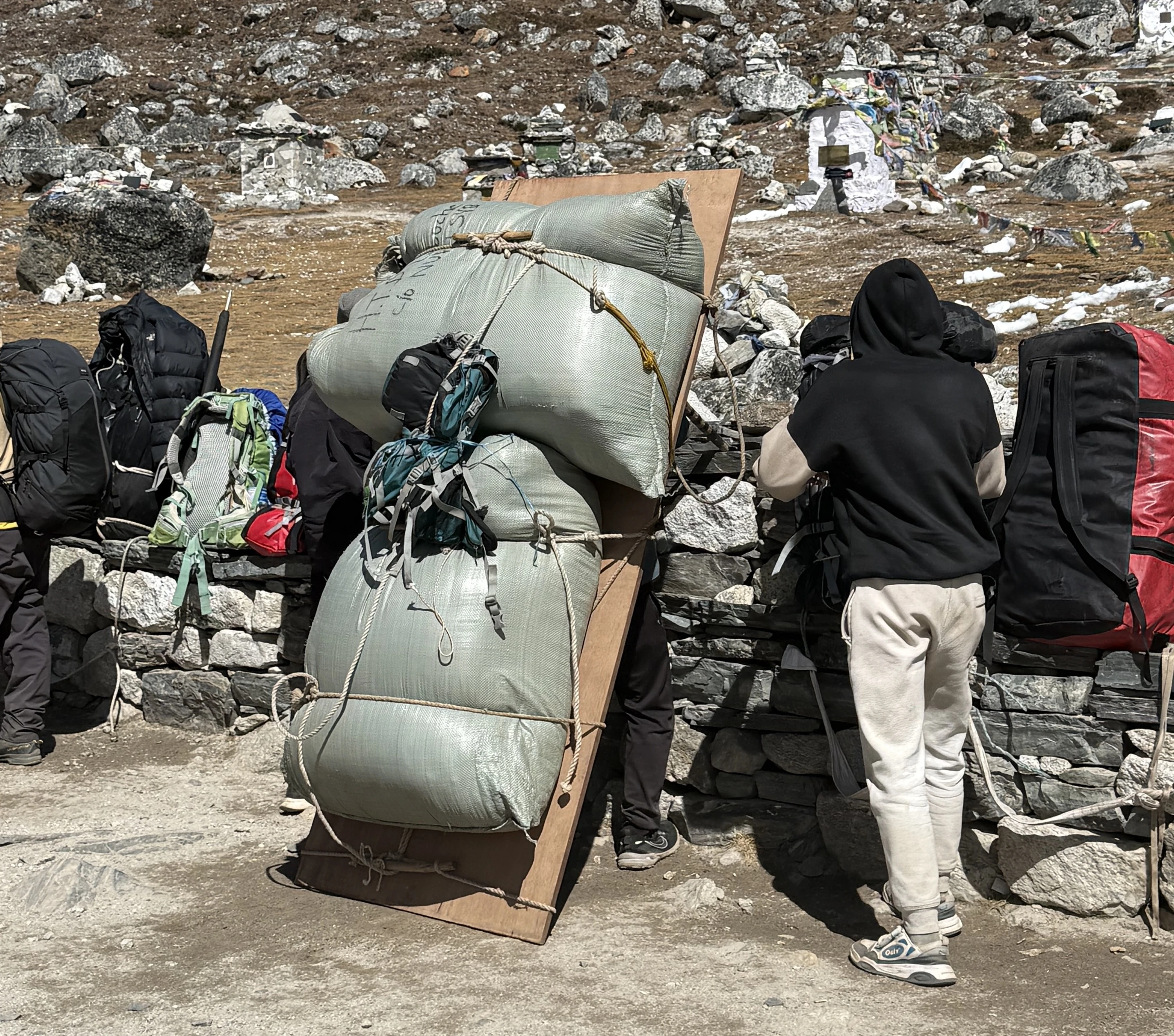
The porter system that underpins this trek is, in many ways, complex. Chances are, like our group, you’ll be relying on porters to carry your main kit between overnight stops, usually in a duffel bag, while you hike with a smaller backpack with your day kit. And even if you do choose to carry everything yourself, it’s impossible to fully opt out of the porter economy; the entire route has been built on it and continues to depend on it.
Along the trail, we saw porters carrying everything from beer barrels to large planks of wood and even fridges, strapped to their backs with head supports. Tourism here provides essential income and opportunity for locals, yet working conditions can be tough and the pay is often low. Because of this, it’s important to budget for tipping and do your research. We tipped our lead guide $280 US dollars, our assistant guide $250, and each porter $230, who were all employed by a Nepalese company (Nepal High Trek) via our tour operator.
Our guides and porters were fantastic. Our senior guide had been leading treks since 2009, often completing the route multiple times a year, and knew everything (including when we all needed a boost of morale). He explained that becoming a lead guide takes years of experience, usually starting as a porter, then working as an assistant guide for around seven years, learning multiple trekking regions and passing an exam. Before that, many spend at least a couple of years carrying loads themselves: he told us he once carried 118kg for several hours up the route.
On average, porters earn around $20 a day, but since they usually have to also cover their own food and accommodation along the route, their take-home pay can be closer to $10. Many take on this work seasonally, especially during holidays like Diwali, which was happening during our trip, to save for further education. To maximise earnings, they may work back-to-back expeditions with little rest in between, carrying loads of 20 to 25kg (often two trekkers’ bags) for the duration of the route. The porters are truly superhuman: they can complete a day’s worth of walking in as little as three hours, usually picking up your bag in the morning and speed ahead.
Plotpackers and Nepal High Trek claim that their guides and porters are permanently employed, offering more stable, year-round work rather than relying on short-term contracts. They also emphasise strict weight limits, with a stated maximum of 20kg per porter, though in reality, the load seemed closer to 25kg each.
Conditions vary. In our group, the youngest porter was 16 years old, but some porters begin working from as young as nine or ten, sometimes carrying significantly heavier loads without proper gear. There are few formal regulations, and pay is often tied to distance and weight carried. Being aware of this reality, while supporting fair operators and tipping generously, goes a long way when engaging with this system.
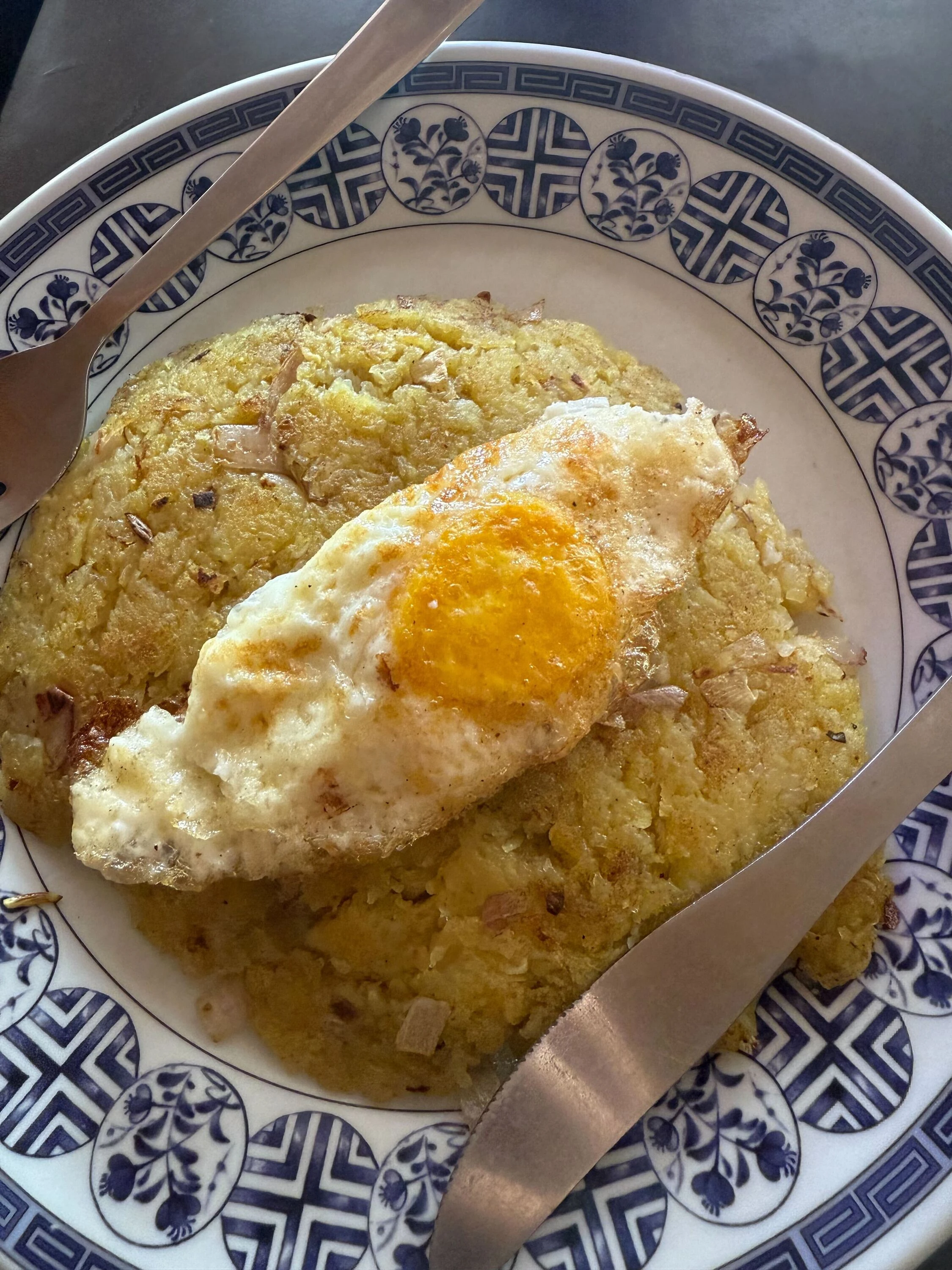
You’ll find that the same items appear again and again on menus. For breakfast, I usually order an omelette with toast, a pancake, a potato rosti with egg (my personal favourite), or porridge, washed down with a coffee and a cup of hot lemon ginger tea, which quickly became a daily essential in the cold. For lunch and dinner, I usually opted for spicy momos, fried rice, noodles, soups, dhal bhat or fried potatoes, and ate strictly vegetarian, as a precaution against getting sick.
Many tea houses offer western food, too, such as pasta and pizzas, though the quality varies. Our guide also brought out fresh fruit like apples and oranges each evening, which felt like a real luxury at altitude. Top tip: if you order the dhal bat, most tea houses offer free refills, which is always appreciated when you’re burning that many calories. Oh, and anything labelled ‘yak burger’ or ‘yak steak’? Almost always buffalo. Yaks are closely related to cows, which are widely considered sacred in Nepal, so they’re not typically eaten.
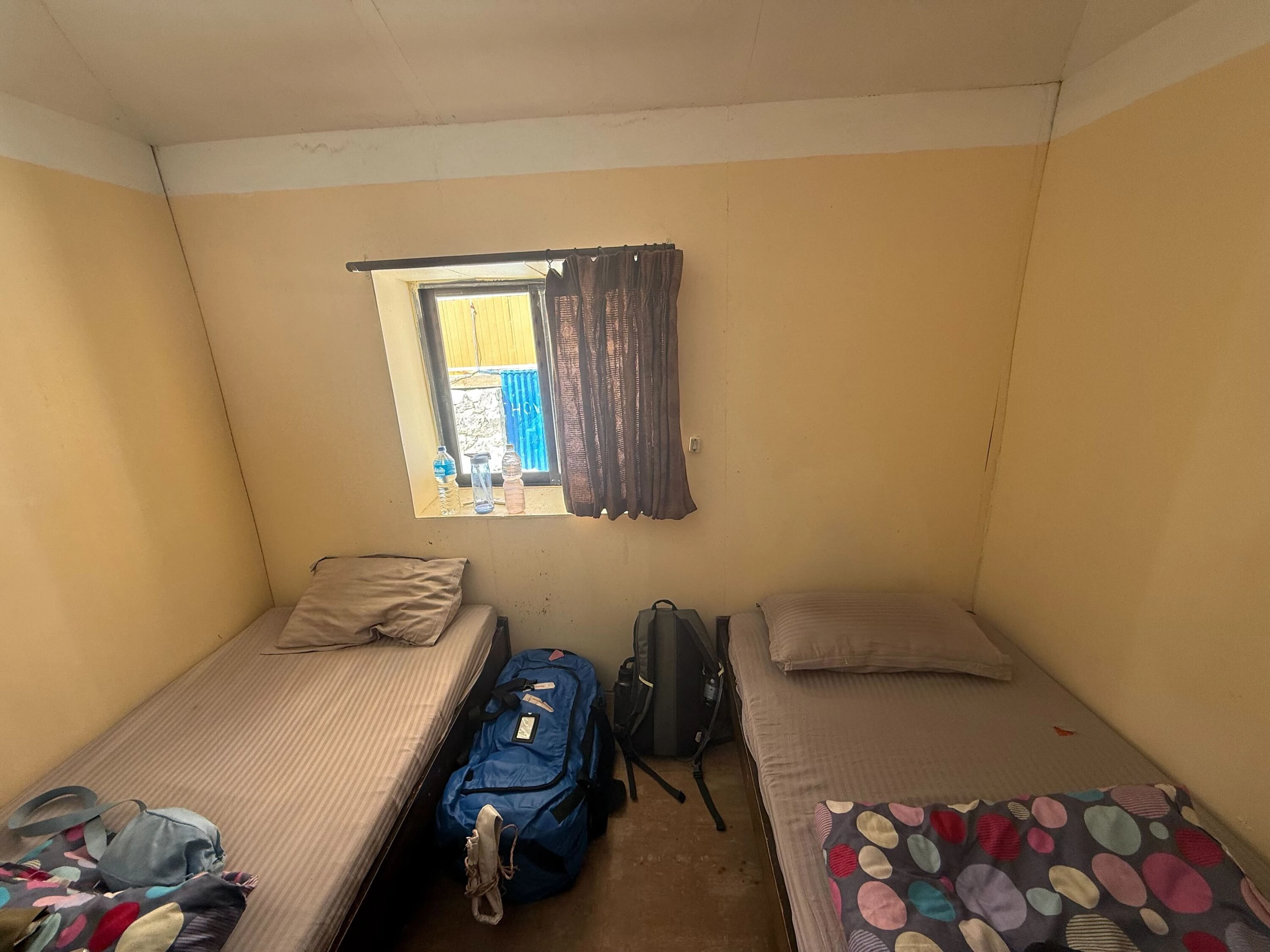
While luxury accommodation is growing in the region, most people doing the walk will spend their nights in simple teahouses, usually sleeping in a room of two to four basic beds with dining rooms warmed by a central stove. Many of these are powered by solar and are surprisingly bustling given how remote they are.
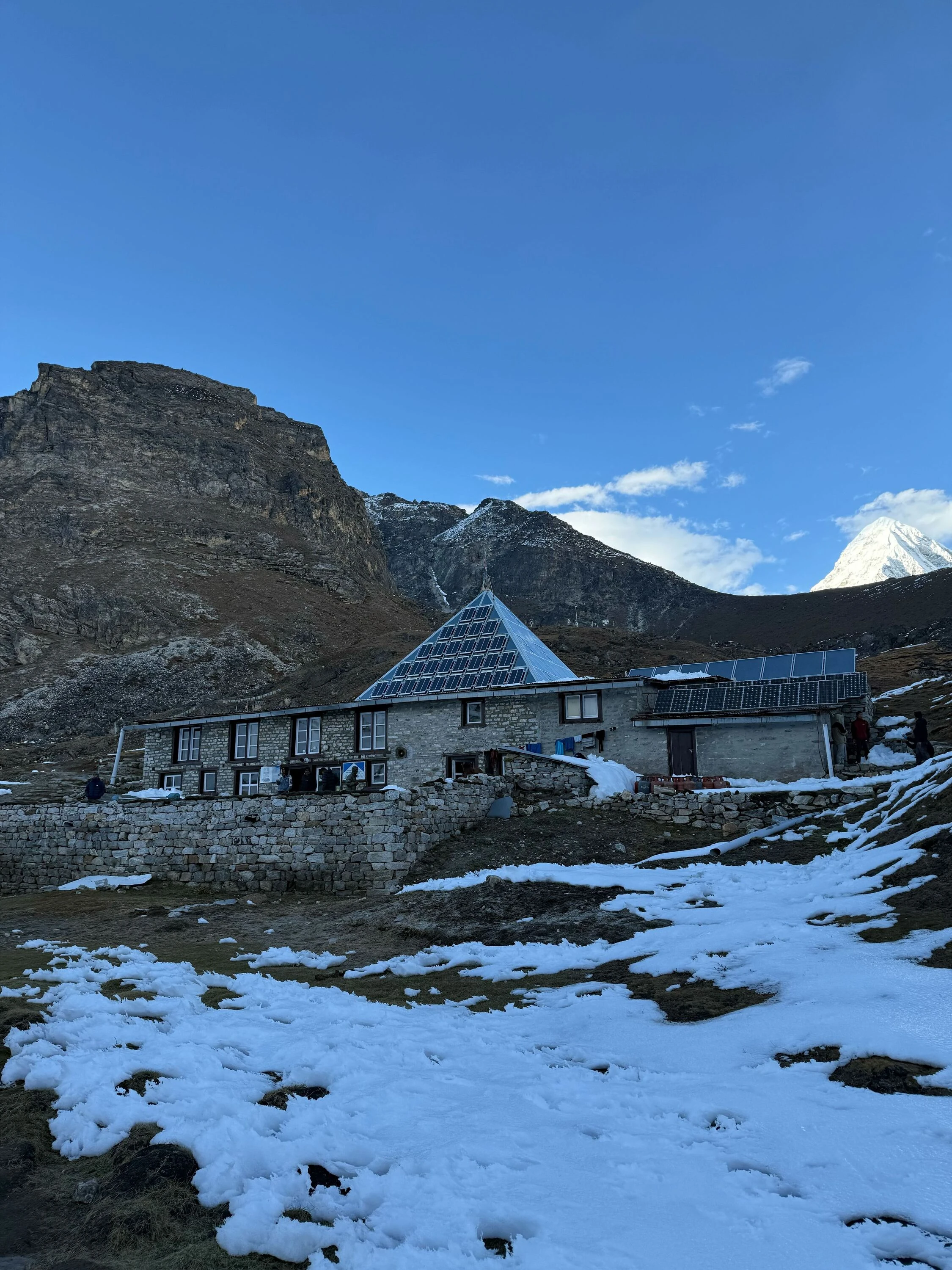
The most unusual place we stayed was near Lobuche, in the Pyramid International Laboratory-Observatory: a high-altitude research facility that offers accommodation for trekkers, which opened in 1990 as a joint venture between the Italian and Nepalese governments. Pyramid-shaped and covered in solar panels, and seemingly dropped into the complete middle of nowhere, it really does look like something from a different planet.
We were given a tour by Kaji Bista, the lead staff member who’s worked there for over a decade and essentially lives on-site. Hosting visiting research teams from around the world, the lab focuses on several areas like climate monitoring, meteorology, and seismic activity, and inside, the upstairs is packed with equipment, including microscopes, sample bottles, computers, and monitoring systems. It’s completely fascinating, and a surprising space to rest your head.
Waste management along the trail is well organised, but again, it’s not without its complexities. A key player is the Sagarmatha Pollution Control Committee (SPCC), a non-profit set up in 1991 to help manage the growing impact of tourism on the region. With around 80,000 visitors passing through each year, they oversee rubbish collection from designated bins along the route, coordinate recycling efforts and maintain many of the trails in the park.
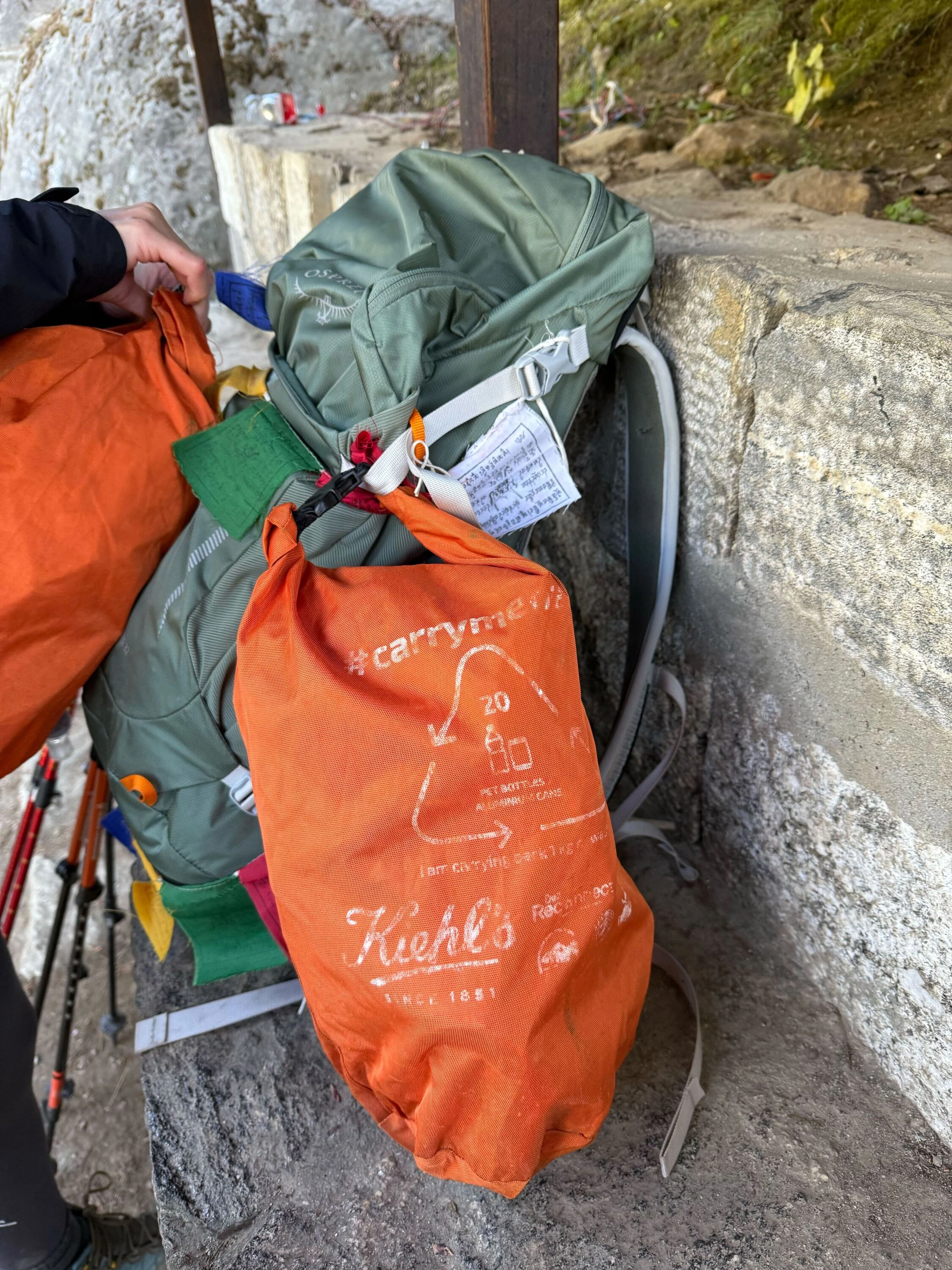
Just above Namche Bazaar, you’ll find Sagarmatha Next, a relatively new and swanky museum, café, gallery and hub run by SPCC to promote more sustainable tourism. One of their more practical initiatives is the ‘Carry Me Back’ scheme, which encourages trekkers to pick up a one-kilo pre-filled bag of waste from designated points along the trail and carry it back down with them. The waste is then transported to Lukla and flown to Kathmandu for recycling: Laxman Lama, operations manager at Sagarmatha Next, told me that airlines will often carry rubbish free of charge on flights that would be operating anyway, slightly offsetting the environmental impact.
One of Lama’s main suggestions for trekkers who want to help waste efforts was simple: to reduce your reliance on single-use plastic water bottles, because these make up a huge proportion of the waste collected. He recommends asking for boiled water at teahouses and using water purification tablets, instead.
There, I said it. Before doing my research, I’d imagined base camp as being brightly coloured tents scattered across the ice, climbers and Sherpas preparing to summit, and mighty unobstructed views of the peak itself. In reality, if you’re trekking outside of peak climbing season (most expeditions wrap up by the end of May), those tents are long gone, and you can only see a glimpse of the fabled mountain.
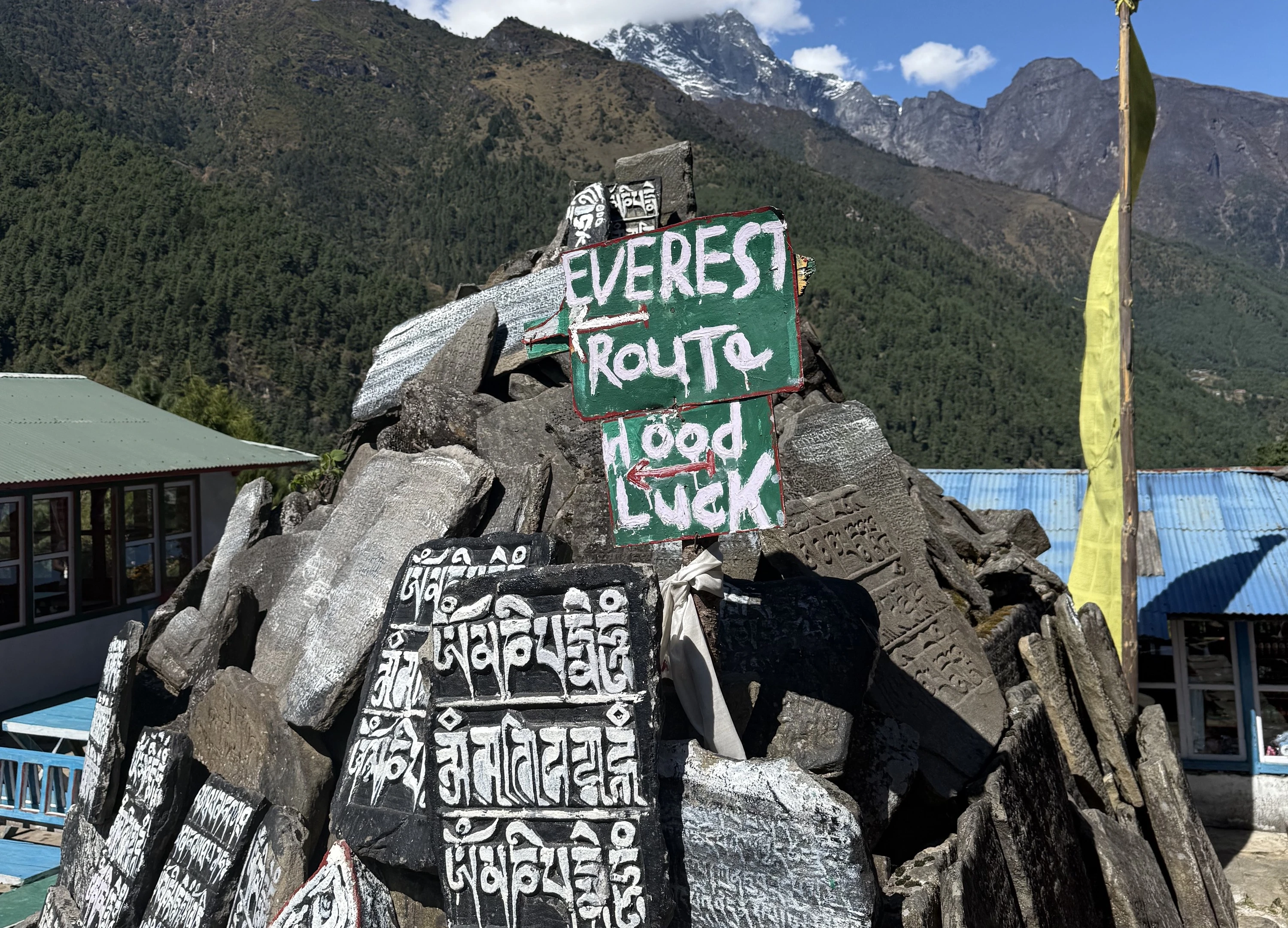
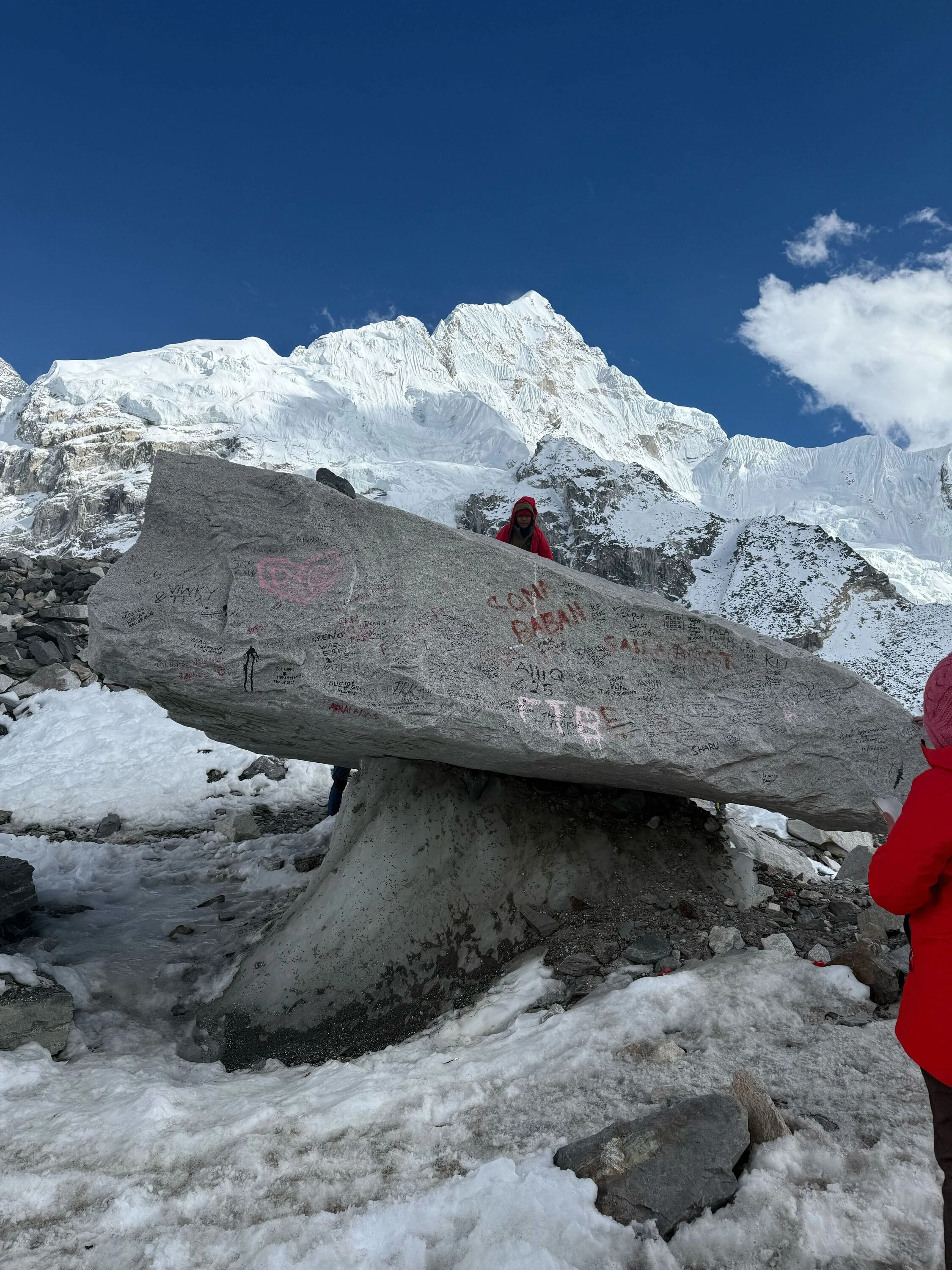
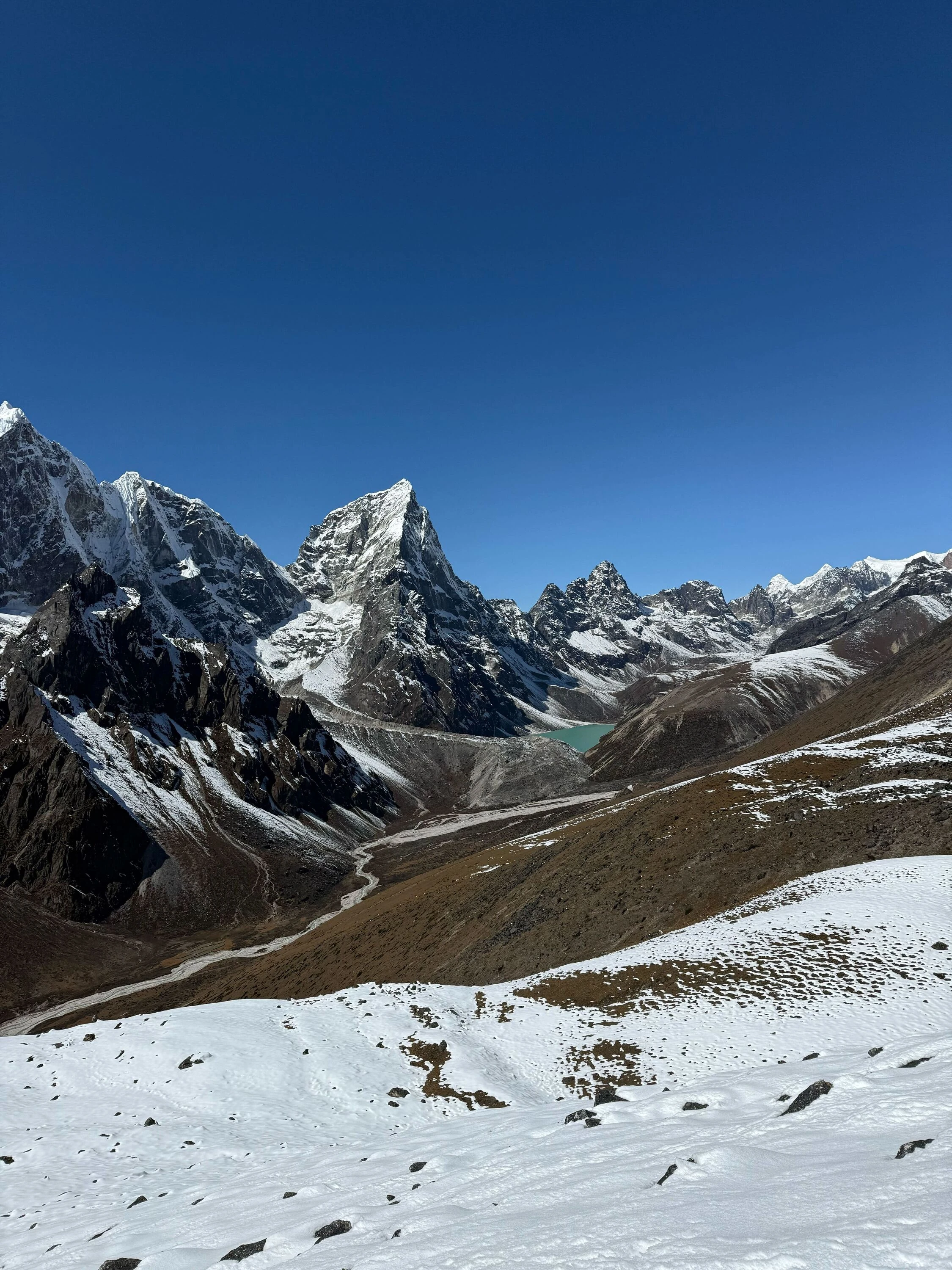
Instead, the standard route brings you to a large graffitied rock marking that you’ve made it. Undeniably, there’s a huge sense of achievement that comes with reaching this point, but I have to admit, it felt a little anticlimactic. When I was there, I counted around 50 to 60 people gathered in the same spot, all waiting their turn to get a photo: in high season, you might find yourself queuing for 20–30 minutes just to get that bucket list pic. I actually found the second acclimatisation hike up Kala Patthar, a couple of days before, far more rewarding: from there, you really get a sense of the scale of the mountains in the region, along with a surreal landscape with a turquoise glacial lake.
It sounds cliché, but this trip really is about the journey, not the destination. The days leading up to reaching base camp were nothing short of spectacular: trekking alongside the vast Khumbu Glacier, visiting the peaceful Tengboche Monastery and passing the solemn memorials dedicated to climbers and Sherpas who lost their lives on Everest. The routine, the environment and the anticipation that comes with the trek up is what stands out: reaching base camp just marks the end of that process.
Time Out travelled as guests of Plotpackers, who run group trips to Everest base camp. Our reviews and recommendations have been editorially independent since 1968. For more, see our editorial guidelines.
Discover Time Out original video