[category]
[title]
The Finke River offers a glimpse into an ancient world with towering gorges, waterholes and desert landscapes


Long before roads cut through Australia’s Red Centre and travellers set out on dusty Outback adventures, the Finke River had already carved its way through the heart of Australia. Known as Larapinta to the Arrernte people (meaning 'salty river'), this remarkable waterway is believed to be one of the oldest river systems on Earth. Scientists estimate it dates back more than 300 million years, making it older than dinosaurs.
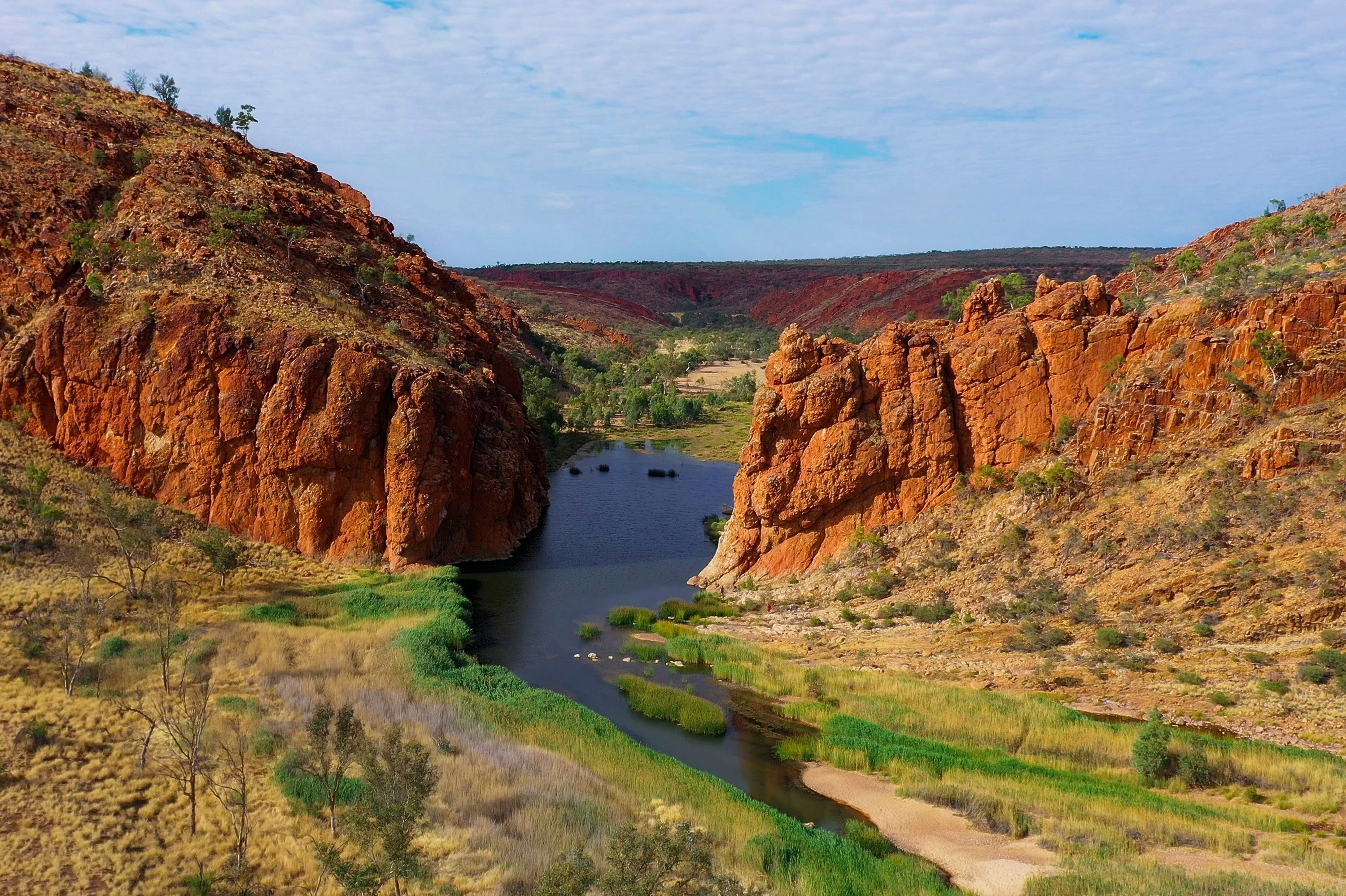
If you’re picturing a river that’s gushing and flowing through the rugged landscapes of Central Australia, think again. For much of the year, the Finke River runs dry; it looks more like a sandy bed dotted with permanent waterholes. But after heavy rains, it magically transforms the arid landscape, surging through ancient gorges and valleys and sustaining wildlife in one of the country's harshest environments.
The river runs through the stunning Finke Gorge National Park, around 140 kilometres west of Alice Springs, and if you want to reach it, you’ll need a powerful 4WD. Whether you’re exploring its towering gorges or swimming in its waterholes, the Finke River offers a glimpse into a landscape that has existed for hundreds of millions of years.
The Finke River is believed to be more than 300 million years old, making it one of the oldest river systems on Earth. Scientists think the river once flowed through a much wetter and greener Australia, before massive geological and climate changes transformed the continent into the dry outback we know today.
Over countless millennia, the river survived shifting mountain ranges, erosion, desertification and changing climates. Its ancient course has remained remarkably intact, which is why geologists consider it such an extraordinary natural feature.
The Finke River stretches approximately 600 to 750 kilometres, depending on seasonal flows and how its tributaries are measured. During flood events, water can travel enormous distances through the desert landscape. However, unlike many rivers, the Finke rarely flows continuously from start to finish. Most of the time, the water disappears into the sands of the desert it flows through.
The river begins in the MacDonnell Ranges near Mount Zeil in the Northern Territory, around a 1.5-hour drive from Alice Springs. It forms near the junction of Ormiston and Davenport creeks before winding south through Central Australia. At the tail end, the Finke River system heads towards Kati Thanda–Lake Eyre in South Australia – but this is rare. In most years, the water evaporates into the Simpson Desert long before it gets there.
Luckily for you, there are some excellent swimming spots along the Finke River. Popular waterholes include Ellery Creek Big Hole, Ormiston Gorge and Glen Helen Gorge. These waterholes are especially refreshing during the warmer months, surrounded by dramatic red cliffs and ghost gums. Water conditions can change depending on rainfall and the season, so it’s always important to check local advice before swimming.
No, there are no crocs in the Finke River (except for the ones you might wear on your feet!). Given that this river lies deep within Central Australia’s arid desert, it’s too far inland from the tropical habitats crocodiles need to survive. If you are hoping to spot a crocodile while visiting Alice Springs, your best bet is the Alice Springs Reptile Centre.
Discover Time Out original video