[category]
[title]
This is where you shouldn't swim, according to a new study by World Atlas


Snakes are one of Australia's more hardcore surprises. Our Great Southern Land plays host and native home to more than 210 snake species, with 100 of those being venomous, and just 12 of these considered to have poison that's potentially lethal for us humans. With Australia's natural abundance of arid desert, knobbly rock and dry grasslands (aka, snake heaven), it's clear that these slithery creatures are able to flourish across every corner of Australia. But, as it turns out, they're also quite fond of the water too. Sorry.
In a new study released by the folks over at World Atlas, the five most snake-infested bodies of water in Australia have been identified. So, consider this a PSA for your next great Aussie road trip.
This natural wetland in Perth is packed with a teeming population of tiger snakes. These highly venomous creatures can grow up to two meters in length and be identified by their brown, olive or black bodies that are striped (tiger-like) by pale white bands. They love the thick reeds, abundance of tiny frogs and small fish that live in Herdsman Lake, and are clearly an essential part of this vibrant ecosystem that's impressively able to operate near such an urban area.
Again, Western Australia comes through with its snakey prowess. This lake is found in Yanchep National Park, north of Perth, and is also brimming with a healthy tiger snake population. You can (from a safe distance) spot these long reptiles swimming through the shallows and sun-baking on rocks. A pretty good life, really.
Queensland is home to 120 snake species, with 65 per cent of them really poisonous. In Lake Moondarra near Mount Isa, you'll find a non-venomous, but particularly impressive snake star. Meet the sometimes four-meter-long, gigantic constrictor, the olive python. Feeding off small reptiles, birds and fish and a powerful swimmer, this water-dwelling snake became Internet famous after some harrowing footage of it swallowing a freshwater crocodile went viral. While they're not poisonous, we think it's best to stay far away from Lake Moondarra.
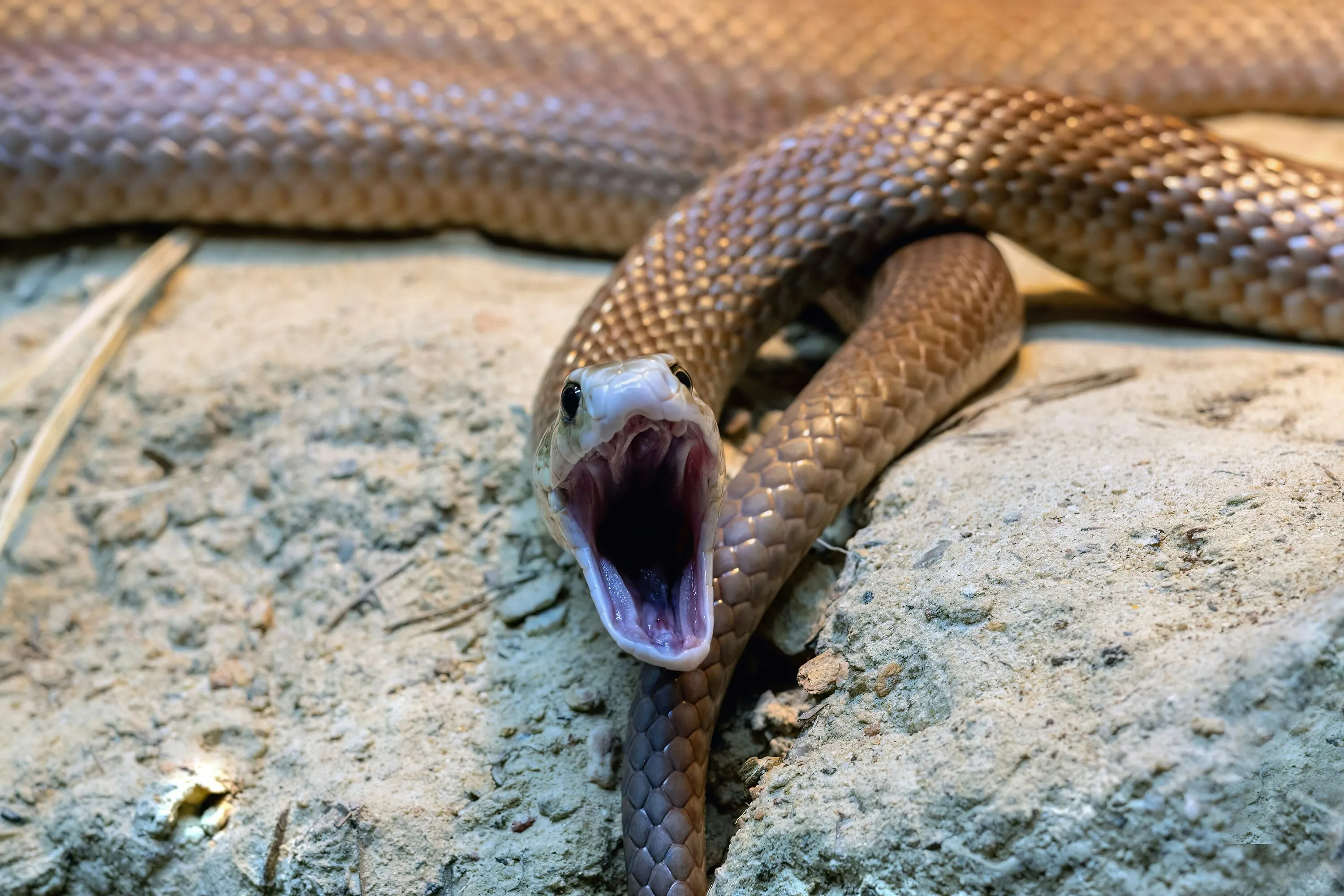
We love the Murray-Darling basin. It's the breathing bowl that holds an endless array of life, and in many ways, all of ours too. Rich with wildlife and a vital series of ecosystems, it's also home to essential predators, including a variety of snakes. In South Australia's Lake Alexandria, you'll find an impressive number of tiger snakes and eastern browns. These fast-moving, freshwater dwellers are some of the most poisonous in the world and can grow to up to two metres. Eastern brown snakes are sadly responsible for the most snake-bite-induced fatalities in Australia, and are known to be very aggressive. So, best to steer clear if you see one out and about.
Snakes like the sea too. In the salty waters off Carnac Island in Perth, researchers have estimated that you'll find three tiger snakes for every 25 meters of habitat on the island. They were introduced to the island in the 1930s, and with no natural predators to bring them down, their population boomed. Tiger snakes love eating seabirds and their eggs, and are basically the supreme rulers of Carnac. Probably wouldn't vote for them in a local election though.
All in all, snakes are an essential part of the Australian ecosystem. Despite posing a legitimate threat to human safety when provoked, it's important to remember that snakes were here long before any of us. Our health and well-being genuinely rely on their existence, with all of us interconnected in the same food chain. We must respect them and leave them be. It's their home too.
Discover Time Out original video