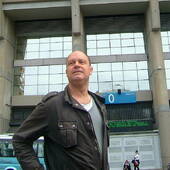

Corvin cinema, Budapest
Peterjon Cresswell/Time Out | Corvin cinema, Budapest
Peterjon Cresswell/Time Out

Budapest’s best cinemas

These classic picture palaces, most at least a century old, still form part of the filmic landscape of Budapest

Peterjon Cresswell
Advertising

One of cinema’s earliest pioneers, Budapest prides itself on its historic picture houses, which still offer affordable entertainment in atmospheric surroundings. This autumn, the Puskin celebrates its centenary with two months of classic features. Films – Once Upon a Time in America, Spielberg’s Duel – are being screened in original language, with Hungarian subtitles. At the same time, between October 24 and November 1, the English-friendly Budapest International Film Festival is being hosted at another heritage landmark, the Corvin, which opened as the city’s most beautiful cinema in 1922.

While the Corvin has always operated under the same name, film theatres such as the Bem (opened in 1908), Művész (1909), Art+ Cinema (1912) and Uránia (1916) have been known as Adria, Décsi, Vesta and Alhambra respectively, name changes reflecting the differing political landscape.

These independent cinemas are still very much going concerns, despite the arrival of multiplexes decades ago. Most post their schedules on their own English-friendly websites, as well as on the Hungarian-only Artmozi website, titles and timings relatively easy to work out. Angol felirattal is with English subtitles, szinkronizált dubbed. Ticket prices are usually around Ft 3,000 (€8).

RECOMMENDED:

The best ruin bars in Budapest

The best things to do in Budapest
The best nightlife in Budapest

Peterjon Cresswell is a writer based in Budapest. At Time Out, all of our travel guides are written by local writers who know their cities inside out. For more about how we curate, see our editorial guidelines.

Time Out Market Budapest

Uránia

What is it? The Uránia National Film Theatre, to give this legendary picture house its full title, is the doyen of Budapest cinemas.  Created as a cabaret venue in partly Moorish style by Hamburg architect Henrik Schmahl in the 1890s, it was given over to film from 1916 onwards. Overhauled in more recent times, the Uránia has a main hall holding 460 people in ornate surroundings.

Why we love it When there’s a major filmic event in town – such as the Hungarian premiere of Oscar winner The Brutalist in 2024 – the grandiose Uránia provides the perfect setting for the occasion. Schmahl’s interior detail, as fashioned shortly after he worked on the Opera House with Miklós Ybl, still dazzles.

Time Out tip: The upstairs café at the Uránia is an elegant destination in its own right, whether you’re here to watch a film or not.

Address: Rákóczi út 21, 1088 Budapest

Transport: M2 Astoria or Blaha Lujza tér; bus 5, 7 & 8E Uránia

Bem

What is it? A historic cinema, opened on the Buda side of Margaret Bridge in 1908, which effectively folded a century later but was revived by a passionate Hungarian film buff around 2016. Taking inspiration from independent cinemas abroad, particularly in English-speaking cities, the Bem programmes classic features in their original language every night of the week in an atmospheric theatre, cosy and unadorned.

Why we love it When the Covid lockdown hit Hungary, and the revered Bem was threatened with closure, regulars rallied round and chipped in to save it. Since then, the Bem has been back in business, showcasing essential Hungarian films with English subtitles and recent indie hits.

Time Out tip: The bar, now at the gateway to the trendy Margit Quarter, is always buzzing, tables filling the lobby area with lively chatter and spilling out onto the street.

Address: Margit körút 5, 1027 Budapest

Transport: Tram 4/6 Margit híd, budai hídfő

Advertising

Művész

What is it? Long a champion of independent film, this classic theatre on the Nagykörút expanded in the early 1990s to comprise five screening rooms, each named after a cinematic legend.

Why we love it The Művész is the kind of place to schedule a Slovenian film festival, a Willem Dafoe season or the latest Wes Anderson work, screened to a knowledgeable audience in an arty ambience.

Time Out tip: Look out for great festivals throughout the year, most notably the Arthouse Cinema Night every May, that shows high-quality international features in original language until the next day.

Address: Teréz körút 30, 1066 Budapest

Transport: M1 and tram 4/6 Oktogon

Toldi

What is it? One of the most central of Budapest’s historic cinemas opened in 1932, and doubled up as a top nightspot in the 1990s. It continues to showcase sought-after international releases, many with English and/or Hungarian subtitles, film fans treated to an expansive, comfortable bar before or after the screening.

Why we love it The Toldi remains a convivial place to watch the latest cult screen hit within a relatively short time of being shown in Paris, Berlin or London.

Time Out tip: Take a look at the body-length memorial by the main door, created in honour of the Ramones. It was in this house that Tamás Erdelyi, aka Tommy Ramone, spent his first seven years before his family escaped to the States to settle in Forest Hills, Queens, New York.

Address: Bajcsy-Zsilinszky út 36-38, 1054 Budapest

Transport: M3 Arany János utca

Advertising

Corvin

What is it? A landmark venue that sits on its namesake corner at a major junction in town, where the Nagykörút and Üllői út meet. Opened as a gorgeous film palace in 1922, the Corvin was adapted for widescreen projections as early as 1957 and has long been a multiscreen cinema. It’s also the main host of the Budapest International Film Festival.

Why we love it Conveniently located, the Corvin has six screening rooms, each named after a Hungarian film legend, allowing for a wide-ranging agenda, many features shown in English with Hungarian subtitles.

Time Out tip: Take a look at the statue immediately outside the cinema – the boy in the cap holding a rifle is the Pesti srác, who represents all the youngsters who picked up a weapon to face Soviet forces during the 1956 Uprising. This spot, opposite the former Kilián Barracks, where the Hungarian National Guard was created, was a major flashpoint during the revolution.

Address: Corvin köz 1, 1082 Budapest

Transport: M3 and tram 4/6 Corvin-negyed

Puskin

What is it? Currently celebrating its centenary, the former Fórum was the first Budapest cinema to screen talkies three years later. Renamed Puskin after the Soviet takeover of 1949, it became a three-screen theatre in 1988 and is a major venue when it comes to film festivals.

Why we love it With all films shown in original language, close to the Astoria crossroads in the centre of town, the Puskin is a reliable choice for an evening at the movies in old-school surroundings with original decorative features.

Time Out tip: The coffeehouse at the Astoria Hotel diagonally opposite is a Budapest classic, where the first independent Hungarian government convened in 1918.

Address: Kossuth Lajos utca 18, 1053 Budapest

Transport: M2, tram 47/49 & bus 5, 7 and 8E Astoria

Advertising

Kino Café

What is it? Revived as a cinema a decade or so ago after closing to become an out-and-out café in 2012, this arthouse stalwart can claim a filmic history dating back to the early 1900s. Dedicated to Hungarian cinema in the 1980s and 1990s, Kino now has a regular schedule of English-language features.

Why we love it With its terrace café still in operation, this is a classic European cinema, slightly underground, appealing to an arty crowd who can easily hop the tram a few stops to some of the city’s top party spots.

Time Out tip: Next door, the Vígszínház (Comedy Theatre) presents many of its productions with English surtitles, the current schedule including Chekhov, and dramatisations of Jane Austen, Franz Kafka and F Scott Fitzgerald.

Address: Szent István körút 16, 1137 Budapest

Transport: M3 and tram 4/6 Nyugati pu

Art+ Cinema

What is it? A lesser-known cinema on the Nagykörút – you can almost pass it and not realise what it is. Opened way back in 1912, 100 metres from where the Lumière brothers screened their moving pictures at the Hotel Royal (now Corinthia) in 1896, this theatre was only recently converted into an arthouse favourite. As a nod to history, its café is called Lumière. Before, it specialised in children’s films and for most of the post-’89 era was known as the Örökmozgó, screening vintage features.

Why we love it Film buffs love this place as the cinema has a real eclectic programme with much shown in original language, with admission considerably cheaper than at theatres attached to the Artmozi network.

Time Out tip: Now the five-star Corinthia, the former Hotel Royal occasionally puts on film events where the Lumière brothers staged their first presentation outside France, the year the hotel opened in 1896.

Address: Erzsébet körút 39, 1074 Budapest

Transport: Tram 4/6 Wesselényi utca/Erzsébet körút, M2 Blaha Lujza tér

Advertising

Tabán

What is it? Local film lovers had to fight hard to preserve this cinema, the first to open on the Buda side in 1911, and revive it as a going concern in the Artmozi network. Almost going under in the 1990s, it folded for a short while in 2013 before becoming a rare arthouse outpost over the river.

Why we love it With all screenings in original language and plenty to see in English, the Tabán also shows the latest Hungarian films with English subtitles, allowing local expats to keep up with the many interesting happenings in the domestic industry.

Time Out tip: The cinema overlooks a little-visited park, Horváth kert, dotted with statues honouring Haydn and Chopin, and featuring a little-known bakery/confectionery, the Dobay, which serves exquisite cakes, great coffee and top ice cream.

Address: Krisztina körút 87-89, 1016 Budapest

Transport: Bus 5 Alagút utca, Bus 16 & 105, tram 56 Krisztina tér

Recommended
    Latest news
      Advertising