

[image]
[title]Buenos Aires can also be read. Its streets, squares, cafés, bookstores and museums appear time and again in the pages of some of our writers and, when we close the book, they are still there, waiting to be explored in a different way. That's why we've put together a selection of books and places that tell the story of Buenos Aires from different perspectives.
To celebrate Reader's Day, this guide invites you to read Buenos Aires in a different way: through the books and places that are part of its literary history. Four books that turned the city into a character and six corners where that literature can still be felt, from Tribunales to San Telmo, through Recoleta and Palermo. An invitation to look at the streets, bars and libraries through a reader's eyes.
Reader's Day: The Books and Places That Tell the Story of Buenos Aires
From Borges to María Luque: five books that portray Buenos Aires from different perspectives. Novels, poems and stories that turn the city into much more than a backdrop and tell the story of its streets, neighborhoods, characters and memories. Because there are many ways to read Buenos Aires: from nostalgia and melancholy to mystery, art and everyday life. These books each build, in their own way, a literary city that continues to change while preserving its stories.
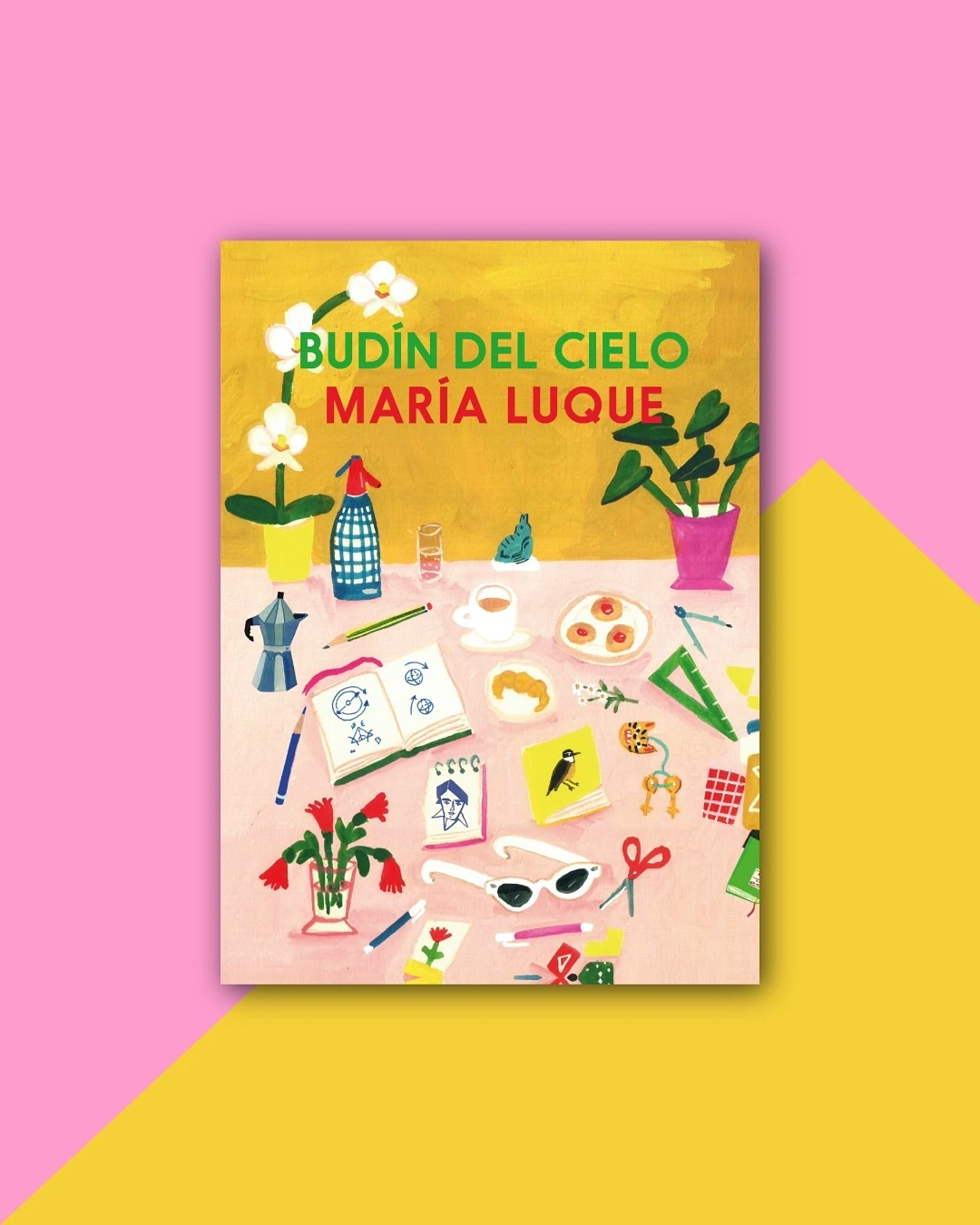
Budín del cielo, María Luque
In Budín del cielo, María Luque tells the story of Rosa, a retiree who lives alone, cooks, remembers old loves and finds beauty in the little things: a conversation with her neighbor, memories of her students or the possibility of talking to flowers and birds. With colorful drawings and a story without major conflicts, Luque creates an endearing character who looks at Buenos Aires with curiosity and tenderness.
Buenos Aires' squares are part of this everyday, bright universe, along with the trees, birds, walks and those small scenes that often go unnoticed. Buenos Aires thus appears as a welcoming landscape, where beauty can also be found in simply stopping to observe what is happening around you.
La pregunta de sus ojos, Eduardo Sacheri
In La pregunta de sus ojos, a retired court official revisits a murder that landed on his desk 30 years earlier and that he was never able to forget. Between an investigation, a love that was left unspoken and an Argentina shaped by political violence, the novel delves deep into the labyrinths of Buenos Aires' justice system.
Much of the story takes place around Tribunales, with the Palace of Justice and Plaza Lavalle forming part of the landscape of offices, case files and secrets that defines the novel's atmosphere.
El nervio óptico, María Gainza
An unclassifiable book that blends art, memory and intimacy. In each chapter, María Gainza begins with a work of art or the life of an artist —such as El Greco, Picasso, Toulouse-Lautrec or Courbet— to also tell something about her own story, her family and Buenos Aires. Illness, loss and the passage of time emerge among paintings and memories, offering a personal perspective on art and life.
Buenos Aires is also part of this universe, in dialogue with the museums, works and artists that run throughout the book. The National Museum of Fine Arts and the National Museum of Decorative Arts thus appear as spaces that connect the city with this reflection on art, memory and the stories hidden behind each painting.
Sobre héroes y tumbas, Ernesto Sábato
Sobre héroes y tumbas is one of the great Buenos Aires novels of the 20th century: the love story between Alejandra Vidal Olmos and Martín unfolds against the history of a Buenos Aires shaped by politics, memory and family ghosts.
Sábato turns the city into much more than a backdrop: its streets, neighborhoods and buildings accompany the characters' journey and give the novel its dark, deeply Buenos Aires atmosphere. Parque Lezama and the southern part of Buenos Aires occupy an important place in the novel's universe, portraying a city marked by melancholy, mystery, decay and traces of the past.
Fervor de Buenos Aires, Jorge Luis Borges
The first book published by Jorge Luis Borges, in 1923, is also a declaration of love for Buenos Aires. In his poems, the quiet streets of the neighborhoods, courtyards, entrance halls and a city observed by the writer through memory come to life, caught between nostalgia for what once was and the feeling that it is changing forever.
Recoleta, Plaza San Martín and neighborhood streets appear as part of that intimate, quiet and still somewhat domestic Buenos Aires that Borges turns into literary material. In Fervor de Buenos Aires, the everyday —a sidewalk, a courtyard, a tree, an entrance hall— takes on a poetic dimension and becomes part of the city's memory.
Buenos Aires' Literary Route
Buenos Aires can also be read in its cafés, libraries and bars, where writers, poets and artists left behind stories that are still part of the city. From Café Tortoni to Varela Varelita, these places preserve a piece of Buenos Aires' literary life. Five stops to discover the tables, buildings and corners where literature also made history.
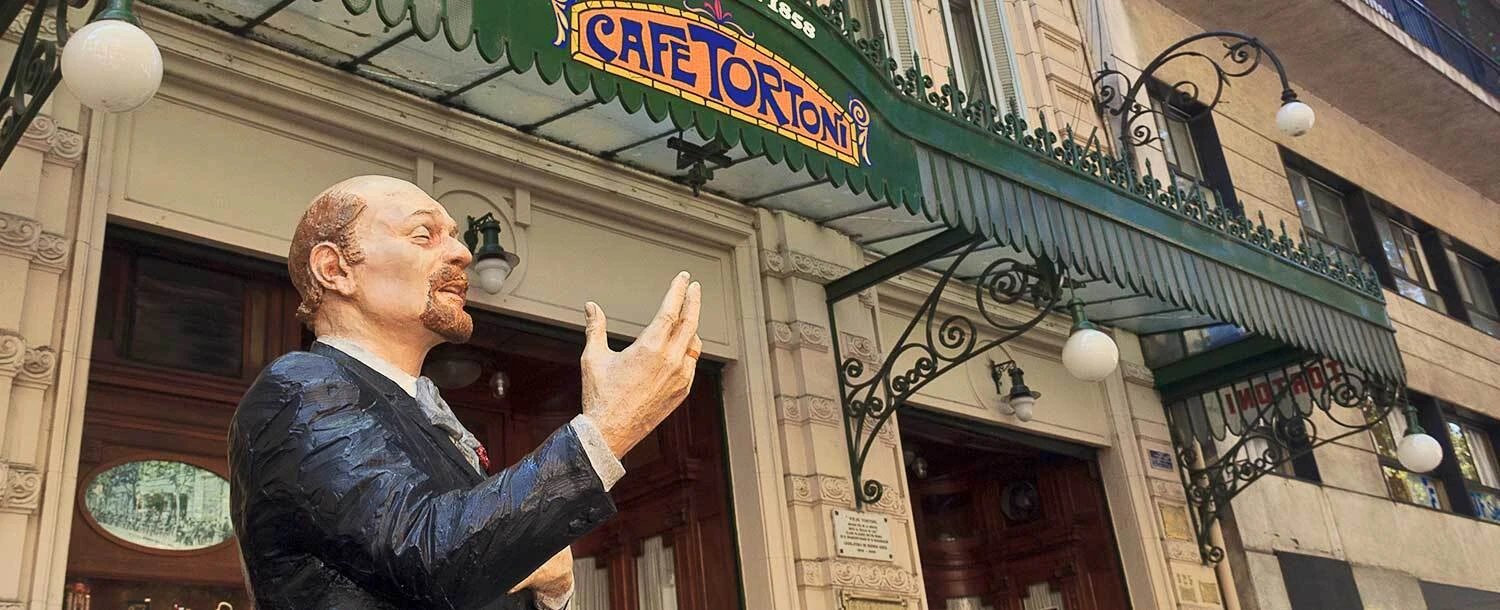
Café Tortoni
Café Tortoni is one of those places where Buenos Aires' literary world seems to still be sitting at the table. Writers such as Jorge Luis Borges, Julio Cortázar, Federico García Lorca and Luigi Pirandello passed through its rooms, and for decades it served as a meeting point for intellectuals, artists and figures from Buenos Aires' bohemian scene.
More than a historic café, Tortoni is part of Buenos Aires' literary map: a place to sit down, order a coffee and think about all the writers who once made these tables part of their own stories.
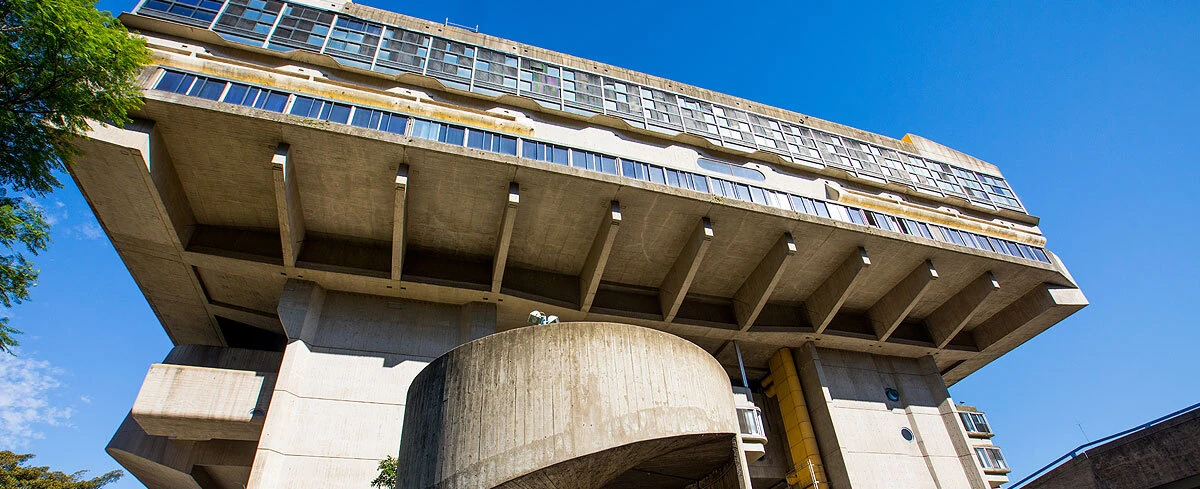
The National Library
The National Library is much more than a place to go and read: it is one of the great landmarks on Argentina's literary map. Founded in 1810, it preserves part of the country's printed memory and houses books, manuscripts, archives and publications that make it possible to trace the different eras of Argentine literature.
It has also had some of the most important figures in Argentine letters among its directors, including Paul Groussac and Jorge Luis Borges, who headed the institution between 1955 and 1973. Today, its imposing Brutalist building in Recoleta invites visitors to step into a universe of books, authors and stories that form part of Buenos Aires' cultural memory.
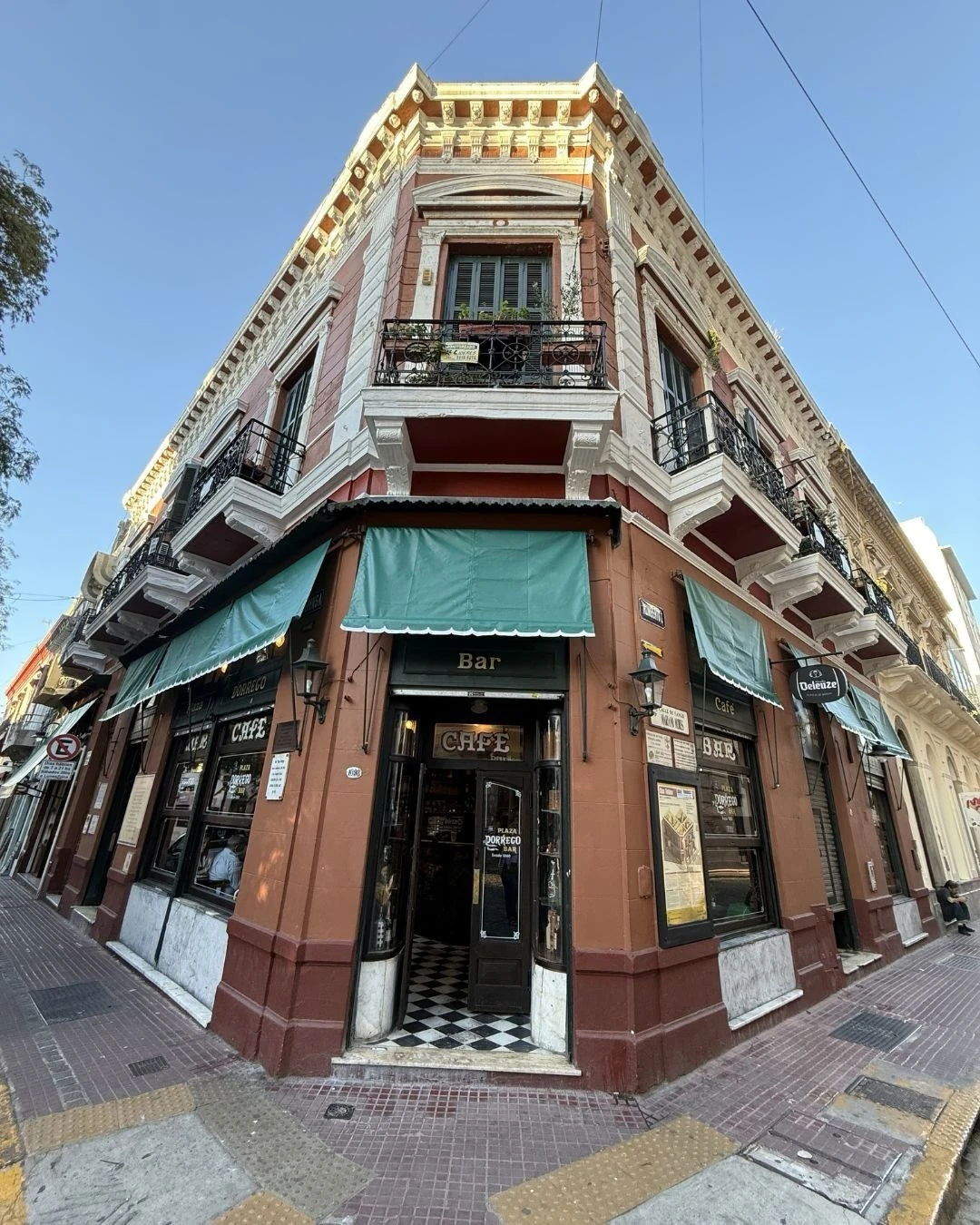
Bar Plaza Dorrego
This historic bar in San Telmo was closed for five years, including two years of restoration, and reopened three months ago on one of the city's most iconic corners. Its story began in 1880, when the general store El Imperial operated in the Altos de Besio building. Over the years, it became a bar and became forever linked to the history of Plaza Dorrego.
For decades, its tables were a meeting point for figures from tango and the visual arts, including Antonio Berni, Ernesto Deira, Luis Felipe Noé, Carlos Gorriarena, Alberto Heredia, Marta Minujín and Álvaro Castagnino. Goldsmith Juan Carlos Pallarols, whose workshop operates in the building, was also a regular. But its most famous episode took place when Jorge Luis Borges and Ernesto Sábato reunited there after twenty years without speaking to each other. A photograph of that encounter traveled around the world and ultimately turned this corner of San Telmo into part of Buenos Aires' cultural history.
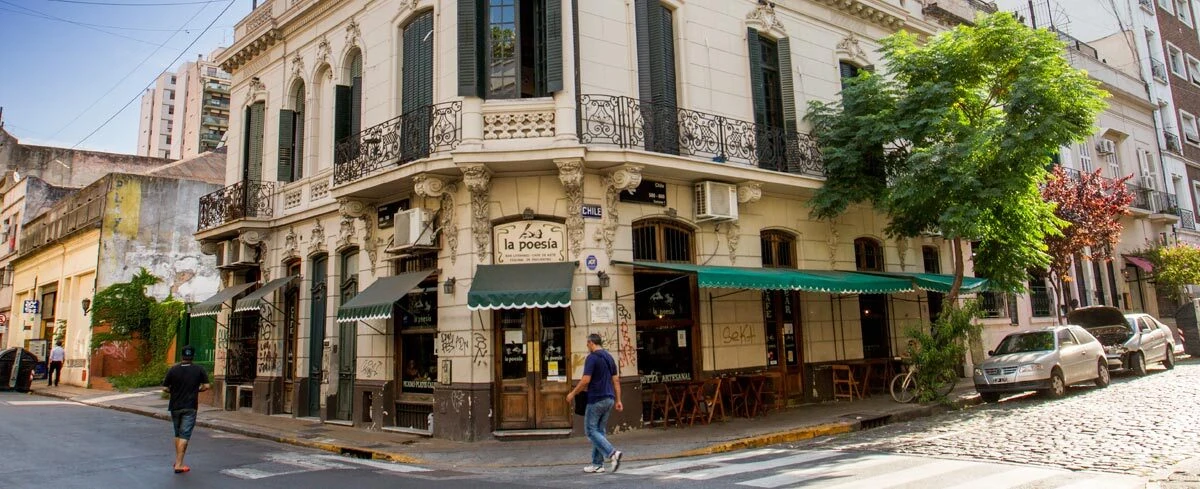
Café La Poesía
A literary café in San Telmo, founded in 1982 by poet Rubén Derlis, which soon became a meeting point for writers and artists. One of its regulars was Horacio Ferrer, author of Balada para un loco and Chiquilín de Bachín, who even wrote the poem Lulú there.
A gallery features 120 portraits of Argentine writers, along with plaques and photographs commemorating other poets and artists who passed through its tables. A San Telmo classic where literature remains part of the scene.
Varela Varelita
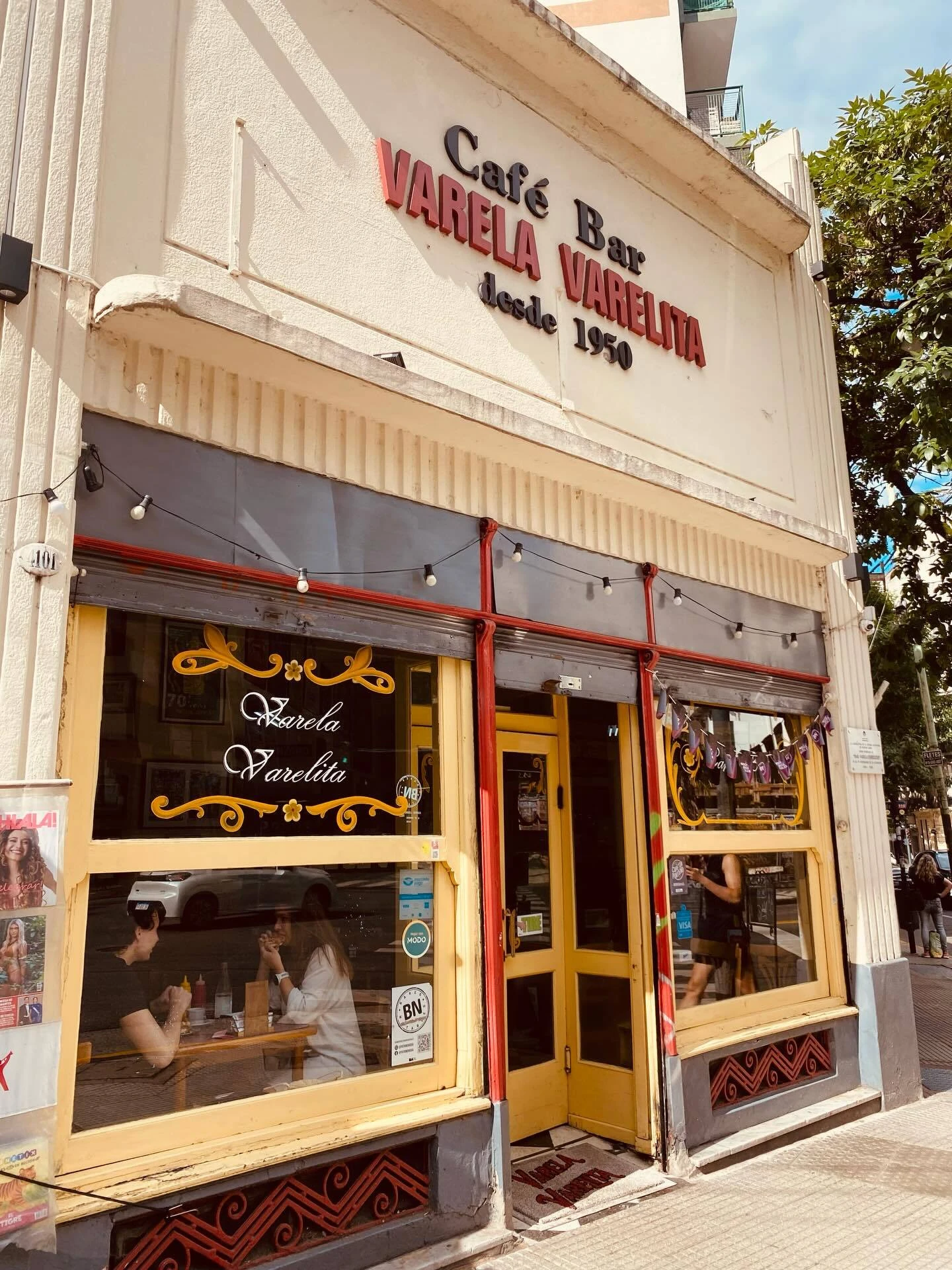
In Palermo, on the corner of Scalabrini Ortiz and Paraguay, Café Varela Varelita is one of those Buenos Aires bars with a literary history of its own. One of its most illustrious regulars was Héctor Libertella, writer and author of El camino de los hiperbóreos, Cavernícolas and Las sagradas escrituras. His presence was immortalized in a framed photograph next to the table where he used to sit.
The funniest story involves whisky: according to the story, Libertella convinced the owners that J&B stood for José Bianco, writer and editor-in-chief of Sur. Ever since, when someone orders a measure, the waiter can announce: “¡Marche un Pepe Bianco!” A perfect stop to add to a tour of Buenos Aires' literary cafés.
The Most-Read Books in Argentina
What did we read in 2025? According to Buscalibre's ranking for National Book Day, the most popular titles included young adult series, special editions, romance novels, and books about wellness and personal development. Harry Potter, Holly Black, Sarah J. Maas and Julia Quinn share the list with titles about emotions, habits and work.
- Estuche especial Los habitantes del aire, by Holly Black
- Estuche Harry Potter, by J. K. Rowling
- Pensar diferente: cómo convertir los retos en la mayor fortaleza, by Patricia Jebsen
- La asistenta, by Freida McFadden
- Una corte de niebla y furia (special edition), by Sarah J. Maas
- LiberTao, by Carolina Menéndez Pastorelli
- El puente donde habitan las mariposas, by Nazareth Castellanos
- A Sir Phillip, con amor (Bridgerton 5), by Julia Quinn
- Mente de alto rendimiento, by Dr. Sandra Rossi
- Las mil aventuras de Mandarina: un sueño increíble, by Mandarina