

[image]
[title]How do you introduce Marcos López? To fully explore his trajectory would require far more space than this interview allows. In the briefest terms possible, we can say he is a photographer and artist. He was born and raised in the province of Santa Fe, but has lived in Buenos Aires for four decades. He is known for his pop and deeply Latin American aesthetic, marked by saturated colors, kitsch, humor, and critique. And throughout his career, he has transformed everyday scenes, popular characters, and other symbols of our culture into exaggerated, baroque images, offering a unique perspective on the periphery.
Between retrospectives and new projects — including serving as the guest artist of honor at the Arte Pequeño Formato fair in June — López sat down with Time Out to talk about how his way of working has changed: from the closed-off artwork to an expanding universe where art circulates, transforms, and seeks audiences beyond the usual circuits.
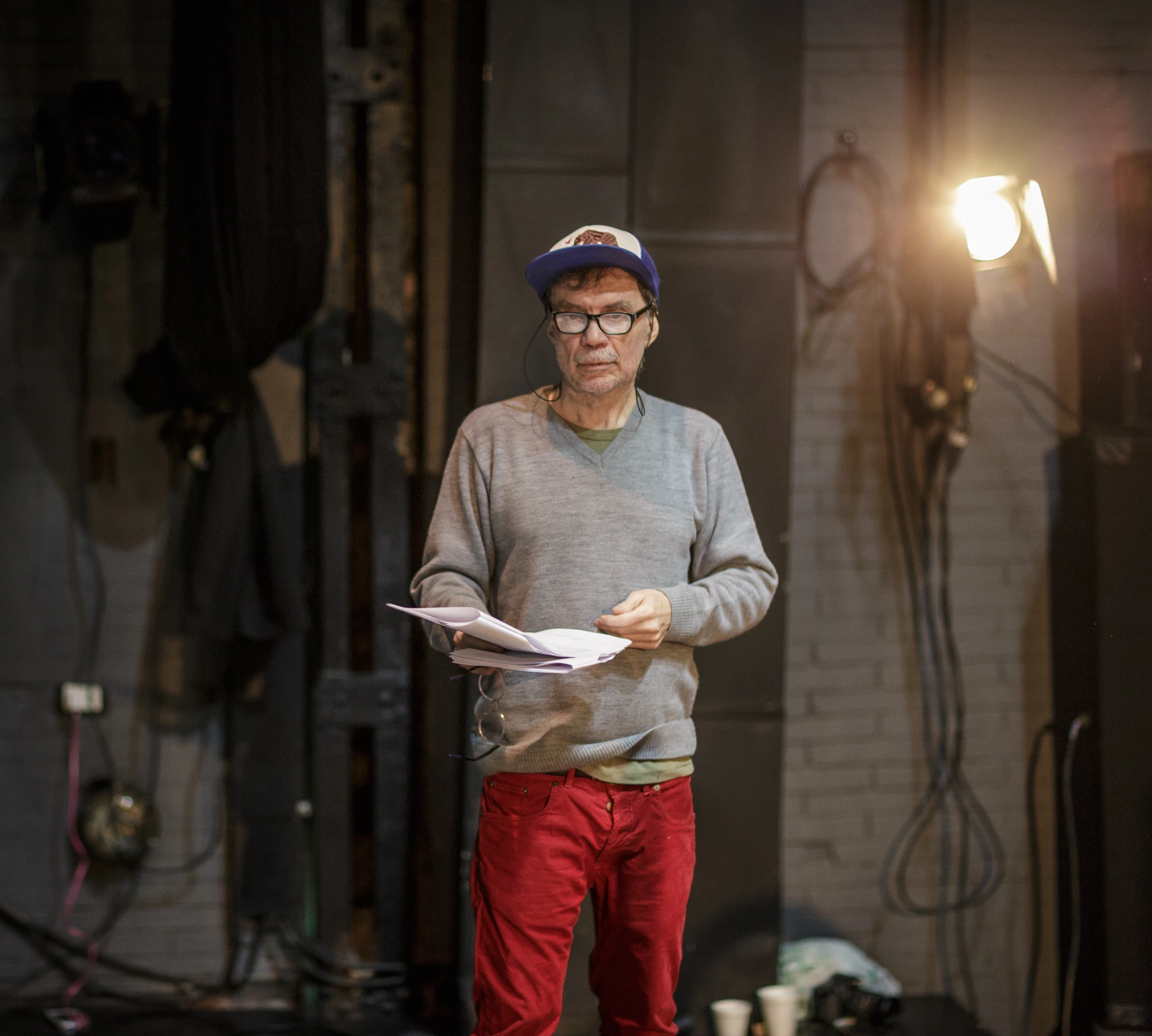
Your work has built a very distinct visual universe within Latin American culture. What aspects do you feel remain relevant today, and what have you needed to revisit or transform?
My work is not so much an aesthetic as it is a way of looking. Color and humor came later. What remains relevant is that need to understand where I’m standing. Latin America is a strange territory: tragic and comic at the same time. That hasn’t changed. What I’ve been revising is the form, not the substance: how to say the same thing without repeating myself, without getting stuck in a formula that already worked.
For a long time, people used the term “Latin Pop” to define your work. Does that idea still represent you today, or do you feel your practice has shifted somewhere else?
It was useful at the time: it allowed me to enter the conversation and place the work on a map. But I never worked to sustain a label. I was always pursuing something more uncomfortable, more personal, even contradictory. If that later gets named one thing or another, that’s secondary. What matters is that it continues to feel true to me.
"Popular culture isn’t a theme, it’s an emotional territory. And there are things there that more proper art doesn’t always want to look at"
At a time when so many images aim for instant impact, your work still carries a particular narrative density. What interests you about the experience of someone looking at one of your images?
I’m interested in first drawing you in and then making you question something. I don’t want it to be exhausted quickly. I want there to be something unresolved, a small discomfort. When an image is too clear, it becomes disposable. I’d rather it linger, stay with you a little longer.
You might also be interested in: 4 museums in Buenos Aires you should visit at least once
There’s something in your work that takes the popular and turns it into a staged scene. What interests you today in that relationship between the everyday and the symbolic?
Popular culture isn’t a theme, it’s an emotional territory. It’s where I come from. And there are things there that more proper or institutional art doesn’t always want to look at. I’m interested in bringing it into a scene where it becomes visible and reveals something deeper, even uncomfortable.
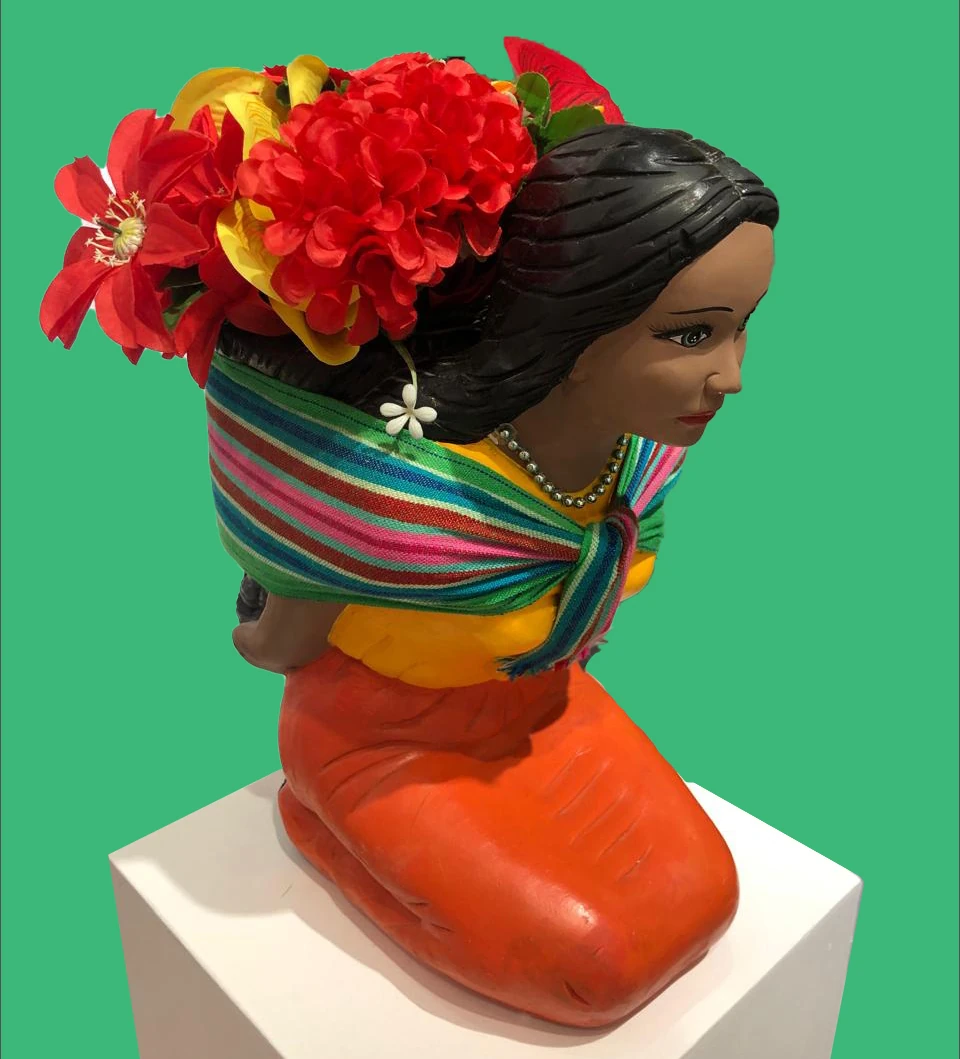
Without solemnity
If there’s one boiling point for taking the pulse of the current scene, it’s the Arte Pequeño Formato fair. With a clear premise — works measuring up to 50 x 50 centimeters — the event emphasizes closeness and challenges traditional scale without losing intensity. Between emerging voices and established names, the space condenses different perspectives into an agile, unpretentious format.
This year you’re the guest artist of honor at Arte Pequeño Formato®. What interested you about a fair focused on accessible works?
I’m interested in the idea of opening up the game. For a long time, art was very closed in on itself. This fair not only allows you to reach new audiences, but also to propose another kind of access and relationship. It’s healthy that spaces like this exist, where the relationship with the work is more direct.
Your work usually has a very strong presence. What happens when you think about your work on a more intimate scale?
It’s another kind of intensity. Smallness forces you to be more precise, more concentrated. Scale doesn’t make a work lesser, just different: it changes the sense of closeness and becomes more direct. I’m very interested in that relationship without so much mediation — simpler, more honest, where the work enters a different register.
You might also be interested in: The boom of literary cafés in Buenos Aires
The fair seeks to bring new audiences closer to art. What do you think is needed for someone who has never bought artwork to feel encouraged to do so?
They need to feel like they’re not entering a closed world. There can’t be a symbolic barrier. It has to be a more direct, less intimidating relationship. To understand that it’s not something distant, but something they can live alongside.
What kind of pieces will you present in this edition? Is there anything created specifically for that context?
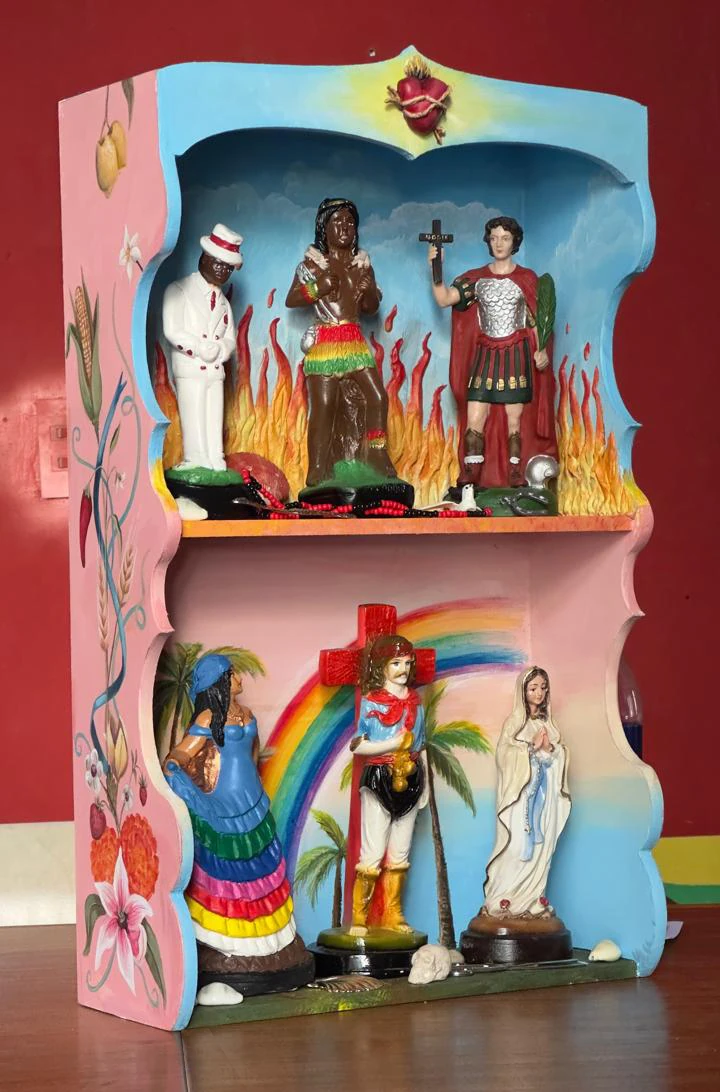
I’m presenting my Mundo López project, which I developed together with the platform Oficina de Proyectos. It’s a way of opening up the imaginary world of my works so that others can inhabit it and make it their own. In that sense, the pieces are designed to circulate in different formats and levels of access, not only as unique artworks.
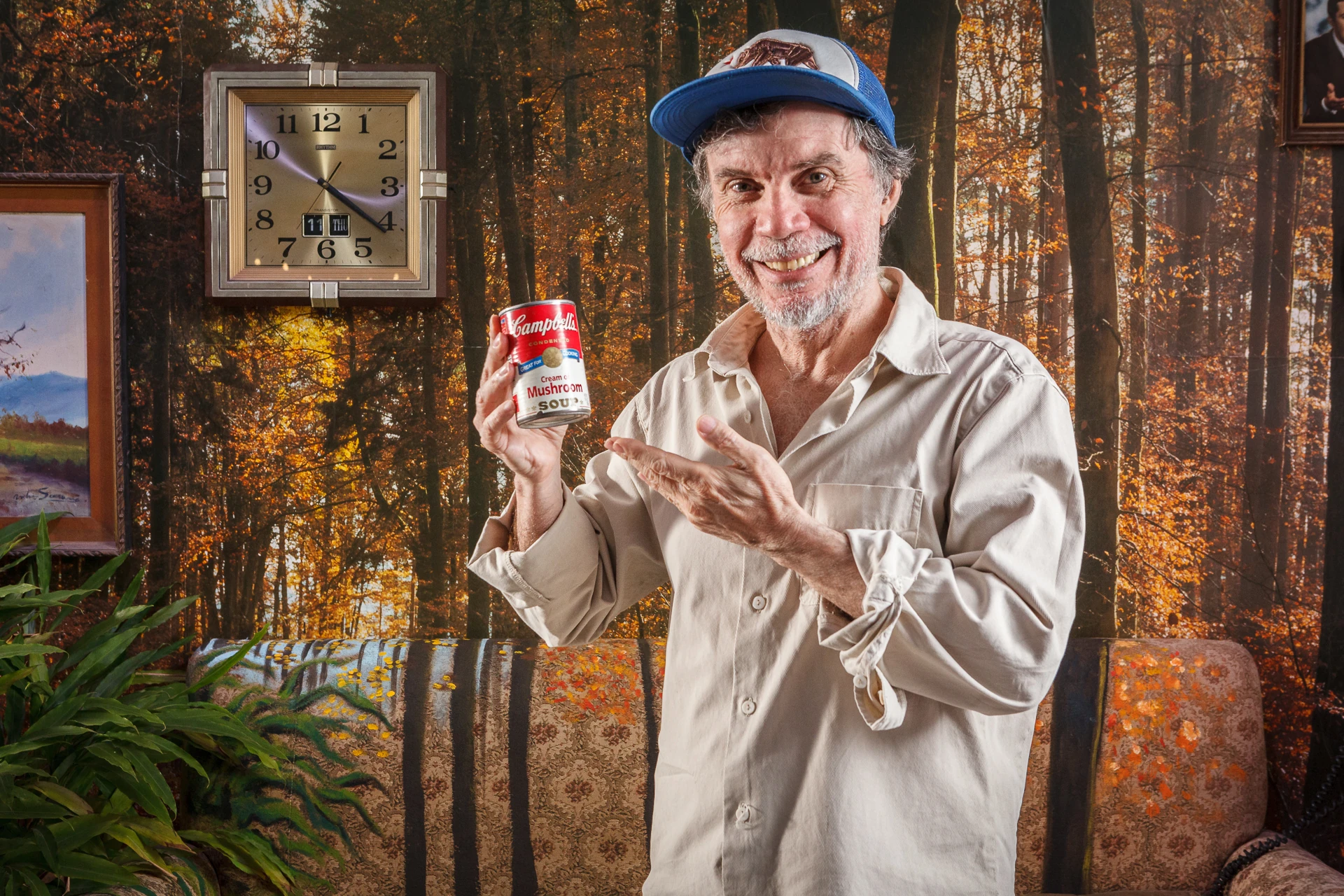
"I’m interested in taking the artwork out of its solemn place, making it something other than an object you look at on a wall"
You could say that Mundo López appears as an expansion of your work into a more collective and open format. How did that need to move beyond the traditional format of the individual artist emerge?
It emerged from a limitation. The classic artist format started to feel too small for me. For a long time, I worked within a fairly clear system, and at a certain point I felt I wanted my universe to circulate differently — more directly, more alive. Mundo López is an expansion. I’m interested in taking the artwork out of its solemn place, making it something other than an object you look at on a wall. I want it to appear in other formats, to enter into other kinds of relationships.
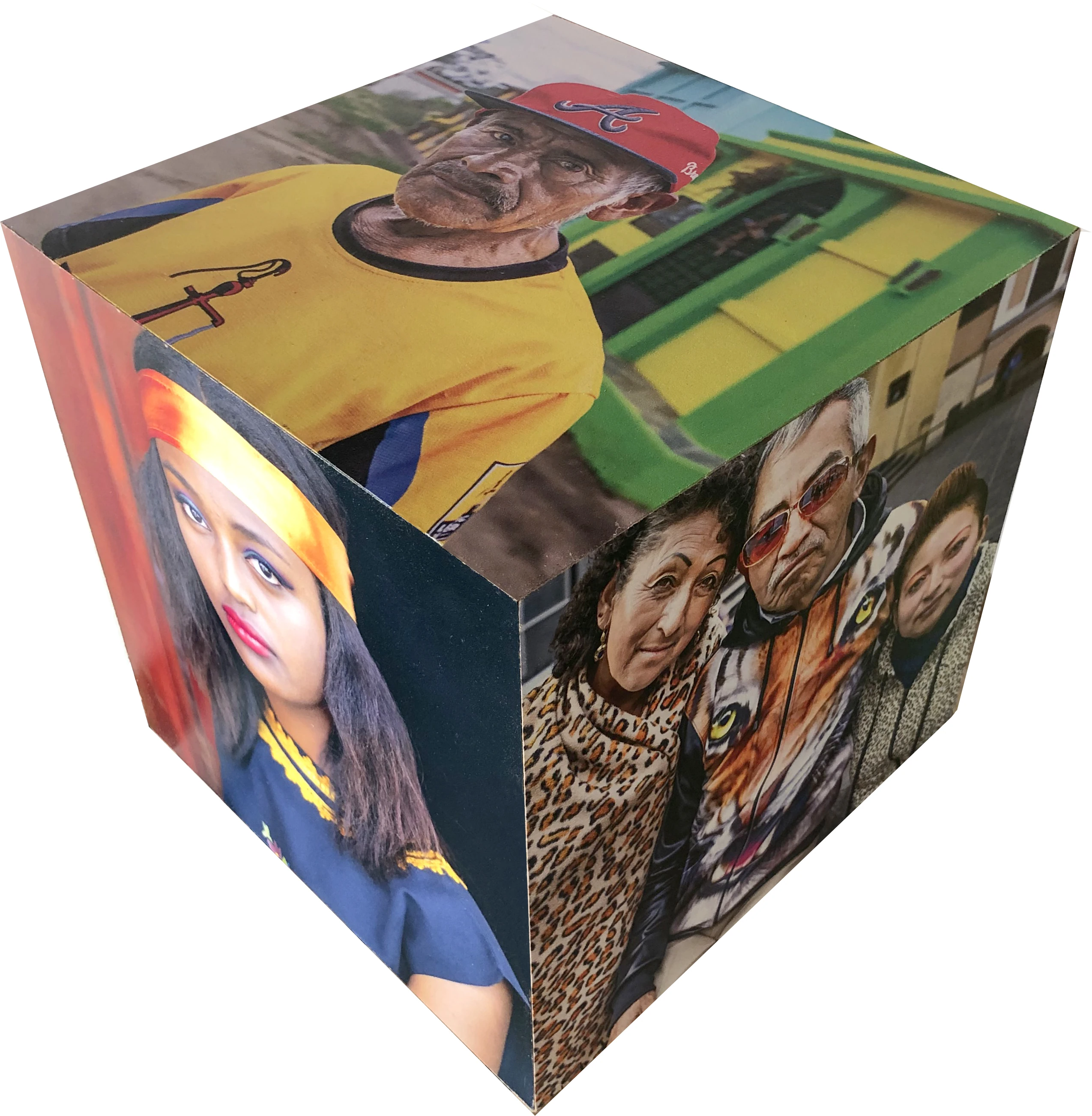
This project also proposes another way of producing and sustaining artwork. What do you think it can offer to younger generations of artists?
The understanding that the artwork is not just the result, but the entire system that sustains it: how it is produced, financed, and circulated. Understanding that gives you more autonomy.
The exhibition at Fundación Larivière spans several decades of your work. What kind of perspective emerges when you see your work in retrospect?
A continuity emerges, but also many doubts. You see obsessions repeating themselves, themes returning, and at the same time moments when you didn’t really know what to do. And that’s fine: it’s part of the journey. It’s not a straight line.
You might also be interested in: Buenos Aires through its galleries: five essential stops
Is there anything you discovered or understood about your own trajectory through this exhibition?
That many times I worked without fully understanding where I was heading. That meaning appears later, over time. It’s not so clear in the moment. And in some way, that also gives you a certain peace of mind.
How does this more institutional exhibition dialogue with more open and experimental projects like Mundo López?
They’re two sides of the same thing. One is more organized, institutional, and legible. The other is more open and in process. I’m interested in that tension.
Many artists today are trying to figure out how to sustain their practice over time. From your experience, what do you think is essential to build besides the work itself?
A system, a way of sustaining what you do, an environment that allows you to keep producing. Otherwise, you always depend on someone else validating or enabling you. And in the long run, that leaves you out.
Arte Pequeño Formato® will run from June 10 to 14 at the Museo de Arquitectura y Diseño (MARQ), Av. Libertador 999, Recoleta.