

[image]
[title]Action, dark humor and a story filled with morally ambiguous characters are some of the key ingredients of Kill Jackie, a series that blends suspense with comedy, creating a world where no one seems to be exactly who they claim to be. The series premieres December 11, exclusively on Universal+.
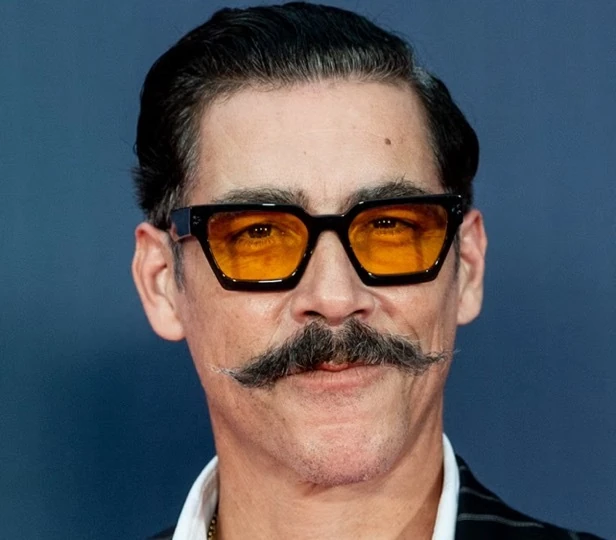
In an exclusive interview with Time Out Buenos Aires, Óscar Jaenada shares details about his experience on the production, the challenge of playing Zigor in an English-language series and working alongside Catherine Zeta-Jones. He also recalls one of the most spontaneous scenes from filming and reflects on what it means to keep learning after so many years in the industry.
First impressions of Kill Jackie
Óscar joined the production when filming was already well underway. His character, Zigor, first appears in the third episode, meaning the rest of the cast had already established a working dynamic.
"When I started filming with them, they had already spent a lot of time working together. There was already a connection between them, and they had gotten to know each other over several months of filming," he explains. His first impression was positive. "I could already see a connection between the actors. I could see a production that was very well established and highly professional. That's when you realize it's going to go far."
The experience also came with its challenges. Since the production was in English, the actor had to pay particular attention to his lines and the nuances of the language. "When you're working on a production that isn't in your native language, you're very focused on your lines, the pauses and everything else. Improvising can be a little harder because of first-day nerves and wanting to live up to the standards of the production."
Catherine Zeta-Jones and a chemistry that grew on camera
One of the standout aspects of Kill Jackie is the chemistry between its main characters. The connection between Jackie and Zigor develops gradually, with the two leads establishing a natural dynamic on screen.
However, the relationship between the actors wasn't the result of a lengthy rehearsal process. "I barely worked with her before we started filming. I didn't have a single rehearsal day with her. They were already well into production, and I had been working on another project right before joining," he recalls.
Their connection developed directly on set. "Once we were on set, we recognized each other's talent and mutual respect. And after hours and hours of working together, our connection gradually grew, just as the connection between our characters did." The fact that filming followed a fairly chronological order also helped their relationship develop naturally.
Our connection gradually grew, just as the connection between our characters did
Action, comedy and the value of improvisation
For Jaenada, one of the biggest attractions of playing Zigor was the opportunity to work in a genre that combines two of his greatest passions: action and comedy. "It's a genre I'm passionate about. I love action and comedy. Bringing those two things together is something I've always admired, ever since Mel Brooks. I think it's a wonderful formula," he explains.
The actor also highlights the challenges involved in producing this kind of story. "Given the kind of cinema we make in Spain, Mexico and Argentina, combining action and comedy is usually very difficult. It tends to be expensive and very challenging."
One of the scenes that best captures this spirit is the dance sequence between Jackie and Zigor. When she comes back for him and invites him out for a drink, things take an unexpected turn.
"There's a scene where they're dancing, on the day Jackie comes back for Zigor and says, 'Come on, let's go have a drink.' There's a moment when everything is improvised: the dancing, the interaction between Zigor and Jackie, the people around them asking for pills. All of that was improvised. It was basically, 'Come on, put on some music and let's create this amphetamine-fueled rush,'" he recalls.
The sequence required several takes and ended up being as exhausting as it was entertaining. "We did so many takes of that scene, and we ended up absolutely exhausted, exhausted, exhausted," he says.
The characters he still wants to play
After a career spent portraying a wide variety of characters, Óscar Jaenada says there are still plenty of stories left for him to explore. For him, every book he reads or story he hears represents a new opportunity to explore a personality and understand what motivates someone.
"Every book I read, every story someone tells me, there's always a character that makes me think, 'It would be wonderful to get inside that person's head and understand why they act or react the way they do,'" he explains.
That curiosity is also connected to what he values most about his profession: the opportunity to keep learning.
"The great thing about this profession is the constant learning and the endless surprises. There's always a character that comes along and makes you say, 'I'm going to give this everything I've got. There won't be another one like it.' And then another comes along that demands twice as much work, and then another that requires you to do all of that in a different language, and then another that also requires a different accent."
For the actor, experience provides new tools and opportunities to keep growing: "I think experience is very important in this art form. It gives you knowledge that you can build on and use to continue learning."
The great thing about this profession is the constant learning and the endless surprises
What he learned from working with some of cinema's biggest stars
Sharing the screen with stars such as Robert De Niro and Johnny Depp has also taught him valuable lessons. But for Óscar, the key isn't necessarily what they say or do in front of the camera. It's something much simpler: knowing how to listen.
"Paying attention, listening, that ability to truly listen that the greats have. There's something you keep noticing: their ability to continue learning, no matter how many generations they've been through or how old they are. They keep learning, they keep paying attention to what anyone has to say," he reflects.
For him, it's a lesson that sets great performers apart: maintaining their curiosity and their willingness to listen to new stories, no matter how many years they've spent in the industry.