[image]
[title]Before becoming one of the biggest names in Argentine fashion, Pablo Ramírez was a boy who drew on the invoices from his father’s auto repair shop. It was there, almost without realizing it, that his own creative universe began to take shape. That restless hand, that urge to transform a blank sheet of paper into something beautiful, remains at the heart of everything he does today. Drawing has never left his side because it is his first language, a way of seeing the world and imagining it.
Now, that deeply personal style fills the walls of Colección Rivarola – El Local with Dibujos de moda (Fashion Drawings), an exhibition that opened on October 28 and can be visited by appointment. It is an opportunity to discover another side of Ramírez: the artist who finds in drawing a means of self-expression.
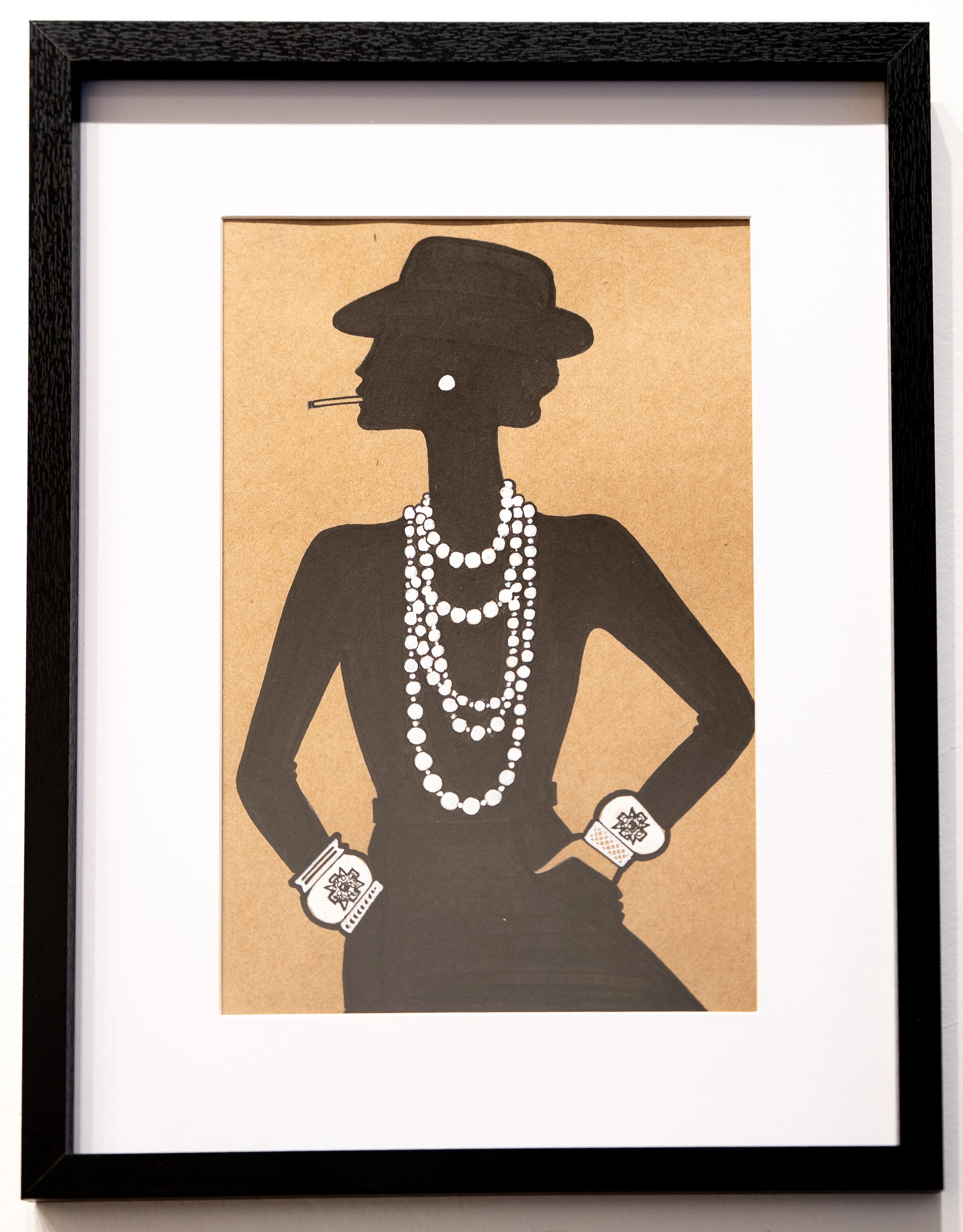
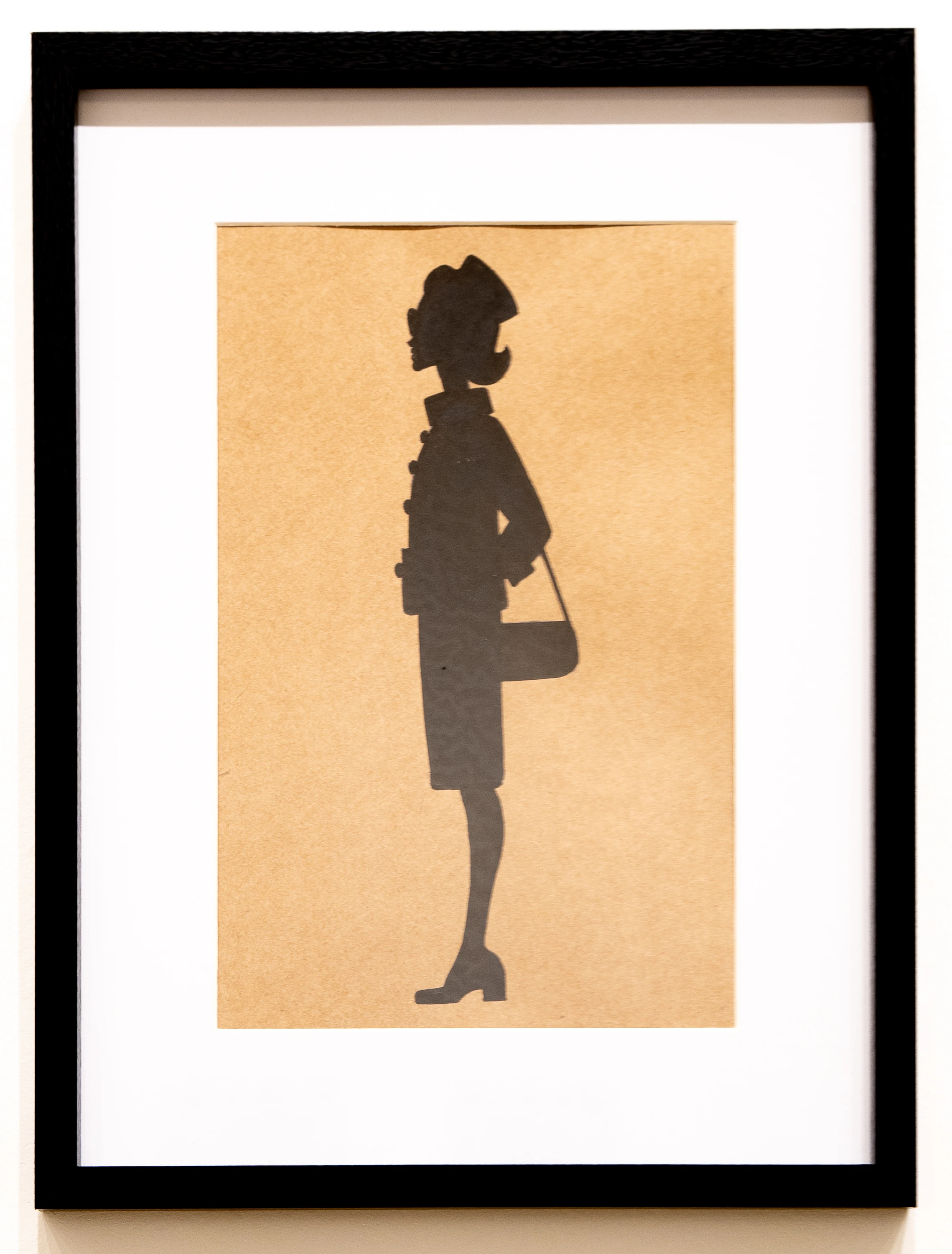
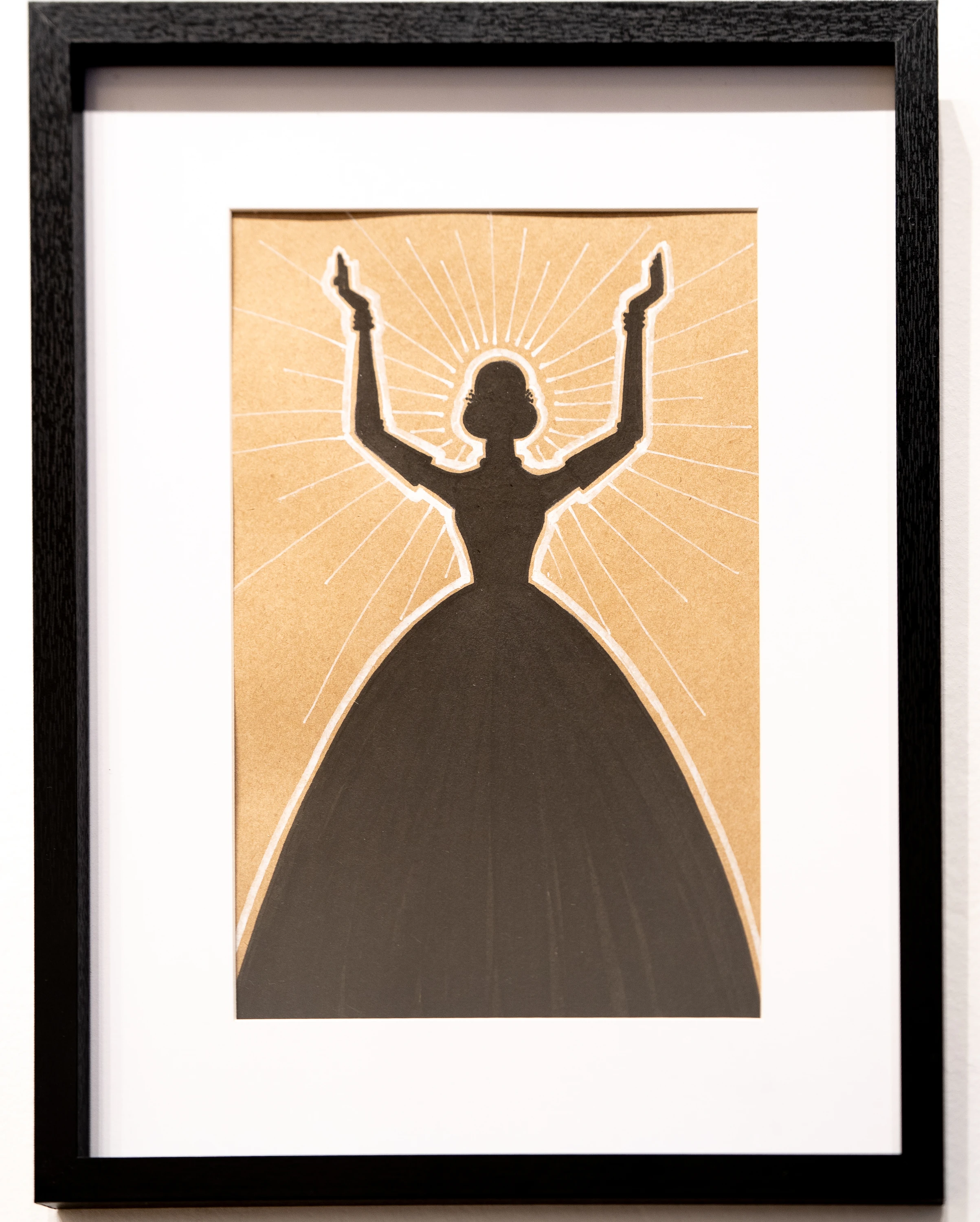
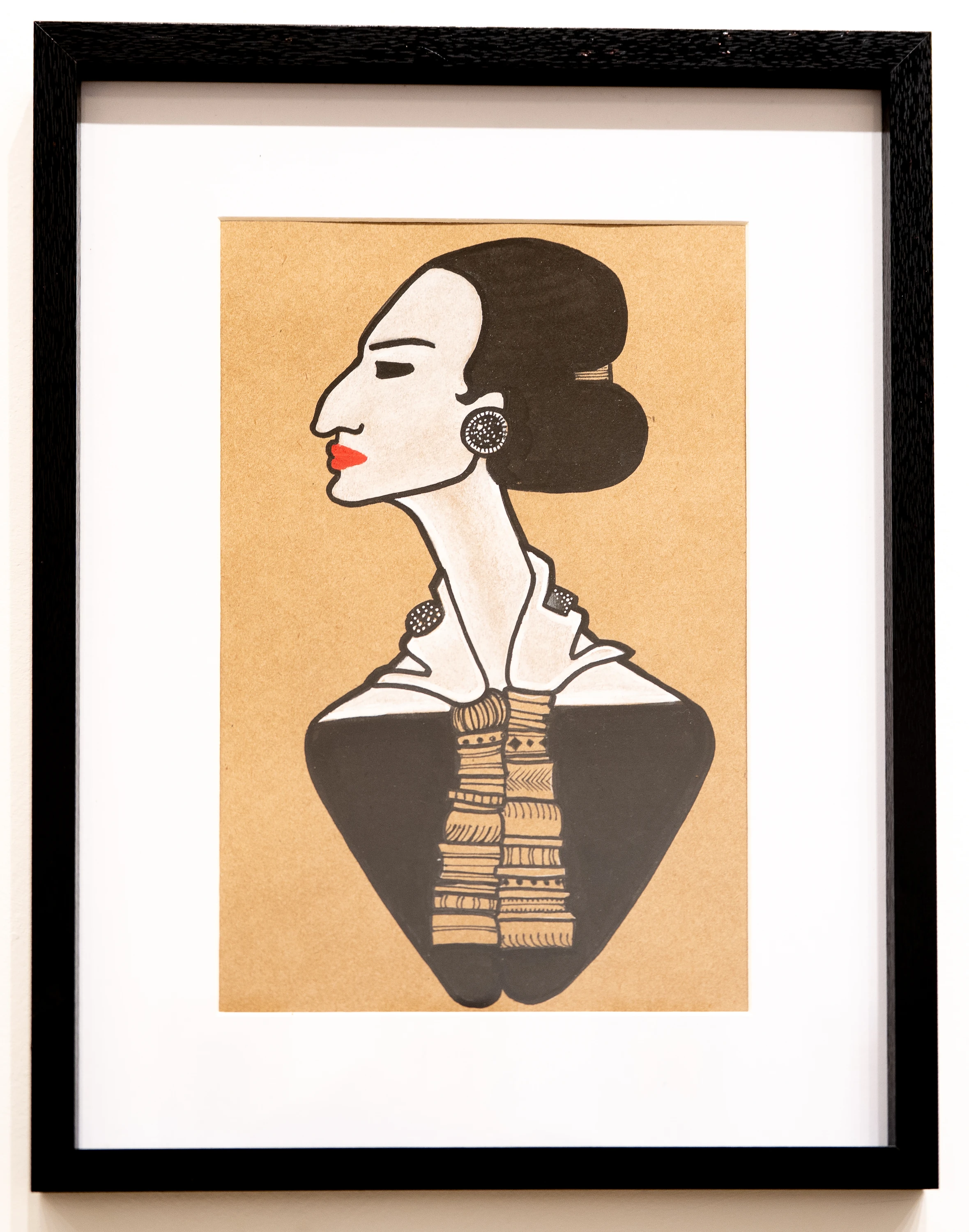
The story behind this exhibition dates back to 2004, with Followers of Fashion, falso diccionario de la moda (Followers of Fashion, a False Dictionary of Fashion, Interzona), a book by Victoria Lescano that Ramírez illustrated with sketches created specifically to accompany each text. Twenty of those drawings have been revisited and reinterpreted for this occasion. Using black ink, markers, charcoal, and touches of white and crimson on kraft paper — a nod to the color of pattern-making paper — the illustrations recapture their original spirit while taking on a new life. The series is complemented by twelve works from Signos, his 2025 illustration collection.
A dictionary to explore
The exhibition unfolds like an alphabet of silhouettes, characters, and stories that form part of fashion’s collective memory. There is a Balenciaga figure in a straight skirt and cropped jacket; a Chanel with pearls and a cigarette; a reinterpretation of Dior featuring a snow-white jacket that revisits the 1947 New Look; Dorothy from The Wizard of Oz carrying her basket handbag; Schiaparelli’s silhouette wearing the shoe hat she created with Dalí; a Vreeland with kabuki-inspired makeup; and an Evita reminiscent of a saint. The bikini also makes an appearance, attributed to engineer Louis Réard in 1946, topped off with an oversized sun hat.
Every figure has a story to tell. A single garment, accessory, or pose is enough to evoke an era, a personality, or an entire world of imagery. Within these lines, elegance, humor, and playfulness come together, alongside historical references, knowing gestures, and, at times, the magic of an illustrated fairy tale. Ramírez revisits some of fashion’s greatest icons, making them his own, interpreting and transforming them through his unique perspective.
You might also like: Buenos Aires museums to visit at least once in your lifetime
Archivo Ramírez, the book
The exhibition has a natural companion: Archivo Ramírez, published this year by Fundación Medifé Edita as part of its culture and health publishing series. The book offers a glimpse into the designer’s most intimate creative world, bringing together materials that trace not only his professional career but also the personal memories and traces that have accompanied his creative process. The publication was editorially directed by Daniela Gutierrez, with editorial design by Estudio ZkySky, founded by Julieta Ulanovsky and Valeria Dulitzky.
Behind this publication is a team that devoted countless hours to researching, gathering, and making sense of this personal archive. Daniela Lucena conceived the project and coordinated the research. She worked alongside Sebastián Rodríguez, who oversaw archive coordination and visual editing, and Agustina Fernández, responsible for heritage and archive management. Lorena Tenuta also coordinated the publication’s editing and shared visual editing responsibilities with Rodríguez.
The essays were written by Facundo Abal, Marcelo Marino, Agustina Fernández, Sebastián Rodríguez, and Ernesto Meccia, alongside three influential voices in fashion journalism and criticism: Victoria Lescano, Ana Torrejón, and Felisa Pinto. Their texts, written at different stages of the designer’s career, come together in this publication to offer fresh interpretations and perspectives on his work.
You might also like: 4 must-visit museums in Buenos Aires
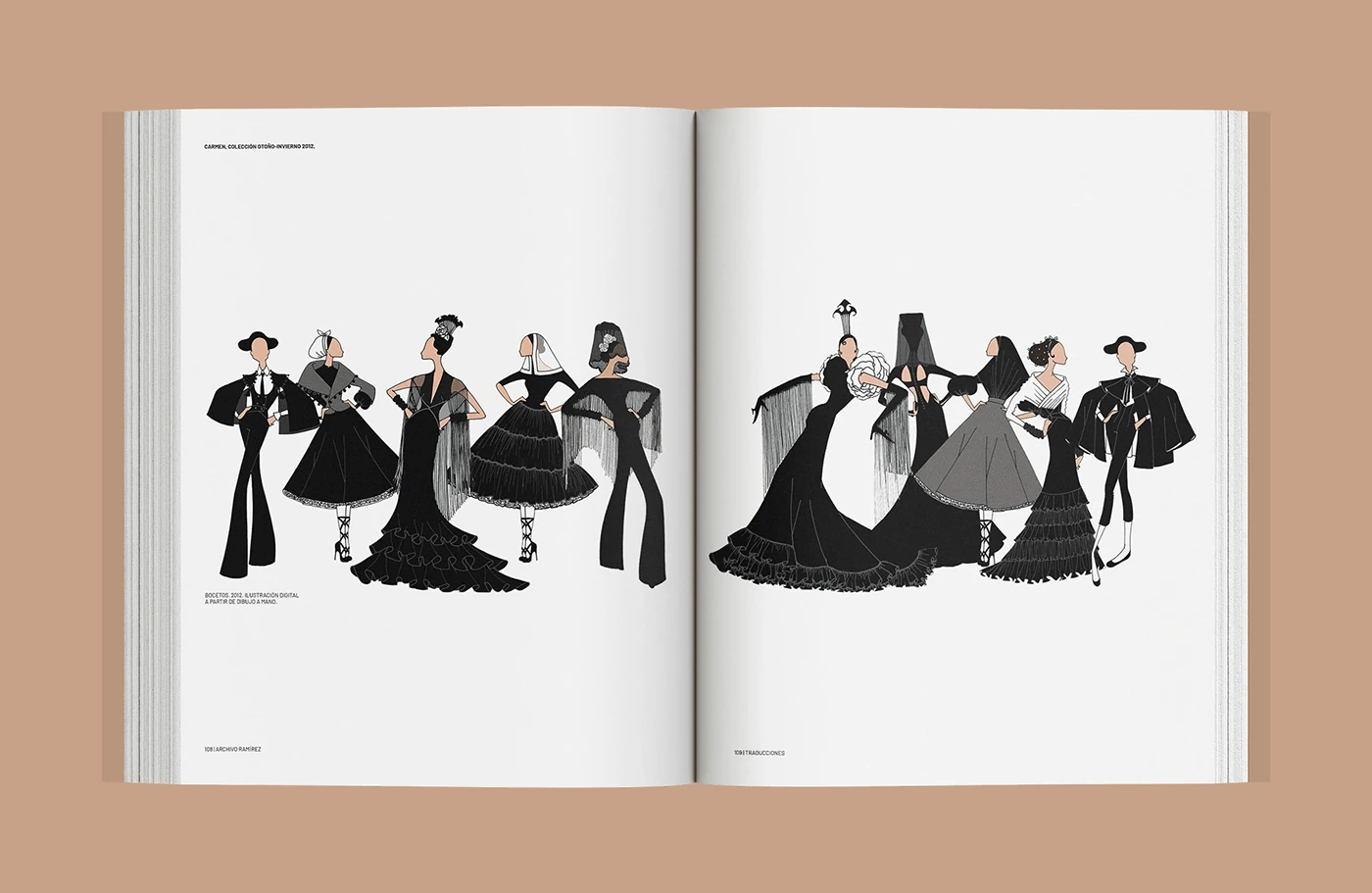
The book is rounded out by a glossary of collections and costume designs spanning twenty-five years of professional work. Ramírez describes it as a reference book rather than a coffee table book or a catalogue. This distinction reflects the depth of the project and the importance he places on revisiting the materials he has collected throughout his life. Along the way, he also acknowledges his business partner, husband, and closest collaborator, Gonzalo Barbadillo, whom he considers an essential part of the journey.
Between the drawings that have once again taken center stage and the documents brought to light in the book, the story emerges of a creator who has never stopped drawing, collecting, observing, and building his own universe. Beyond the collections and decades of professional experience, that first passion for drawing, born on the invoices of an auto repair shop, remains as strong as ever, continuing to shape the world of Pablo Ramírez.