

[image]
[title]In Villa Crespo, Trescha offers a contemporary interpretation of Argentine cuisine. At the helm is chef Tomás Treschanski, who, after training in internationally renowned kitchens such as Frantzén, Azurmendi and Barrafina, developed his own culinary approach based on local ingredients, research and the blending of cultures. His tasting menu brings together flavors, techniques and textures in a culinary journey that evolves according to seasonal ingredients and the team's ongoing work.
Awarded one Michelin star and ranked No. 36 on Latin America's 50 Best Restaurants 2025, Trescha stands out for an experience that places the kitchen at the center of attention. The concept revolves around a counter seating just 11 guests, allowing diners to watch the chefs at work and interact with them. The restaurant also features a dedicated Test Kitchen, where the team explores fermentation, techniques and new flavor combinations. The result is an ever-evolving cuisine, with Argentine ingredients as its starting point and the chef's personal vision as its guiding thread.
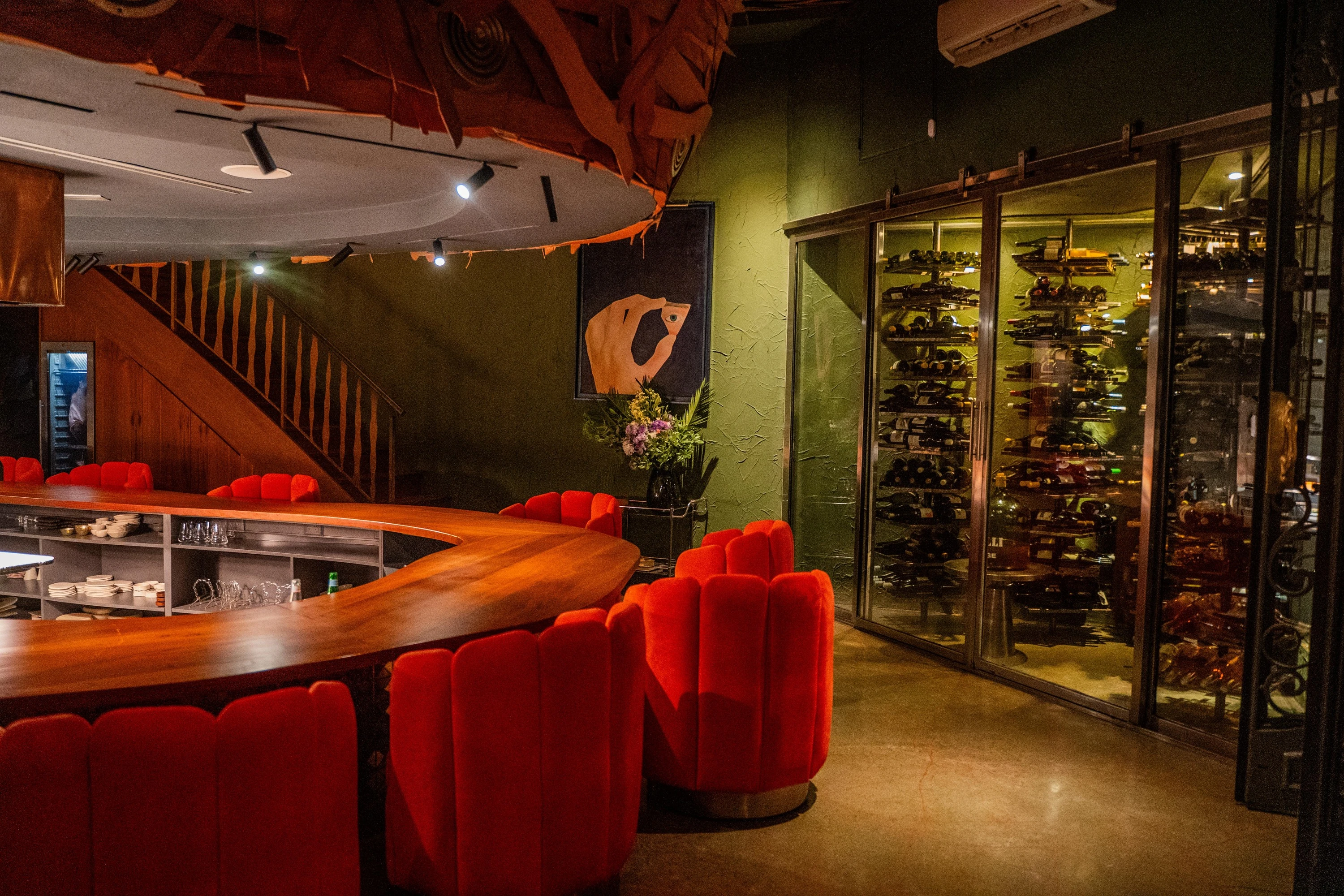
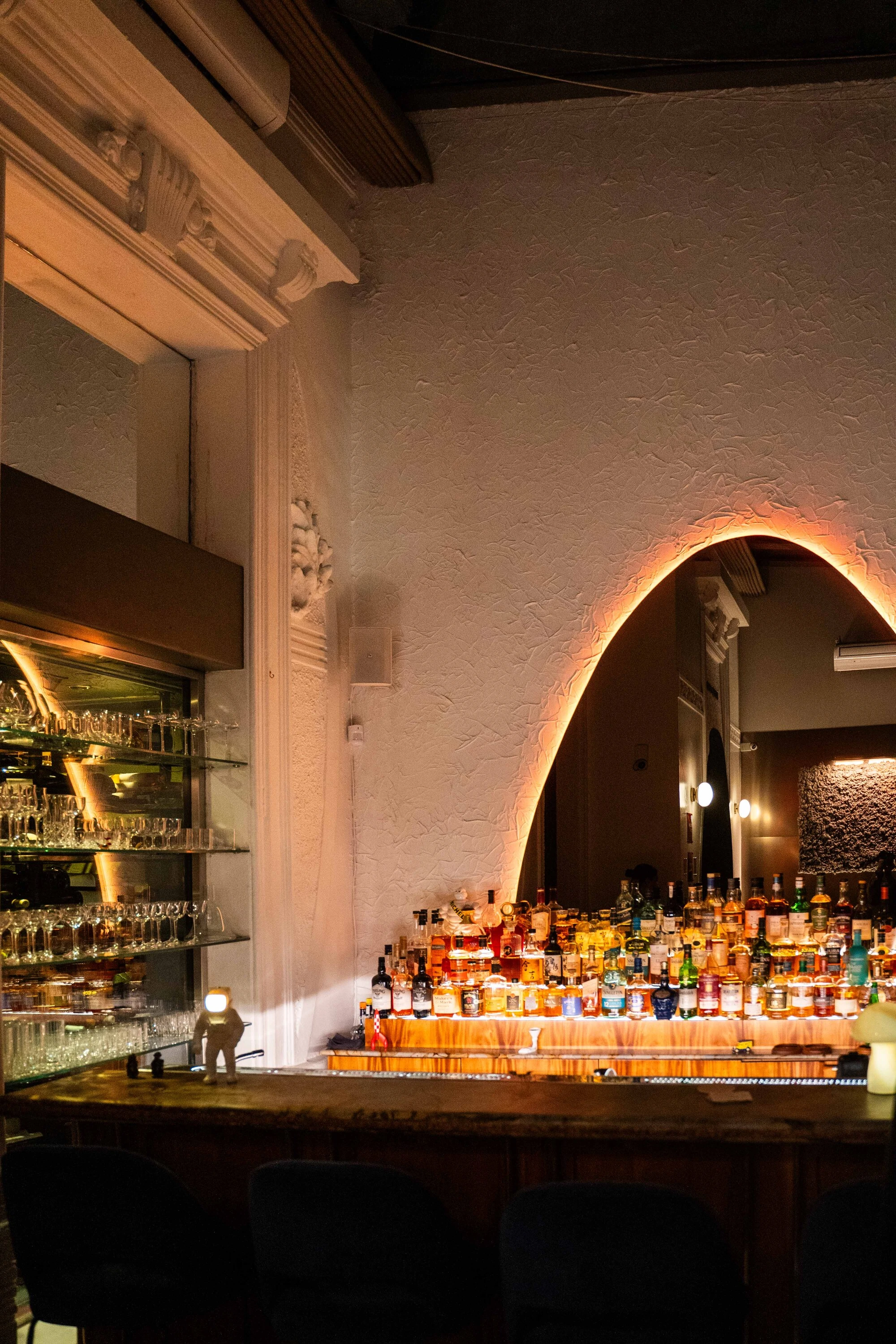
In a renovated house in Villa Crespo, Trescha has built its identity around one idea: finding new ways to express Argentine cuisine. The space combines contemporary design with a counter that brings guests closer to the action in the kitchen. Here, each dish forms part of a carefully designed journey through different flavors and techniques.
The experience centers on a 14-course tasting menu, available Wednesday through Saturday, with two seatings at 6:30pm and 9:45pm. Rather than offering an extensive à la carte selection, the restaurant invites diners to surrender to a sequence of dishes that reflects the team's culinary explorations and the ingredients they work with.
The cuisine draws inspiration from Argentina's diverse landscapes. From the south to the north, ingredients reflect different geographies, traditions and climates. Trescha works with more than 350 producers across the country, building its dishes around this diversity while incorporating recipes from other cultures, techniques learned through travel and flavors that have shaped the chef's personal journey.
Research also plays a central role. In the Test Kitchen, the team experiments with ingredients, explores fermentation and develops new preparations. Some ideas quickly find their way onto the menu, while others require months of work. Even after a dish is introduced, the team continues refining it. The goal is for every creation to achieve balance, have a clear purpose and, above all, taste delicious.
A succession of dishes that invites diners beyond the familiar
We made our way through the menu course by course, eager to discover the combinations the team had created for this experience. We began with prawns with quince, roe and nori, an opening bite that brings together flavors of the sea, fruity notes and references to Japanese cuisine. Next came mussels with kimchi and basil, a combination that pairs the taste of the ocean with kimchi's fermented character and the aromatic freshness of basil. From the very beginning, Trescha makes it clear that its approach is anything but predictable: each dish opens up a new possibility for combining ingredients.
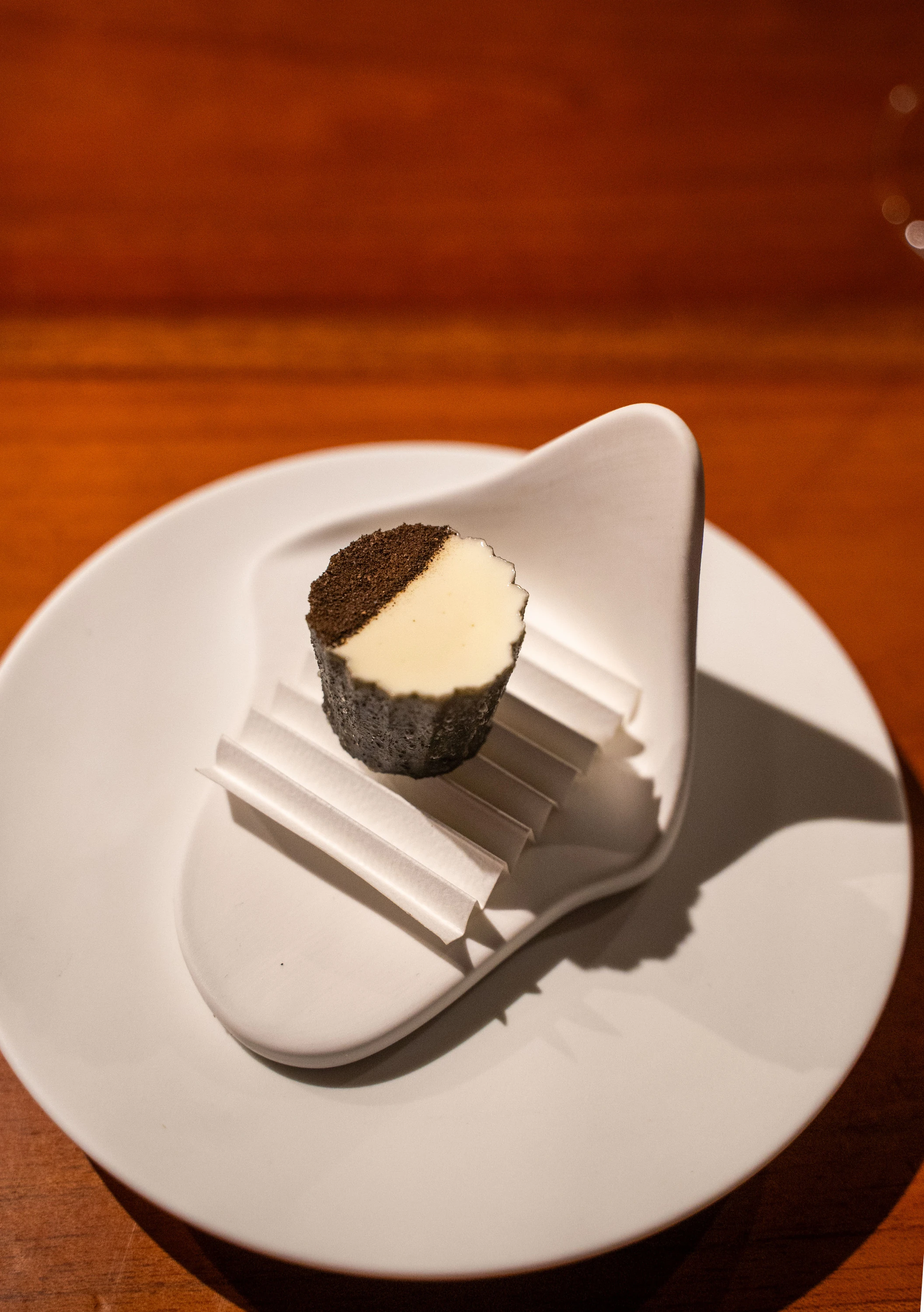
The eggplant with lemon and Tuscan cheese introduces another dimension to the experience, balancing citrus acidity with the richness of the cheese. The choice of ingredients reveals a kitchen that doesn't rely exclusively on sophisticated products to create something interesting, but also finds possibilities in familiar vegetables and flavors. What matters is how the ingredients interact and the search for a combination that makes sense on the plate.
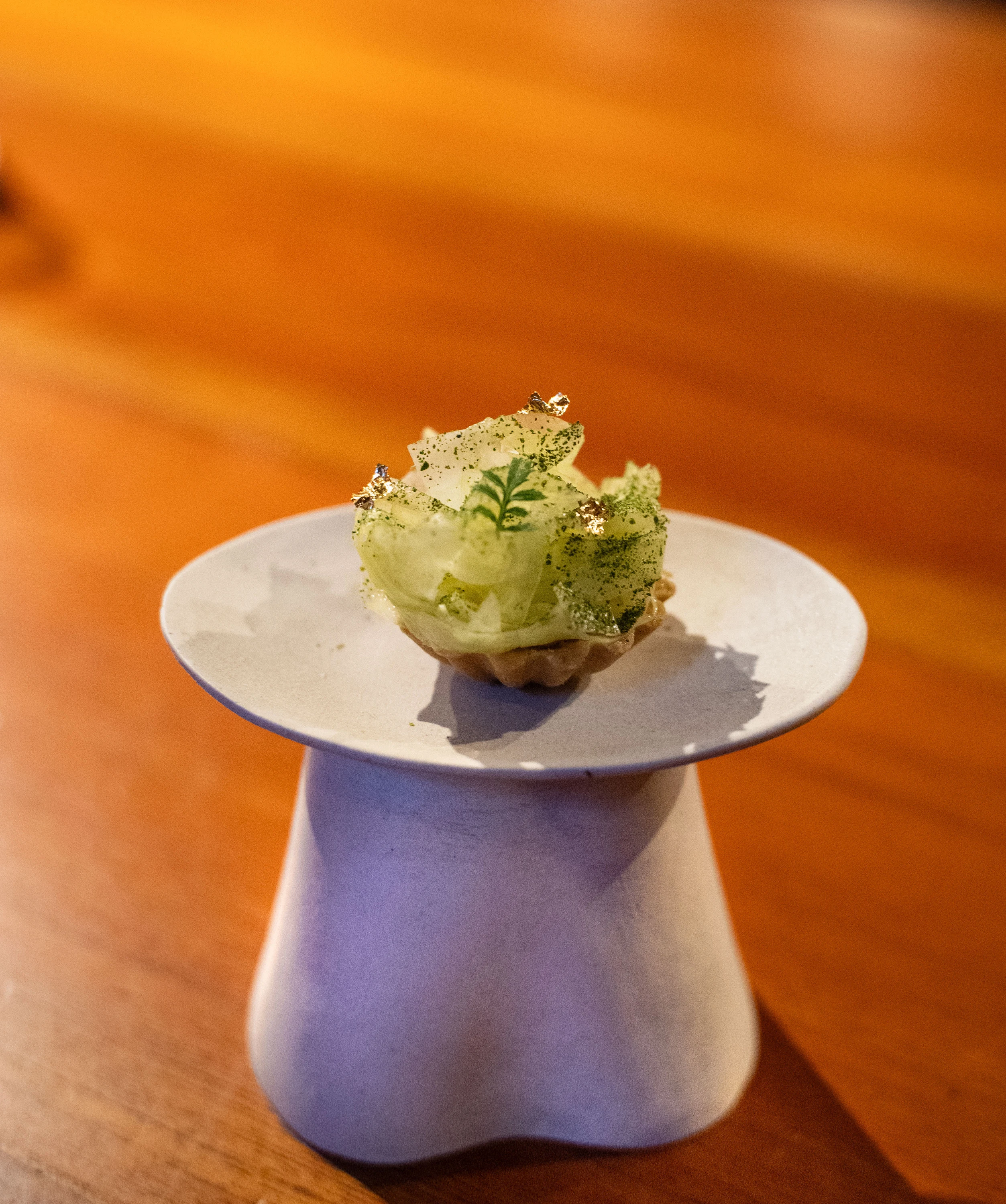
As the menu progresses, the combinations become increasingly diverse. Wagyu with shiso and strawberry brings together a cut of beef known for its marbling, an aromatic Japanese herb and a fruit that introduces a contrasting flavor profile. Next comes sea bass with sea lettuce and bergamot, where marine ingredients meet a citrus note, followed by red cabbage with cauliflower and caviar.
The sequence continues with trout, bouillabaisse and pesto, a preparation that connects the fish with a classic reference to Provençal cuisine, followed by fumet with parsley and smoked butter. The ingredients change, as do the culinary influences, but the menu maintains a common thread: a desire to explore different ways of cooking and presenting each ingredient.
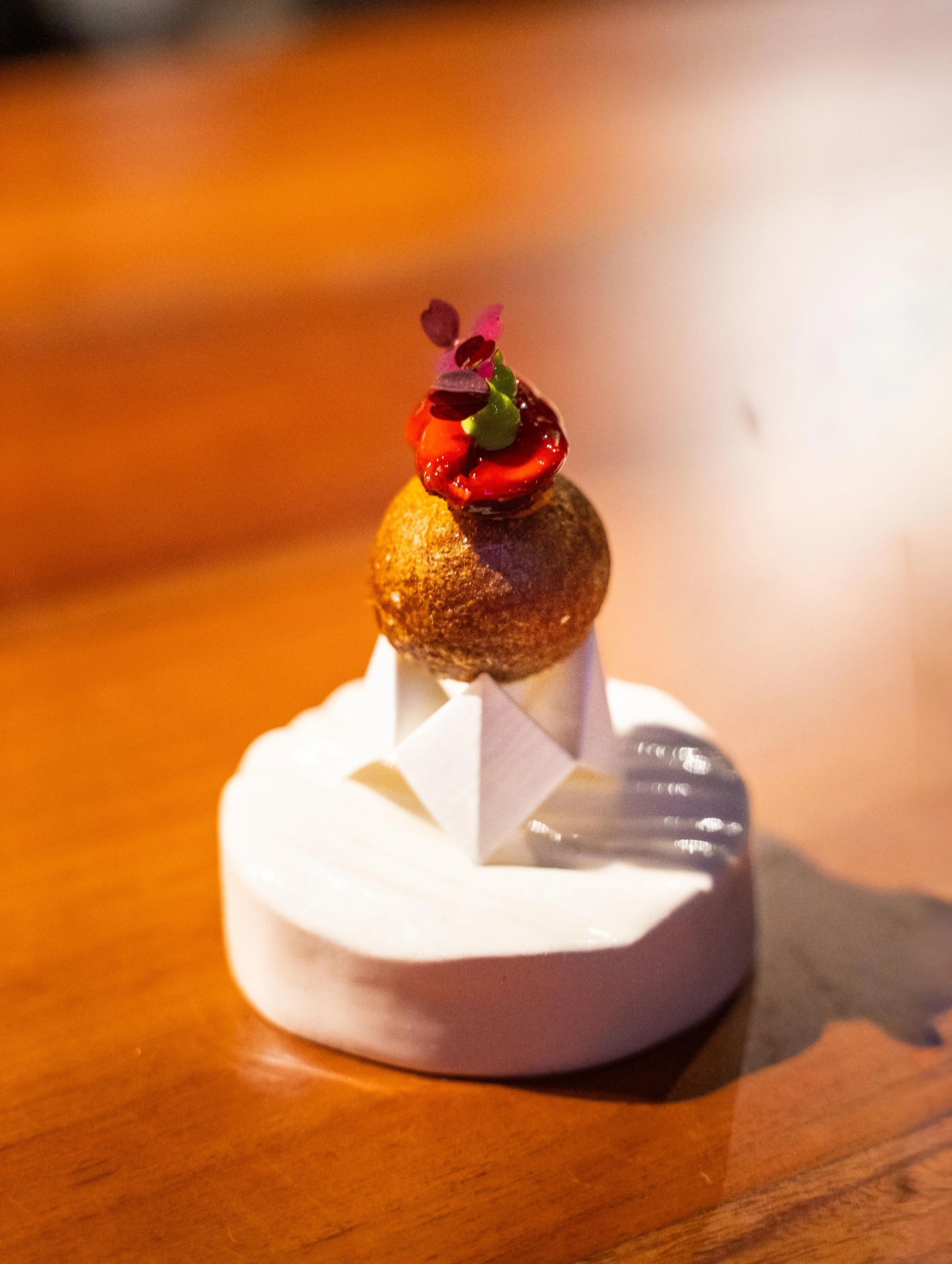
The journey continues with wreckfish, squid and vanilla, a combination that brings together two seafood ingredients with one more commonly associated with desserts. Then comes a consommé with Amontillado sherry, incorporating Spanish fortified wine into a classic culinary preparation.
Later, suckling pig with aged chimichurri takes the experience toward familiar flavors of Argentine cuisine, reinterpreted within a multi-course tasting menu. The sequence isn't simply about bringing together unusual ingredients: it also revisits well-known culinary traditions and explores how they can coexist with different techniques and influences.
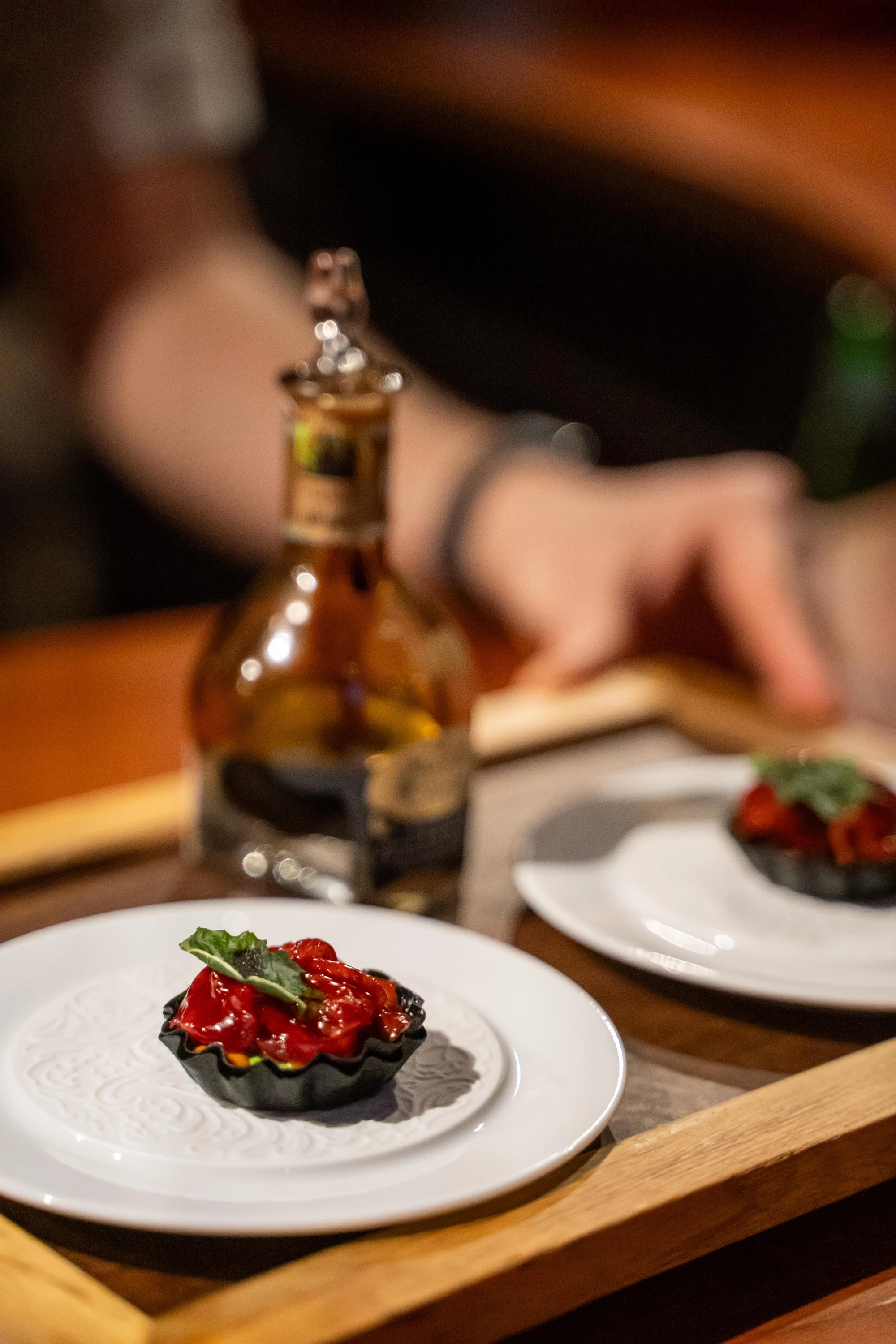
Among the following dishes are udon with peanuts and 'nduja, combining Japanese noodles with a spicy Calabrian cured sausage, and milcao with kumquat and horseradish, where a traditional preparation from southern Chile meets a citrus fruit and an ingredient with a bold, pungent character. These combinations perfectly capture Trescha's philosophy: a cuisine that draws inspiration from different places, works with a wide variety of ingredients and reimagines them through its own perspective. Rather than confining itself to a single tradition, the restaurant builds its identity through these cultural intersections and a process of research that continues well beyond each menu.
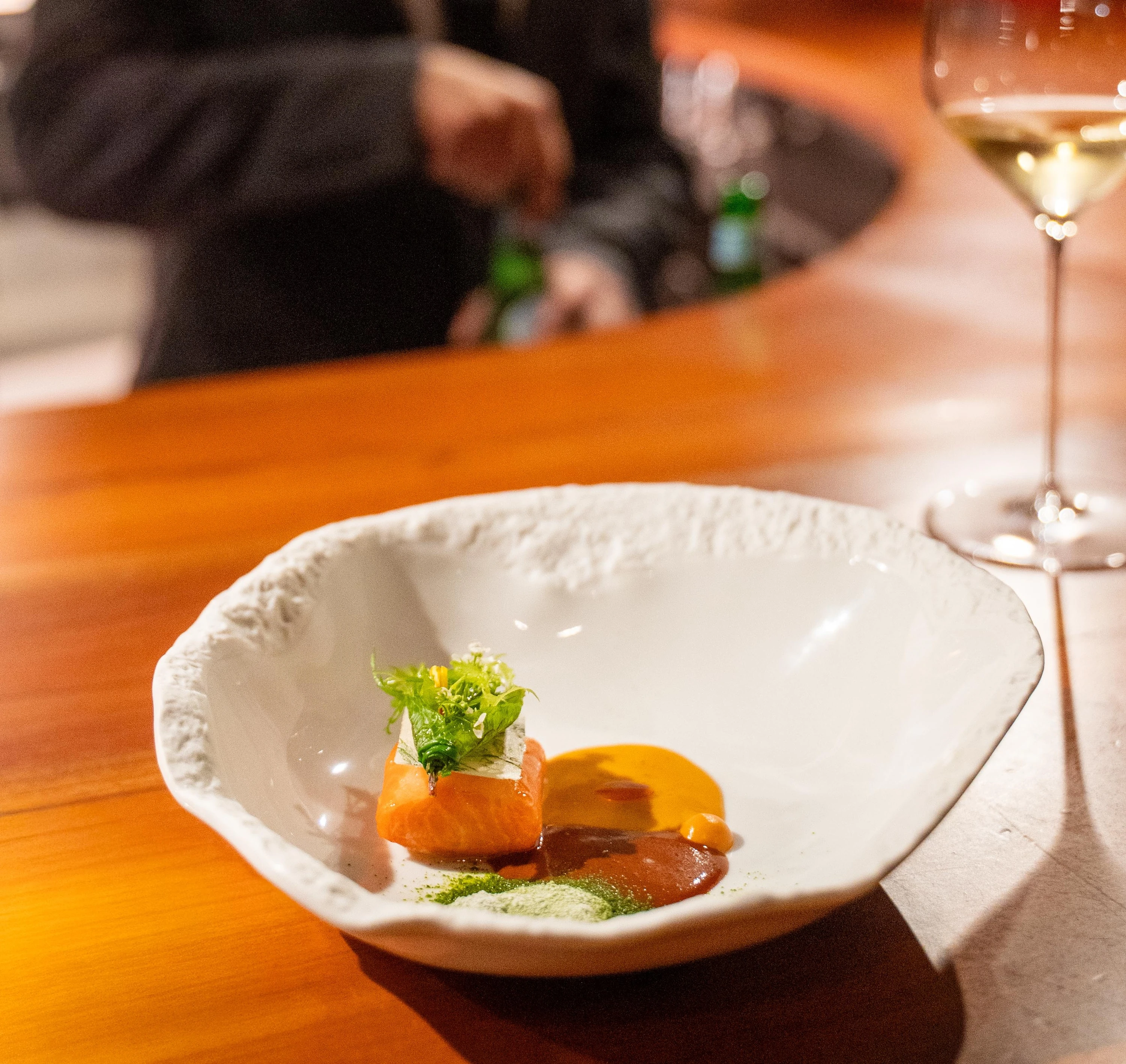
The menu delivers surprises until the very last bite
The final stretch of the menu continues to play with contrasts, this time through sweet preparations that also venture beyond convention. Lemon pine, raspberry and pandan brings together citrus, fruity and aromatic notes in a combination that reflects the team's creative approach. This is followed by cacao with Roquefort and capers, an unexpected pairing that takes a classic pastry ingredient into savory territory, and pumpkin with yuzu and coconut, where an everyday ingredient meets flavors from other parts of the world.
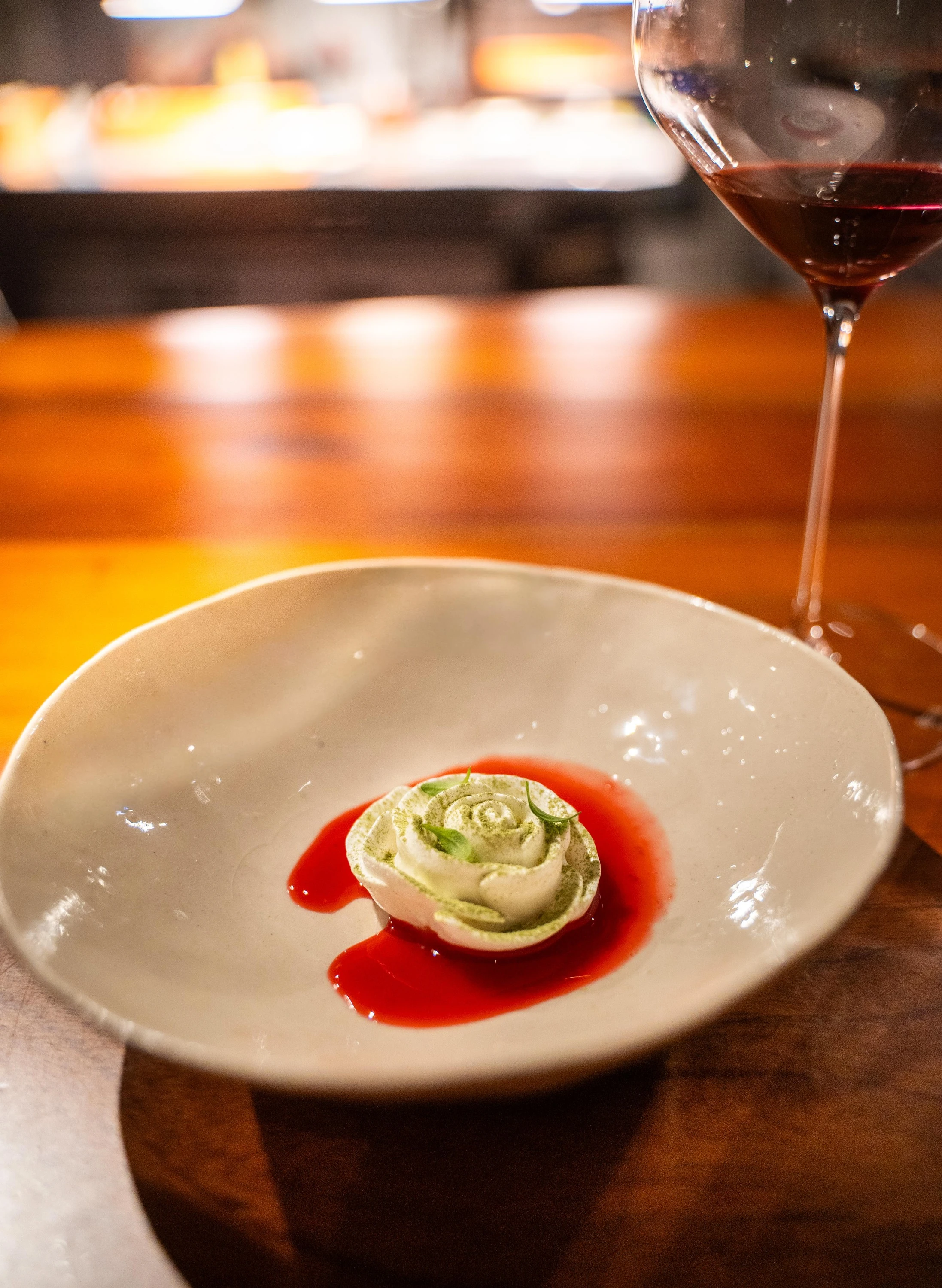
The journey ends with petits fours, the small bites that bring a multi-course dining experience to a close. Even at this final stage, Trescha's philosophy remains evident: exploring new pairings, working with diverse ingredients and finding a balance between technique, creativity and flavor. It's an experience that encourages diners to approach each dish with curiosity and views cooking as a never-ending process of discovery.
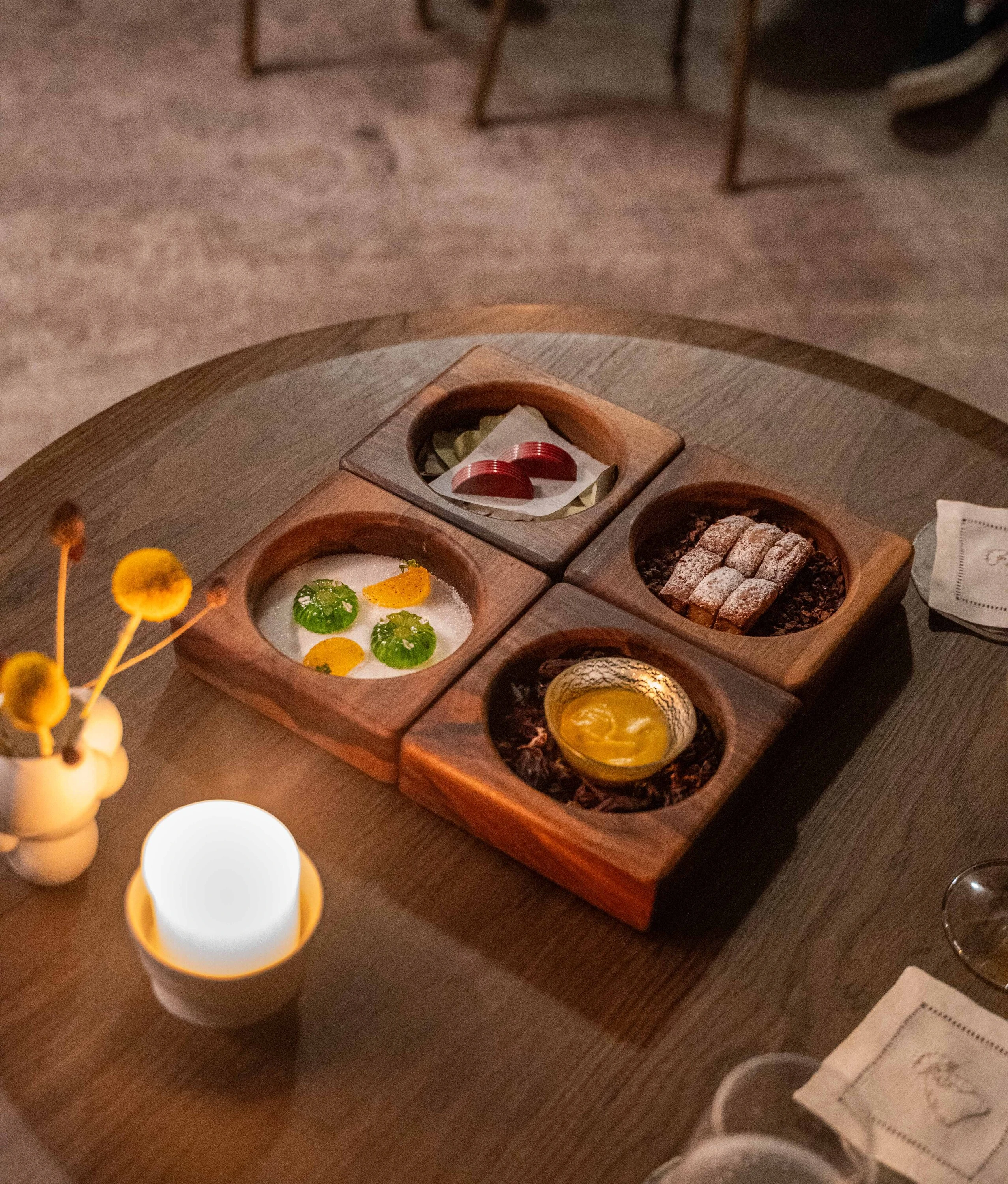
Trescha holds one Michelin star and ranked No. 36 on Latin America's 50 Best Restaurants list in 2025. Yet beyond the accolades, what makes the restaurant particularly interesting is its ability to bring together Argentine ingredients, research and a personal perspective on contemporary cuisine.
Wine and beverage pairings are part of the experience
The restaurant also offers several pairing options, both alcoholic and non-alcoholic, to complement the tasting menu. The wine selection includes labels such as Ínsólito Albariño 2023, from Buenos Aires; Nassella Chardonnay 2022, from Mendoza; Los Dragones Syrah 2025, also from Mendoza; and Malamado Vintage 2020, from the Uco Valley. The selection accompanies the culinary journey with wines from different regions of Argentina.
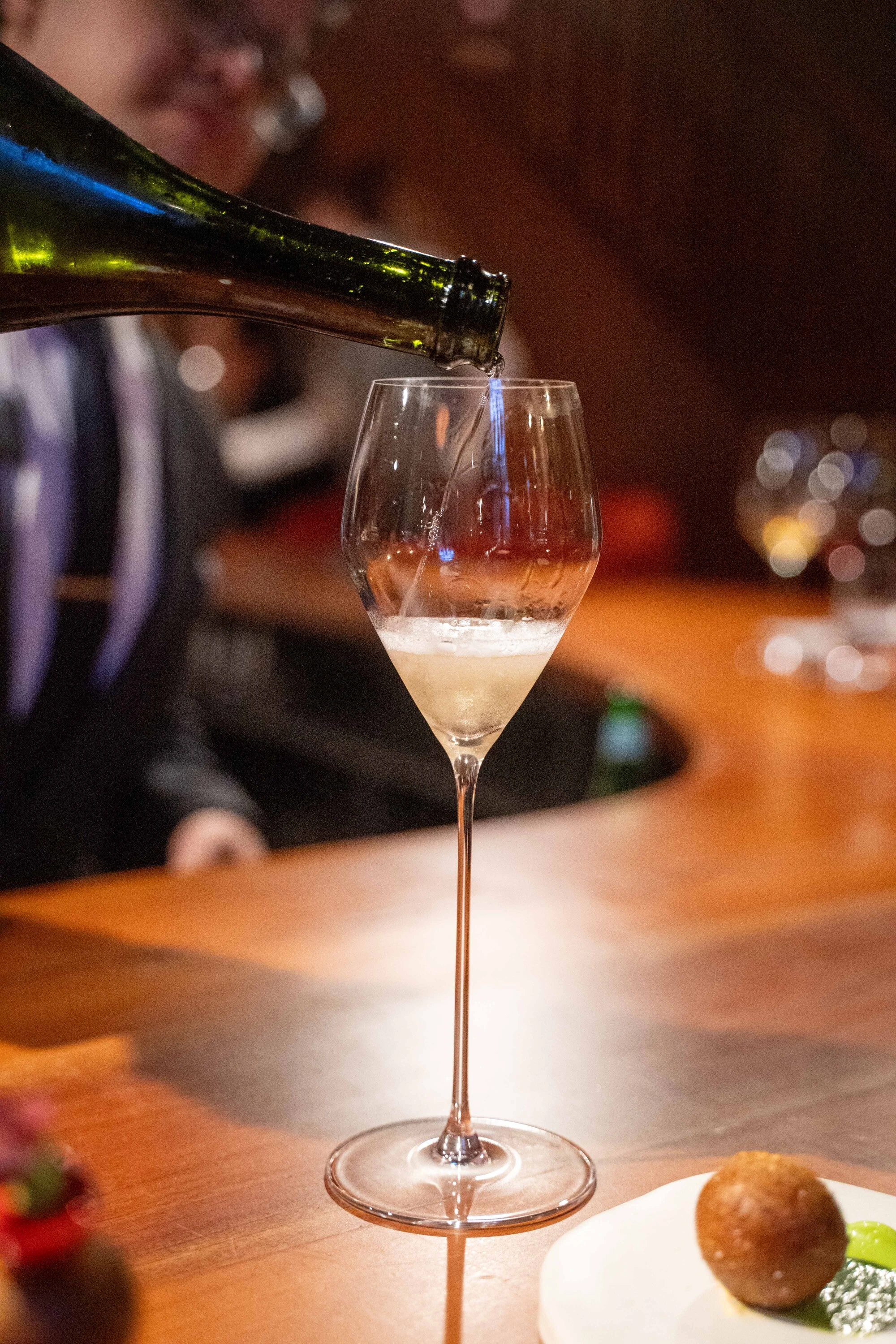
For those who prefer non-alcoholic options, the menu includes creations such as Bosque Rojo, made with raspberry, red tea and coconut; Apple and Spices, featuring green apple, juniper and celery; Cucumber and Burrito, with lime and the Argentine aromatic herb known as burrito; and Winery Tea, combining red apple, green grapes and Darjeeling tea. In this way, the beverage pairings become another part of the experience, exploring ingredients, aromas and flavor combinations that complement each course.
The kitchen, just inches away
One of the most distinctive features of the experience is the counter seating. Sitting directly in front of the kitchen, guests can watch the team at work and follow the movement between courses up close. This proximity also creates opportunities to ask questions and chat with the chefs preparing the dishes, adding another dimension to the tasting menu.
At Trescha, the team emphasizes that the goal isn't to explain every technique, but rather to ensure that the experience is enjoyable in every respect. Food takes center stage, but service, comfort and the interaction that unfolds throughout the evening are equally important. In a restaurant where every dish is backed by a process of research and experimentation, this closeness offers a glimpse into the work behind the scenes without allowing the explanations to overshadow the experience.
-
Address: Murillo 725, Villa Crespo, Buenos Aires.
-
Experience: 14-course tasting menu.
-
Opening days and seating times: Wednesday to Saturday, at 6:30pm and 9:45pm.
-
Reservations: Through the restaurant's official booking channels.
-
Website: trescharestaurant.com/es-ar