

[image]
[title]Fifteen years after its almost experimental debut in Buenos Aires’ underground scene, Un Poyo Rojo returns to the city as a contemporary classic of Argentine physical theater. Starting January 6, 2026, the play starring Luciano Rosso and Alfonso Barón comes back to the Teatro Metropolitan for ten performances only (tickets here), reaffirming why it continues to work anywhere in the world: a love story told through the body, humor, and the constant risk of the here and now. With no spoken text but overwhelming physical power, the show offers an experience that is as playful as it is emotional—each performance is unrepeatable, and the bond with the audience is always put to the test.
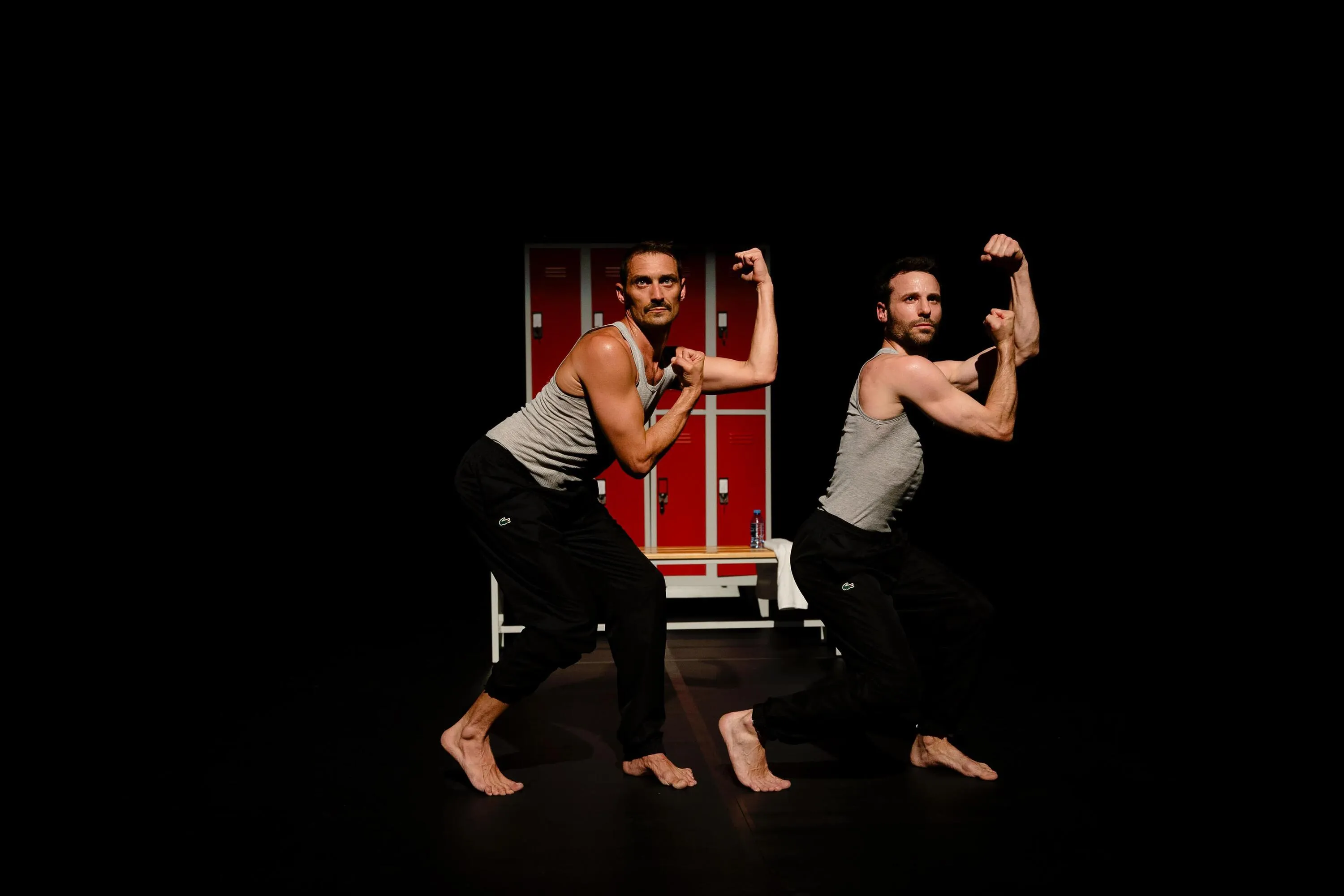
Un Poyo Rojo was born almost as an experiment and now marks 15 years touring the world. What do you think the play has that keeps it working with the same force as that first off-scene premiere in Buenos Aires?
Luciano Rosso: There are several factors. The show stays fresh because it has moments of improvisation that constantly renew it, and that creates a very direct connection with the audience. And on our side, interpretively, it’s always a game: getting together again to play, to take risks, and to have fun. Like a game of soccer or cards on a Sunday. It’s always an excuse to enjoy ourselves.
Alfonso Barón: It works because it tells a universal story. Who hasn’t had a love story at some point? And when I talk about love, I don’t mean only a couple—it can be a pet, an idea, a goal. Physical theater doesn’t give you everything served up; it invites you to think and to complete it from your own experience. The language of the body has infinite readings. It’s a simple story, but with very complex resources. And the audience perceives that: Un Poyo Rojo is handcrafted work. It’s not just a show; it’s an experience.
“Un Poyo Rojo is handcrafted work. It’s not just a show; it’s an experience”
The play has no text, yet it says a great deal about desire, competition, and relationships between men. Do you feel that today’s audiences read it differently than they did 10 or 15 years ago?
Luciano Rosso: At its core, the play is a love story. And that doesn’t change or go out of style. No matter how the world and society transform, love is universal—it has no linguistic or ideological barriers that can alter it.
Alfonso Barón: I always think of those Choose Your Own Adventure books. The story is the same, but each reader takes a different path. Something similar happens here: the play doesn’t speak only about desire or competition between two men, but about many layers that depend on who’s watching and from where. Audiences have always read different things into it. Even today, they give us interpretations we never imagined.
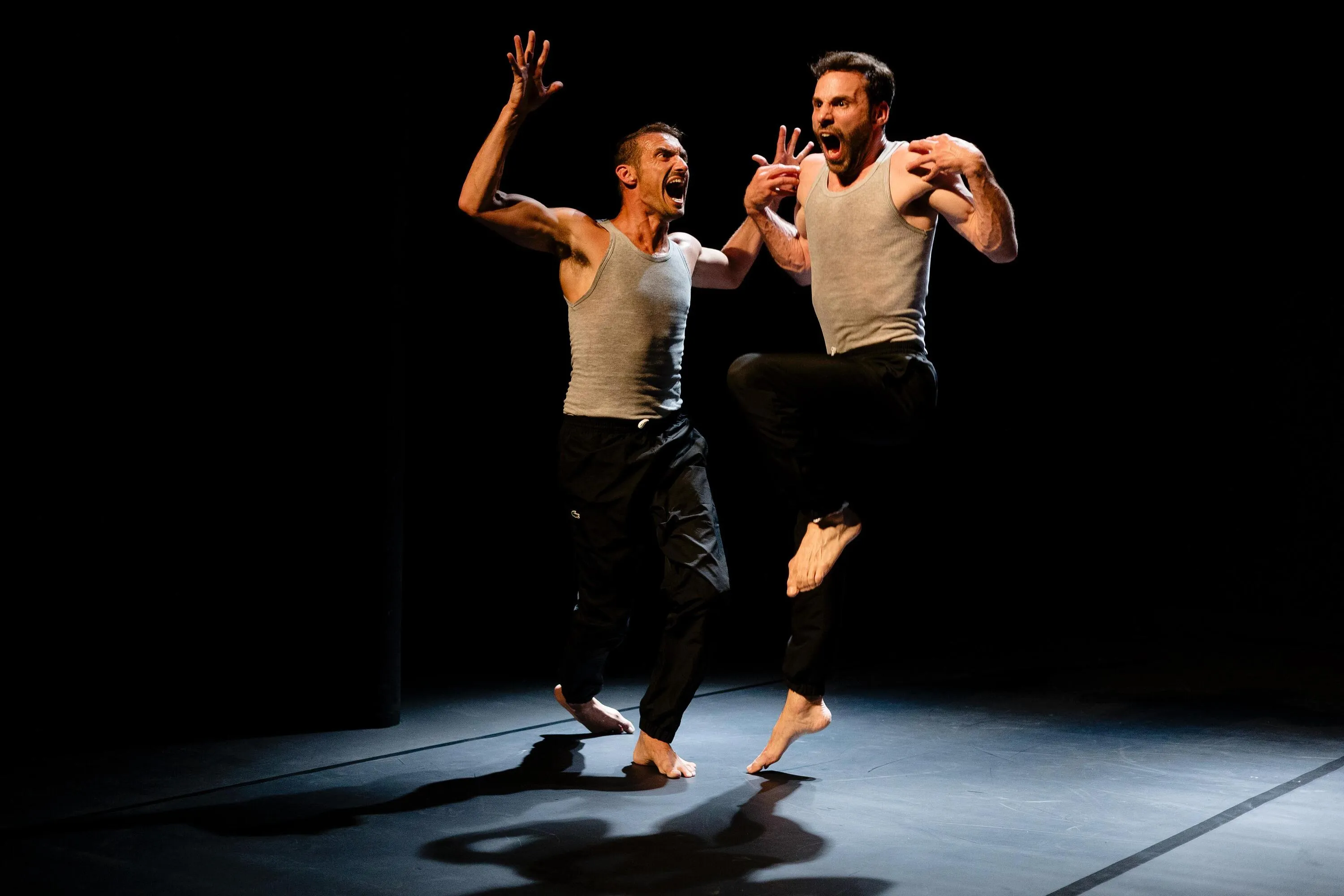
After more than a thousand performances in 30 countries, is there anything that still surprises you about the audience’s reaction—even from Buenos Aires locals who “have already seen it”?
Luciano Rosso: Audiences react to novelty, and our task is to surprise ourselves too. It works like a mirror—it reflects what we’re living onstage. Plus there’s the random element of live radio, that unpredictability that slips into every performance and keeps the play alive, anchored in the here and now.
Alfonso Barón: What moves me is that people thank us for seeing something that helps them unwind. The play has humor, but also a sensitive side that sometimes breaks through. Some people laugh, others cry, and many tell us they leave the theater wanting to dance, to create. That’s an enormous gift.
"Some laugh, others cry, and many tell us they leave the theater wanting to dance, to create"
With such a physical and living work, how do you imagine the future of Un Poyo Rojo? Can it keep mutating with you?
Luciano Rosso: It will keep changing because we change. Not only physically, but also as performers. The play is a kind of permanent school where we pour our concerns and learnings. It has a solid structure, but it allows us to evolve as people—and that shows onstage.
Alfonso Barón: It has already mutated and will keep mutating. Like our bodies. We accompany the play, and the play accompanies us. Adapting is part of the game.
You may also be interested in: What to See in Theater in Summer 2026
Returning to the Teatro Metropolitan and Corrientes Avenue is no small thing. What does it mean to reopen in Buenos Aires in summer after conquering so many stages around the world?
Luciano Rosso: It’s always a pleasure to return to Buenos Aires. It’s coming home. Even though we haven’t lived here for years, stepping onto a Buenos Aires stage has a special mystique. And there’s that pride of the Argentine audience, who saw us born and grow and who accompany us as we take this creature around the world.
Alfonso Barón: For me, it means everything. There’s nothing like coming home and sharing the play where it was born, with the best audience in the world. Argentine culture can’t be explained—we’re passion. That goes onstage. That’s why the play stays alive. Because here, hugs are exaggerated, ridiculous, familiar… we’re a spectacle, and it shows.
"There’s nothing like coming home and sharing the play where it was born, with the best audience in the world"
PING PONG PORTEÑO
A Buenos Aires underground spot where bodies, art, and nightlife intersect
Luciano: Every underground place in Buenos Aires has that.
Alfonso: You got me… I haven’t lived here in so long that I wouldn’t know what to say.
A bar or classic eatery ideal after the show
Luciano: Some traditional eatery in San Telmo or a bar in Villa Crespo.
Alfonso: Celta.
A neighborhood that transforms at night
Luciano: Colegiales.
Alfonso: Chacarita.
A simple nighttime plan that always works
Luciano: Bar San Bernardo.
Alfonso: Bars.
Something to eat very late
Luciano: Pizza at El Imperio de Chacarita.
Alfonso: A 24-hour grill.
If Un Poyo Rojo ended in a classic Buenos Aires night out, how would the night continue?
Luciano: Dancing cumbia at a neighborhood party.
Alfonso: In a closed theater or at a house with a rooftop—music, drinks, and lots of chingui chingui.