[image]
[title]With eight nominations at the 2026 Academy Awards and sky-high expectations, Wuthering Heights arrives in cinemas as an experience you feel in the body before you process it in the mind. We spoke with director Emerald Fennell and stars Margot Robbie and Jacob Elordi about this intense, contemporary re-reading of Emily Brontë’s classic: a story of ferocious, uncomfortable and profoundly physical love, where desire, cruelty and obsession seek not redemption but emotional truth.
What the new film Wuthering Heights is about
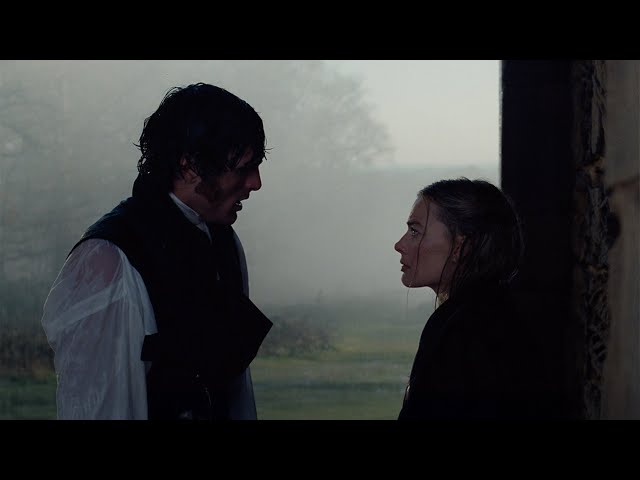
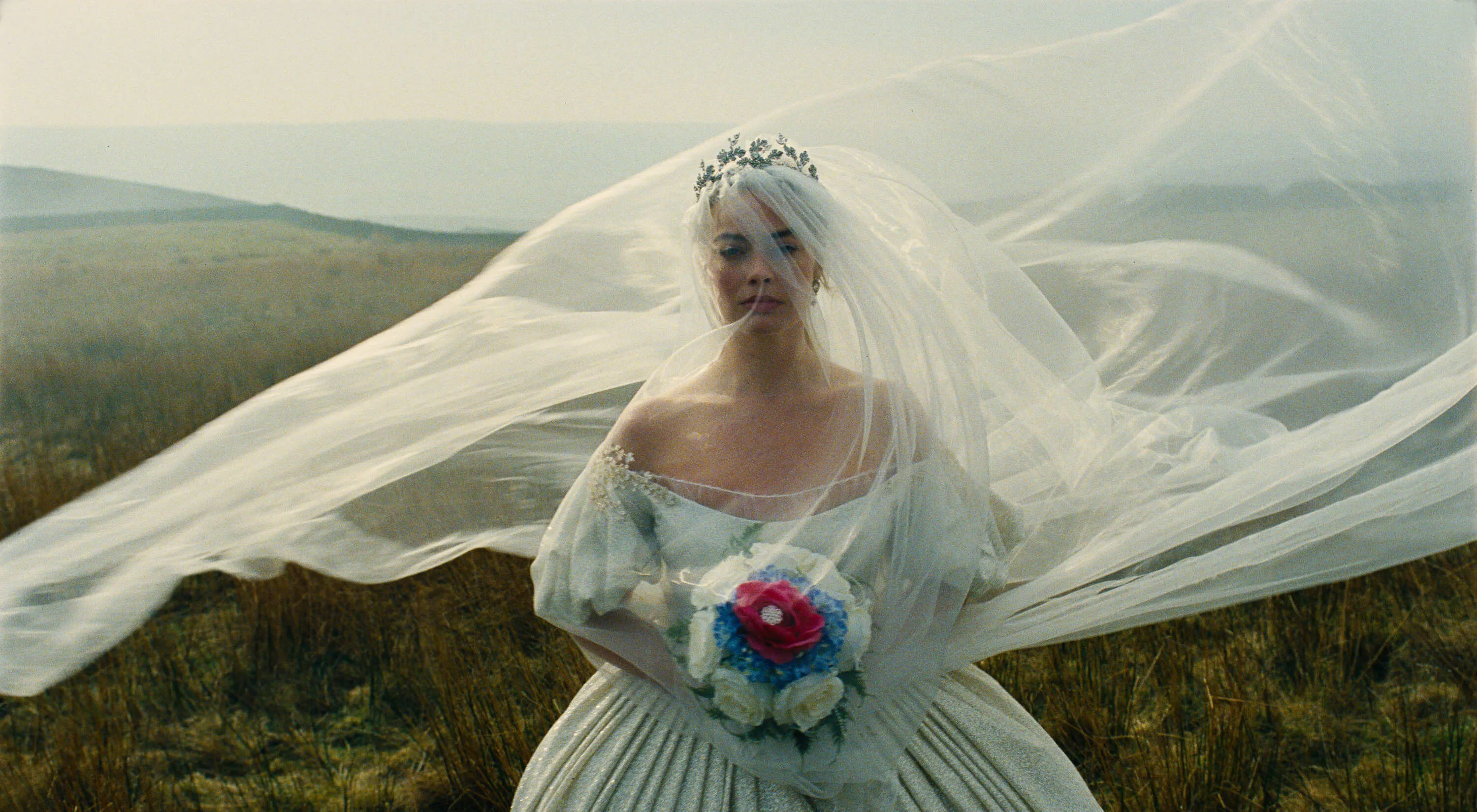
This new version of Wuthering Heights reimagines Emily Brontë’s classic as an intense and destructive love story between Cathy and Heathcliff. The film explores desire, obsession and cruelty through a contemporary lens, without softening the emotional violence of its protagonists.
Emerald Fennell explains her vision of Wuthering Heights
Fennell is not interested in explaining the book or translating it in an academic way; she simply wants to recreate what it did to her. “I’ve always had a physical response to this book… What’s infinitely wonderful about Wuthering Heights is, in fact, Emily Brontë and who she was as an artist. She was a transcendentally brilliant poet and her work connects in a way very few things do… what I really wanted was to acknowledge my connection to it, to the way it made me feel,” she says. She adds: “I wanted to create something that came close to the feeling I had the first time I read it… the things that still make people feel something two centuries later.” From that premise comes a film that does not judge its characters: “It’s not a didactic film; it doesn’t take a moral stance. What really interested me was asking myself: ‘What do we do when no one is watching?’”
“What really interested me with the film was asking myself: What do we do when no one is watching?” — Emerald Fennell
Margot Robbie on playing Cathy in Wuthering Heights
Margot Robbie, who worked intensely to inhabit Cathy, asks: “What is it about this story that makes us keep wanting to see it, examine it, analyse it, love it… obsess over it and debate it, almost two centuries later?” “The answer is that I don’t know. And if I did know, I don’t know if we’d still be analysing it 200 years later. But I suspect it has something to do with how challenging these characters are, how much you want things to work out for them, how difficult and complex their relationship is and, at the same time, how simple it feels.”
“What is it about this story that makes us keep wanting to see it, examine it, analyse it, love it… obsess over it and debate it, almost two centuries later?” — Margot Robbie
That approach is felt in the construction of Cathy, a character as fascinating as she is dangerous. Fennell places her within a tradition of untamed heroines: “She’s spoiled, capricious, ferocious… a beautiful lady without mercy. Brontë is very specific and repeats again and again that Cathy enjoys hurting people… she’s a kind of sadist, with that dangerous charisma, that obstinacy, that interest in cruelty and that vanity. The one thing that makes her forgivable, in many ways, is her love for Heathcliff.”
In Margot Robbie, she found the perfect embodiment of that contradictory energy: “Margot is able to encapsulate all of this… she has that dangerous, destructive charisma; she has enormous talent and she’s also wild in many ways. Like Cathy, she’s very sensitive, mischievous, intelligent, powerful and, if she wanted to, she could be terrifying; she’s the kind of woman you want to spend time with.”
Jacob Elordi’s Heathcliff in the new adaptation
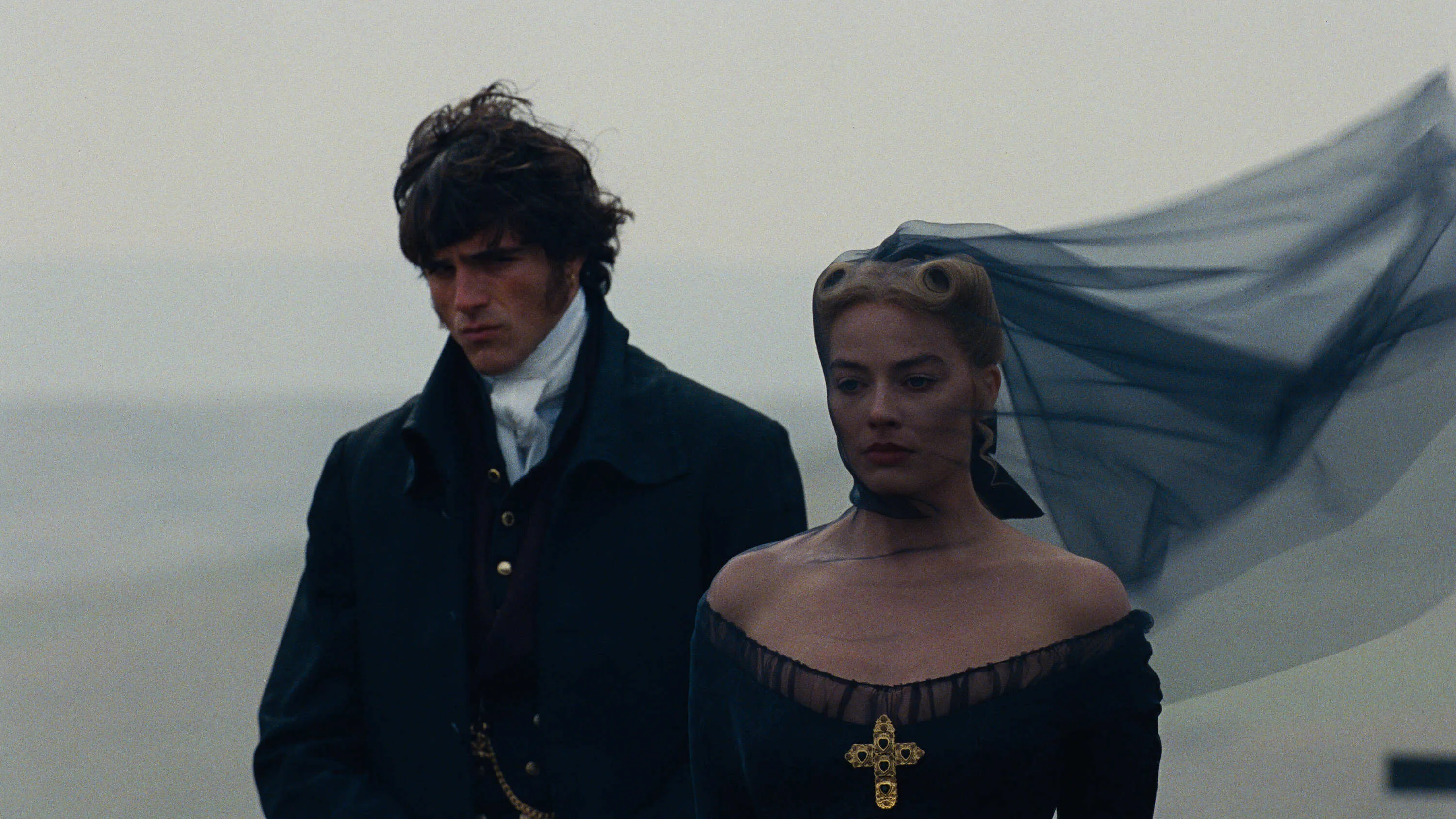
Heathcliff, by contrast, is presented as an open wound. “He’s the archetype of the Byronic hero: hot-tempered, cruel, dangerous, but also one of the most moving characters in literature; a despicable character who can still be your love interest,” Fennell explains. That’s why she chose Elordi: “We needed an actor who could make us love someone who isn’t easy to love.”
Jacob Elordi understands him through the body: “Heathcliff is the original outsider… always braced for impact… Cathy was his only source of light or warmth.” And for Margot, no one else could be Heathcliff: “Emerald wrote Heathcliff with Jacob in mind. She said she made that decision because he looks like the illustration of Heathcliff on the cover of the book she read as a teenager, and I love that. I can’t imagine anyone else in that role, and I’ll always associate him with the character. He’ll always be Heathcliff to me. He embodied him so precisely that now I can’t picture any other version. I can’t even imagine who the Heathcliff of the next generation will be. I feel like the role belongs to him.”
“Emerald wrote Heathcliff with Jacob in mind. I can’t imagine anyone else in that role. I feel like the role belongs to him.” — Margot Robbie
Differences between Emily Brontë’s Wuthering Heights and the film
Margot notes that Emerald Fennell’s adaptation feels “a bit more modern” because Cathy and Heathcliff are older than in the original novel. “In the book, Cathy is almost a teenager; in our film she’s between 20 and 25 when it begins,” she explains, adding that this change foregrounds the social pressure pushing Cathy to marry another man, even while she’s in love with Heathcliff. That maturity, Robbie says, means the characters can no longer hide behind naivety: their decisions are conscious, they hurt others, and they carry far deeper consequences.
You might also like: February film releases on the big screen
How Wuthering Heights was filmed: aesthetics, music and production
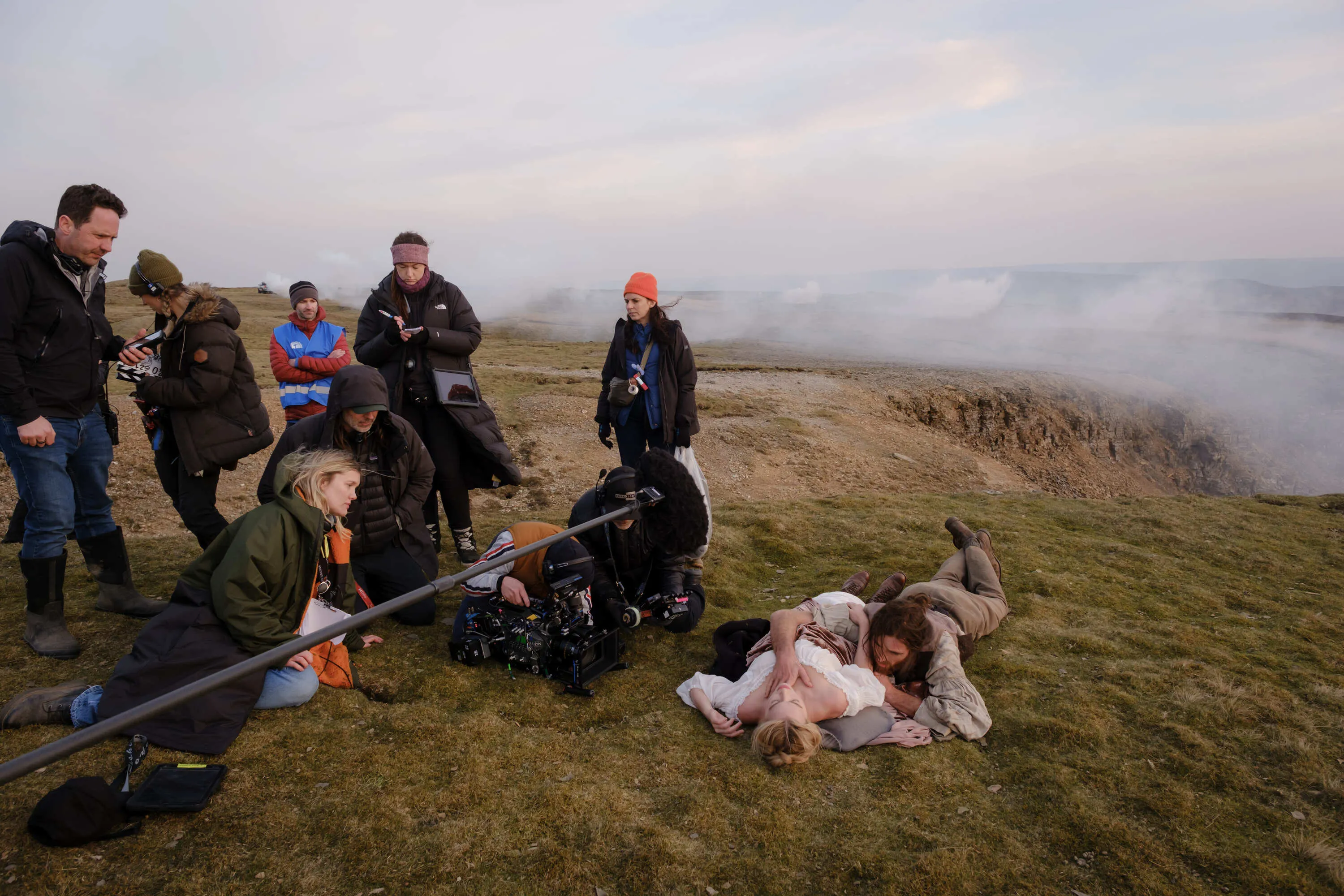
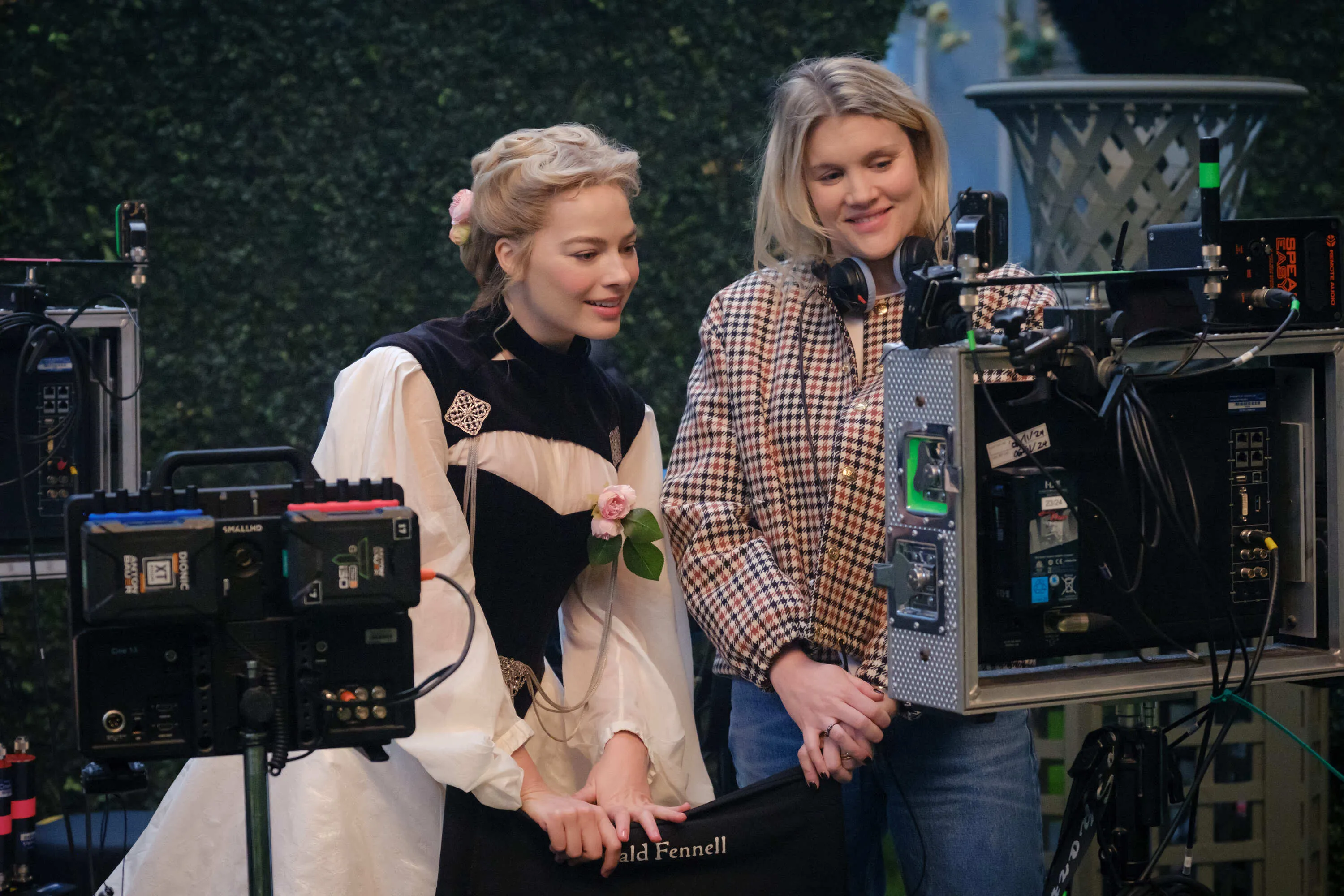
The film was conceived as a handcrafted work, almost old-fashioned in spirit. “Everything is made by hand and shot on film. We wanted to make a movie in the style of the studios of old,” Fennell says, having designed sets, lighting and costumes from the outset, with the actors already in mind. Music also plays a central role: “I think music is especially important if you’re trying to provoke a physical reaction.” That led to a collaboration with Charli xcx: “I sent her the script; she called me and asked if she could make a whole album.”
Margot Robbie describes the result as an experience rather than a conventional narrative: “Emerald’s version is a very emotional and visceral experience… it focuses on how what’s happening makes you feel.” She adds a key idea of the film: “None of these characters adapts their personality to circumstances… they’re characters who affect circumstances.” Elordi agrees with that contemporary reading: “What Emerald captured is the spirit of Emily Brontë… interpreted through a modern lens.”
“I hope this film rekindles passion in people and reminds us how much we miss love, how much we need it, how much we desire it.” — Jacob Elordi
Why Wuthering Heights is an emotional and physical experience
Fennell doesn’t want passive viewers. “No one should sit quietly watching this film,” she says. “It’s grand, epic and devastatingly sexy, based on what I believe is the greatest love story ever written.” Her wish is clear: “I hope the story reaches people’s souls, that audiences leave the cinema feeling something electrifying.”
Elordi adds: “I hope this film rekindles passion in people and reminds us how much we miss love, how much we need it, how much we desire it… that it helps us dream of future loves and remember past ones, or unrequited ones. Wuthering Heights is about an epic, enduring, eternal and torturous love. There is joy and darkness. It’s an unrestrained look at the complexity of love, without judgment.”
In this way, this cinematic version of Wuthering Heights doesn’t aim to close off meanings or impose a definitive reading, but to invite viewers to plunge headlong into its universe. A period romance stripped of solemnity, a love story with no promise of redemption, and a film that—like the book—gets under your skin and lingers long after it ends.